Philip W. Jackson - Böcker
Visar alla böcker från författaren Philip W. Jackson. Handla med fri frakt och snabb leverans.
6 produkter
6 produkter
167 kr
Skickas inom 7-10 vardagar
One day in 1938, John Dewey addressed a room of professional educators and urged them to take up the task of “finding out just what education is.” Reading this lecture in the late 1940s, Philip W. Jackson took Dewey’s charge to heart and spent the next sixty years contemplating his words. The stimulating result of a lifetime of thinking about educating, What Is Education? is a profound philosophical exploration of how we transmit knowledge in human society and how we think about accomplishing that vital task. Most contemporary approaches to education follow a strictly empirical track, aiming to discover pragmatic solutions for teachers and school administrators. Jackson argues that we need to learn not just how to improve on current practices but also how to think about what education means—in short, we need to answer Dewey by constantly rethinking education from the ground up. Guiding us through the many facets of Dewey’s comments, Jackson also calls on Hegel, Kant, and Paul Tillich to shed light on how a society does, can, and should transmit truth and knowledge to successive generations. Teasing out the implications in these thinkers’ works ultimately leads Jackson to the conclusion that education is at root a moral enterprise. At a time when schools increasingly serve as a battleground for ideological contests, What Is Education? is a stirring call to refocus our minds on what is for Jackson the fundamental goal of education: making students as well as teachers—and therefore everyone—better people.
764 kr
Skickas inom 7-10 vardagar
One day in 1938, John Dewey addressed a room of professional educators and urged them to take up the task of "finding out just what education is." Reading this lecture in the late 1940s, Philip W. Jackson took Dewey's charge to heart and spent the next sixty years contemplating his words. The stimulating result of a lifetime of thinking about educating, "What Is Education?" is a profound philosophical exploration of how we transmit knowledge in human society and how we think about accomplishing that vital task. Most contemporary approaches to education follow a strictly empirical track, aiming to discover pragmatic solutions for teachers and school administrators. Jackson argues that we need to learn not just how to improve on current practices but also how to think about what education means - in short, we need to answer Dewey by constantly rethinking education from the ground up. Guiding us through the many facets of Dewey's comments, Jackson also calls on Hegel, Kant, and Paul Tillich to shed light on how a society does, can, and should transmit truth and knowledge to successive generations.Teasing out the implications in these thinkers' works ultimately leads Jackson to the conclusion that education is at root a moral enterprise. At a time when schools increasingly serve as a battleground for ideological contests, "What Is Education?" is a stirring call to refocus our minds on what is for Jackson the fundamental goal of education: making students as well as teachers - and therefore everyone-better people.
398 kr
Skickas inom 5-8 vardagar
What do the arts have to teach us about how to live our lives? How can teachers use art's "lessons" to improve their teaching? This provocative book examines John Dewey's thinking about the arts and explores the practical implications of that thinking for educators. Philip W. Jackson draws on Art as Experience, the philosopher's only book on the subject, and less well-known observations scattered throughout Dewey's writings to consider the nature and power of art and its relation to education. For those unacquainted with Dewey's thought as well as for Dewey specialists, this book provides rich insights into how the arts might inform educational practice.Jackson introduces the basics of Dewey's aesthetic theory and then looks at the ways in which single works of art can profoundly affect the individuals who either make them or come to them as readers, listeners, or spectators. He considers the experiences of many writers—music and art critics, authors of self-help books, poets, and philosophers—to explore the transformative power of the experience of art. In a concluding chapter on the educational relevance of Dewey's views, the author focuses on two instances of flawed educational practice, showing how a more conscientious application of Dewey's view of the arts could have improved the learning experience.
236 kr
Skickas inom 7-10 vardagar
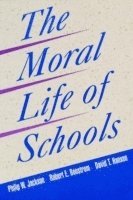
"Rarely have I come across a book that so quickly provoked me to re-examine my own classroom behavior. There is no place to hide in this careful scrutiny of the teacher as crucial player in the daily morality tale that becomes the story of school life."-- Vivian Gussin Paley, teacher, University of Chicago Laboratory Schools This book takes the reader on an eye-opening journey through a variety of elementary and high school classrooms, highlighting the moral significance of all that transpires there. Drawing on the results of a two-and-a-half year study, the authors examine the ways in which moral considerations permeate the everyday life of classrooms. In addition to providing teachers and teacher educators with a new framework for looking at and thinking about the moral dimensions of schooling, the authors also offer specific suggestions about how to look at classroom events from a moral perspective. Contents One. Looking for the Moral: An Observer's Guide Two. Becoming Aware of Moral Complexity Within a School Setting: Four Sets of Observations Three. Facing Moral Ambiguity and Tension: Four More Sets of Observations Four. Cultivating Expressive Awareness in Schools and Classrooms Postscript: Where Might One Go from Here? Philip W. Jackson is the David Lee Shillinglaw Distinguished Service Professor of Education and Psychology and a member of the Committee on Ideas and Methods at the University of Chicago. Robert E. Boostrom is a senior research associate of the Benton Center for Curriculum and Instruction at the University of Chicago. David T. Hansen is an assistant professor of curriculum and instruction in the College of Education at the University of Illinois at Chicago
275 kr
Skickas inom 7-10 vardagar
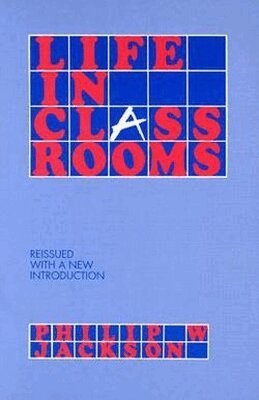
Since its first appearance, Life in Classrooms has established itself as a classic study of the educational process at its most fundamental level. The book's aim is to encourage researchers to examine more deeply the dynamics of classroom learning, the cornerstone of educational change. Focusing on elementary classrooms, chapters include: The Daily Grind, Students’ Feelings about School, Involvement and Withdrawal in the Classroom, Teachers’ Views, The Need for New Perspectives.
268 kr
Skickas inom 11-20 vardagar
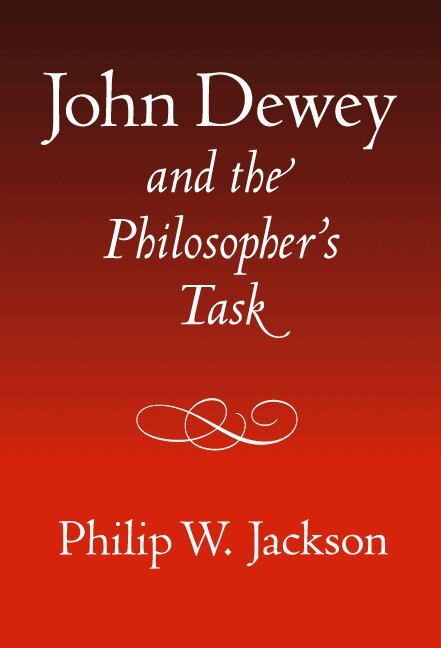
In this text, readers are taken on a journey into the mind of John Dewey. By analyzing Dewey's attempts to revise the introduction to one of his most important books, ""Experience and Nature"", Philip W. Jackson explores Dewey's efforts (both intellectually and emotionally) to explain the relationship between philosophy and human affairs. This story of Dewey's life-long struggle with a complex philosophical question (one that continues to challenge philosophers) is also the story of Jackson's own struggle to understand Dewey's quest. Written for anyone interested in philosophy or the writings of Dewey, this book should be useful for understanding the philosophic method and the philosopher's task of inquiry.