Philippa Kelly - Böcker
Visar alla böcker från författaren Philippa Kelly. Handla med fri frakt och snabb leverans.
9 produkter
9 produkter
443 kr
Skickas inom 7-10 vardagar
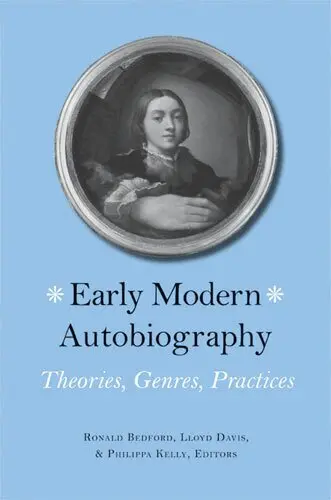
Why, and in what ways, did late medieval and early modern English people write about themselves, and what was their understanding of how "selves" were made and discussed? This collection goes to the heart of current debate about literature and autobiography, addressing the contentious issues of what is meant by early modern autobiographical writing, how it was done, and what was understood by self-representation in a society whose groupings were both elaborate and highly regulated. Early Modern Autobiography considers the many ways in which autobiographical selves emerged from the late medieval period through the seventeenth century, with the aim of understanding the interaction between those individuals’ lives and their worlds, the ways in which they could be recorded, and the contexts in which they are read. In addressing this historical arc, the volume develops new readings of significant autobiographical works, while also suggesting the importance of texts and contexts that have rarely been analyzed in detail, enabling the contributors to reflect on, and challenge, some prevailing ideas about what it means to write autobiographically and about the development of notions of self-representation.“The idea of the self, as seen from diverse and fascinating perspectives on sixteenth- and seventeenth-century life: this is what readers can expect from Early Modern Autobiography. A beautifully edited collection, genuinely far-reaching and insightful, Early Modern Autobiography makes known to us a great deal about how people saw themselves four hundred years ago."—Derek Cohen, Professor of English, McLaughlin College, York University"Acutely addressing a range of central issues from subjectivity to theatricality to religion, these essays will be of great interest to specialists in early modern studies and students of autobiographical writings from all eras."—Heather Dubrow, Tighe-Evans Professor and John Bascom Professor, Department of English, University of Wisconsin"The essays in this volume show where archival discoveries—memoirs, letters, account books, wills, and marginalia—can take us in understanding early modern mentalities. They document the interdependence of the abstract and the everyday, the social constructedness of self-awareness, local contexts for self-recordation, and impulses that range from legal purpose to imaginative escape. The sixteen chapters open many fascinating new perspectives on identity and personhood in Renaissance England."—Lena Cowen Orlin, Executive Director, The Shakespeare Association of America and Professor of English, University of Maryland Baltimore CountyRonald Bedford is Reader in the School of English, Communication and Theatre at the Unversity of New England in Armidale, New South Wales, and author of The Defence of Truth: Herbert of Cherbury and the Seventeenth Century and Dialogues with Convention: Readings in Renaissance Poetry. The late Lloyd Davis was Reader in the School of English at the University of Queensland, and author of Guise and Disguise: Rhetoric and Characterization in the English Renaissance (1993) and editor of Sexuality and Gender in the English Renaissance (1998) and Shakespeare Matters: History, Teaching, Performance (2003). Philippa Kelly is a Senior Research Fellow at the University of New South Wales, and has published widely in the areas of Shakespeare studies, cultural studies, feminism, and postcolonial studies.
2 479 kr
Skickas inom 10-15 vardagar
How did early modern English people write about themselves, and how do we listen to their voices four centuries later? The authors of Early Modern English Lives: Autobiography and Self-Representation 1500-1660 argue that identity is depicted through complex, subtle, and often contradictory social interactions and literary forms. Diaries, letters, daily spiritual reckonings, household journals, travel journals, accounts of warfare, incidental meditations on the nature of time, death and self-reflection, as well as life stories themselves: these are just some of the texts that allow us to address the social and historical conditions that influenced early modern self-writing. The texts explored in Early Modern English Lives do not automatically speak to our familiar patterns of introspection and self-inquiry. Often formal, highly metaphorical and emotionally restrained, they are very different in both tone and purpose from the autobiographies that crowd bookshelves today. Does the lack of emotional description suggest that complex emotions themselves, in all the depth and variety that we now understand (and expect of) them, are a relatively modern phenomenon? This is one of the questions addressed by Early Modern English Lives. The authors bring to our attention the kinds of rhetorical and generic features of early modern self-representation that can help us to appreciate people living four hundred years ago as the complicated, composite figures they were: people whose expression of identity involved an elaborate interplay of roles and discourses, and for whom the notion of privacy itself was a wholly different phenomenon.
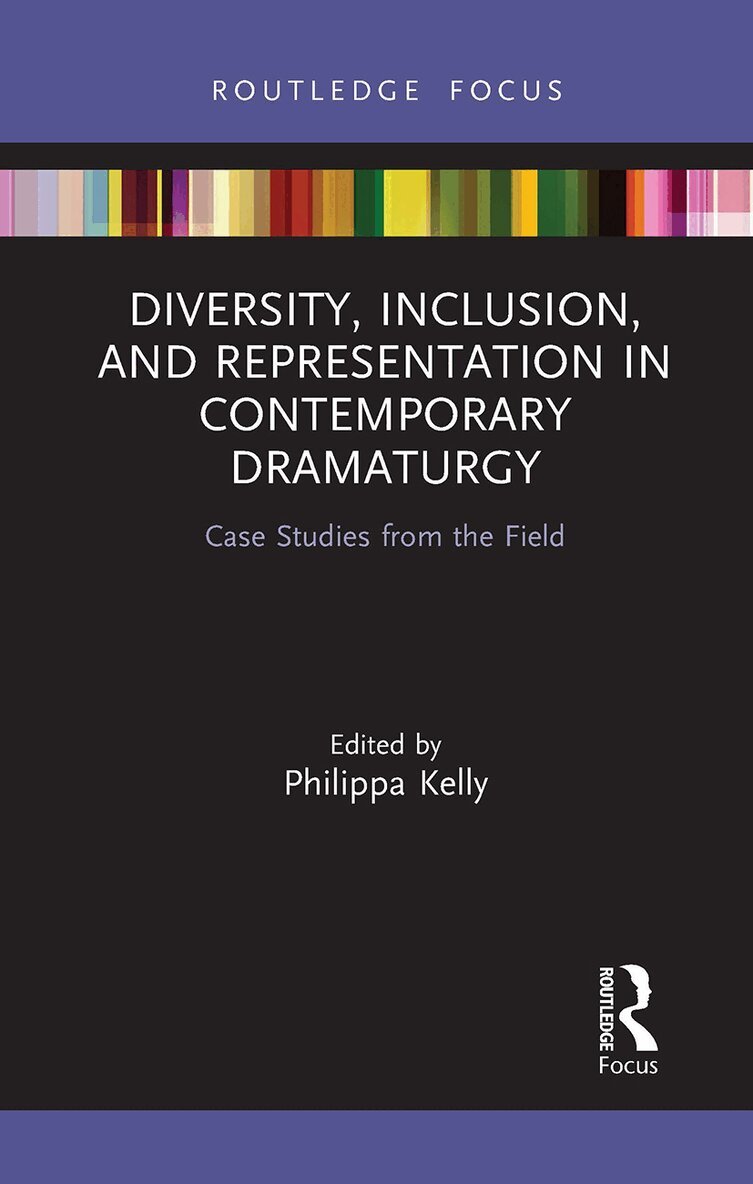
Diversity, Inclusion, and Representation in Contemporary Dramaturgy
Case Studies from the Field
Häftad, Engelska, 2023
274 kr
Skickas inom 10-15 vardagar
Diversity, Inclusion, and Representation in Contemporary Dramaturgy offers fresh perspectives on how dramaturgs can support a production beyond rigid disciplinary expectations about what information and ideas are useful and how they should be shared.The sixteen contributors to this volume offer personal windows into dramaturgy practice, encouraging theater practitioners, students, and general theater-lovers to imagine themselves as dramaturgs newly inspired by the encounters and enquiries that are the juice of contemporary theater. Each case study is written by a dramaturg whose body of work explores important issues of race, cultural equity, and culturally-specific practices within a wide range of conventions, venues, and communities. The contributors demonstrate the unique capacity of their craft to straddle the ravine between stage and stalls, intention and impact.By unpacking, in the most up-to-date ways, the central question of “Why this play, at this time, for this audience?,” this collection provides valuable insights and dramaturgy tools for scholars and students of Dramaturgy, Directing, and Theater Studies.
647 kr
Skickas inom 10-15 vardagar
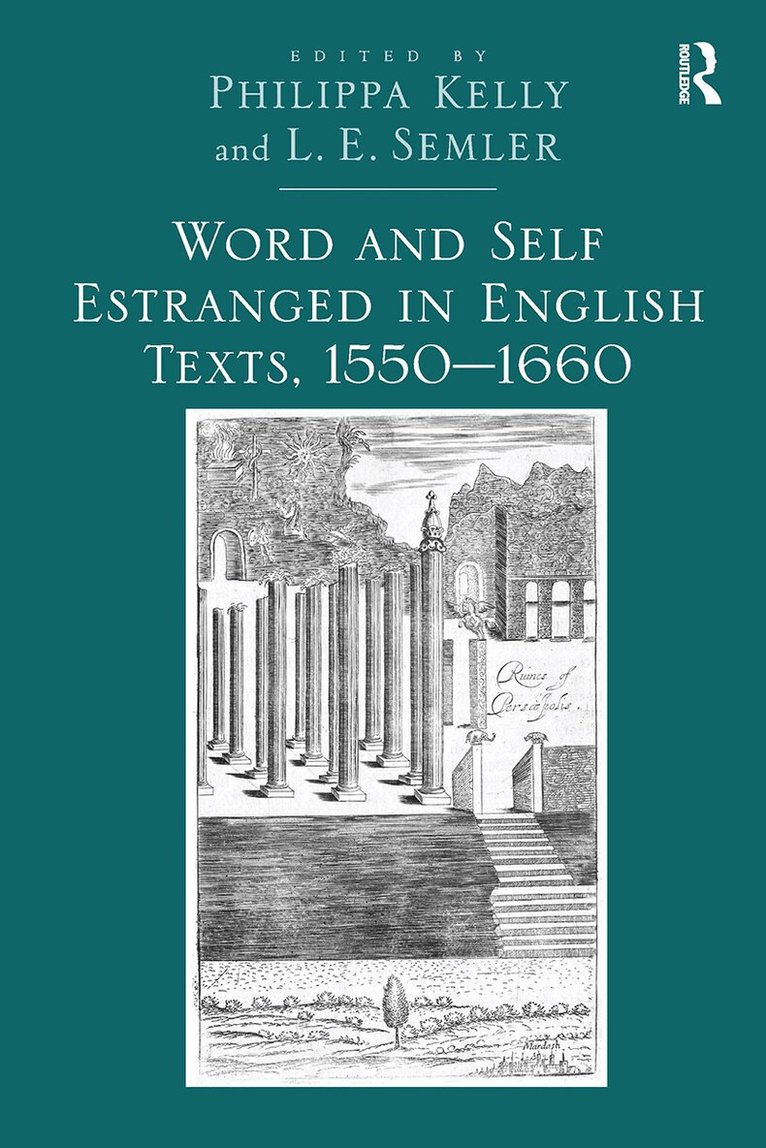
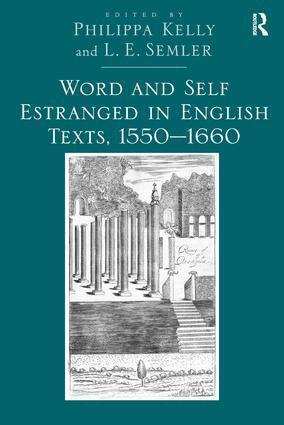
The essays in Word and Self Estranged in English Texts, 1550-1660, consider diverse historical contexts for writing about 'strangeness'. They draw on current practices of reading to present contrasts and analogies within and between various social understandings. In so doing they reveal an interplay of thematic and stylistic modes that tells us a great deal about how, and why, certain aspects of life and thinking were 'estranged' in sixteenth and seventeenth century thinking. The collection's unique strength is that it makes specific bridges between contemporary perspectives and early modern connotations of strangeness and inhibition. The subjects of these essays are 'strange' to our ways of thinking because of their obvious distance from us in time and culture. And yet, curiously, far from being entirely alien to these texts, some of the most modern thinking-about paradigms, texts, concepts-connects with the early modern in unexpected ways. Milton meets the contemporary 'competent reader', Wittgenstein meets Robert Cawdrey, Shakespeare embraces the teenager, and Marvell matches wits with French mathematician René Thom. Additionally, the early modern texts posit their own 'others', or sites of estrangement-Moorishness, Persian art, even the human body-with which they perform their own astonishing maneuvers of estrangement and alignment. In reading Renaissance works from our own time and inviting them to reflect upon our own time, Word and Self Estranged in English Texts, 1550-1660 offers a vital reinterpretation of early modern texts.
881 kr
Skickas inom 10-15 vardagar
How did early modern English people write about themselves, and how do we listen to their voices four centuries later? The authors of Early Modern English Lives: Autobiography and Self-Representation 1500-1660 argue that identity is depicted through complex, subtle, and often contradictory social interactions and literary forms. Diaries, letters, daily spiritual reckonings, household journals, travel journals, accounts of warfare, incidental meditations on the nature of time, death and self-reflection, as well as life stories themselves: these are just some of the texts that allow us to address the social and historical conditions that influenced early modern self-writing. The texts explored in Early Modern English Lives do not automatically speak to our familiar patterns of introspection and self-inquiry. Often formal, highly metaphorical and emotionally restrained, they are very different in both tone and purpose from the autobiographies that crowd bookshelves today. Does the lack of emotional description suggest that complex emotions themselves, in all the depth and variety that we now understand (and expect of) them, are a relatively modern phenomenon? This is one of the questions addressed by Early Modern English Lives. The authors bring to our attention the kinds of rhetorical and generic features of early modern self-representation that can help us to appreciate people living four hundred years ago as the complicated, composite figures they were: people whose expression of identity involved an elaborate interplay of roles and discourses, and for whom the notion of privacy itself was a wholly different phenomenon.
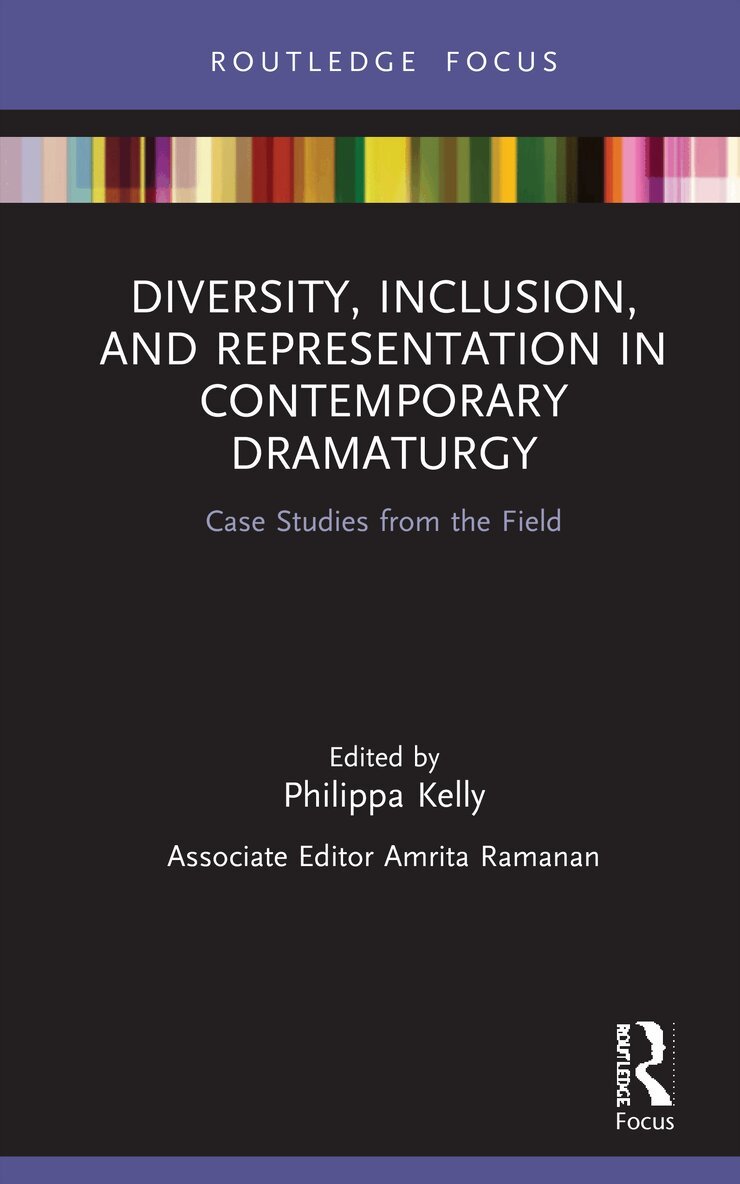
Diversity, Inclusion, and Representation in Contemporary Dramaturgy
Case Studies from the Field
Inbunden, Engelska, 2020
778 kr
Skickas inom 10-15 vardagar
Diversity, Inclusion, and Representation in Contemporary Dramaturgy offers fresh perspectives on how dramaturgs can support a production beyond rigid disciplinary expectations about what information and ideas are useful and how they should be shared.The sixteen contributors to this volume offer personal windows into dramaturgy practice, encouraging theater practitioners, students, and general theater-lovers to imagine themselves as dramaturgs newly inspired by the encounters and enquiries that are the juice of contemporary theater. Each case study is written by a dramaturg whose body of work explores important issues of race, cultural equity, and culturally-specific practices within a wide range of conventions, venues, and communities. The contributors demonstrate the unique capacity of their craft to straddle the ravine between stage and stalls, intention and impact.By unpacking, in the most up-to-date ways, the central question of “Why this play, at this time, for this audience?,” this collection provides valuable insights and dramaturgy tools for scholars and students of Dramaturgy, Directing, and Theater Studies.
2 490 kr
Skickas inom 10-15 vardagar
The essays in Word and Self Estranged in English Texts, 1550-1660, consider diverse historical contexts for writing about 'strangeness'. They draw on current practices of reading to present contrasts and analogies within and between various social understandings. In so doing they reveal an interplay of thematic and stylistic modes that tells us a great deal about how, and why, certain aspects of life and thinking were 'estranged' in sixteenth and seventeenth century thinking. The collection's unique strength is that it makes specific bridges between contemporary perspectives and early modern connotations of strangeness and inhibition. The subjects of these essays are 'strange' to our ways of thinking because of their obvious distance from us in time and culture. And yet, curiously, far from being entirely alien to these texts, some of the most modern thinking-about paradigms, texts, concepts-connects with the early modern in unexpected ways. Milton meets the contemporary 'competent reader', Wittgenstein meets Robert Cawdrey, Shakespeare embraces the teenager, and Marvell matches wits with French mathematician René Thom. Additionally, the early modern texts posit their own 'others', or sites of estrangement-Moorishness, Persian art, even the human body-with which they perform their own astonishing maneuvers of estrangement and alignment. In reading Renaissance works from our own time and inviting them to reflect upon our own time, Word and Self Estranged in English Texts, 1550-1660 offers a vital reinterpretation of early modern texts.
407 kr
Skickas inom 10-15 vardagar
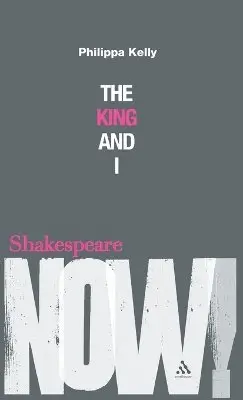
This is the personal form of criticism, focusing on the wide-ranging issues of identity and history raised by "King Lear" by exploring Australians' engagements with the play. Outlaws, irreverent humorists, political underdogs, authoritarians...these are the images of Australians as revealed through the lens of "King Lear". For a very long time there prevailed a generalized view of Australia as a remote outpost ambiguously related to colonial narratives of pioneering hardship. However, starting in the 1970s, a flowering of Australian artefacts (particularly cinema), as well as the financial affordability of travel to Australia, has led to a growing curiosity about the country and a wish to understand its 'narrative'. As much of this narrative comes of people creating culture and society where no laws were believed to have existed, the idea of authority is fundamental, and "King Lear" emerges in an astonishing variety of contexts as we consider the play as a filter for the complexity of Australian social practices."The King and I" moves from 1976 through to 2009, taking moments in a personal history to examine, through the lens of "King Lear", themes of authority, indigenous identity, feminism, and political injustice and unrest. "Shakespeare Now!" is a series of short books that engage imaginatively and often provocatively with the possibilities of Shakespeare's plays. It goes back to the source - the most living language imaginable - and recaptures the excitement, audacity and surprise of Shakespeare. It will return you to the plays with opened eyes.
1 698 kr
Skickas inom 10-15 vardagar
Outlaws, irreverent humorists, political underdogs, authoritarians - and the silhouette, throughout, of a contemporary Australian woman: these are some of the figures who emerge from Philippa Kelly's extraordinary personal tale, The King and I. Kelly uses Shakespeare's King Lear as it has never been used before - to tell the story of Australia and Australians through the intimate journey she makes with Shakespeare's old king, whose struggles and torments are touchstones for the variety, poignancy and humour of Australian life. We hear the shrieking of birds and feel the heat of dusty towns, and we also come to know about important moments in Australia's social and political landscape: about the evolution of women's rights; about the erosion and reclamation of Aboriginal identity and the hardships experienced by transported settlers; and about attitudes toward age and endurance. At the heart of this book is one woman's personal story, and through this story we come to understand many profound and often hilarious features of the land Down Under.