Phillip John Usher - Böcker
Visar alla böcker från författaren Phillip John Usher. Handla med fri frakt och snabb leverans.
4 produkter
4 produkter
1 995 kr
Skickas inom 7-10 vardagar
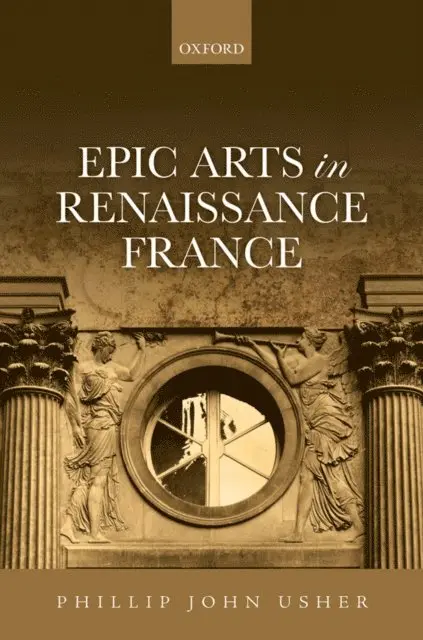
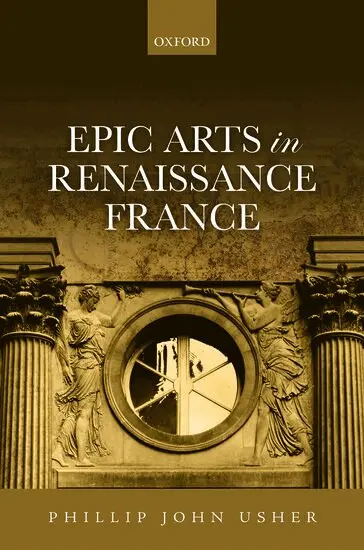
Epic Arts in Renaissance France studies the relationship between epic literature and other art forms such as painting, sculpture, and architecture. Why, the book asks, the epic heroes and themes so ubiquitous in French Renaissance art are widely celebrated whereas the same period's literary epics, frequently maligned, now go unread? To explore this paradox, the book investigates a number of epic building sites, i.e. specific situations in which literary epics either become the basis for realisations in other art forms or somehow contest or compete with them. Beginning with a detour about the appearance of epic heroes (Odysseus and Aeneas) on marriage chests in fifteenth-century Florence, the study traces how French communities of readers, writers, translators, and artists reinvent epic forms in their own--or their patron's--image. Following extended discussion of three galleries in different regions of France, which all depicted key scenes from the classical epics of Homer, Virgil, and Lucan, the book turns to epics written in the period. Chapters of Epic Arts focus on Etienne Dolet's Fata, which praise the victories (but also failures) of François Ier in ways that make it both a continuum of Fontainebleau and a response to the celebration of French defeat in foreign paintings; on Ronsard's Franciade, whose muse was depicted on the façade of the Louvre and whose story was eventually taken up in a long series of paintings by Toussaint Dubreuil; and on Agrippa d'Aubigné's Protestant Tragiques, which allude to, and frequently function as graffiti over, Catholic works of art in Paris and Rome. Situated at the frontier of literary criticism and art history, Epic Arts in Renaissance France is a compelling call for a revaluation of French epic literature and indeed of how we read.
369 kr
Skickas inom 10-15 vardagar
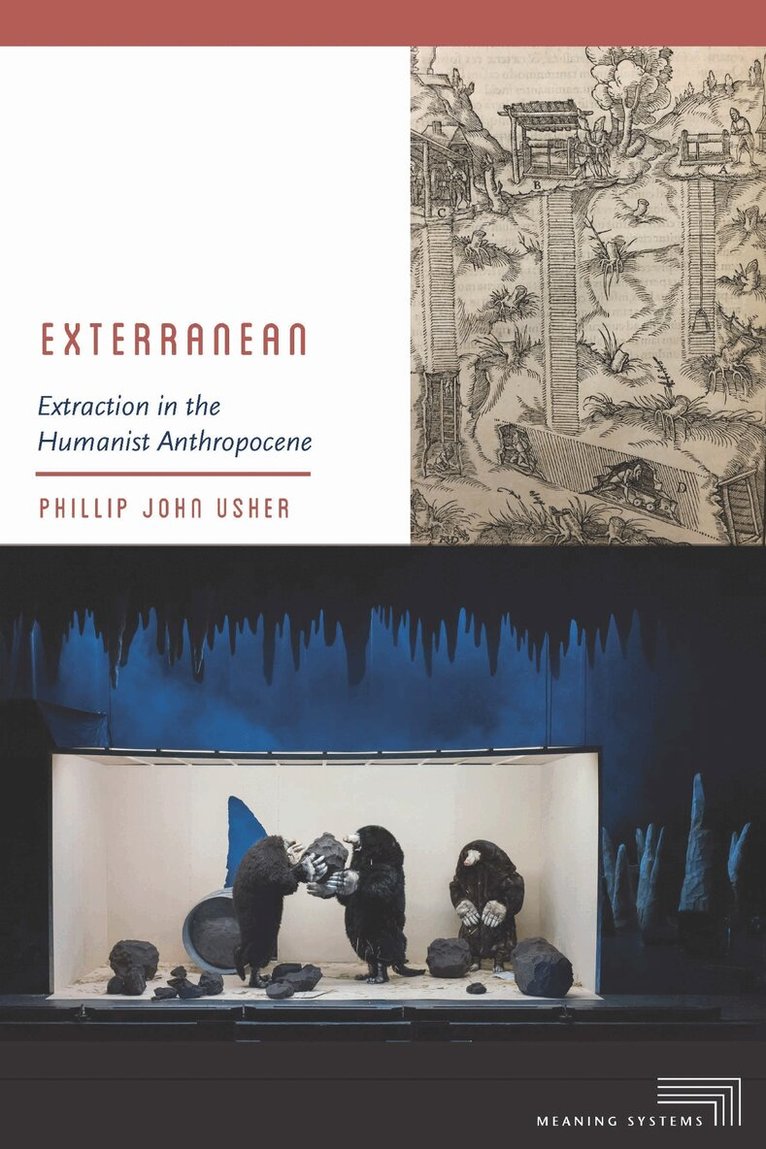
Exterranean concerns the extraction of stuff from the Earth, a process in which matter goes from being sub- to exterranean. By opening up a rich archive of nonmodern texts and images from across Europe, this work offers a bracing riposte to several critical trends in ecological thought. By shifting emphasis from emission to extraction, Usher reorients our perspective away from Earthrise-like globes and shows what is gained by opening the planet to depths within. The book thus maps the material and immaterial connections between the Earth from which we extract, the human and nonhuman agents of extraction, and the extracted matter with which we live daily.Eschewing the self-congratulatory claims of posthumanism, Usher instead elaborates a productive tension between the materially-situated homo of nonmodern humanism and the abstract and aggregated anthropos of the Anthropocene. In dialogue with Michel Serres, Bruno Latour, and other interdisciplinary work in the environmental humanities, Usher shows what premodern material can offer to contemporary theory. Examining textual and visual culture alike, Usher explores works by Ronsard, Montaigne, and Rabelais, early scientific works by Paracelsus and others, as well as objects, engravings, buildings, and the Salt Mines of Wieliczka. Both historicist and speculative in approach, Exterranean lays the groundwork for a comparative ecocriticism that reaches across and untranslates theoretical affordances between periods and languages.
1 294 kr
Skickas inom 10-15 vardagar
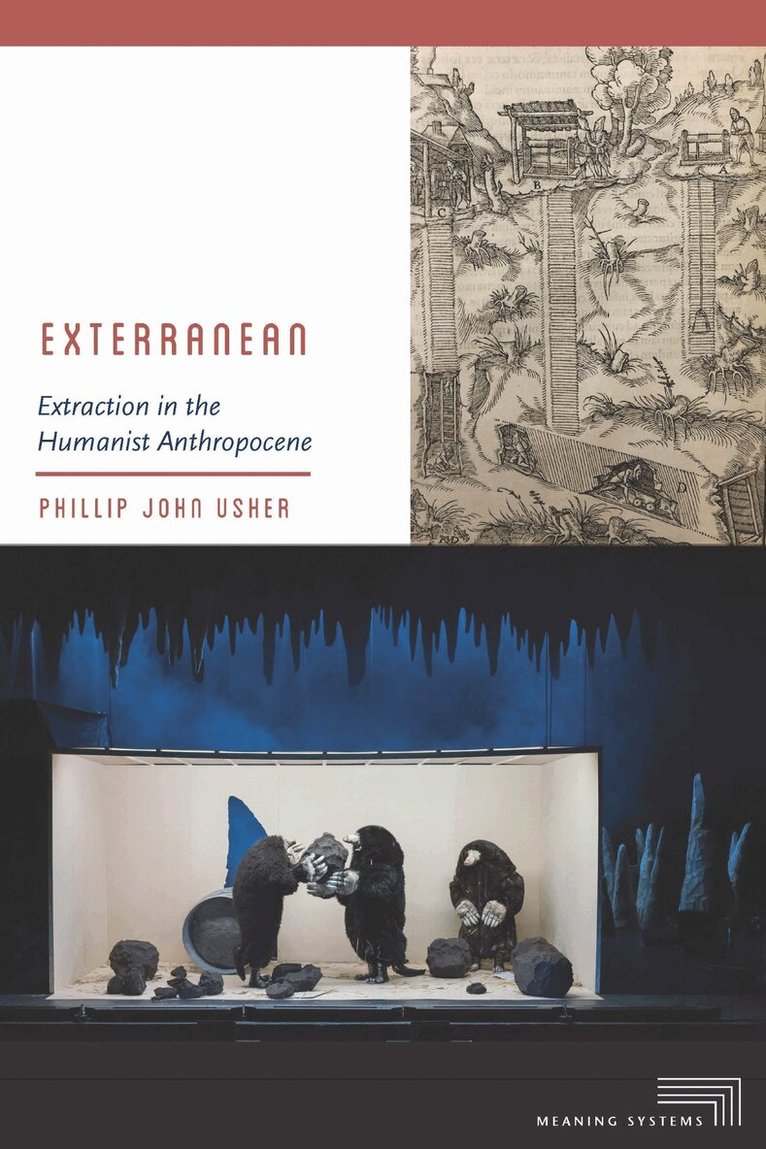
Exterranean concerns the extraction of stuff from the Earth, a process in which matter goes from being sub- to exterranean. By opening up a rich archive of nonmodern texts and images from across Europe, this work offers a bracing riposte to several critical trends in ecological thought. By shifting emphasis from emission to extraction, Usher reorients our perspective away from Earthrise-like globes and shows what is gained by opening the planet to depths within. The book thus maps the material and immaterial connections between the Earth from which we extract, the human and nonhuman agents of extraction, and the extracted matter with which we live daily.Eschewing the self-congratulatory claims of posthumanism, Usher instead elaborates a productive tension between the materially-situated homo of nonmodern humanism and the abstract and aggregated anthropos of the Anthropocene. In dialogue with Michel Serres, Bruno Latour, and other interdisciplinary work in the environmental humanities, Usher shows what premodern material can offer to contemporary theory. Examining textual and visual culture alike, Usher explores works by Ronsard, Montaigne, and Rabelais, early scientific works by Paracelsus and others, as well as objects, engravings, buildings, and the Salt Mines of Wieliczka. Both historicist and speculative in approach, Exterranean lays the groundwork for a comparative ecocriticism that reaches across and untranslates theoretical affordances between periods and languages.
590 kr
Skickas inom 7-10 vardagar
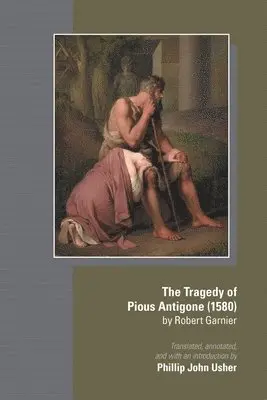
The Tragedy of Pious Antigone (1580) is the first English-language translation of Robert Garnier’s Antigone, ou la Pieté. Written by France’s earliest career tragedian, who also worked in the Paris Parliament and as a counselor at a judicial tribunal in the town of Le Mans, the play draws on various classical sources (especially Seneca, Statius, and Sophocles) to retell the well-known story of a family torn apart by war: as brothers Eteocles and Polynices fight to the death, their sister Antigone and mother Jocasta make repeated calls for peace. Originally published at the height of the French Wars of Religion (1562–1598) that pitted Catholics and Protestants against each other, the five acts of Garnier’s play would have had immediate resonance. Neither extolling nor defending one side or the other, this humanist tragedy, which also anticipates the style of Corneille and Racine, could have been appreciated not only by members of one religious community or the other, but by both as a seemingly non-partisan and earnest lamentation about, and reflection upon, troubled times. This famous story, re-imagined by countless authors including Bertolt Brecht, Jean Anouilh, Griselda Gambaro, Athol Fugard, and many others, is here re-told to emphasize empowered female voices in times of political division.