Phillip M. Richards - Böcker
Visar alla böcker från författaren Phillip M. Richards. Handla med fri frakt och snabb leverans.
6 produkter
6 produkter
207 kr
Skickas inom 10-15 vardagar
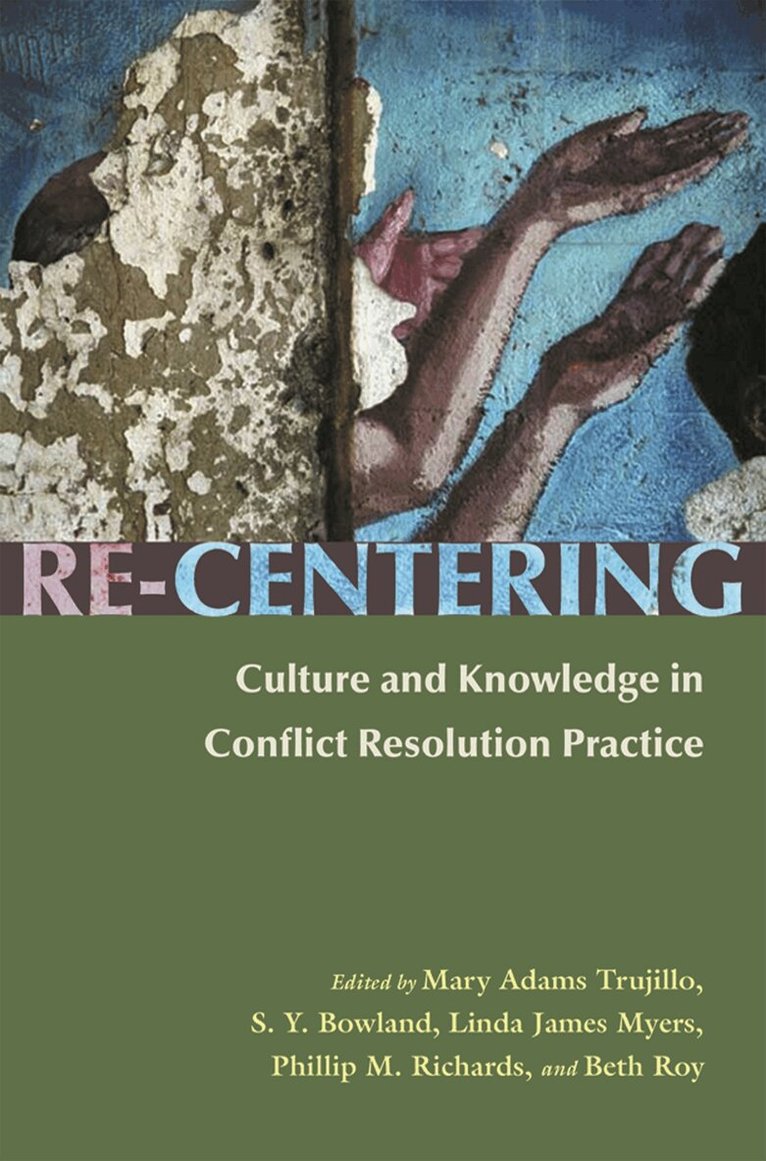
At its core, the field of conflict resolution is about relationships and ways of approaching methods for problem solving. These relationships and approaches vary greatly depending on the individual, society, and historical background. Cultural perspective is thus fundamental to any dispute intervention. ""Re-Centering Culture and Knowledge in Conflict Resolution Practice"" is a collection of essays by scholars and practitioners of conflict resolution and grassroots members of communities whose contributions are not commonly recognized.The volume offers a sampling of the cultural voices essential to effective practice yet often considered marginal in the discourse of conflict resolution. The authors explore the role of culture, race, and oppression in resolving disputes. Drawing on firsthand experience and sound research, the authors address such issues as culturally sensitive mediation practices, the diversity of perspectives in conflict resolution literature, and power dynamics. The first anthology of its kind, this book combines personal narratives with formal scholarship. By melding these varied approaches, the authors seek to inspire activism for social justice in today's multicultural society.
486 kr
Skickas inom 10-15 vardagar
At its core, the field of conflict resolution is about relationships and ways of approaching methods for problem solving. These relationships and approaches vary greatly depending on the individual, society, and historical background. Cultural perspective is thus fundamental to any dispute intervention. ""Re-Centering Culture and Knowledge in Conflict Resolution Practice"" is a collection of essays by scholars and practitioners of conflict resolution and grassroots members of communities whose contributions are not commonly recognized.The volume offers a sampling of the cultural voices essential to effective practice yet often considered marginal in the discourse of conflict resolution. The authors explore the role of culture, race, and oppression in resolving disputes. Drawing on firsthand experience and sound research, the authors address such issues as culturally sensitive mediation practices, the diversity of perspectives in conflict resolution literature, and power dynamics. The first anthology of its kind, this book combines personal narratives with formal scholarship. By melding these varied approaches, the authors seek to inspire activism for social justice in today's multicultural society.
Del 12 - Intersections in Communications and Culture Global Approaches and Transdisciplinary Perspectives
Black Heart
The Moral Life of Recent African American Letters
Häftad, Engelska, 2005
375 kr
Skickas inom 5-8 vardagar
1 200 kr
Skickas inom 7-10 vardagar
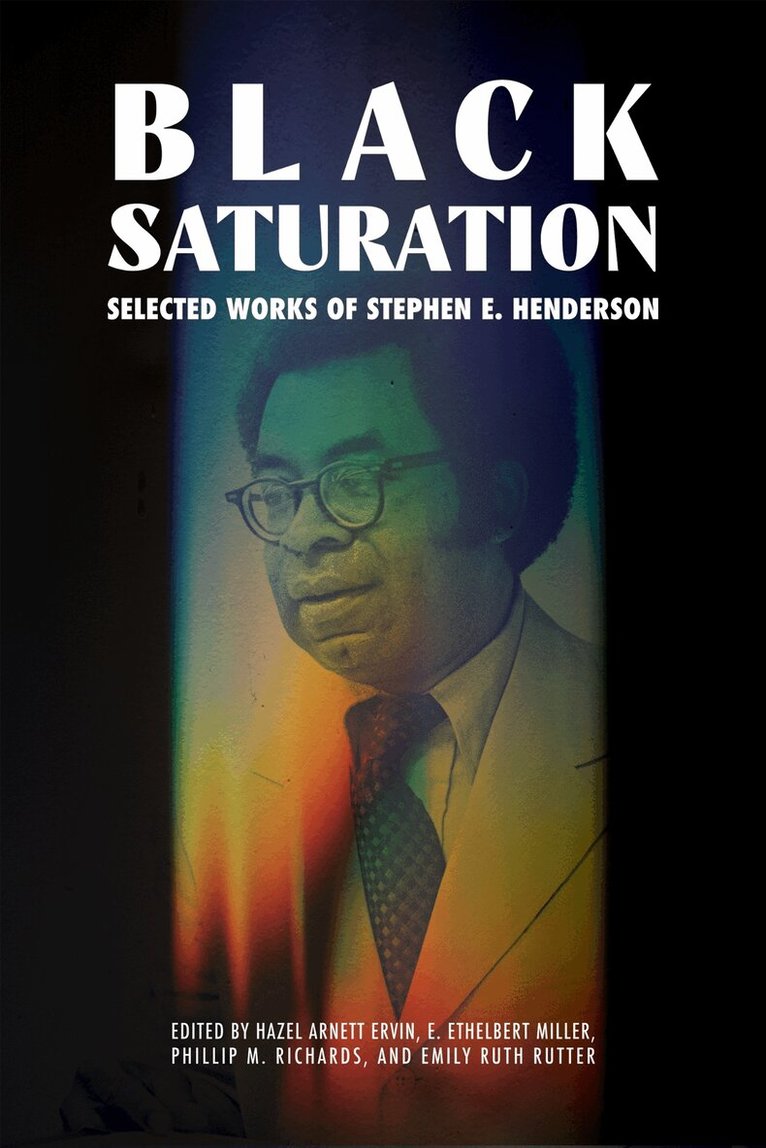
Committed to developing frameworks for defining and evaluating Black poetry, literary scholar Stephen E. Henderson (1925–1997) examined the question: What makes a poem Black? In his critical approach, Henderson prioritized form but not at the expense of source, function, or context, and, in so doing, developed convincing theoretical frameworks for examining African American lyric expressions, especially that of Black Arts poets. Black Saturation: Selected Works of Stephen E. Henderson is designed to expand and enrich understandings of Henderson’s critical corpus by showcasing many of his most essential essays, presentations, and syllabi in a standalone volume.Henderson deftly conceptualized the ways in which aesthetic innovations were interwoven with revolutionary exigencies—a marriage of poetry and politics that became a hallmark of the 1960s and ’70s. While other critics often ignored or fumbled to construct an adequate rubric for evaluating and celebrating Black Arts poetry—penned by Amiri Baraka, Carolyn Rodgers, Sonia Sanchez, Jayne Cortez, Mari Evans, Sarah Webster Fabio, Haki Madhubuti, and Larry Neal, among many others—Henderson constellated a triad of interdependent characteristics (structure, theme, and saturation) through which he examined Black literature in general and poetry in particular.Revisiting Henderson’s scholarship in the third decade of the twenty-first century allows us, on the one hand, to further appreciate his imprint on current scholarship about Black literature, especially poetry, and, on the other, to introduce contemporary students and scholars to his salient theoretical frameworks, not to mention his persuasive critical style.
355 kr
Skickas inom 7-10 vardagar
Committed to developing frameworks for defining and evaluating Black poetry, literary scholar Stephen E. Henderson (1925–1997) examined the question: What makes a poem Black? In his critical approach, Henderson prioritized form but not at the expense of source, function, or context, and, in so doing, developed convincing theoretical frameworks for examining African American lyric expressions, especially that of Black Arts poets. Black Saturation: Selected Works of Stephen E. Henderson is designed to expand and enrich understandings of Henderson’s critical corpus by showcasing many of his most essential essays, presentations, and syllabi in a standalone volume.Henderson deftly conceptualized the ways in which aesthetic innovations were interwoven with revolutionary exigencies—a marriage of poetry and politics that became a hallmark of the 1960s and ’70s. While other critics often ignored or fumbled to construct an adequate rubric for evaluating and celebrating Black Arts poetry—penned by Amiri Baraka, Carolyn Rodgers, Sonia Sanchez, Jayne Cortez, Mari Evans, Sarah Webster Fabio, Haki Madhubuti, and Larry Neal, among many others—Henderson constellated a triad of interdependent characteristics (structure, theme, and saturation) through which he examined Black literature in general and poetry in particular.Revisiting Henderson’s scholarship in the third decade of the twenty-first century allows us, on the one hand, to further appreciate his imprint on current scholarship about Black literature, especially poetry, and, on the other, to introduce contemporary students and scholars to his salient theoretical frameworks, not to mention his persuasive critical style.
804 kr
Skickas inom 10-15 vardagar
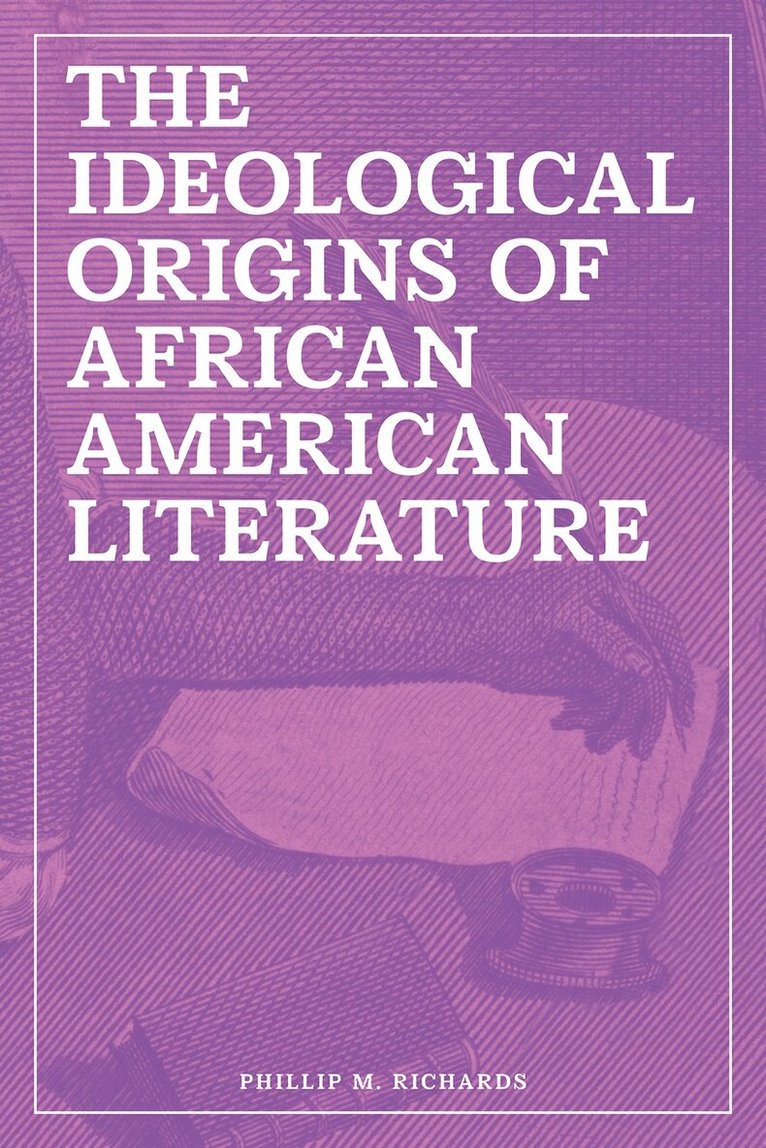
Inquiry into African American literature in recent decades has neglected to probe the intellectual structure of the tradition’s aesthetics and its underlying ideology. In The Ideological Origins of African American Literature, Phillip M. Richards begins this reconstructive work, illuminating the dialectical backstory of black prose and poetry in America. Richards argues that the social and political forces that influenced white literature were uniquely reacted to, absorbed, and often times rejected by African American literary figures — from the eighteenth-century Puritan notions of a God-centered history to the onset of Romanticism and Modernism in the nineteenth and twentieth centuries. Building his case for ideological continuity, Richards surveys a profoundly creative period of 125 years launched by an African American reaction against a racist, mid-eighteenth-century American culture. This epoch in African American literature saw a fusion of Puritan-Protestant culture into a religious and secular worldview, drawing in the poetry of Phillis Wheatley, antebellum slave narratives, Richard Allen, and the periodicals of the ambitious African Methodist Episcopalian movement—all of which would form the underlying foundation of a black Victorian culture. A rising black middle class, Richards argues, would later be secularized by an eroding religious tradition under the pressures of nineteenth-century modernity, the trauma of Jim Crow, and the emerging northern ghetto. Richards further traces the emergence of Romanticism which appeared with white American authors such as Emerson, Thoreau, and Whitman, but would not take shape in African American literature until the likes of W.E.B. Du Bois and Langston Hughes took stock of Anglo-European culture at the end of the nineteenth century. The Ideological Origins of African American Literature illustrates a pattern of black writing that eschews the hegemonic white culture of the day for an evolving black culture that would define an American literary landscape.