Pierre Hazan - Böcker
Visar alla böcker från författaren Pierre Hazan. Handla med fri frakt och snabb leverans.
8 produkter
8 produkter
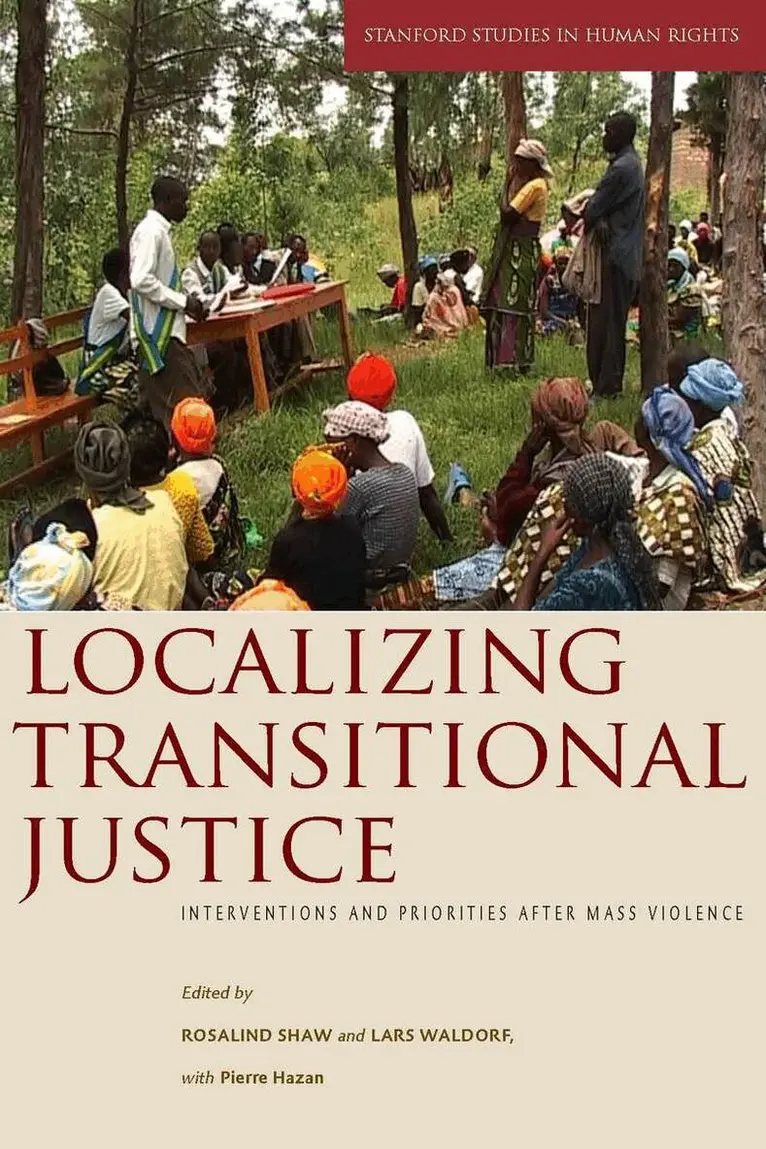
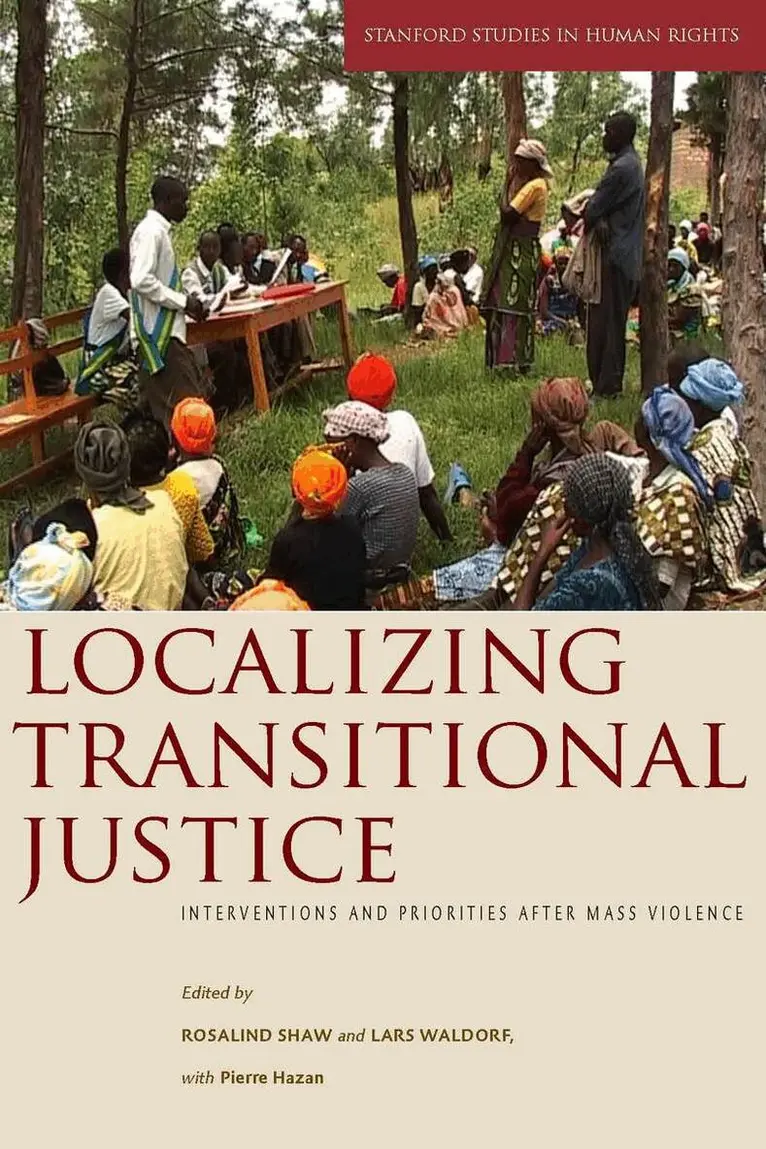
Localizing Transitional Justice
Interventions and Priorities After Mass Violence
Inbunden, Engelska, 2010
1 282 kr
Skickas inom 10-15 vardagar
Through war crimes prosecutions, truth commissions, purges of perpetrators, reparations, and memorials, transitional justice practices work under the assumptions that truth telling leads to reconciliation, prosecutions bring closure, and justice prevents the recurrence of violence. But when local responses to transitional justice destabilize these assumptions, the result can be a troubling disconnection between international norms and survivors' priorities.Localizing Transitional Justice traces how ordinary people respond to—and sometimes transform—transitional justice mechanisms, laying a foundation for more locally responsive approaches to social reconstruction after mass violence and egregious human rights violations. Recasting understandings of culture and locality prevalent in international justice, this vital book explores the complex, unpredictable, and unequal encounter among international legal norms, transitional justice mechanisms, national agendas, and local priorities and practices.
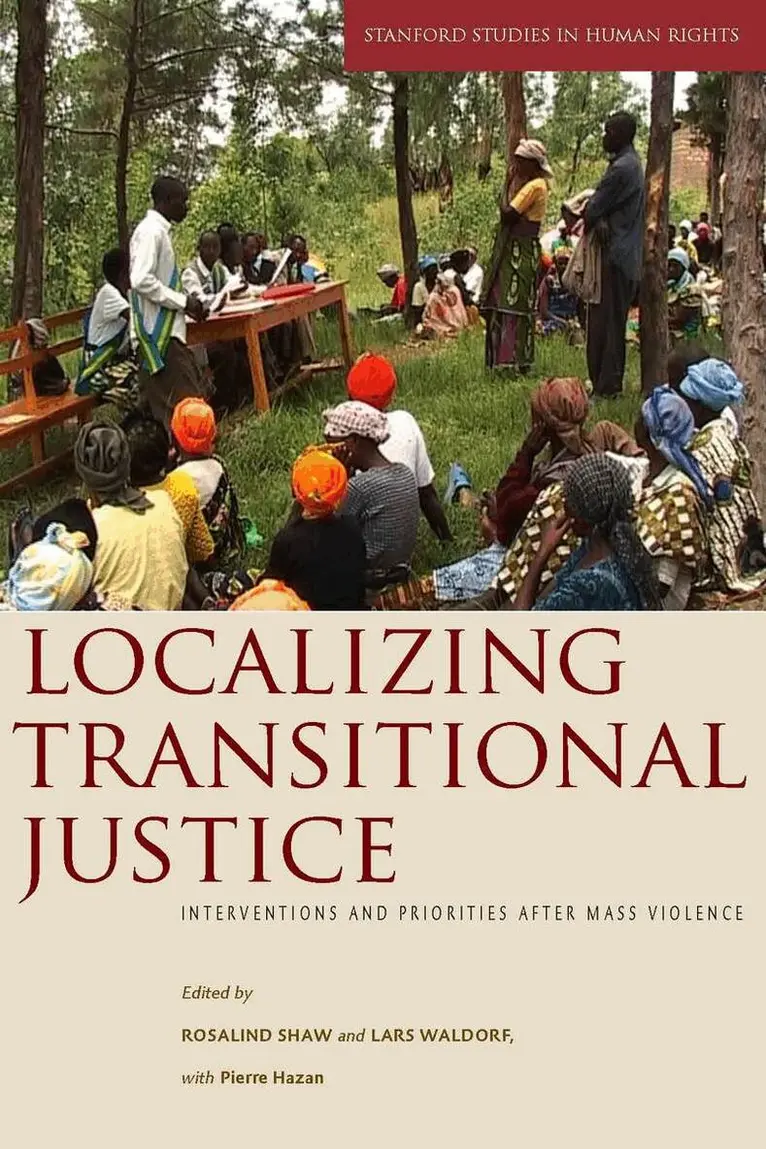
Localizing Transitional Justice
Interventions and Priorities After Mass Violence
Häftad, Engelska, 2010
297 kr
Skickas inom 7-10 vardagar
Through war crimes prosecutions, truth commissions, purges of perpetrators, reparations, and memorials, transitional justice practices work under the assumptions that truth telling leads to reconciliation, prosecutions bring closure, and justice prevents the recurrence of violence. But when local responses to transitional justice destabilize these assumptions, the result can be a troubling disconnection between international norms and survivors' priorities.Localizing Transitional Justice traces how ordinary people respond to—and sometimes transform—transitional justice mechanisms, laying a foundation for more locally responsive approaches to social reconstruction after mass violence and egregious human rights violations. Recasting understandings of culture and locality prevalent in international justice, this vital book explores the complex, unpredictable, and unequal encounter among international legal norms, transitional justice mechanisms, national agendas, and local priorities and practices.
1 181 kr
Skickas inom 10-15 vardagar
In a country or community fractured by war and mass violence, who is to determine "justice" and how it should be achieved? Truth commissions, international courts, and financial restitution are some of the various solutions that have been used in recent years. However, these broad efforts at transitional justice may themselves backfire, and sometimes lead to further injustice. Given its own limitations and battered by political pressure from all sides, transitional justice is an imperfect solution. Yet as Pierre Hazan contends in his new book, it constitutes our best hope for liberation from a cycle of violence begetting vengeance and more violence.Judging War, Judging History takes a hard look at the growing use and influence of truth and reconciliation commissions and the increasing importance of transitional justice in contemporary conflict resolution. From the Nuremberg Trials to current-day conflicts in South Africa, Morocco, and Uganda, Pierre Hazan reveals the extent to which the approaches intended to commemorate events and mend societies after acts of war and violence ultimately intensify the huge task of dealing with victims' claims for recognition. This compelling book uncovers the tensions created by these new reconciliation policies and shows how changing ideas about and approaches to justice influence not only our understanding of the past, but also our contemporary social and political choices.
202 kr
Skickas inom 5-8 vardagar
In a country or community fractured by war and mass violence, who is to determine "justice" and how it should be achieved? Truth commissions, international courts, and financial restitution are some of the various solutions that have been used in recent years. However, these broad efforts at transitional justice may themselves backfire, and sometimes lead to further injustice. Given its own limitations and battered by political pressure from all sides, transitional justice is an imperfect solution. Yet as Pierre Hazan contends in his new book, it constitutes our best hope for liberation from a cycle of violence begetting vengeance and more violence.Judging War, Judging History takes a hard look at the growing use and influence of truth and reconciliation commissions and the increasing importance of transitional justice in contemporary conflict resolution. From the Nuremberg Trials to current-day conflicts in South Africa, Morocco, and Uganda, Pierre Hazan reveals the extent to which the approaches intended to commemorate events and mend societies after acts of war and violence ultimately intensify the huge task of dealing with victims' claims for recognition. This compelling book uncovers the tensions created by these new reconciliation policies and shows how changing ideas about and approaches to justice influence not only our understanding of the past, but also our contemporary social and political choices.
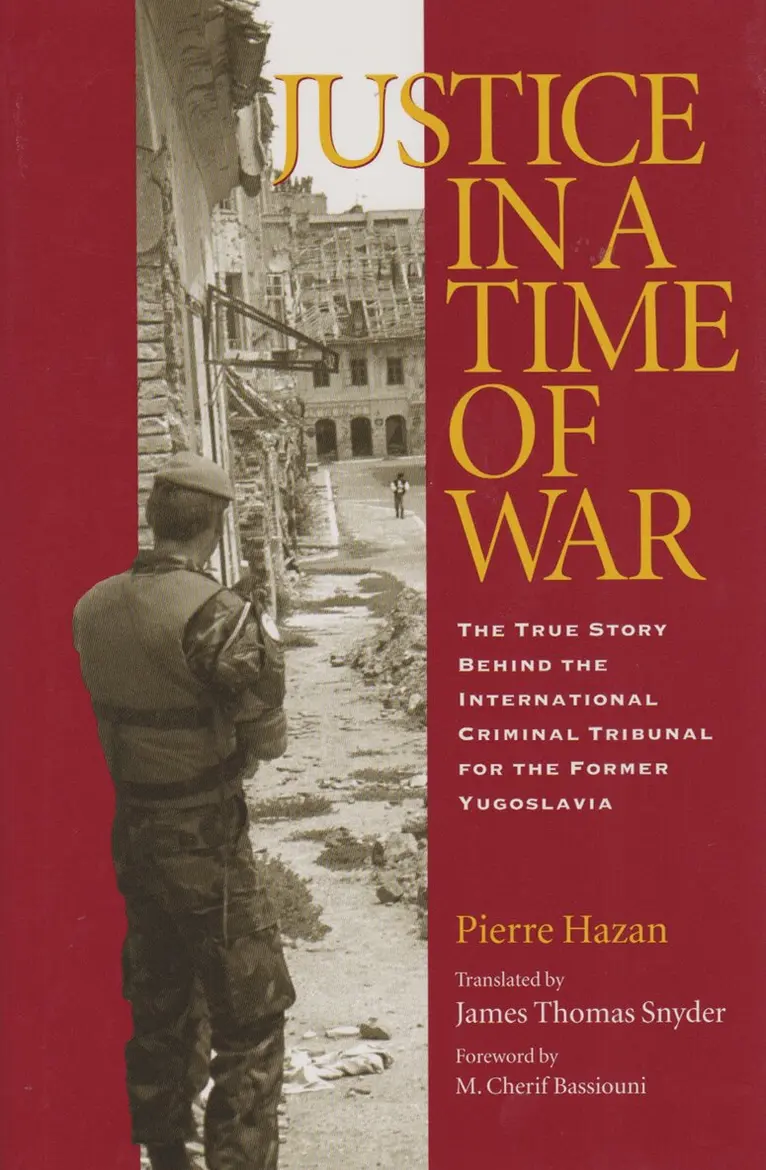
Justice in a Time of War
The True Story Behind the International Criminal Tribunal for the Former Yugoslavia
Inbunden, Engelska, 2004
394 kr
Skickas inom 7-10 vardagar
Can we achieve justice during war? Should law substitute for realpolitik? Can an international court act against the global community that created it? Justice in a Time of War is a translation from the French of the first complete, behind-the-scenes story of the International Criminal Tribunal for the Former Yugoslavia, from its proposal by Balkan journalist Mirko Klarin through recent developments in the trial of Slobodan Milosevic. It is also a meditation on the conflicting intersection of law and politics in achieving justice and peace. Le Monde's review (November 3, 2000) of the original edition recommended Hazan's book as a nuanced account of the Tribunal that should be a must-read for the new leaders of Yugoslavia. "" The story Pierre Hazan tells is that of an institution which, over the course of the years, has managed to escape in large measure from the initial hidden motives and manipulations of those who created it (and not only the Americans)."" With insider interviews filling out every scene, Hazan tells a chaotic story of war that raged while the Western powers cobbled together a tribunal in order to avoid actual intervention. The international lawyers and judges for this rump world court started with nothing - but they ultimately established the tribunal as an unavoidable actor in the Balkans. The West had created the Tribunal in 1993, hoping to threaten international criminals with indictment and thereby force an untenable peace. In 1999, the Tribunal suddenly became useful to NATO countries as a means by which to criminalize Milosevic's regime and to justify military intervention in Kosovo and in Serbia. Ultimately, this hastened the end of Milosevic's rule and led the way to history's first war crimes trial of a former president by an international tribunal. Hazan's account of the Tribunal's formation and evolution questions the contradictory policies of the Western powers and illuminates a cautionary tale for the reader: realizing ideals in a world enamored of realpolitik is a difficult and often haphazard activity.
Justice in a Time of War
The True Story Behind the International Criminal Tribunal for the Former Yugoslavia
Häftad, Engelska, 2004
176 kr
Skickas inom 7-10 vardagar
Can we achieve justice during war? Should law substitute for realpolitik? Can an international court act against the global community that created it? Justice in a Time of War is a translation from the French of the first complete, behind-the-scenes story of the International Criminal Tribunal for the Former Yugoslavia, from its proposal by Balkan journalist Mirko Klarin through recent developments in the trial of Slobodan Milosevic. It is also a meditation on the conflicting intersection of law and politics in achieving justice and peace. Le Monde's review (November 3, 2000) of the original edition recommended Hazan's book as a nuanced account of the Tribunal that should be a must-read for the new leaders of Yugoslavia. "" The story Pierre Hazan tells is that of an institution which, over the course of the years, has managed to escape in large measure from the initial hidden motives and manipulations of those who created it (and not only the Americans)."" With insider interviews filling out every scene, Hazan tells a chaotic story of war that raged while the Western powers cobbled together a tribunal in order to avoid actual intervention. The international lawyers and judges for this rump world court started with nothing - but they ultimately established the tribunal as an unavoidable actor in the Balkans. The West had created the Tribunal in 1993, hoping to threaten international criminals with indictment and thereby force an untenable peace. In 1999, the Tribunal suddenly became useful to NATO countries as a means by which to criminalize Milosevic's regime and to justify military intervention in Kosovo and in Serbia. Ultimately, this hastened the end of Milosevic's rule and led the way to history's first war crimes trial of a former president by an international tribunal. Hazan's account of the Tribunal's formation and evolution questions the contradictory policies of the Western powers and illuminates a cautionary tale for the reader: realizing ideals in a world enamored of realpolitik is a difficult and often haphazard activity.
196 kr
Kommande
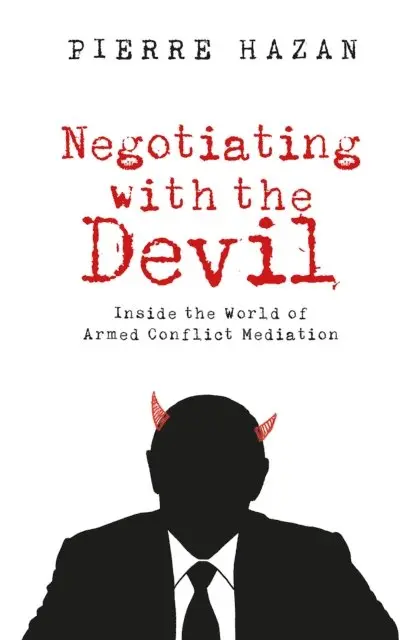
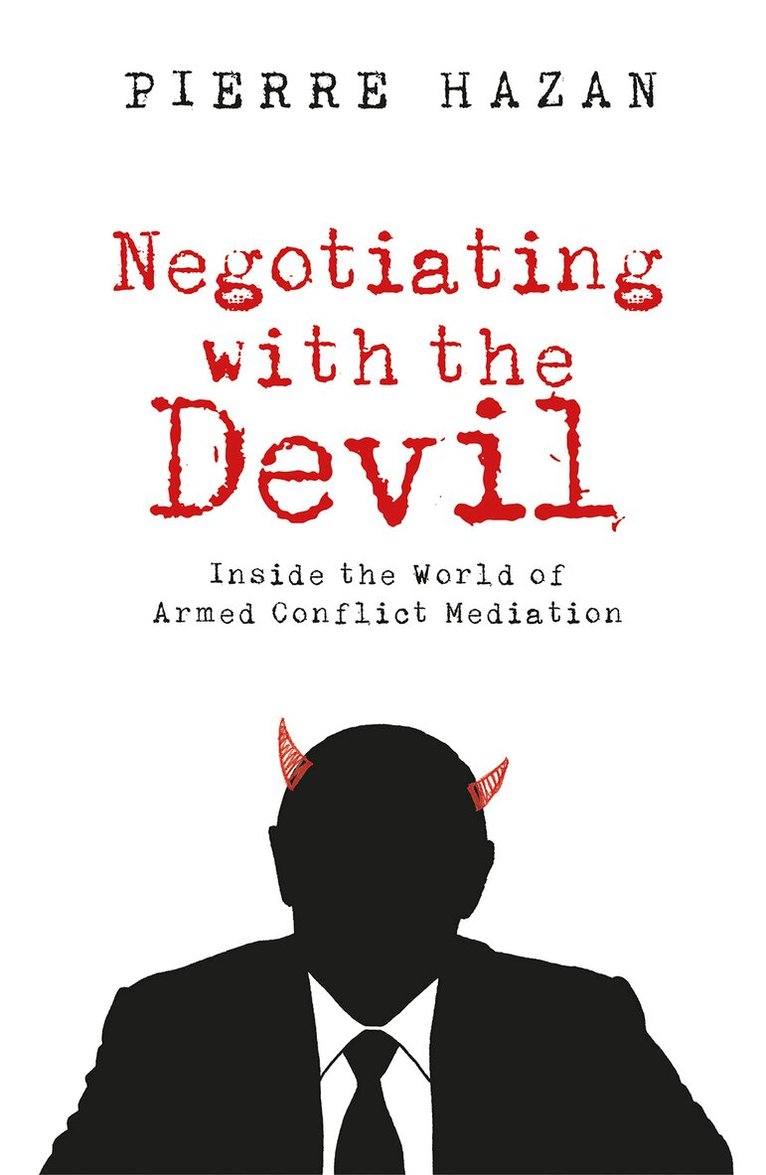
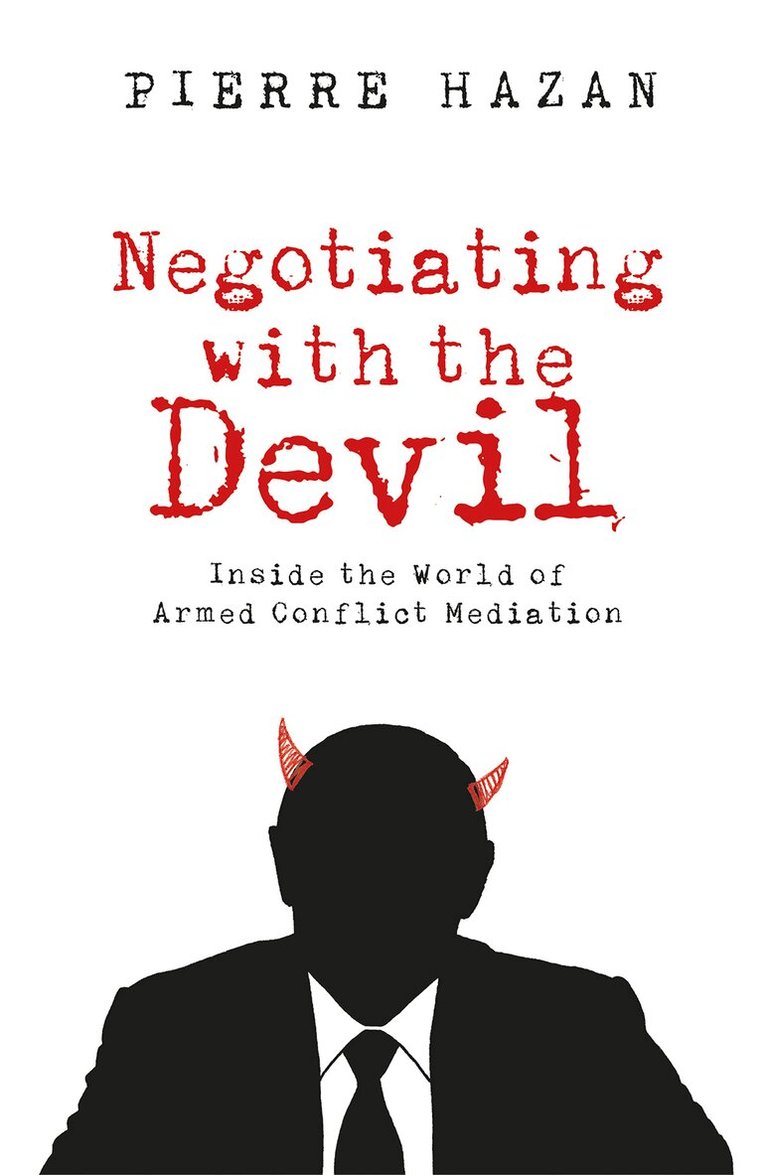
Insider reflections on the political and ethical ‘red lines’ that shape talks with armed interlocutors, be they states or insurgents.After many years in the little-known world of back-channel mediation, helping sworn adversaries to prevent, manage or resolve conflict, Pierre Hazan felt compelled to re-examine the acute practical and ethical dilemmas that affected his work in Bosnia, Ukraine, the Sahel and the Central African Republic. What is the mediator’s responsibility when two belligerents conclude a peace agreement to the detriment of a third? Should mediators never be party to ‘ethnic cleansing’, even if it saves lives? Is a fragile peace worth sacrificing justice for—or will that sacrifice fuel another cycle of violence?In an increasingly dystopian world, Negotiating with the Devil offers both practical guidelines and a moral compass for mediators whose field of action has transformed dramatically. We have gone from soft to hard power; from ‘peace dividends’ to war in Europe; from the end of one Cold War to a new East–West confrontation in Ukraine; from Pax Americana to a multipolar world; from the dream of an all-powerful UN to the organisation’s marginalisation.Against this tapestry, Hazan sheds light on the complex work of those steering peace negotiations, blending vivid first-hand observation with sharp insights into the psychology of compromise as a first step towards peace.
246 kr
Skickas inom 7-10 vardagar
Insider reflections on the political and ethical ‘red lines’ that shape talks with armed interlocutors, be they states or insurgents.After many years in the little-known world of back-channel mediation, helping sworn adversaries to prevent, manage or resolve conflict, Pierre Hazan felt compelled to re-examine the acute practical and ethical dilemmas that affected his work in Bosnia, Ukraine, the Sahel and the Central African Republic. What is the mediator’s responsibility when two belligerents conclude a peace agreement to the detriment of a third? Should mediators never be party to ‘ethnic cleansing’, even if it saves lives? Is a fragile peace worth sacrificing justice for—or will that sacrifice fuel another cycle of violence?In an increasingly dystopian world, Negotiating with the Devil offers both practical guidelines and a moral compass for mediators whose field of action has transformed dramatically. We have gone from soft to hard power; from ‘peace dividends’ to war in Europe; from the end of one Cold War to a new East–West confrontation in Ukraine; from Pax Americana to a multipolar world; from the dream of an all-powerful UN to the organisation’s marginalisation.Against this tapestry, Hazan sheds light on the complex work of those steering peace negotiations, blending vivid first-hand observation with sharp insights into the psychology of compromise as a first step towards peace.