• Fri frakt över 249 kr
  • •
  • Snabba leveranser
  • •
  • Billiga böcker
Kundservice

Du är på sajten för privatpersoner.

Företag, bibliotek eller offentlig verksamhet?

Du handlar på classic.bokus.com, där alla dina funktioner finns intakta.
Till classic.bokus.com
Bokus logotyp. Gå till startsidan.
  • Erbjudanden
  • Student
  • Topplistor
  • Barn & ungdom
  • Bokus Play
  • E-böcker
  • Ljudböcker
  • Pocketböcker
  • Spel och pussel

5% studentrabatt – använd koden KURSBOK27 →

Sidfot

Mina sidor

    Hjälp

    • Kundservice
    • Vanliga frågor och svar
    • Frakt och leverans
    • Retur vid ångerrätt
    • Reklamera vara
    • Betalning
    • Köpvillkor
    • Allmänna villkor
    • Information om webbplatsens tillgänglighet

    Om Bokus

    • Om oss
    • Pressrum
    • För studenter
    • För företag
    • För bibliotek och offentlig verksamhet
    • För leverantörer
    • Hållbarhet

    Populärt

    • Aktuella erbjudanden
    • Presentkort
    • Studentlitteratur
    • Nya böcker
    • Topplistor
    • Signerade böcker
    • Engelska böcker

    Inspiration

    • Boktips
    • BookTok
    • Barnbokskaraktärer
    • Populära författare
    Logotyp för Bokus
    Följ oss på Facebook (extern länk)Följ oss på Instagram (extern länk)Följ oss på YouTube (extern länk)Följ oss på TikTok (extern länk)
    bokus @ CookiesAnpassa cookiesIntegritetspolicyKöpvillkor
    Till Citymail hemsida (extern länk)Till Budbee hemsida (extern länk)Till Postnord hemsida (extern länk)Till Schenker hemsida (extern länk)Till Early Bird hemsida (extern länk)Till Walleys hemsida (extern länk)
    1. Samhälle och politik
    2. Sociologi och antropologi
    3. Antropologi

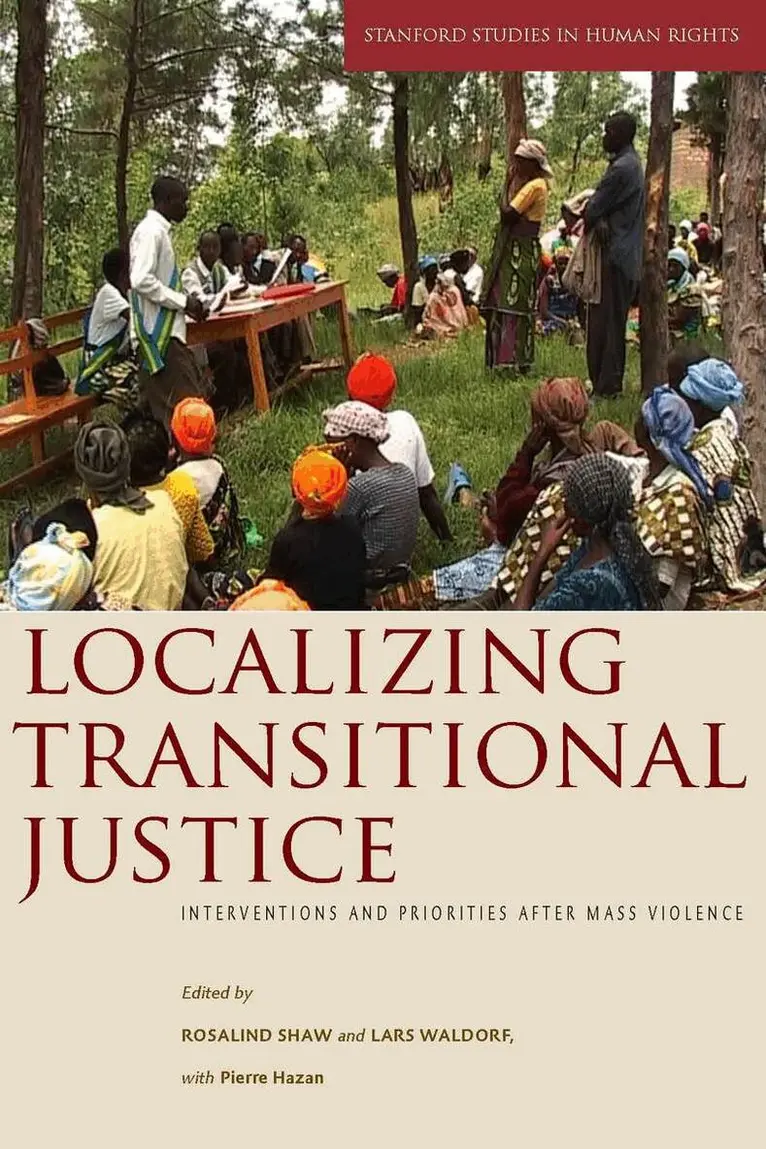
    Localizing Transitional Justice

    Interventions and Priorities After Mass Violence

    AvRosalind Shaw,Lars Waldorf

    Häftad, Engelska, 2010

    Del i serien Stanford Studies in Human Rights

    307 kr

    Beställningsvara. Skickas inom 5-8 vardagar. Fri frakt över 249 kr.

    Beskrivning

    Through war crimes prosecutions, truth commissions, purges of perpetrators, reparations, and memorials, transitional justice practices work under the assumptions that truth telling leads to reconciliation, prosecutions bring closure, and justice prevents the recurrence of violence. But when local responses to transitional justice destabilize these assumptions, the result can be a troubling disconnection between international norms and survivors' priorities.Localizing Transitional Justice traces how ordinary people respond to—and sometimes transform—transitional justice mechanisms, laying a foundation for more locally responsive approaches to social reconstruction after mass violence and egregious human rights violations. Recasting understandings of culture and locality prevalent in international justice, this vital book explores the complex, unpredictable, and unequal encounter among international legal norms, transitional justice mechanisms, national agendas, and local priorities and practices.

    Produktinformation

    • Utgivningsdatum:2010-04-23
    • Mått:152 x 229 x 21 mm
    • Vikt:499 g
    • Format:Häftad
    • Språk:Engelska
    • Serie:Stanford Studies in Human Rights
    • Antal sidor:368
    • Förlag:Stanford University Press
    • ISBN:9780804761505

    Utforska kategorier

    • Antropologi inom Samhälle och politik
    • Folkrätt inom Juridik
    • Politiskt förtryck inom Samhälle och politik

    Mer om författaren

    Rosalind Shaw is Associate Professor of Anthropology at Tufts University. Lars Waldorf is Senior Lecturer in the Centre for Applied Human Rights at the University of York (UK), and previously ran Human Rights Watch's field office in Rwanda. Pierre Hazan is Visiting Professor of Post-Conflict Justice at the Graduate Institute for International and Development Studies in Geneva, Switzerland.

    Recensioner i media

    "This book addresses key questions and present thoroughgoing critiques through a broad and yet detailed approach, providing an essential grounding for further investigations into the contemporary realities of transitional justice."—Federica Guglielmo, Journal of Africa "An impressive panel of nineteen authors with diverse backgrounds and expertise has collectively produced a highly stimulating and challenging book that provides a rare combination of intellectual scrutiny, unconventional thinking, and solid field knowledge. Shaw and Waldorf bring impeccable personal knowledge of at least two countries that have experienced major international, hybrid, and national transitional justice undertakings: Sierra Leone and Rwanda. Their intellectual rigor can be felt throughout the publication, which generally brings great coherence and relevance to an unusually eclectic array of countries and contexts."—Thierry Cruvellier, African Affairs "[Localizing Transitional Justice shows a] compelling sensitivity to the realities of international intervention's complex and sometimes contradictory nature . . . By identifying problems in current conceptualizations of transitional justice, and by urging shifts in thinking that address these issues, the essays in this volume seek to encourage both more responsive and more effective approaches to localized intervention."—Yale Journal of International Law "Localizing Transitional Justice addresses extremely current debates on transitional justice and post-conflict justice interventions, bringing together a range of excellent cases. The contributors are doing some of the most exciting, cutting-edge work in this area. Together, they have written a sterling book which maps out a new field with remarkable breadth and clarity. It will definitely be a key reference in the field."—Rachel Sieder, Centro de Investigaciones y Estudios Superiores en Antropología Social (CIESAS), Mexico "Full of innovative ideas and trenchant critiques, Localizing Transitional Justice offers smart recommendations for how we should approach and conceive of transitional justice today. Among its strengths are its distinction between post-repression and post-war transitional justice, its critique of equating the local with the traditional, and its incisive assessment of the 'toolkit' approach to transitional justice. This is a powerful new contribution to the study of human rights."—Mike McGovern, Yale University