Pierre Singaravélou – Författare
Visar alla böcker från författaren Pierre Singaravélou. Handla med fri frakt och snabb leverans.
7 produkter
7 produkter
1 147 kr
Skickas inom 7-10 vardagar
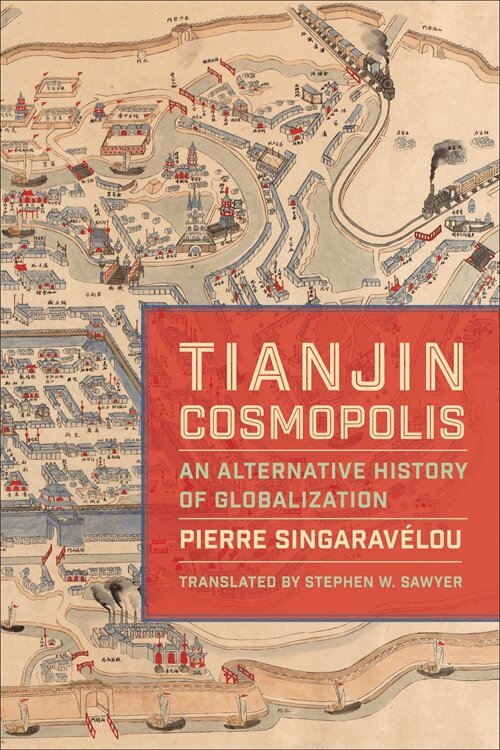
At the turn of the twentieth century, the city of Tianjin was the diplomatic capital of the Middle Kingdom, where foreign consuls met Chinese dignitaries, and a hub of commerce and culture. Yet in the eyes of foreigners, the city remained provincial. After the tumult of the Boxer Rebellion, however, Tianjin transformed, when a little-known international political project turned it for a time into one of the most cosmopolitan places in the world.Pierre Singaravélou tells the story of Tianjin’s emergence as a transnational metropolis, arguing that the city’s experience challenges conventional narratives of the origins of globalization. He focuses on the aftermath of the Boxer Rebellion, when a number of imperial powers established an international military government that sought to modernize the city and its environs. Under its reign, people from all over the West and Asia flocked to Tianjin, in a whirlwind of commercial and cultural exchange. This provisional government embarked on ambitious public works and public health projects, attempting to transform not only the city’s infrastructure but also its residents’ behavior—all while the imperial powers seized large foreign concessions. Singaravélou traces the many tensions of the global city: between accommodation and resistance for Tianjin’s residents, between colonization and internationalization within the provisional government, and between cooperation and competition among the imperial powers. Bringing together global and local perspectives, Tianjin Cosmopolis offers a new vantage point on the imperial globalization of the early twentieth century.
292 kr
Skickas inom 7-10 vardagar
At the turn of the twentieth century, the city of Tianjin was the diplomatic capital of the Middle Kingdom, where foreign consuls met Chinese dignitaries, and a hub of commerce and culture. Yet in the eyes of foreigners, the city remained provincial. After the tumult of the Boxer Rebellion, however, Tianjin transformed, when a little-known international political project turned it for a time into one of the most cosmopolitan places in the world.Pierre Singaravélou tells the story of Tianjin’s emergence as a transnational metropolis, arguing that the city’s experience challenges conventional narratives of the origins of globalization. He focuses on the aftermath of the Boxer Rebellion, when a number of imperial powers established an international military government that sought to modernize the city and its environs. Under its reign, people from all over the West and Asia flocked to Tianjin, in a whirlwind of commercial and cultural exchange. This provisional government embarked on ambitious public works and public health projects, attempting to transform not only the city’s infrastructure but also its residents’ behavior—all while the imperial powers seized large foreign concessions. Singaravélou traces the many tensions of the global city: between accommodation and resistance for Tianjin’s residents, between colonization and internationalization within the provisional government, and between cooperation and competition among the imperial powers. Bringing together global and local perspectives, Tianjin Cosmopolis offers a new vantage point on the imperial globalization of the early twentieth century.
903 kr
Skickas inom 7-10 vardagar
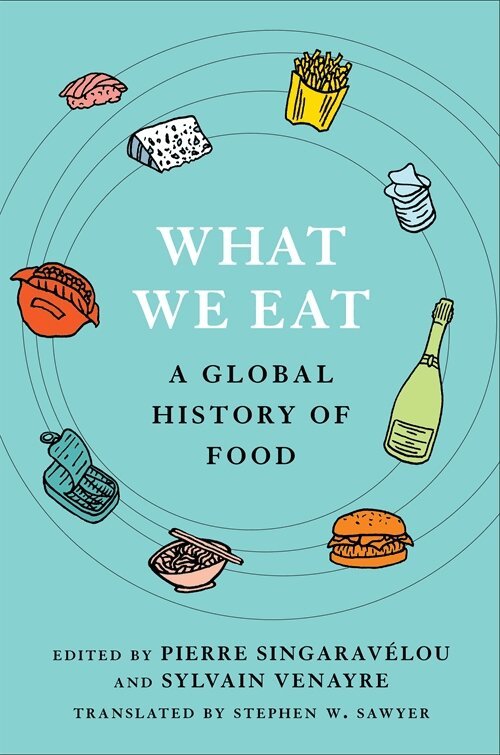
Ketchup seems iconically American, but the word comes from a Southeast Asian anchovy sauce, and today it is made largely from Chinese tomato paste. Japan’s beloved ramen arose from the meeting of Chinese noodles and American wheat flour before attaining worldwide popularity in both gourmet and convenience-food forms. The baguette is mythologized as a product of the French Revolution, but in fact it emerged during late-nineteenth-century urbanization. Colonialism brought baguettes to Vietnam, where street vendors devised a new dish: banh mi, which refugees took with them around the world.Telling these tales and many others, What We Eat explores world history through the lens of the global journeys of nearly ninety food products. Leading historians trace the origins and popularization of items commonly found in supermarkets, showing how each food illuminates wider histories. They consider the tension between the role of cuisine in shaping particular cultural identities and the standardization associated with globalization, and they demonstrate how foods have transformed as different societies have borrowed them. Chapters reveal the surprising sagas of coffee, cornflakes, gin, guacamole, hot dogs, hummus, naan, pet food, pizza, sparkling water, sushi, and many more. At once an intimate and a global history, What We Eat shows readers the everyday items on grocery store shelves in a new light.
219 kr
Skickas inom 7-10 vardagar
Ketchup seems iconically American, but the word comes from a Southeast Asian anchovy sauce, and today it is made largely from Chinese tomato paste. Japan’s beloved ramen arose from the meeting of Chinese noodles and American wheat flour before attaining worldwide popularity in both gourmet and convenience-food forms. The baguette is mythologized as a product of the French Revolution, but in fact it emerged during late-nineteenth-century urbanization. Colonialism brought baguettes to Vietnam, where street vendors devised a new dish: banh mi, which refugees took with them around the world.Telling these tales and many others, What We Eat explores world history through the lens of the global journeys of nearly ninety food products. Leading historians trace the origins and popularization of items commonly found in supermarkets, showing how each food illuminates wider histories. They consider the tension between the role of cuisine in shaping particular cultural identities and the standardization associated with globalization, and they demonstrate how foods have transformed as different societies have borrowed them. Chapters reveal the surprising sagas of coffee, cornflakes, gin, guacamole, hot dogs, hummus, naan, pet food, pizza, sparkling water, sushi, and many more. At once an intimate and a global history, What We Eat shows readers the everyday items on grocery store shelves in a new light.
387 kr
Skickas inom 7-10 vardagar
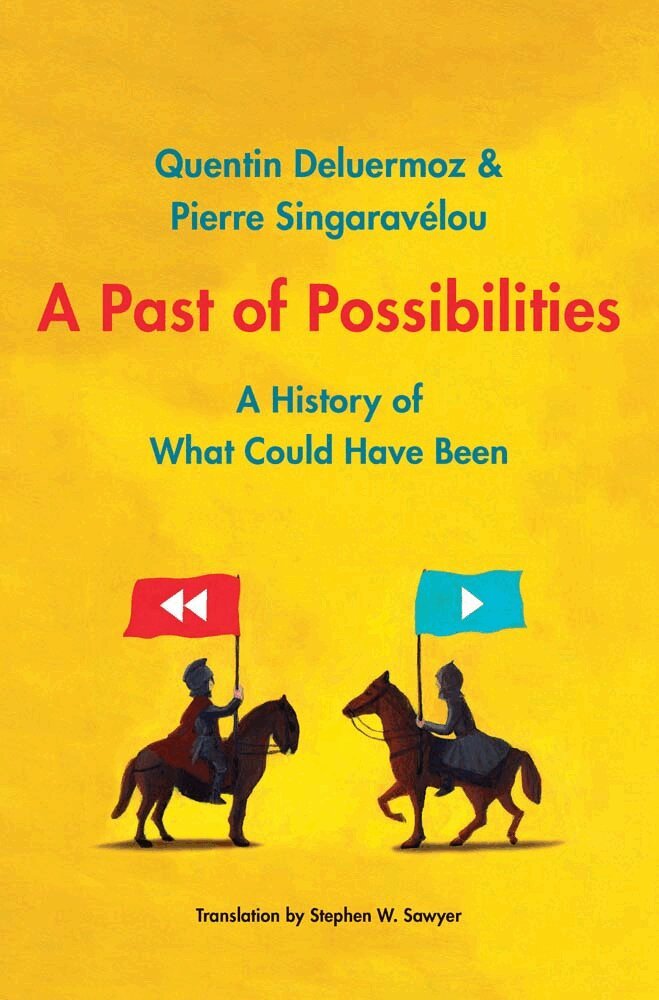
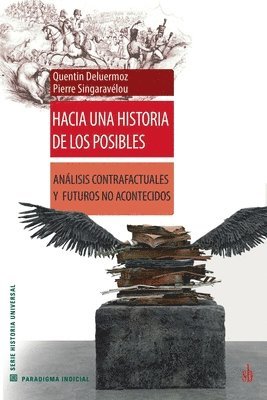
An exploration of hypothetical turning points in history from Ancient Greece to September 11What if history, as we know it, had run another course? Touching on alternate histories of the future and the past, or uchronias, A Past of Possibilities encourages deeper consideration of watershed moments in the course of history. Wide-ranging in scope, it examines the Boxer Rebellion in China, the 1848 revolution in France, and the assassination of Archduke Franz Ferdinand in 1914, and integrates science fiction, history, historiography, sociology, anthropology, and film. In probing the genre of literature and history that is fascinated with hypotheticals surrounding key points in history, Quentin Deluermoz and Pierre Singaravélou reach beyond a mere reimagining of history, exploring the limits and potentials of the futures past. From the most bizarre fiction to serious scientific hypothesis, they provide a survey of the uses of counterfactual histories, methodological issues on the possible in social sciences, and practical proposals for using alternate histories in research and the wider public.
237 kr
Skickas inom 7-10 vardagar
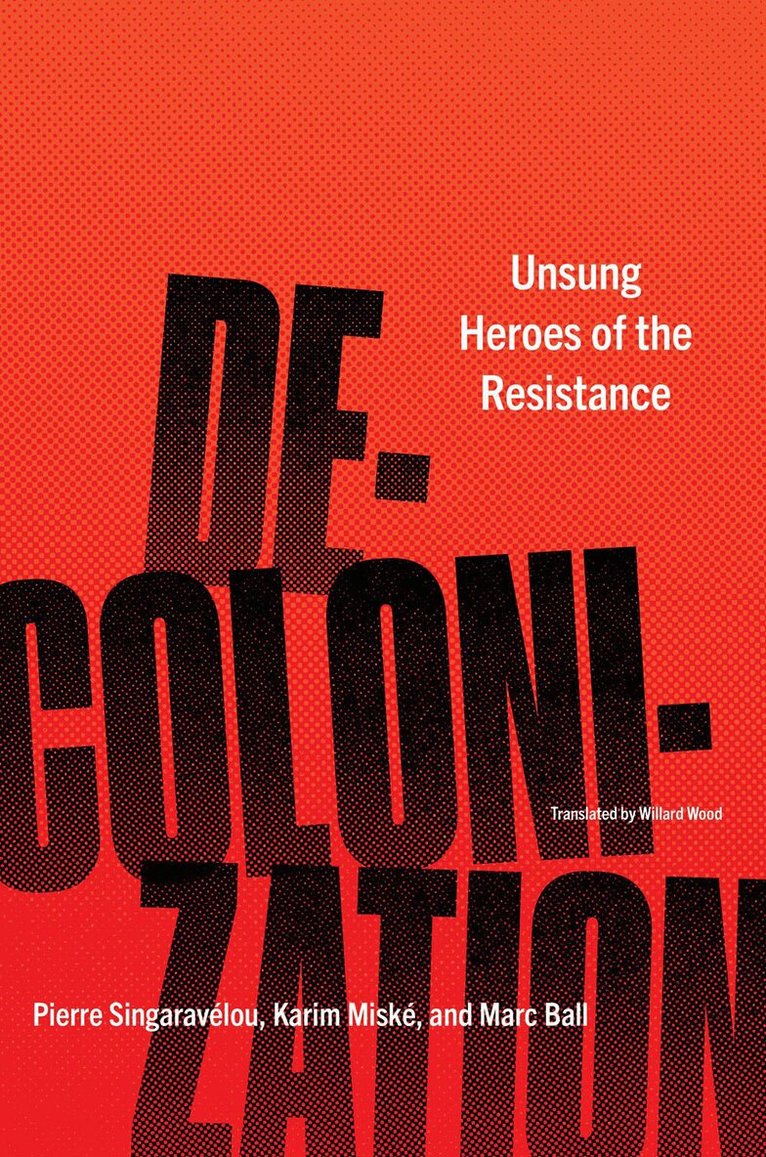
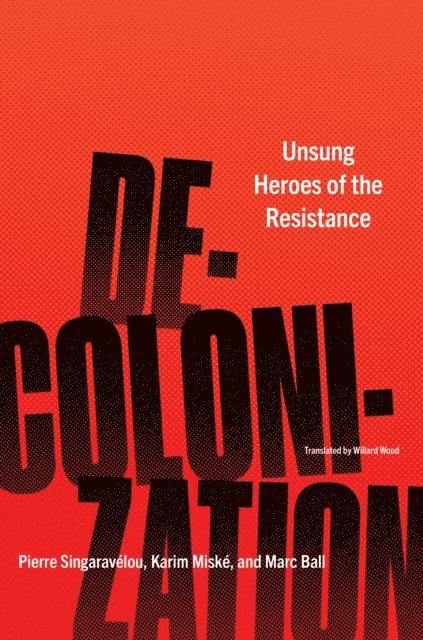
Full of gripping historical vignettes and evocative photographs, an accessible overview of the dynamic figures who resisted colonization, from India, Senegal, and Algeria to Vietnam, Kenya, and Congo.Decolonization started on the very first day of colonization. From the arrival of the Europeans, the peoples of Africa and Asia rose up. No one willingly accepts subjugation, but in order to one day regain freedom, you first and foremost need to stay alive. Faced with the Europeans’ machine guns, the colonized hit back in other ways: from civil disobedience to communist revolution, by way of soccer and literature. It was a struggle marked by infinite patience and unlimited determination, fought by heroic men and women now largely unknown. Condensing a wealth of scholarly research into short, lively chapters, Decolonization brings their extraordinary stories to light: Manikarnika Tambe, the Indian queen who led her troops into battle against the British; Mary Nyanjiru, the Kenyan activist who spearheaded a protest in Nairobi; Lamine Senghor, the Senegalese infantryman who became an anti-colonial militant in Paris; and many more. With them, a current of resistance swept the world, culminating in the independence of almost all the colonies in the 1960s. But at what price? In the atomic India of Indira Gandhi, in the Congo subjected to Mobutu’s dictatorship, or in a London shaken by the rioting of young immigrants, we can see just how crucial it is that we understand and learn from this painful history.
Hacia una historia de los posibles: Análisis contrafactuales y futuros no acontecidos
Häftad, Spanska
354 kr
Skickas inom 3-6 vardagar