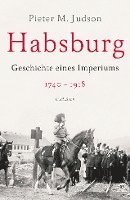
Pieter M. Judson - Böcker
Visar alla böcker från författaren Pieter M. Judson. Handla med fri frakt och snabb leverans.
7 produkter
7 produkter
381 kr
Skickas
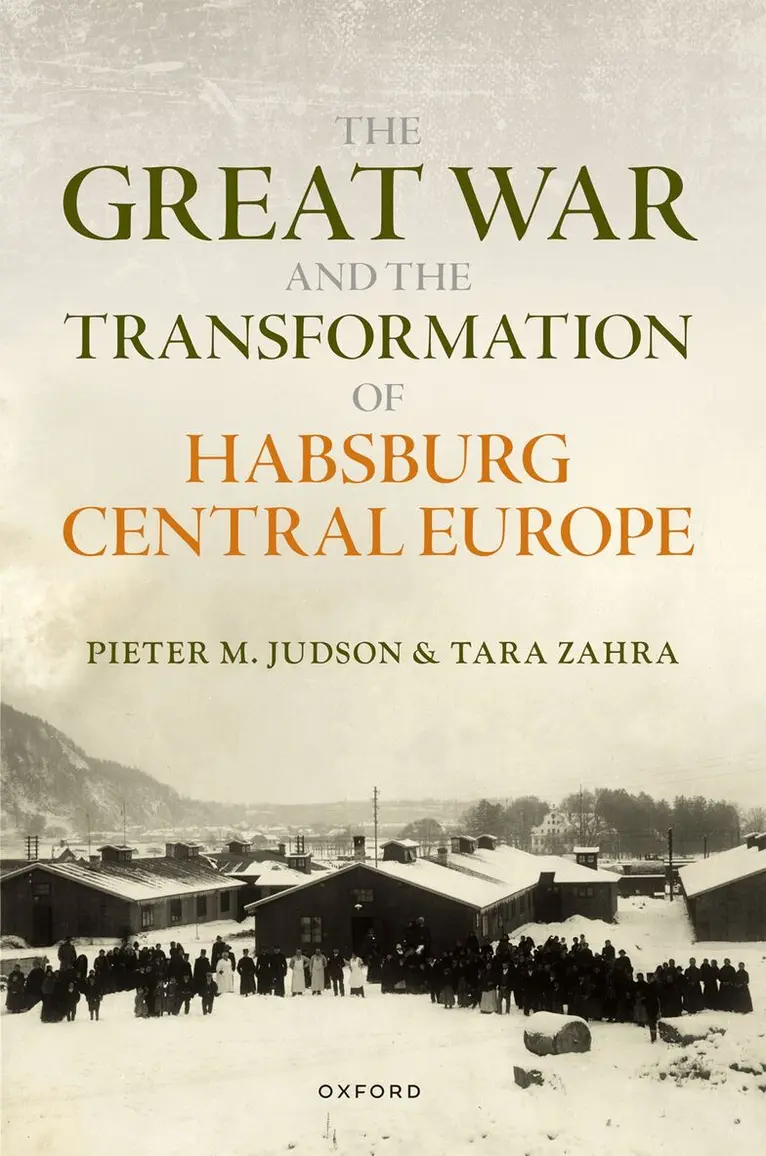
The world's eyes were on Austria-Hungary on June 28, 1914. But both inside and outside of Austria, few could imagine the dramatic consequences of the events in Sarajevo. The popular shock and anger that greeted the assassination did not mean war was a likely or necessary outcome - or, moreover, that the Monarchy itself was destined to disintegrate. The Great War and the Transformation of Habsburg Central Europe examines how the First World War transformed the multinational Austro-Hungarian Monarchy into a fractured landscape of mistrust, scarcity, and dissolution and laid the foundation for the new postwar world. The outcome of the war is not, it argues, evidence of the inherent fragility of multinational polities, and Austria-Hungary was not inevitably doomed to collapse on the eve of the war. Instead, it contends that the Habsburg state laid the groundwork for its own dissolution by turning on its citizens. By imposing military rule, suspending civil rights, fostering suspicions among its citizens based on the languages they spoke, and failing to secure enough food to feed the population, the Habsburg state both created new and exacerbated existing regional, local, religious, and national antagonisms. Over time, severe hardships on the home front, in occupied territories, and in refugee and prisoner-of-war camps spurred widespread resentment and eroded loyalty to the monarchy. But even as the empire frayed, the war inspired innovative institutions, social welfare measures, and new understandings of citizenship that continued to influence postwar Europe.By analyzing these experiences at multiple scales - local, imperial, and international - award-winning historians Pieter Judson and Tara Zahra here reframe the history of the late Habsburg Monarchy. Taking a deliberately broad chronology, they demonstrate that the war can no longer be treated as a mere postscript to Austria-Hungary's biography. Instead, the war was a constitutive factor in the Empire's dissolution, in the domestic relations that structured society in the successor states, and in the birth of the new world order institutionalized by the Paris Peace Conferences. Both the experience and outcome of the First World War in the Habsburg Monarchy held implications that extended far beyond its borders, and beyond the lives of its forty-eight million citizens.
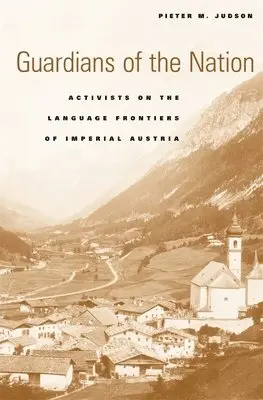
Guardians of the Nation
Activists on the Language Frontiers of Imperial Austria
Inbunden, Engelska, 2007
794 kr
Skickas inom 10-15 vardagar
In the decades leading up to World War I, nationalist activists in imperial Austria labored to transform linguistically mixed rural regions into politically charged language frontiers. They hoped to remake local populations into polarized peoples and their villages into focal points of the political conflict that dominated the Habsburg Empire. But they often found bilingual inhabitants accustomed to cultural mixing who were stubbornly indifferent to identifying with only one group.Using examples from several regions, including Bohemia and Styria, Pieter Judson traces the struggle to consolidate the loyalty of local populations for nationalist causes. Whether German, Czech, Italian, or Slovene, the nationalists faced similar and unexpected difficulties in their struggle to make nationalism relevant to local concerns and to bind people permanently to one side. Judson examines the various strategies of the nationalist activists, from the founding of minority language schools to the importation of colonists from other regions, from projects to modernize rural economies to the creation of a tourism industry. By 1914, they succeeded in projecting a public perception of nationalist frontiers, but largely failed to nationalize the populations.Guardians of the Nation offers a provocative challenge to standard accounts of the march of nationalism in modern Europe.
288 kr
Skickas inom 7-10 vardagar
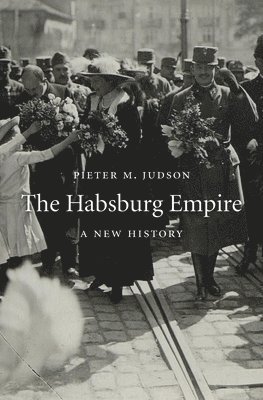
A EuropeNow Editor’s PickA Choice Outstanding Academic Title of the Year“Pieter M. Judson’s book informs and stimulates. If his account of Habsburg achievements, especially in the 18th century, is rather starry-eyed, it is a welcome corrective to the black legend usually presented. Lucid, elegant, full of surprising and illuminating details, it can be warmly recommended to anyone with an interest in modern European history.”—Tim Blanning, Wall Street Journal“This is an engaging reappraisal of the empire whose legacy, a century after its collapse in 1918, still resonates across the nation-states that replaced it in central Europe. Judson rejects conventional depictions of the Habsburg empire as a hopelessly dysfunctional assemblage of squabbling nationalities and stresses its achievements in law, administration, science and the arts.”—Tony Barber, Financial Times“Spectacularly revisionist… Judson argues that…the empire was a force for progress and modernity… This is a bold and refreshing book… Judson does much to destroy the picture of an ossified regime and state.”—A. W. Purdue, Times Higher Education“Judson’s reflections on nations, states and institutions are of broader interest, not least in the current debate on the future of the European Union after Brexit.”—Annabelle Chapman, Prospect
1 956 kr
Skickas inom 3-6 vardagar
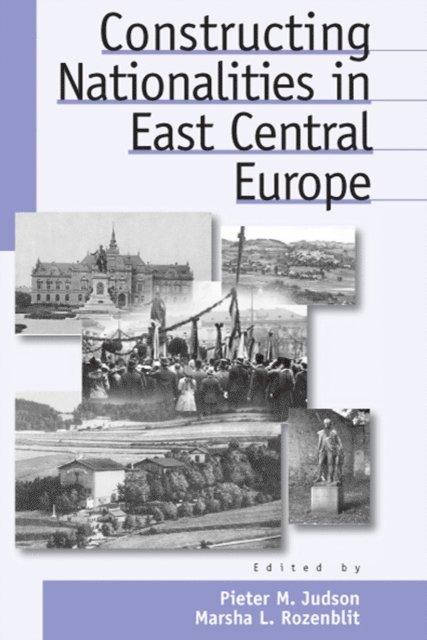
The hundred years between the revolutions of 1848 and the population transfers of the mid-twentieth century saw the nationalization of culturally complex societies in East Central Europe. This fact has variously been explained in terms of modernization, state building and nation-building theories, each of which treats the process of nationalization as something inexorable, a necessary component of modernity. Although more recently social scientists gesture to the contingencies that may shape these larger developments, this structural approach makes scholars far less attentive to the “hard work” (ideological, political, social) undertaken by individuals and groups at every level of society who tried themselves to build “national” societies. The essays in this volume make us aware of how complex, multi-dimensional and often contradictory this nationalization process in East Central Europe actually was. The authors document attempts and failures by nationalist politicians, organizations, activists and regimes from 1848 through 1948 to give East-Central Europeans a strong sense of national self-identification. They remind us that only the use of dictatorial powers in the 20th century could actually transform the fantasy of nationalization into a reality, albeit a brutal one.
496 kr
Skickas inom 3-6 vardagar
The hundred years between the revolutions of 1848 and the population transfers of the mid-twentieth century saw the nationalization of culturally complex societies in East Central Europe. This fact has variously been explained in terms of modernization, state building and nation-building theories, each of which treats the process of nationalization as something inexorable, a necessary component of modernity. Although more recently social scientists gesture to the contingencies that may shape these larger developments, this structural approach makes scholars far less attentive to the “hard work” (ideological, political, social) undertaken by individuals and groups at every level of society who tried themselves to build “national” societies. The essays in this volume make us aware of how complex, multi-dimensional and often contradictory this nationalization process in East Central Europe actually was. The authors document attempts and failures by nationalist politicians, organizations, activists and regimes from 1848 through 1948 to give East-Central Europeans a strong sense of national self-identification. They remind us that only the use of dictatorial powers in the 20th century could actually transform the fantasy of nationalization into a reality, albeit a brutal one.
398 kr
Skickas inom 3-6 vardagar
240 kr
Skickas inom 3-6 vardagar