Pietro Navarra - Böcker
Visar alla böcker från författaren Pietro Navarra. Handla med fri frakt och snabb leverans.
6 produkter
6 produkter
672 kr
Skickas inom 7-10 vardagar
Polarization in Western democracies and the collapse of centrally planned economies have led to calls for a redefinition of the state's core functions. This volume explores shifting conceptions of constitutional political economy anchoring the state from the viewpoints of theory, systems, and applications. It suggests why changes may be desirable and how these might be implemented. Part I addresses the writing of constitutions, the dynamic between constitutional order and civil society, the struggle between competitive and protectionist interests, the conflict between protecting expectations and moral evolution, and the role of cultural explanations of constitutional development patterns. Part II explores the interplay between electoral systems and constitutional engineering, the internal costs of political coalitions, and campaigns in pluralistic elections. Part III investigates the quest for stable, dynamic federal states with particular attention to opportunities and pitfalls in Europe. With a foreword and contributions from Nobel Laureate James M. Buchanan.
357 kr
Skickas inom 7-10 vardagar
Polarization in Western democracies and the collapse of centrally planned economies have led to calls for a redefinition of the state's core functions. This volume explores shifting conceptions of constitutional political economy anchoring the state from the viewpoints of theory, systems, and applications. It suggests why changes may be desirable and how these might be implemented. Part I addresses the writing of constitutions, the dynamic between constitutional order and civil society, the struggle between competitive and protectionist interests, the conflict between protecting expectations and moral evolution, and the role of cultural explanations of constitutional development patterns. Part II explores the interplay between electoral systems and constitutional engineering, the internal costs of political coalitions, and campaigns in pluralistic elections. Part III investigates the quest for stable, dynamic federal states with particular attention to opportunities and pitfalls in Europe. With a foreword and contributions from Nobel Laureate James M. Buchanan.
1 363 kr
Skickas inom 7-10 vardagar
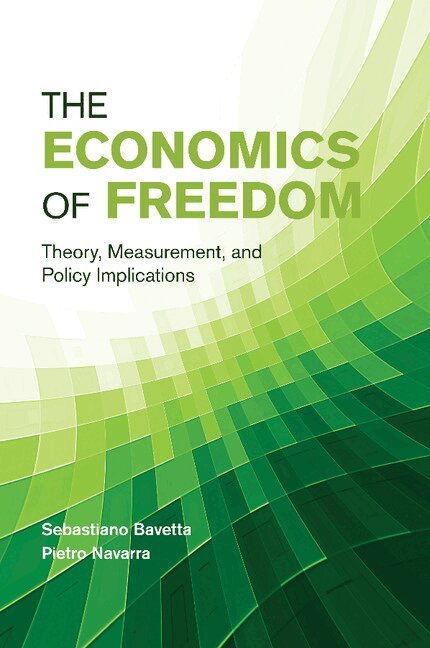
What is freedom? Can we measure it? Does it affect policy? This book develops an original measure of freedom called 'Autonomy Freedom', consistent with J. S. Mill's view of autonomy, and applies it to issues in policy and political design. The work pursues three aims. First, it extends classical liberalism beyond exclusive reliance on negative freedom so as to take autonomous behavior explicitly into account. Second, it grounds on firm conceptual foundations a new standard in the measurement of freedom that can be fruitfully coupled with existing gauges. Third, it shows empirically that individual preferences for redistribution and cross-country differences in welfare spending in Organisation for Economic Co-operation and Development (OECD) countries are driven by the degree of 'autonomy freedom' that individuals enjoy. By means of an interdisciplinary approach and a sophisticated econometric methodology, the book takes an explicit stand in defense of freedom and sets the basis for a liberalism based upon people's actions and institutions.
850 kr
Skickas inom 7-10 vardagar
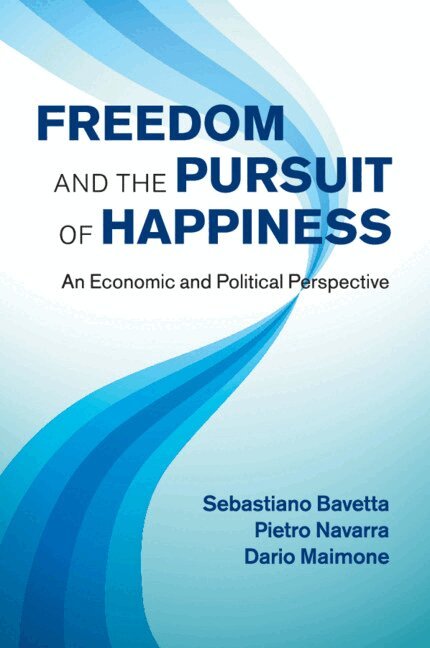
This book is about the relationship between different concepts of freedom and happiness. The book's authors distinguish three concepts for which an empirical measure exists: opportunity to choose (negative freedom), capability to choose (positive freedom), and autonomy to choose (autonomy freedom). They also provide a comprehensive account of the relationship between freedom and well-being by comparing channels through which freedoms affect quality of life. The book also explores whether the different conceptions of freedom complement or replace each other in the determination of the level of well-being. In so doing, the authors make freedoms a tool for policy making and are able to say which conception is the most effective for well-being, as circumstances change. The results have implications for a justification of a free society: maximizing freedoms is good for its favorable consequences upon individual well-being, a fundamental value for the judgment of human advantage.
441 kr
Skickas inom 7-10 vardagar
What is freedom? Can we measure it? Does it affect policy? This book develops an original measure of freedom called 'Autonomy Freedom', consistent with J. S. Mill's view of autonomy, and applies it to issues in policy and political design. The work pursues three aims. First, it extends classical liberalism beyond exclusive reliance on negative freedom so as to take autonomous behavior explicitly into account. Second, it grounds on firm conceptual foundations a new standard in the measurement of freedom that can be fruitfully coupled with existing gauges. Third, it shows empirically that individual preferences for redistribution and cross-country differences in welfare spending in Organisation for Economic Co-operation and Development (OECD) countries are driven by the degree of 'autonomy freedom' that individuals enjoy. By means of an interdisciplinary approach and a sophisticated econometric methodology, the book takes an explicit stand in defense of freedom and sets the basis for a liberalism based upon people's actions and institutions.
428 kr
Skickas inom 7-10 vardagar
This book is about the relationship between different concepts of freedom and happiness. The book's authors distinguish three concepts for which an empirical measure exists: opportunity to choose (negative freedom), capability to choose (positive freedom), and autonomy to choose (autonomy freedom). They also provide a comprehensive account of the relationship between freedom and well-being by comparing channels through which freedoms affect quality of life. The book also explores whether the different conceptions of freedom complement or replace each other in the determination of the level of well-being. In so doing, the authors make freedoms a tool for policy making and are able to say which conception is the most effective for well-being, as circumstances change. The results have implications for a justification of a free society: maximizing freedoms is good for its favorable consequences upon individual well-being, a fundamental value for the judgment of human advantage.