Pilar Martinez Benedi - Böcker
Visar alla böcker från författaren Pilar Martinez Benedi. Handla med fri frakt och snabb leverans.
3 produkter
3 produkter
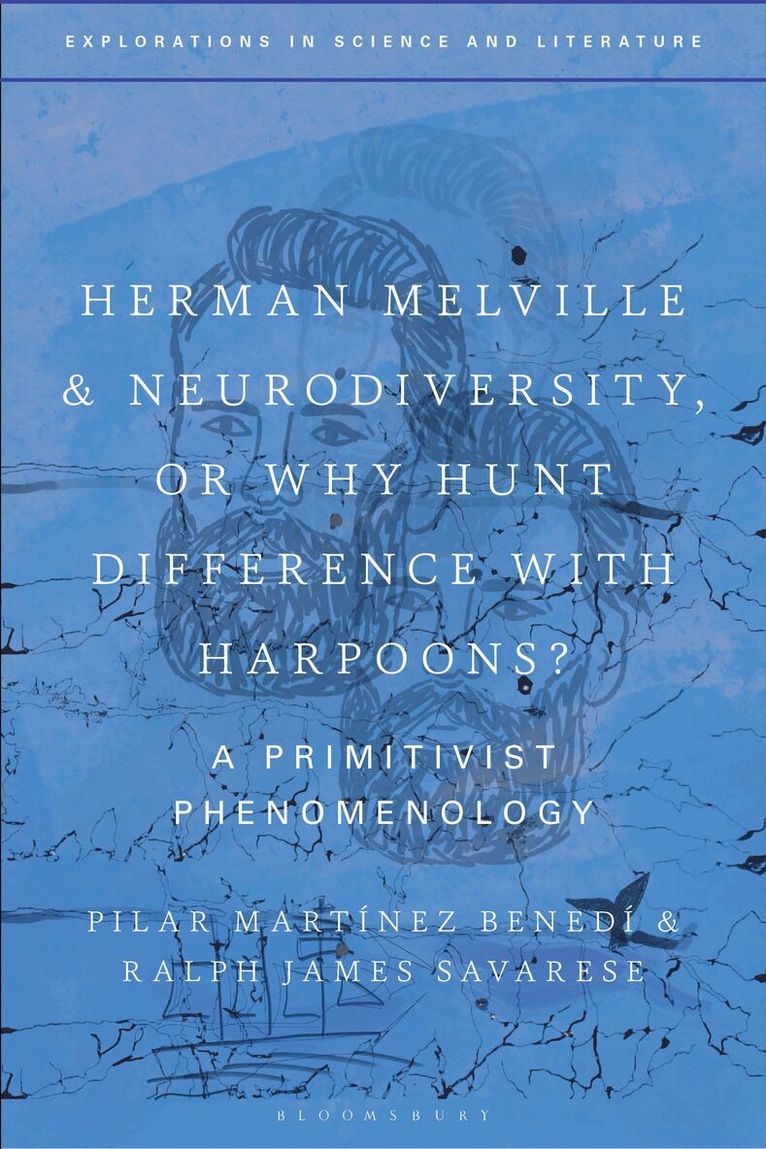
Herman Melville and Neurodiversity, or Why Hunt Difference with Harpoons?
A Primitivist Phenomenology
Inbunden, Engelska, 2024
1 391 kr
Skickas inom 10-15 vardagar
Focusing on the difference between lower-level perceptual processes in the “neural unconscious” and higher-order thought in the frontal lobes, this open access book shows how Herman Melville sought to reclaim the fluid world of the sensory, with its precategorical and radically egalitarian impulses. By studying this previously underexamined facet of Melville’s work, this book offers an essential corrective to the “pathology paradigm,” which demonizes departures from a neurological norm and feasts on pejorative categorization. The neurodiversity movement arose precisely as a response to how so-called “mental disorders” have been described, understood, and treated. Unlike standard neuroscientific or psychiatric investigation, Melville’s work doesn’t strive to explain typical functioning through the negative and, in the process, to shore up a regime of normalcy. To the contrary, it exploits the lack of congealed diagnoses in the 19th Century, much more neutrally asking the question: what can an atypical body-mind do? Steeped in current studies about autism, Alzheimer’s, Capgras and Fregoli syndromes, Mirror-touch synesthesia, phantom limb syndrome, stuttering, and tinnitus, and fully conversant with Melville scholarship, Phenomenological Primitives demonstrates what the humanities can contribute to the sciences and what the sciences can contribute to the humanities.The ebook editions of this book are available open access under a CC BY-NC-ND 4.0 licence on bloomsburycollections.com. Open access was funded in part by Grinnell College.
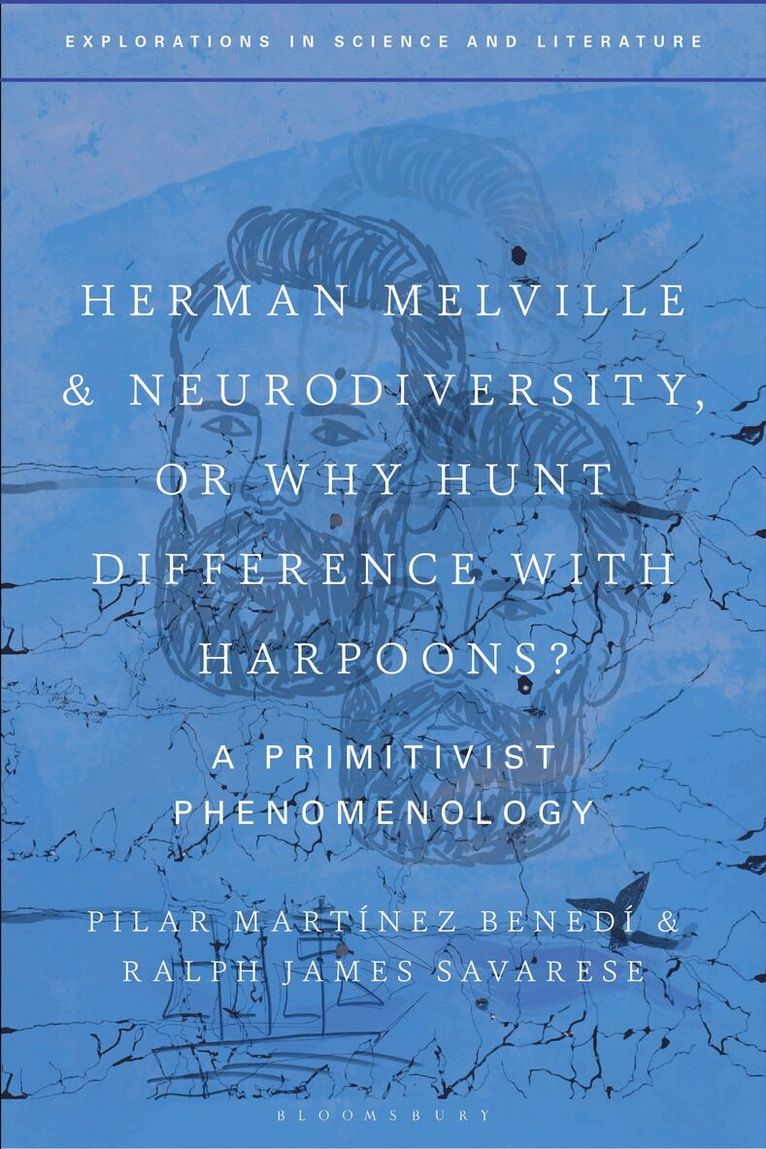
Herman Melville and Neurodiversity, or Why Hunt Difference with Harpoons?
A Primitivist Phenomenology
Häftad, Engelska, 2026
557 kr
Kommande
Focusing on the difference between lower-level perceptual processes in the “neural unconscious” and higher-order thought in the frontal lobes, this open access book shows how Herman Melville sought to reclaim the fluid world of the sensory, with its precategorical and radically egalitarian impulses. By studying this previously underexamined facet of Melville’s work, this book offers an essential corrective to the “pathology paradigm,” which demonizes departures from a neurological norm and feasts on pejorative categorization. The neurodiversity movement arose precisely as a response to how so-called “mental disorders” have been described, understood, and treated. Unlike standard neuroscientific or psychiatric investigation, Melville’s work doesn’t strive to explain typical functioning through the negative and, in the process, to shore up a regime of normalcy. To the contrary, it exploits the lack of congealed diagnoses in the 19th Century, much more neutrally asking the question: what can an atypical body-mind do? Steeped in current studies about autism, Alzheimer’s, Capgras and Fregoli syndromes, Mirror-touch synesthesia, phantom limb syndrome, stuttering, and tinnitus, and fully conversant with Melville scholarship, Phenomenological Primitives demonstrates what the humanities can contribute to the sciences and what the sciences can contribute to the humanities.The ebook editions of this book are available open access under a CC BY-NC-ND 4.0 licence on bloomsburycollections.com. Open access was funded in part by Grinnell College.
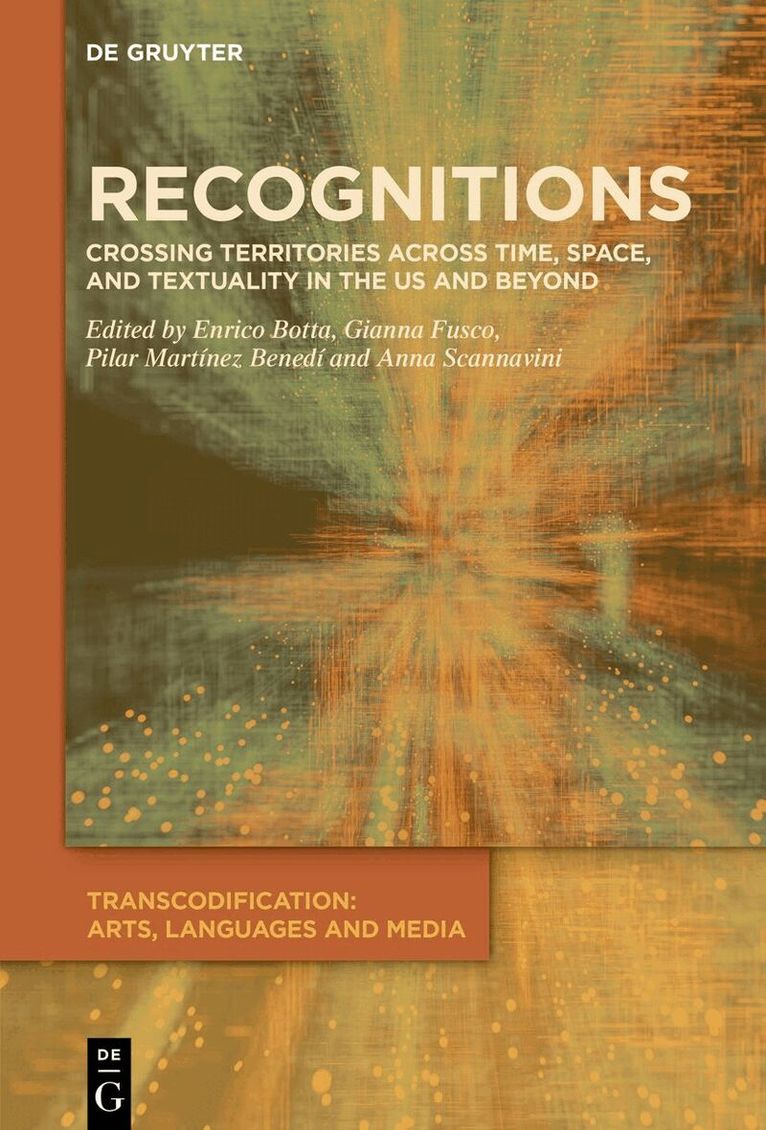
Recognitions
Crossing Territories across Time, Space, and Textuality in the US and Beyond
Inbunden, Engelska, 2024
1 594 kr
Skickas inom 3-6 vardagar
This volume offers a critical exploration of the many ways in which transcodification acts at the intersection of literature, art, history, and social and cultural artifacts to foster instances of recognition in the US. Recognition covers a wealth of meanings: from the mere acknowledgement of existence, validity or legality, or appreciation of something as valuable, to the identification of something as known or familiar. Accordingly, this volume deals with different struggles for recognition. One focus of the volume is the assessment of artistic achievement in relation to a so-called original, with essays concerned with cultural codes and with the role that translation, adaptation, and cross-cultural encounters have played in US artistic and literary productions. A second, parallel, strand focuses on the fight for political and social inclusion, or on the dynamics beneath the recognition of group and gender identities, to explore how activism and artistic/literary productions challenge received identity boundaries and accepted social and cultural hierarchies. Bringing together recognition and transcodification/transculturality, the book deconstructs crystalized and codified categories and celebrates the crossing of boundaries.