Ralph James Savarese - Böcker
Visar alla böcker från författaren Ralph James Savarese. Handla med fri frakt och snabb leverans.
4 produkter
4 produkter
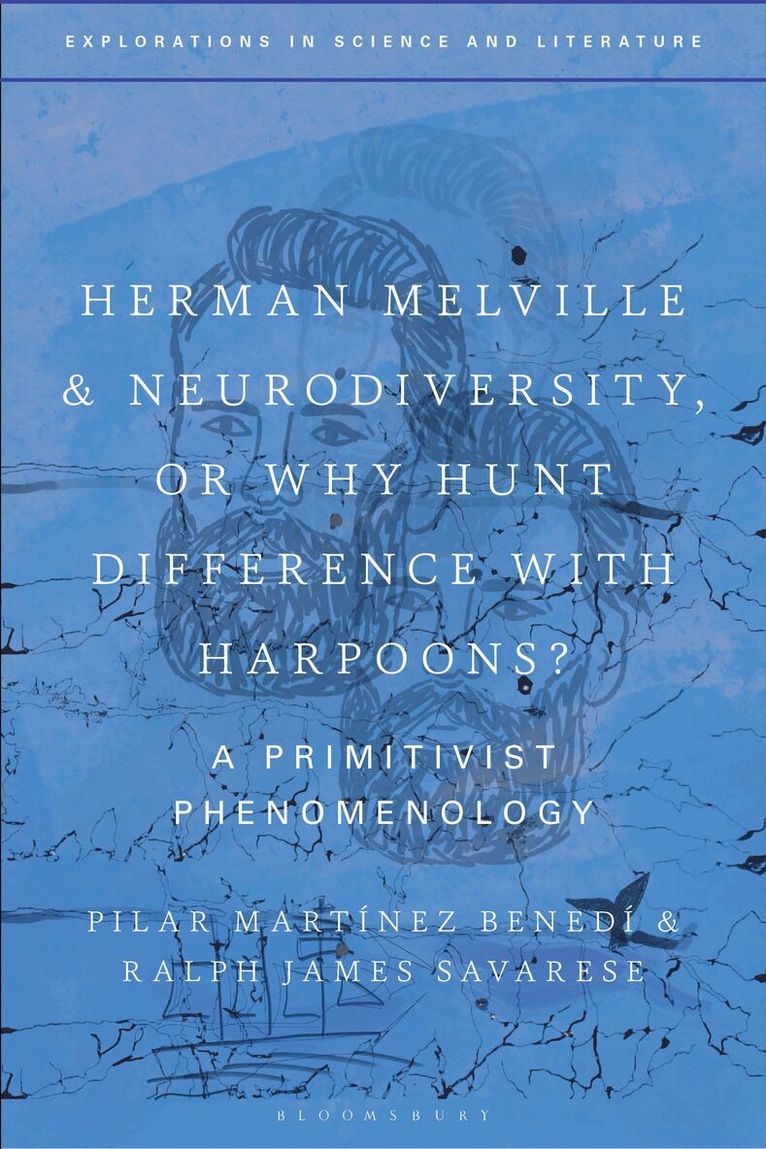
Herman Melville and Neurodiversity, or Why Hunt Difference with Harpoons?
A Primitivist Phenomenology
Inbunden, Engelska, 2024
1 391 kr
Skickas inom 10-15 vardagar
Focusing on the difference between lower-level perceptual processes in the “neural unconscious” and higher-order thought in the frontal lobes, this open access book shows how Herman Melville sought to reclaim the fluid world of the sensory, with its precategorical and radically egalitarian impulses. By studying this previously underexamined facet of Melville’s work, this book offers an essential corrective to the “pathology paradigm,” which demonizes departures from a neurological norm and feasts on pejorative categorization. The neurodiversity movement arose precisely as a response to how so-called “mental disorders” have been described, understood, and treated. Unlike standard neuroscientific or psychiatric investigation, Melville’s work doesn’t strive to explain typical functioning through the negative and, in the process, to shore up a regime of normalcy. To the contrary, it exploits the lack of congealed diagnoses in the 19th Century, much more neutrally asking the question: what can an atypical body-mind do? Steeped in current studies about autism, Alzheimer’s, Capgras and Fregoli syndromes, Mirror-touch synesthesia, phantom limb syndrome, stuttering, and tinnitus, and fully conversant with Melville scholarship, Phenomenological Primitives demonstrates what the humanities can contribute to the sciences and what the sciences can contribute to the humanities.The ebook editions of this book are available open access under a CC BY-NC-ND 4.0 licence on bloomsburycollections.com. Open access was funded in part by Grinnell College.
Herman Melville and Neurodiversity, or Why Hunt Difference with Harpoons?
A Primitivist Phenomenology
Häftad, Engelska, 2026
557 kr
Kommande
Focusing on the difference between lower-level perceptual processes in the “neural unconscious” and higher-order thought in the frontal lobes, this open access book shows how Herman Melville sought to reclaim the fluid world of the sensory, with its precategorical and radically egalitarian impulses. By studying this previously underexamined facet of Melville’s work, this book offers an essential corrective to the “pathology paradigm,” which demonizes departures from a neurological norm and feasts on pejorative categorization. The neurodiversity movement arose precisely as a response to how so-called “mental disorders” have been described, understood, and treated. Unlike standard neuroscientific or psychiatric investigation, Melville’s work doesn’t strive to explain typical functioning through the negative and, in the process, to shore up a regime of normalcy. To the contrary, it exploits the lack of congealed diagnoses in the 19th Century, much more neutrally asking the question: what can an atypical body-mind do? Steeped in current studies about autism, Alzheimer’s, Capgras and Fregoli syndromes, Mirror-touch synesthesia, phantom limb syndrome, stuttering, and tinnitus, and fully conversant with Melville scholarship, Phenomenological Primitives demonstrates what the humanities can contribute to the sciences and what the sciences can contribute to the humanities.The ebook editions of this book are available open access under a CC BY-NC-ND 4.0 licence on bloomsburycollections.com. Open access was funded in part by Grinnell College.
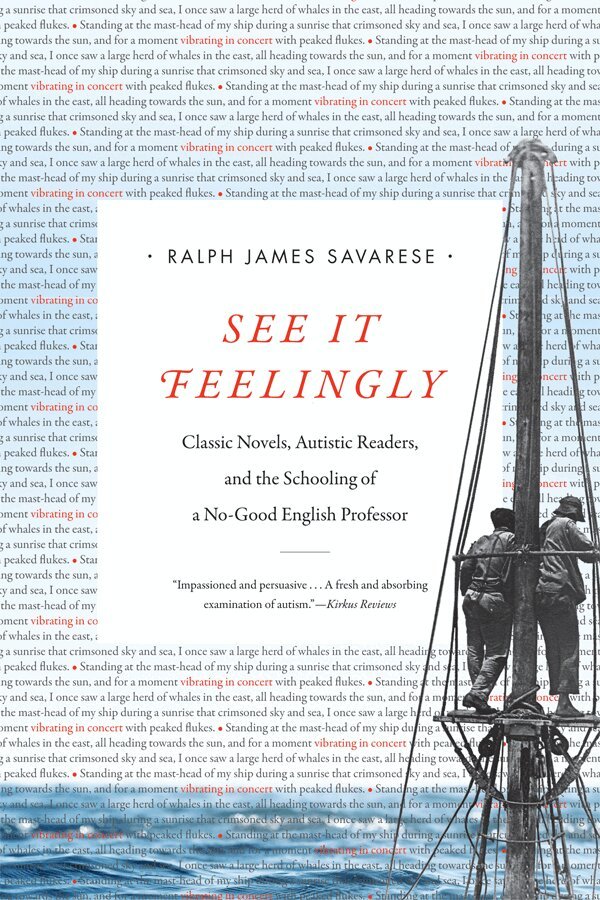
See It Feelingly
Classic Novels, Autistic Readers, and the Schooling of a No-Good English Professor
Inbunden, Engelska, 2018
492 kr
Skickas inom 7-10 vardagar
“We each have Skype accounts and use them to discuss [Moby-Dick] face to face. Once a week, we spread the worded whale out in front of us; we dissect its head, eyes, and bones, careful not to hurt or kill it. The Professor and I are not whale hunters. We are not letting the whale die. We are shaping it, letting it swim through the Web with a new and polished look.”-Tito MukhopadhyaySince the 1940s researchers have been repeating claims about autistic people's limited ability to understand language, to partake in imaginative play, and to generate the complex theory of mind necessary to appreciate literature. In See It Feelingly Ralph James Savarese, an English professor whose son is one of the first nonspeaking autistics to graduate from college, challenges this view.Discussing fictional works over a period of years with readers from across the autism spectrum, Savarese was stunned by the readers' ability to expand his understanding of texts he knew intimately. Their startling insights emerged not only from the way their different bodies and brains lined up with a story but also from their experiences of stigma and exclusion.For Mukhopadhyay Moby-Dick is an allegory of revenge against autism, the frantic quest for a cure. The white whale represents the autist's baffling, because wordless, immersion in the sensory. Computer programmer and cyberpunk author Dora Raymaker skewers the empathetic failings of the bounty hunters in Philip K. Dick's Do Androids Dream of Electric Sheep? Autistics, some studies suggest, offer instruction in embracing the nonhuman. Encountering a short story about a lonely marine biologist in Antarctica, Temple Grandin remembers her past with an uncharacteristic emotional intensity, and she reminds the reader of the myriad ways in which people can relate to fiction. Why must there be a norm?Mixing memoir with current research in autism and cognitive literary studies, Savarese celebrates how literature springs to life through the contrasting responses of unique individuals, while helping people both on and off the spectrum to engage more richly with the world.
621 kr
Kommande
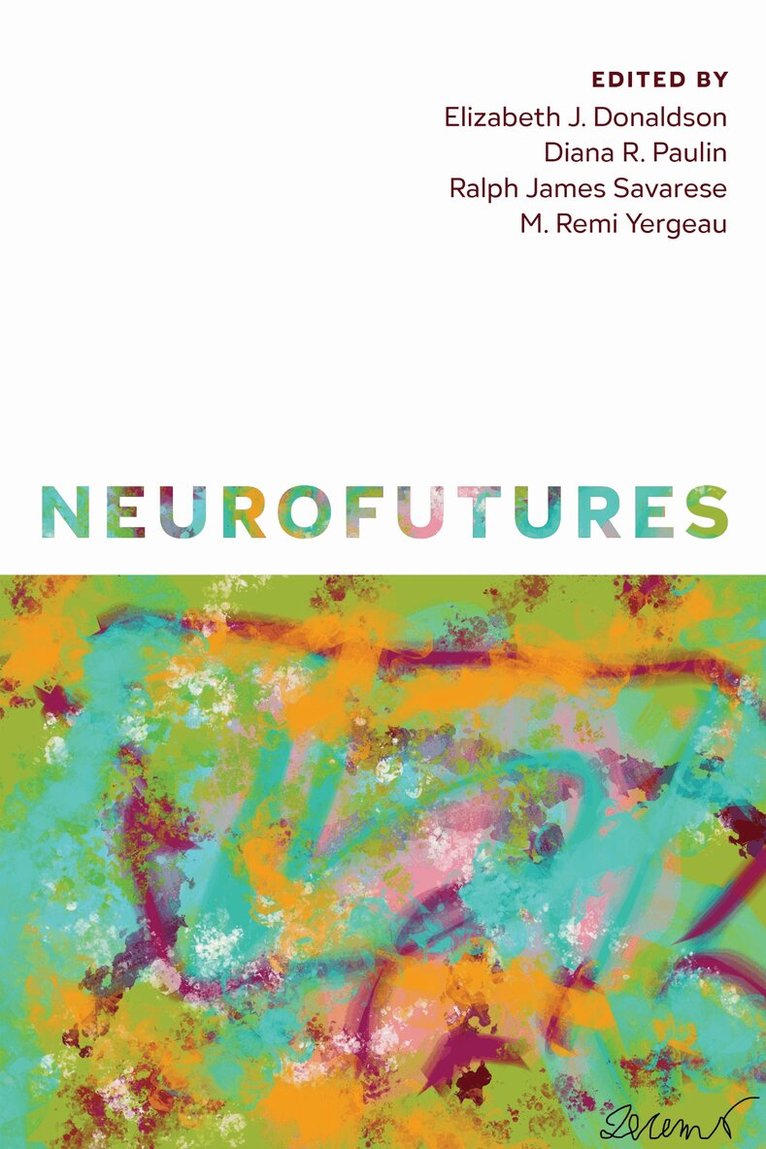
Essays on neurodiversity in life and literatureRooted in disability activism and social justice discourse, Neurofutures defines, contextualizes, and reframes neurodiversity in its broadest sense—as the infinite variation of human minds. The essays highlight the voices of individuals with experiences of autism, anxiety, bipolar disorder, sleep-wake differences, obsessive-compulsive disorder, psychosis, and other forms of neurodivergence—experiences that may exist alongside other contexts like race, class, gender, and sexuality. Drawing on insights from literary texts and lived experiences, contributors acknowledge the pains and complexities of cognitive difference while evincing creative, defiant resilience and envisioning futures in which neurodivergence is valued, ableism is opposed, and intersectional justice is possible.This volume contains discussion of the following authors and works: Hamja Ahsan, Shy Radicals: The Antisystemic Politics of the Militant Introvert Jesse Ball, Census Octavia E. Butler, Fledgling Arthur C. Clarke, Childhood's End Mark Eati and Max Eati, The Divine Maze Hannah Emerson, The Kissing of Kissing C. S. Friedman, This Alien Shore Dianne Goddard and Peyton Goddard, I Am Intelligent Temple Grandin Thomas Hoccleve, "My Compleinte" Shirley Jackson, We Have Always Lived in the Castle N. K. Jemisin, Broken Earth trilogy Mira T. Lee, Everything Here Is Beautiful "Little Eight John" Toni Morrison, Beloved Dawn Prince-Hughes, Songs of the Gorilla Nation: My Journey through Autism Jasbir Puar, The Right to Maim: Debility, Capacity, Disability Daniel Paul Schreber, Memoirs of My Nervous Illness Rivers Solomon, An Unkindness of Ghosts Sunaura Taylor, Beasts of Burden: Animal and Disability Liberation Esmé Weijun Wang, The Collected Schizophrenias Adam Wolfond, The Wanting Way Richard Wright, Native Son.