Piotr H. Kosicki - Böcker
Visar alla böcker från författaren Piotr H. Kosicki. Handla med fri frakt och snabb leverans.
7 produkter
7 produkter
417 kr
Tillfälligt slut
691 kr
Skickas inom 7-10 vardagar
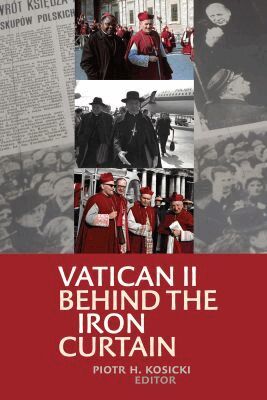
A substantial historiography has emerged across national and linguistic boundaries documenting the Second Vatican Council. And yet virtually no attention has been devoted to the links between the Council and the Catholic faithful who had found themselves living behind an iron curtain by the end of the 1940s. Historians of the Catholic Church have, in fact, mostly rejected the possibility that Communist countries played a role in the Council’s story, or that the Council in turn shaped the subsequent paths of those countries.The goal of this volume is to begin writing Central and Eastern Europe back into the story of the Second Vatican Council, its origins, and its consequences. This volume assembles—for the first time in any language—a broad overview of the place of four different Communist-run countries—Czechoslovakia, Hungary, Poland, and Yugoslavia—in the story of the Council. Framing these is an account of how the Cold War impacted the Council and its reception. The book engages with both English-language scholarship and the national historiographies of the countries that it examines, o ering a global lens on the present state of research (covering all relevant languages) and seeking to propel that research forward. All of the chapters draw on both non-English secondary literature and original primary sources—some published, some archival.In all four countries, religious aggiornamento went hand in hand with waves and spurts of political liberalization. Though short-lived in their initial form, civic aggiornamenti magnified the impact of religious aggiornamento. Every country behind the Iron Curtain was different, yet even across such diverse situations, one finds evidence that societies engaged with Vatican II—and, moreover, that the Council furnished a set of norms and aspirations that would play a significant role in the final years of the Cold War. The election of St. John Paul II in 1978†…, a pope from behind the Iron Curtain, lit a match, but the tinder had been set much earlier for modernization, reform, and an embrace of pluralism—even among Catholics living behind the Iron Curtain.
1 624 kr
Skickas inom 10-15 vardagar
This book is the first scholarly exploration of how Christian Democracy kept Cold War Europe’s eastern and western halves connected after the creation of the Iron Curtain in the late 1940s.
1 624 kr
Skickas inom 10-15 vardagar
This book is the first scholarly exploration of how Christian Democracy kept Cold War Europe’s eastern and western halves connected after the creation of the Iron Curtain in the late 1940s.
Del 1 - Civitas. Studies in Christian Democracy
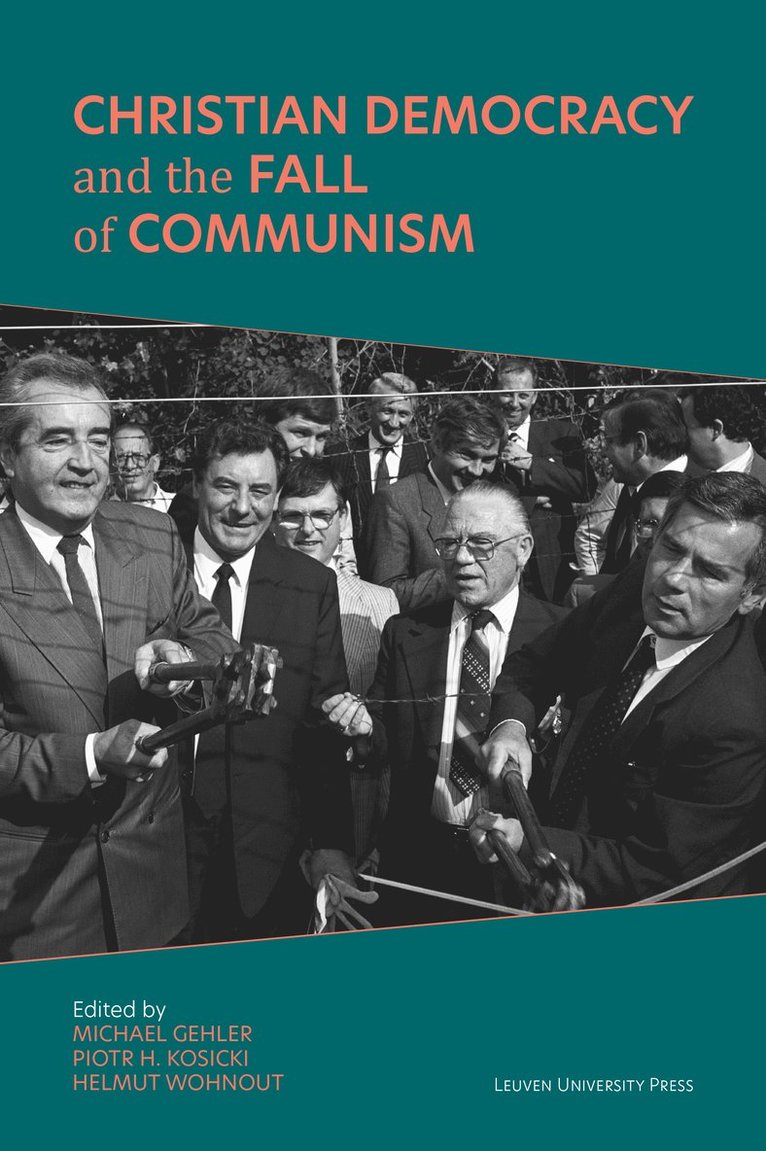
Christian Democracy and the Fall of Communism
Inbunden, Engelska, 2019
429 kr
Tillfälligt slut
The role of Christian Democracy in the collapse of the Communist BlocDebates on the role of Christian Democracy in Central and Eastern Europe too often remain strongly tied to national historiographies. With the edited collection the contributing authors aim to reconstruct Christian Democracy’s role in the fall of Communism from a bird's-eye perspective by covering the entire region and by taking “third-way” options in the broader political imaginary of late-Cold War Europe into account. The book’s twelve chapters present the most recent insights on this topic and connect scholarship on the Iron Curtain’s collapse with scholarship on political Catholicism. Christian Democracy and the Fall of Communism offers the reader a two-fold perspective. The first approach examines the efforts undertaken by Western European actors who wanted to foster or support Christian Democratic initiatives in Central and Eastern Europe. The second approach is devoted to the (re-)emergence of homegrown Christian Democratic formations in the 1980s and 1990s. One of the volume’s seminal contributions lies in its documentation of the decisive role that Christian Democracy played in supporting the political and anti-political forces that engineered the collapse of Communism from within between 1989 and 1991.Contributors: Andrea Brait (University of Innsbruck), Alexander Brakel (Konrad Adenauer Foundation, Israel), Ladislav Cabada (Metropolitan University Prague), Giovanni Mario Ceci (Università degli Studi Roma Tre / IES-Rome), Kim Christiaens (KU Leuven), Michael Gehler (University of Hildesheim), Thomas Gronier (UMR SIRICE), Piotr H. Kosicki (University of Maryland), Sławomir Łukasiewicz (John Paul II Catholic University of Lublin), Anton Pelinka (Central European University in Budapest), Johannes Schönner (Karl von Vogelsang Institute), Artūras Svarauskas (Lithuanian University of Educational Science), Helmut Wohnout (Austrian Federal Chancellery / Karl von Vogelsang Institute)This publication is GPRC-labeled (Guaranteed Peer-Reviewed Content).
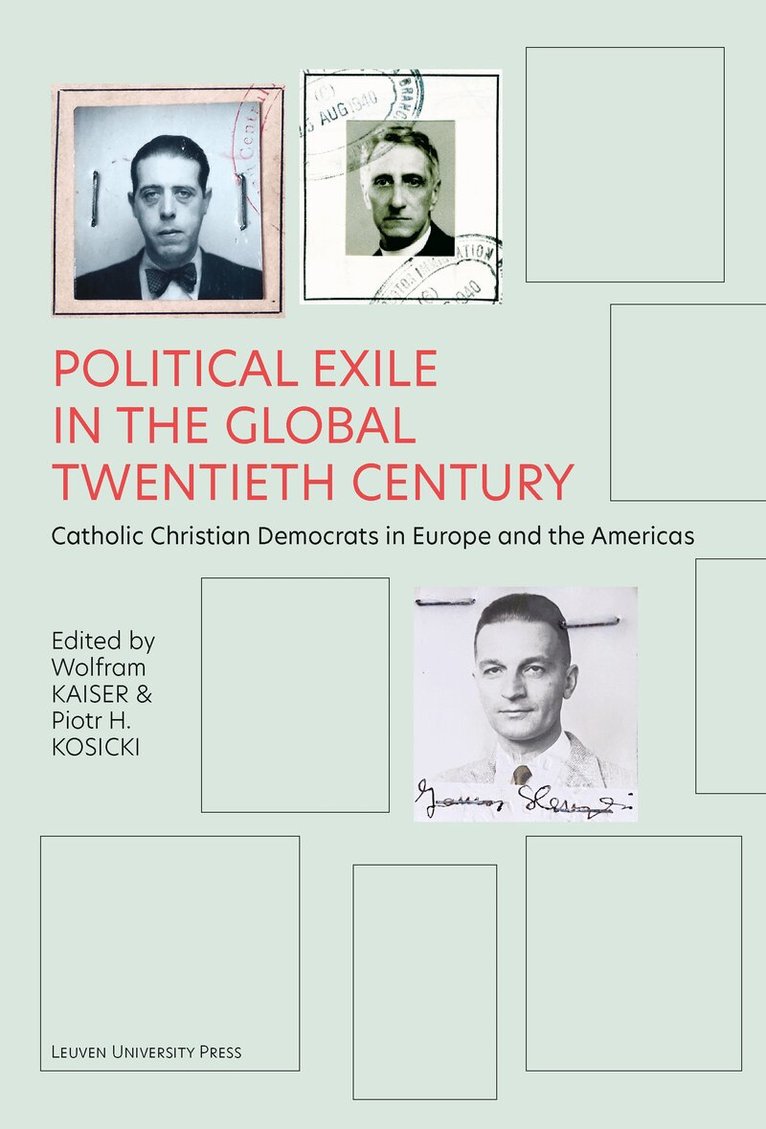
Political Exile in the Global Twentieth Century
Catholic Christian Democrats in Europe and the Americas
Häftad, Engelska, 2021
429 kr
Skickas inom 5-8 vardagar
This book focuses on the political exile of Catholic Christian Democrats during the global twentieth century, from the end of the First World War to the end of the Cold War. Transcending the common national approach, the present volume puts transnational perspectives at center stage and in doing so aspires to be a genuinely global and longitudinal study. Political Exile in the Global Twentieth Century includes chapters on continental European exile in the United Kingdom and North America through 1945; on Spanish exile following the Civil War (1936-39), throughout the Franco dictatorship; on East-Central European exile from the defeat of Nazi Germany and the establishment of Communist rule (1944-48) through the end of the Cold War; and Latin American exile following the 1973 Chilean coup.Encompassing Europe (both East and West), Latin America, and the United States, Political Exile in the Global Twentieth Century places the diasporas of 20th-century Christian Democracy within broader, global debates on political exile and migration.Contributors: Paolo Acanfora (University of Rome La Sapienza), Leyre Arrieta (University of Deusto), Gemma Caballer (University of Barcelona), Justinas Dementavicius (Vilnius University), Joaquin Fermandois (Catholic University of Chile / San Sebastian University), Elodie Giraudier (Harvard University), Carlo Invernizzi Accetti (City University of New York), Katalin Kadar Lynn (Independent Scholar), Wolfram Kaiser (University of Portsmouth), Piotr H. Kosicki (University of Maryland), Slawomir Lukasiewicz (John Paul II Catholic University of Lublin), Christopher Stroot (University of California San Diego)
1 694 kr
Skickas inom 10-15 vardagar
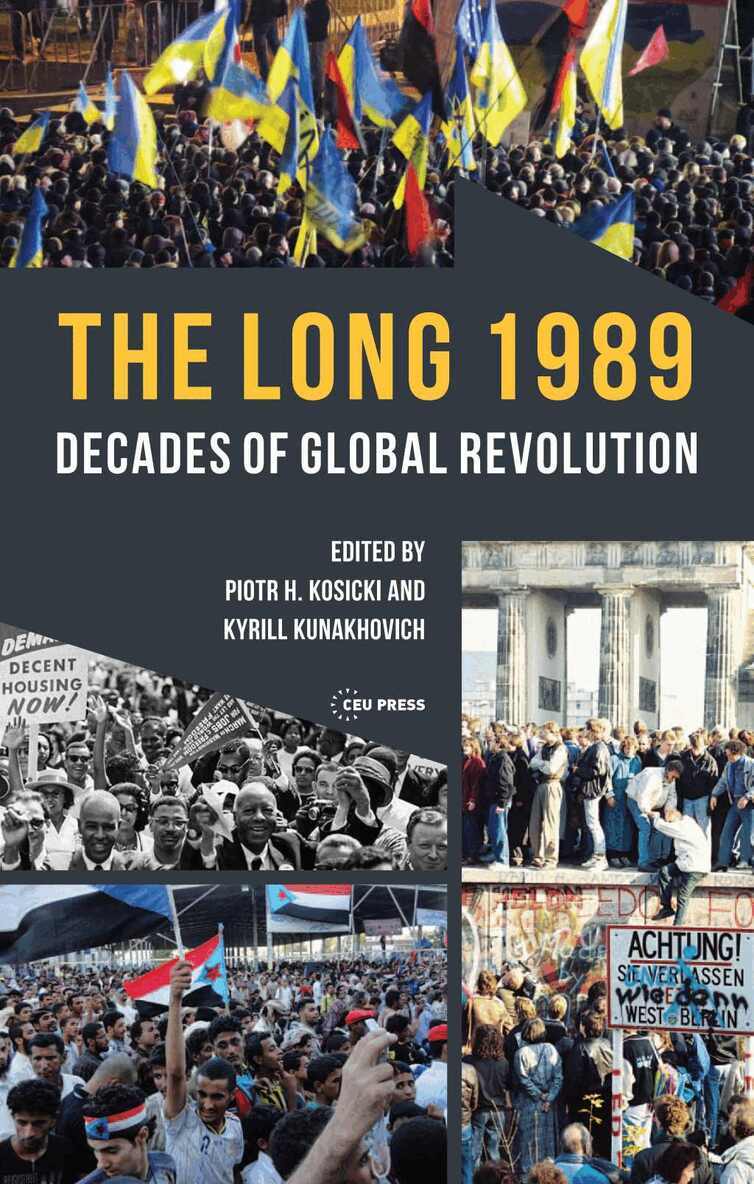
The fall of communism in Europe is now the frame of reference for any mass mobilization, from the Arab Spring to the Occupy movement to Brexit. Even thirty years on, 1989 still figures as a guide and motivation for political change. It is now a platitude to call 1989 a “world event,” but the chapters in this volume show how it actually became one. The authors of these nine essays consider how revolutionary events in Europe resonated years later and thousands of miles away: in China and South Africa, Chile and Afghanistan, Turkey and the USA. They trace the circulation of people, practices, and concepts that linked these countries, turning local developments into a global phenomenon. At the same time, they examine the many shifts that revolution underwent in transit. All nine chapters detail the process of mutation, adaptation, and appropriation through which foreign affairs found new meanings on the ground. They interrogate the uses and understandings of 1989 in particular national contexts, often many years after the fact. Taken together, this volume asks how the fall of communism in Europe became the basis for revolutionary action around the world, proposing a paradigm shift in global thinking about revolution and protest.