Pól Ó Dochartaigh - Böcker
Visar alla böcker från författaren Pól Ó Dochartaigh. Handla med fri frakt och snabb leverans.
2 produkter
2 produkter
370 kr
Tillfälligt slut
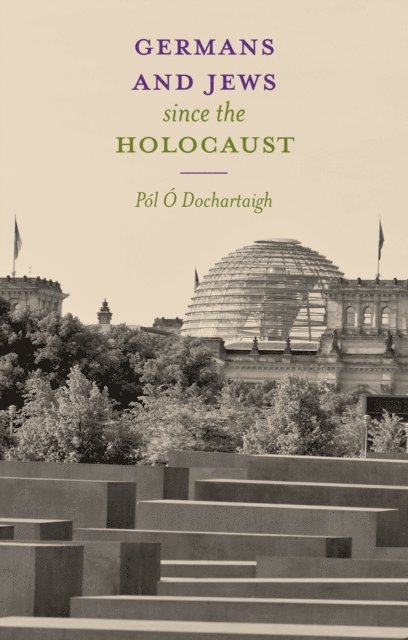
From the very moment of the liberation of camps at Auschwitz, Belsen and Buchenwald, Germans have been held accountable for the crimes committed in the Holocaust. The Nazi regime unleashed the most systematic attempt in history to wipe out an entire people, murdering men, women and children for the simple 'crime' of being Jewish. After the war ended in 1945, the Jewish State of Israel was created and Jewish communities were re-established in a now divided Germany. Germans have engaged actively with their Nazi legacy and the Jewish communities have remained and grown stronger, but neo-Nazism has also persisted. Young Germans have learned the horrific deeds of the past at school, and throughout the world, people of all nations have tried to learn the lesson 'never again', while Germany has become 'Israel's best friend in Europe'.Pól Ó Dochartaigh analyses the ways in which Germans and Jews alike have attempted to come to terms with the Holocaust and its terrible legacy. He also looks at efforts to remember – and to forget – the Holocaust, movement towards recompense and reparation, and the survival of anti-Semitism.
Del 132 - Studies in German Literature Linguistics and Culture
Representing the "Good German" in Literature and Culture after 1945
Altruism and Moral Ambiguity
Inbunden, Engelska, 2013
1 353 kr
Skickas inom 10-15 vardagar
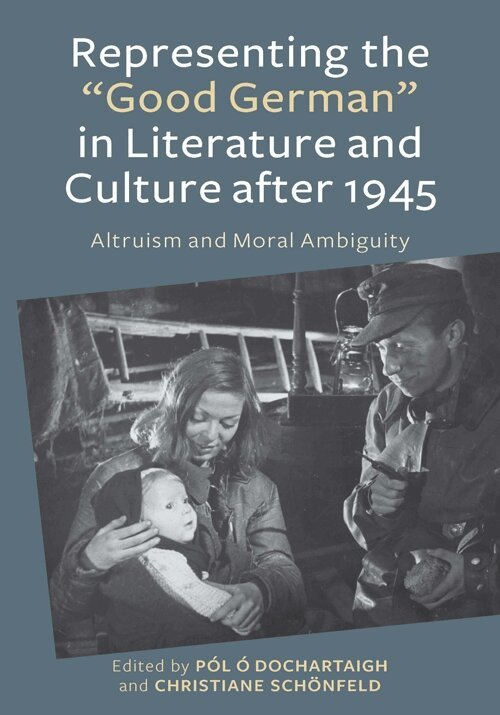
Essays analyzing postwar literary, cultural, and historical representations of "good Germans" during the Second World War and the Nazi period.In the aftermath of the Second World War, both the allied occupying powers and the nascent German authorities sought Germans whose record during the war and the Nazi period could serve as a counterpoint to the notion of Germans asevil. That search has never really stopped. In the past few years, we have witnessed a burgeoning of cultural representations of this "other" kind of Third Reich citizen - the "good German" - as opposed to the committed Nazi or genocidal maniac. Such representations have highlighted individuals' choices in favor of dissenting behavior, moral truth, or at the very least civil disobedience. The "good German's" counterhegemonic practice cannot negate or contradict the barbaric reality of Hitler's Germany, but reflects a value system based on humanity and an "other" ideal community.This volume of new essays explores postwar and recent representations of "good Germans" during the Third Reich, analyzing the logic of moral behavior, cultural and moral relativism, and social conformity found in them. It thus draws together discussions of the function and reception of "Good Germans" in Germany and abroad.Contributors: Eoin Bourke, Manuel Bragança, Maeve Cooke, Kevin De Ornellas, Sabine Egger, Joachim Fischer, Coman Hamilton, Jon Hughes, Karina von Lindeiner-Strásky, Alexandra Ludewig, Pól O Dochartaigh, Christiane Schönfeld, Matthias Uecker.Pól O Dochartaigh is Professor of German and Dean of the Faculty of Arts at the University of Ulster, Northern Ireland. Christiane Schönfeld is Senior Lecturer in German and Head of the Department of German Studies at Mary Immaculate College, University of Limerick.