Quassim Cassam - Böcker
Visar alla böcker från författaren Quassim Cassam. Handla med fri frakt och snabb leverans.
20 produkter
20 produkter
479 kr
Skickas
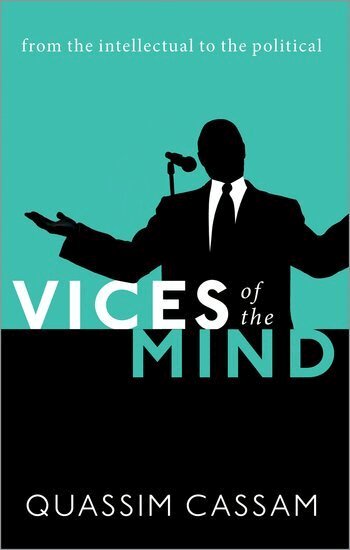
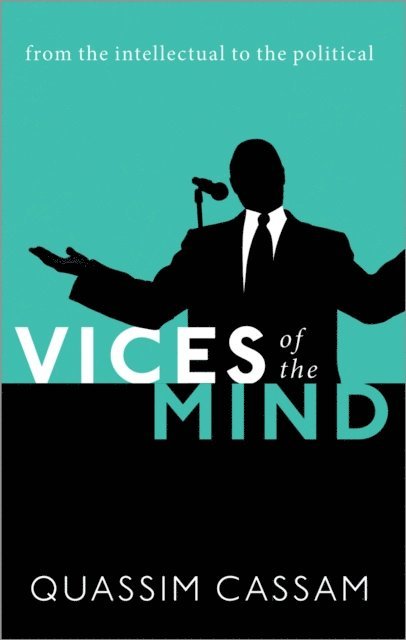
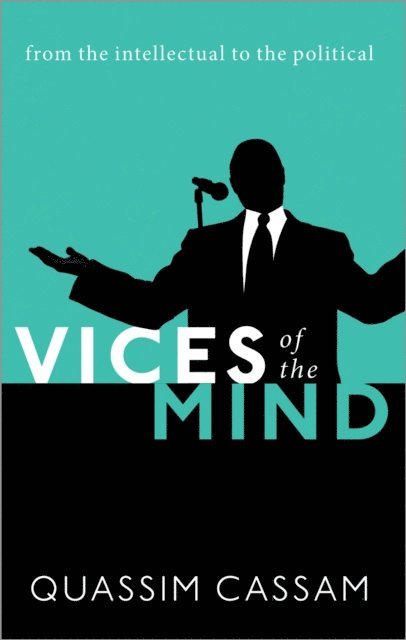
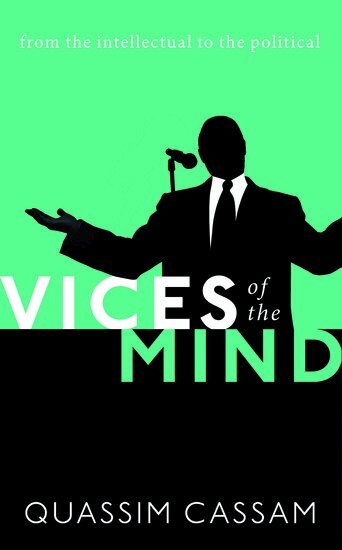
Leading philosopher Quassim Cassam introduces epistemic vices, drawing on recent political phenomena including Brexit and Trump to explore such 'vices of the mind'.Manifesting as character traits, attitudes, or thinking styles, epistemic vices prevent us from having or sharing knowledge. Cassam gives an account of the nature and importance of these vices, which include closed-mindedness, intellectual arrogance, wishful thinking, and prejudice. In providing the first extensive coverage of vice epistemology, an exciting new area of philosophical research, Vices of the Mind uses real examples drawn primarily from the world of politics to develop a compelling theory of epistemic vice. Key events such as the 2003 Iraq War and the 2016 Brexit vote, and notable figures including Donald Trump and Boris Johnson are analysed in detail to illustrate what epistemic vice looks like in the modern world. The traits covered in this landmark work include a hitherto unrecognised epistemic vice called 'epistemic insouciance'. Cassam examines both the extent to which we are responsible for our failings and the factors that make it difficult to know our own vices. If we are able to overcome self-ignorance and recognise our epistemic vices, then is there is anything we can do about them? Vices of the Mind picks up on this concern in its conclusion by detailing possible self-improvement strategies and closing with a discussion of what makes some epistemic vices resistant to change.
1 391 kr
Skickas inom 5-8 vardagar
Self and World is an exploration of the nature of self-awareness. Quassim Cassam challenges the widespread and influential view that we cannot be introspectively aware of ourselves as objects in the world. In opposition to the views of many empiricist and idealistic philosophers, including Hume, Kant and Wittgenstein, he argues that the self is not systematically elusive from the perspective of self-consciousness, and that consciousness of our thoughts and experiences requires a sense of our thinking, experiencing selves as shaped, located, and solid physical objects in a world of such objects. Awareness of oneself as a physical object involves forms of bodily self-awareness whose importance has seldom been properly acknowledged in philosophical accounts of the self and self-awareness. The conception of self-awareness defended in this book helps to undermins the idealist thesis that the self does not belong to the world, and also the claim that the existence of subjects or persons is only a derivative feature of reality. In the final part of the book, Cassam argues that the existence of persons is a substantial fact about the world, and that it is not possible to give a complete description of reality without claiming that persons exist.This clear, original, and challenging treatment of one of the deepest intellectual problems will demand the attention of all philosophers and cognitive scientists who are concerned with the self.
659 kr
Skickas inom 5-8 vardagar
Self and World is an exploration of the nature of self-awareness. Quassim Cassam challenges the widespread and influential view that we cannot be introspectively aware of ourselves as objects in the world. In opposition to the views of many empiricist and idealist philosophers, including Hume, Kant, and Wittgenstein, he argues that the self is not systematically elusive from the perspective of self-consciousness, and that consciousness of our thoughts and experiences requires a sense of our thinking, experiencing selves as shaped, located, and solid physical objects in a world of such objects. Awareness of oneself as a physical object involves forms of bodily self-awareness whose importance has seldom been properly acknowledged in philosophical accounts of the self and self-awareness. The conception of self-awareness defended in this book helps to undermine the idealist thesis that the self does not belong to the world, and also the claim that the existence of subjects or persons is only a derivative feature of reality. In the final part of the book, Cassam argues that the existence of persons is a substantial fact about the world, and that it is not possible to give a complete description of reality without claiming that persons exist. This clear, original, and challenging treatment of one of the deepest of intellectual problems will demand the attention of all philosophers and cognitive scientists who are concerned with the self.
1 078 kr
Skickas inom 7-10 vardagar
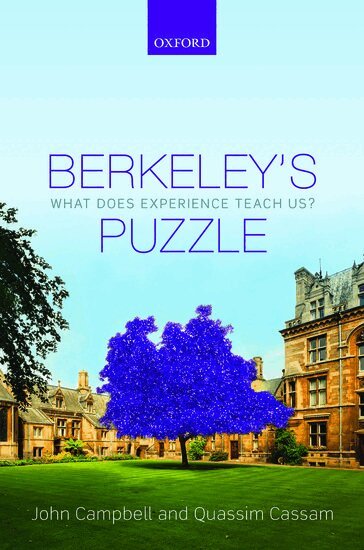
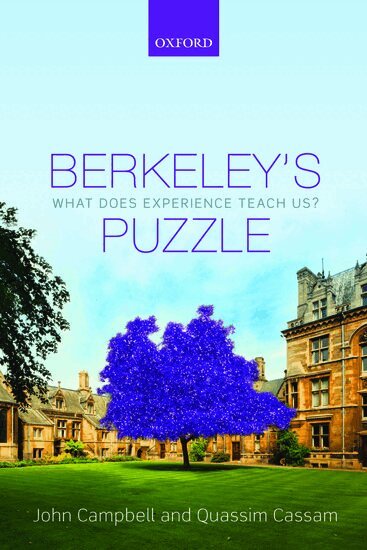
Sensory experience seems to be the basis of our knowledge and conception of mind-independent things. The puzzle is to understand how that can be: even if the things we experience (apples, tables, trees etc), are mind-independent how does our sensory experience of them enable us to conceive of them as mind-independent? George Berkeley thought that sensory experience can only provide us with the conception of mind-dependent things, things which cannot exist when they aren't being perceived. It's easy to dismiss Berkeley's conclusion but harder to see how to avoid it. In this book, John Campbell and Quassim Cassam propose very different solutions to Berkeley's Puzzle. For Campbell, sensory experience can be the basis of our knowledge of mind-independent things because it is a relation, more primitive than thought, between the perceiver and high-level objects and properties in the mind-independent world. Cassam opposes this 'relationalist' solution to the Puzzle and defends a 'representationalist' solution: sensory experience can give us the conception of mind-independent things because it represents its objects as mind-independent, but does so without presupposing concepts of mind-independent things.This book is written in the form of a debate between two rival approaches to understanding the relationship between concepts and sensory experience. Although Berkeley's Puzzle frames the debate, the questions addressed by Campbell and Cassam aren't just of historical interest. They are among the most fundamental questions in philosophy.
739 kr
Skickas inom 7-10 vardagar
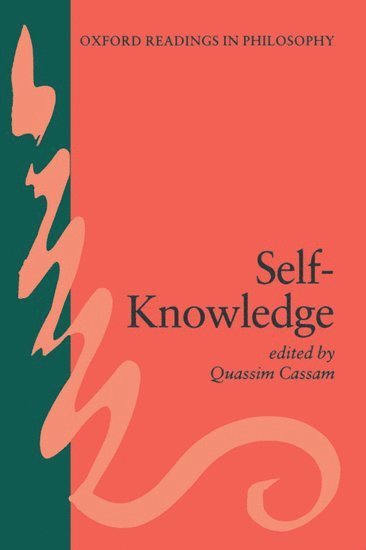
This volume brings together some of the most important and influential recent writings on knowledge of oneself and of one's own thoughts, sensations, and experiences. The essays give valuable insights into such fundamental philosophical issues as personal identity, the nature of consciousness, the relation between mind and body, and knowledge of other minds.
664 kr
Skickas inom 3-6 vardagar
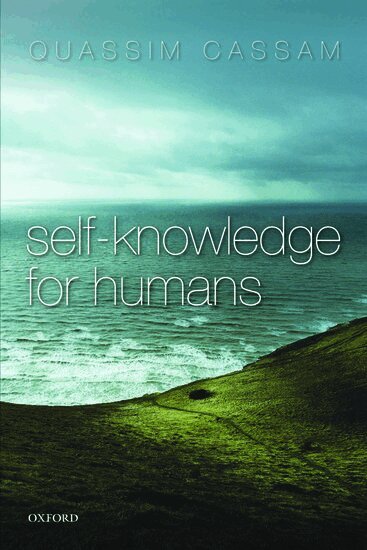
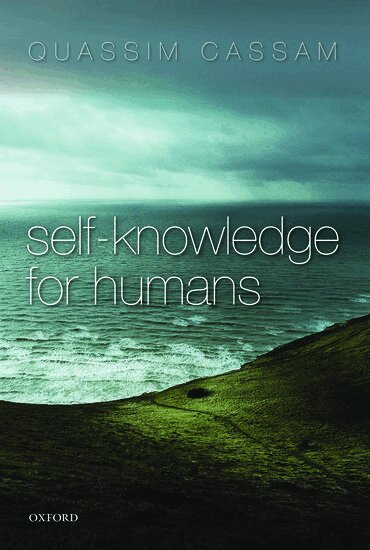
Human beings are not model epistemic citizens. Our reasoning can be careless and uncritical, and our beliefs, desires, and other attitudes aren't always as they ought rationally to be. Our beliefs can be eccentric, our desires irrational and our hopes hopelessly unrealistic. Our attitudes are influenced by a wide range of non-epistemic or non-rational factors, including our character, our emotions, and powerful unconscious biases. Yet we are rarely conscious of such influences. Self-ignorance is not something to which human beings are immune. In this book Quassim Cassam develops an account of self-knowledge which tries to do justice to these and other respects in which humans aren't model epistemic citizens. He rejects rationalist and other mainstream philosophical accounts of self-knowledge on the grounds that, in more than one sense, they aren't accounts of self-knowledge for humans. Instead he defends the view that inferences from behavioural and psychological evidence are a basic source of human self-knowledge. On this account, self-knowledge is a genuine cognitive achievement and self-ignorance is almost always on the cards. As well as explaining knowledge of our own states of mind, Cassam also accounts for what he calls 'substantial' self-knowledge, including knowledge of our values, emotions, and character. He criticizes philosophical accounts of self-knowledge for neglecting substantial self-knowledge, and concludes with a discussion of the value of self-knowledge. This book tries to do for philosophy what behavioural economics tries to do for economics. Just as behavioural economics is the economics of ^homo sapiens, as distinct from the economics of an ideally rational and self homo economics, so Cassam argues that philosophy should focus on the human predicament rather than on the reasoning and self-knowledge of an idealized homo philosophicus.
488 kr
Skickas inom 5-8 vardagar
Sensory experience seems to be the basis of our knowledge and conception of mind-independent things. The puzzle is to understand how that can be: even if the things we experience (apples, tables, trees, etc), are mind-independent how does our sensory experience of them enable us to conceive of them as mind-independent? George Berkeley thought that sensory experience can only provide us with the conception of mind-dependent things, things which cannot exist when they aren't being perceived.It's easy to dismiss Berkeley's conclusion but harder to see how to avoid it. In this book, John Campbell and Quassim Cassam propose very different solutions to Berkeley's Puzzle. For Campbell, sensory experience can be the basis of our knowledge of mind-independent things because it is a relation, more primitive than thought, between the perceiver and high-level objects and properties in the mind-independent world. Cassam opposes this 'relationalist' solution to the Puzzle and defends a 'representationalist' solution: sensory experience can give us the conception of mind-independent things because it represents its objects as mind-independent, but does so without presupposing concepts of mind-independent things.This book is written in the form of a debate between two rival approaches to understanding the relationship between concepts and sensory experience. Although Berkeley's Puzzle frames the debate, the questions addressed by Campbell and Cassam aren't just of historical interest. They are among the most fundamental questions in philosophy.
471 kr
Skickas inom 5-8 vardagar
Epistemic vices are character traits, attitudes or thinking styles that prevent us from gaining, keeping or sharing knowledge. In this book, Quassim Cassam gives an account of the nature and importance of these vices, which include closed-mindedness, intellectual arrogance, wishful thinking, and prejudice. In providing the first extensive coverage of vice epistemology, an exciting new area of philosophical research, Vices of the Mind uses real examples drawn primarily from the world of politics to develop a compelling theory of epistemic vice. Cassam defends the view that as well as getting in the way of knowledge these vices are blameworthy or reprehensible. Key events such as the 2003 Iraq War and the 2016 Brexit vote, and notable figures including Donald Trump are analysed in detail to illustrate what epistemic vice looks like in the modern world. The traits covered in this landmark work include a hitherto unrecognised epistemic vice called 'epistemic insouciance'. Cassam examines both the extent to which we are responsible for our failings and the factors that make it difficult to know our own vices. If we are able to overcome self-ignorance and recognise our epistemic vices then is there is anything we can do about them? Vices of the Mind picks up on this concern in its conclusion by detailing possible self-improvement strategies and closing with a discussion of what makes some epistemic vices resistant to change.
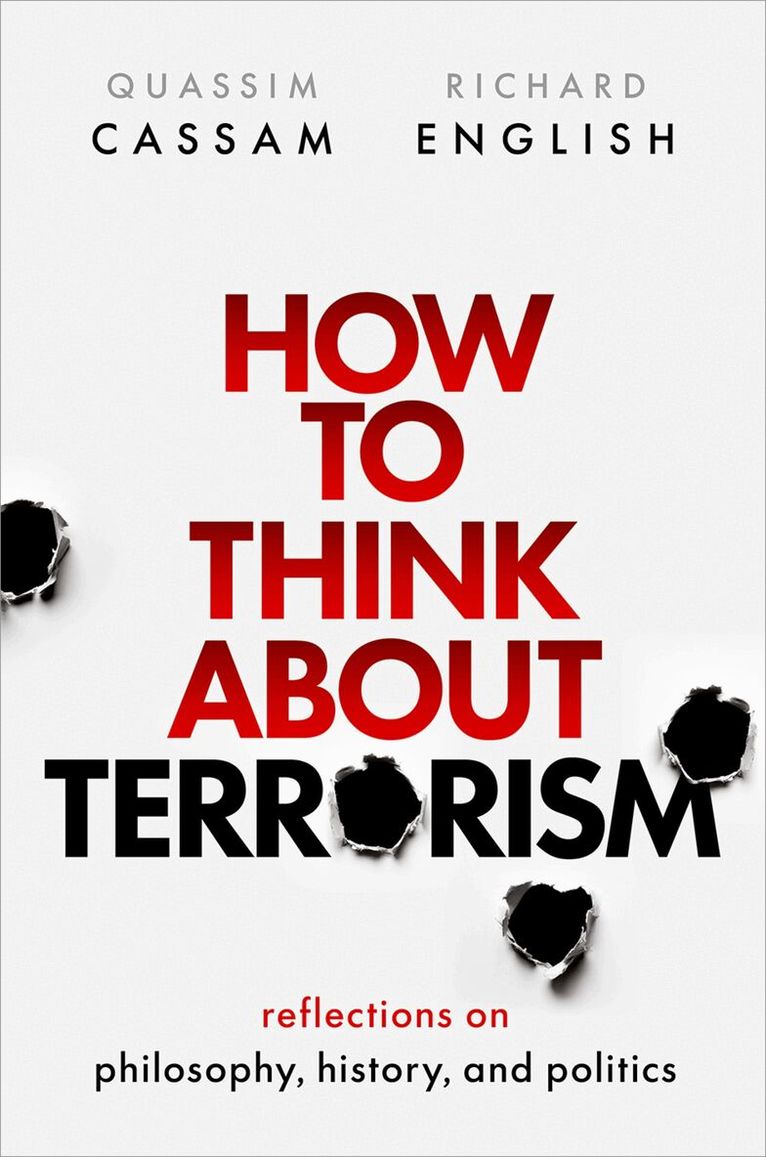
How to Think About Terrorism
Reflections on Philosophy, History, and Politics
Inbunden, Engelska, 2026
334 kr
Kommande
What is terrorism? How do people become terrorists? To what extent can terrorism be considered rational? Quassim Cassam and Richard English tackle these vital questions in How to Think About Terrorism.How to Think About Terrorism transforms how we understand terrorism, through innovative engagement with philosophical ideas and arguments as they intersect with historical and political thinking. This book reflects on the vital question of definition, recognizing that a useful description of terrorism should be sufficiently flexible and open-ended to accommodate the great variety of terrorist methods, motives, objectives, perpetrators, and targets. Quassim Cassam and Richard English offer a philosophical (but empirically and historically grounded) account of the differences between non-state terrorism and state terrorism, and of the dynamics and nature of state terrorism itself. The authors address the question of how people become terrorists, combining in a Hybrid View the strengths of generalist and of particularist approaches; and offer a realist middle way between irrationalism and rationalism.How to Think About Terrorism offers a complex and historically nuanced account of the relationship between religion and terrorism, and reflects systematically on the extent to which terrorism can, in principle, be morally justified. In terms of counter-terrorism, this book argues that philosophical thinking about torture should focus on real rather than artificial scenarios; it also draws together its cumulative argument in an innovative assessment of the moral, political, and practical foundations for a range of counter-terrorist approaches, an analysis intended to be as practically relevant as it is analytically compelling.
900 kr
Skickas inom 3-6 vardagar
How is knowledge of the external world possible? How is knowledge of other minds possible? How is a priori knowledge possible? These are all examples of how-possible questions in epistemology. Quassim Cassam explains how such questions arise and how they should be answered. In general, we ask how knowledge, or knowledge of some specific kind, is possible when we encounter obstacles to its existence or acquisition. So the question is: how is knowledge possible given the various factors that make it look impossible? A satisfactory answer to such a question will therefore need to do several different things. In essence, explaining how a particular kind of knowledge is possible is a matter of identifying ways of acquiring it, overcoming or dissipating obstacles to its acquisition, and figuring out what makes it possible to acquire it. To respond to a how-possible question in this way is to go in for what might be called a 'multi-levels' approach. The aim of this book is to develop and defend this approach. The first two chapters bring out its advantages and explain why it works better than more familiar 'transcendental' approaches to explaining how knowledge is possible. The remaining chapters use the multi-levels framework to explain how perceptual knowledge is possible, how it is possible to know of the existence of minds other than one's own and how a priori knowledge is possible.
537 kr
Skickas inom 5-8 vardagar
How is knowledge of the external world possible? How is knowledge of other minds possible? How is a priori knowledge possible? These are all examples of how-possible questions in epistemology. Quassim Cassam explains how such questions arise and how they should be answered. In general, we ask how knowledge, or knowledge of some specific kind, is possible when we encounter obstacles to its existence or acquisition. So the question is: how is knowledge possible given the various factors that make it look impossible? A satisfactory answer to such a question will therefore need to do several different things. In essence, explaining how a particular kind of knowledge is possible is a matter of identifying ways of acquiring it, overcoming or dissipating obstacles to its acquisition, and figuring out what makes it possible to acquire it. To respond to a how-possible question in this way is to go in for what might be called a 'multi-levels' approach. The aim of this book is to develop and defend this approach. The first two chapters bring out its advantages and explain why it works better than more familiar 'transcendental' approaches to explaining how knowledge is possible. The remaining chapters use the multi-levels framework to explain how perceptual knowledge is possible, how it is possible to know of the existence of minds other than one's own and how a priori knowledge is possible.
847 kr
Skickas inom 5-8 vardagar
Human beings are not model epistemic citizens. Our reasoning can be careless and uncritical, and our beliefs, desires, and other attitudes aren't always as they ought rationally to be. Our beliefs can be eccentric, our desires irrational and our hopes hopelessly unrealistic. Our attitudes are influenced by a wide range of non-epistemic or non-rational factors, including our character, our emotions and powerful unconscious biases. Yet we are rarely conscious of such influences. Self-ignorance is not something to which human beings are immune. In this book Quassim Cassam develops an account of self-knowledge which tries to do justice to these and other respects in which humans aren't model epistemic citizens. He rejects rationalist and other mainstream philosophical accounts of self-knowledge on the grounds that, in more than one sense, they aren't accounts of self-knowledge for humans. Instead he defends the view that inferences from behavioural and psychological evidence are a basic source of human self-knowledge. On this account, self-knowledge is a genuine cognitive achievement and self-ignorance is almost always on the cards. As well as explaining knowledge of our own states of mind, Cassam also accounts for what he calls 'substantial' self-knowledge, including knowledge of our values, emotions, and character. He criticizes philosophical accounts of self-knowledge for neglecting substantial self-knowledge, and concludes with a discussion of the value of self-knowledge.This book tries to do for philosophy what behavioural economics tries to do for economics. Just as behavioural economics is the economics of homo sapiens, as distinct from the economics of an ideally rational homo economicus, so Cassam argues that philosophy should focus on the human predicament rather on the reasoning and self-knowledge of an idealized homo philosophicus.
292 kr
Skickas inom 10-15 vardagar
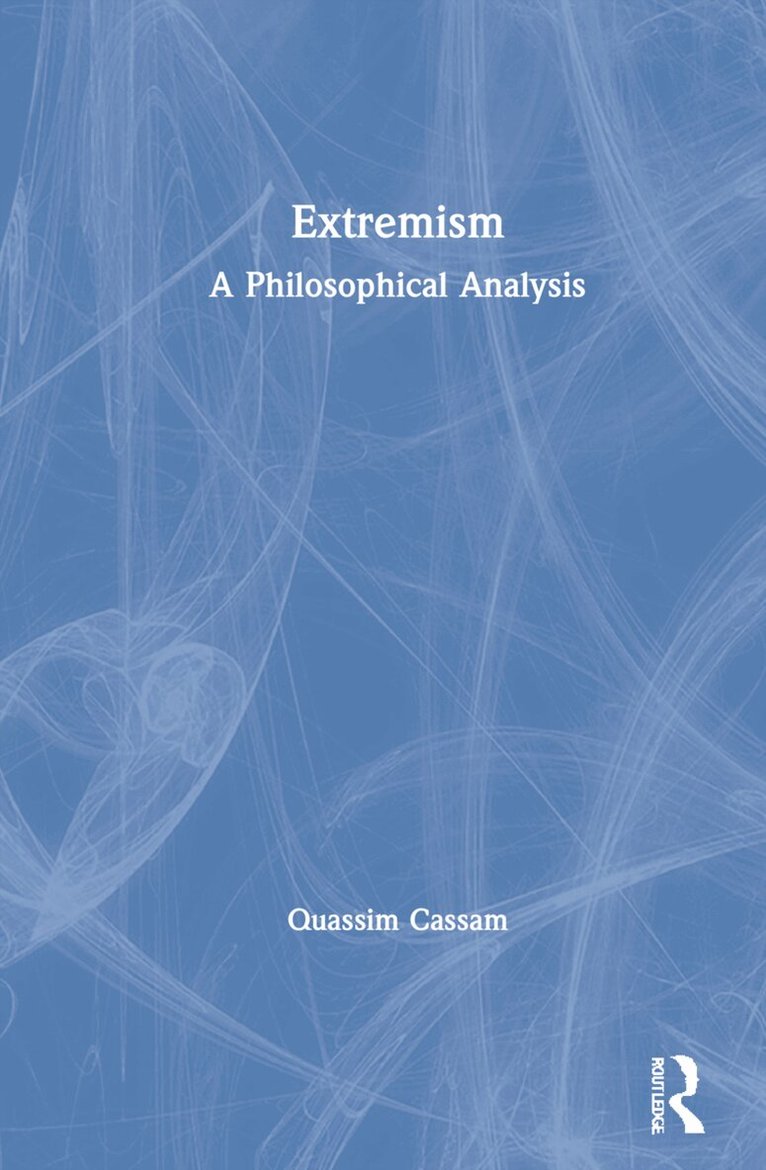
Extremism is one of the most charged and controversial issues of the twenty-first century. Despite myriad programs of deradicalization and prevention around the world, it remains an intractable and poorly understood problem. Yet it is also sometimes regarded as a positive force – according to Martin Luther King Jr., 'the question is not whether we will be extremists, but what kind of extremists we will be'.In this much-needed and lucid book, Quassim Cassam identifies three types of extremism – ideological; methods; and psychological extremism – and discusses the following fundamental topics and issues: What is extremism? What are the methods adopted by extremists? Is there an extremist ‘mindset’ and if so, what is it? What role do ideas of purity, victimhood and humiliation play in understanding extremism? How does extremism differ from fanaticism and fundamentalism? How does one become an extremist and how should we understand deradicalization?Throughout the book, Quassim Cassam uses many compelling examples, ranging from the Khmer Rouge, the IRA, Al-Qaeda and Timothy McVeigh to Philip Roth’s novel American Pastoral and counter-extremism programmes, including the UK’s Prevent strategy. Clear-headed and engaging, Extremism: A Philosophical Analysis is essential reading for anyone interested in this important topic, not only in Philosophy but related disciplines such as Politics and International Relations, Conflict and Terrorism Studies, Law, Education and Religion. It will also be of great interest to policy-makers and those engaged in understanding extremism at any level.
1 752 kr
Skickas inom 10-15 vardagar
Extremism is one of the most charged and controversial issues of the twenty-first century. Despite myriad programs of deradicalization and prevention around the world, it remains an intractable and poorly understood problem. Yet it is also sometimes regarded as a positive force – according to Martin Luther King Jr., 'the question is not whether we will be extremists, but what kind of extremists we will be'.In this much-needed and lucid book, Quassim Cassam identifies three types of extremism – ideological; methods; and psychological extremism – and discusses the following fundamental topics and issues: What is extremism? What are the methods adopted by extremists? Is there an extremist ‘mindset’ and if so, what is it? What role do ideas of purity, victimhood and humiliation play in understanding extremism? How does extremism differ from fanaticism and fundamentalism? How does one become an extremist and how should we understand deradicalization?Throughout the book, Quassim Cassam uses many compelling examples, ranging from the Khmer Rouge, the IRA, Al-Qaeda and Timothy McVeigh to Philip Roth’s novel American Pastoral and counter-extremism programmes, including the UK’s Prevent strategy. Clear-headed and engaging, Extremism: A Philosophical Analysis is essential reading for anyone interested in this important topic, not only in Philosophy but related disciplines such as Politics and International Relations, Conflict and Terrorism Studies, Law, Education and Religion. It will also be of great interest to policy-makers and those engaged in understanding extremism at any level.
617 kr
Skickas inom 10-15 vardagar
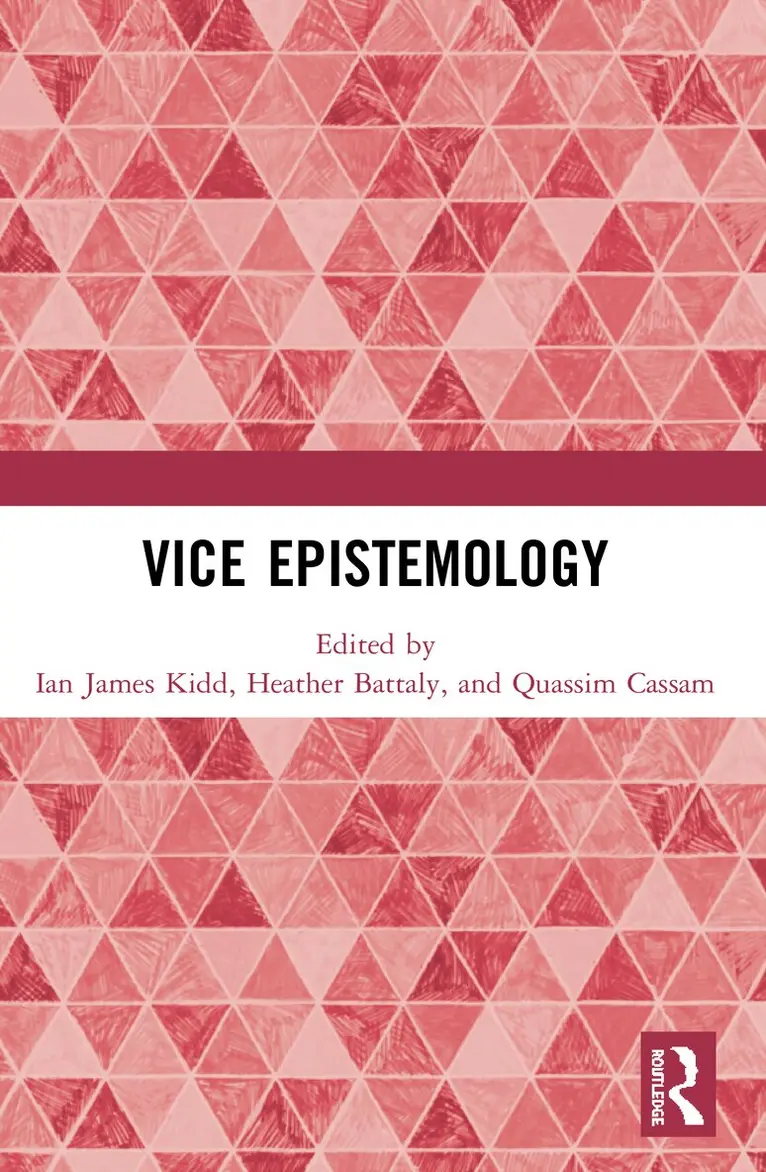
Some of the most problematic human behaviors involve vices of the mind such as arrogance, closed-mindedness, dogmatism, gullibility, and intellectual cowardice, as well as wishful or conspiratorial thinking. What sorts of things are epistemic vices? How do we detect and mitigate them? How and why do these vices prevent us from acquiring knowledge, and what is their role in sustaining patterns of ignorance? What is their relation to implicit or unconscious bias? How do epistemic vices and systems of social oppression relate to one another? Do we unwittingly absorb such traits from the process of socialization and communities around us? Are epistemic vices traits for which we can blamed? Can there be institutional and collective epistemic vices?This book seeks to answer these important questions about the vices of the mind and their roles in our social and epistemic lives, and is the first collection of its kind. Organized into three parts, chapters by outstanding scholars explore the nature of epistemic vices, specific examples of these vices, and case studies in applied vice epistemology, including education and politics.Alongside these foundational questions, the volume offers sophisticated accounts of vices both new and familiar. These include epistemic arrogance and servility, epistemic injustice, epistemic snobbishness, conspiratorial thinking, procrastination, and forms of closed-mindedness.Vice Epistemology is essential reading for students of ethics, epistemology, and virtue theory, and various areas of applied, feminist, and social philosophy. It will also be of interest to practitioners, scholars, and activists in politics, law, and education.
1 886 kr
Skickas inom 10-15 vardagar
This is the first edited scholarly collection devoted solely to the epistemology of democracy. Its fifteen chapters, published here for the first time and written by an international team of leading researchers, will interest scholars and advanced students working in democratic theory, the harrowing crisis of democracy, political philosophy, social epistemology, and political epistemology.The volume is structured into three parts, each offering five chapters. The first part, Democratic Pessimism, covers the crisis of democracy, the rise of authoritarianism, public epistemic vices, misinformation and disinformation, civic ignorance, and the lacking quantitative case for democratic decision-making. The second part, Democratic Optimism, discusses the role of hope and positive emotions in rebuilding democracy, proposes solutions to myside bias, and criticizes dominant epistocratic approaches to forming political administrations. The third and final part, Democratic Realism, assesses whether we genuinely require emotional empathy to understand the perspectives of our political adversaries, discusses the democratic tension between mutual respect for others and a quest for social justice, and evaluates manifold top-down and bottom-up approaches to policy making.
576 kr
Skickas inom 10-15 vardagar
This is the first edited scholarly collection devoted solely to the epistemology of democracy. Its fifteen chapters, published here for the first time and written by an international team of leading researchers, will interest scholars and advanced students working in democratic theory, the harrowing crisis of democracy, political philosophy, social epistemology, and political epistemology.The volume is structured into three parts, each offering five chapters. The first part, Democratic Pessimism, covers the crisis of democracy, the rise of authoritarianism, public epistemic vices, misinformation and disinformation, civic ignorance, and the lacking quantitative case for democratic decision-making. The second part, Democratic Optimism, discusses the role of hope and positive emotions in rebuilding democracy, proposes solutions to myside bias, and criticizes dominant epistocratic approaches to forming political administrations. The third and final part, Democratic Realism, assesses whether we genuinely require emotional empathy to understand the perspectives of our political adversaries, discusses the democratic tension between mutual respect for others and a quest for social justice, and evaluates manifold top-down and bottom-up approaches to policy making.
2 088 kr
Skickas inom 10-15 vardagar
Some of the most problematic human behaviors involve vices of the mind such as arrogance, closed-mindedness, dogmatism, gullibility, and intellectual cowardice, as well as wishful or conspiratorial thinking. What sorts of things are epistemic vices? How do we detect and mitigate them? How and why do these vices prevent us from acquiring knowledge, and what is their role in sustaining patterns of ignorance? What is their relation to implicit or unconscious bias? How do epistemic vices and systems of social oppression relate to one another? Do we unwittingly absorb such traits from the process of socialization and communities around us? Are epistemic vices traits for which we can blamed? Can there be institutional and collective epistemic vices?This book seeks to answer these important questions about the vices of the mind and their roles in our social and epistemic lives, and is the first collection of its kind. Organized into three parts, chapters by outstanding scholars explore the nature of epistemic vices, specific examples of these vices, and case studies in applied vice epistemology, including education and politics.Alongside these foundational questions, the volume offers sophisticated accounts of vices both new and familiar. These include epistemic arrogance and servility, epistemic injustice, epistemic snobbishness, conspiratorial thinking, procrastination, and forms of closed-mindedness.Vice Epistemology is essential reading for students of ethics, epistemology, and virtue theory, and various areas of applied, feminist, and social philosophy. It will also be of interest to practitioners, scholars, and activists in politics, law, and education.
371 kr
Skickas inom 7-10 vardagar
9/11 was an inside job. The Holocaust is a myth promoted to serve Jewish interests. The shootings at Sandy Hook Elementary School were a false flag operation. Climate change is a hoax perpetrated by the Chinese government. These are all conspiracy theories. A glance online or at bestseller lists reveals how popular some of them are. Even if there is plenty of evidence to disprove them, people persist in propagating them. Why? Philosopher Quassim Cassam explains how conspiracy theories are different from ordinary theories about conspiracies. He argues that conspiracy theories are forms of propaganda and their function is to promote a political agenda. Although conspiracy theories are sometimes defended on the grounds that they uncover evidence of bad behaviour by political leaders, they do much more harm than good, with some resulting in the deaths of large numbers of people. There can be no clearer indication that something has gone wrong with our intellectual and political culture than the fact that conspiracy theories have become mainstream. When they are dangerous, we cannot afford to ignore them. At the same time, refuting them by rational argument is difficult because conspiracy theorists discount or reject evidence that disproves their theories. As conspiracy theories are so often smokescreens for political ends, we need to come up with political as well as intellectual responses if we are to have any hope of defeating them.
186 kr
Skickas inom 7-10 vardagar
9/11 was an inside job. The Holocaust is a myth promoted to serve Jewish interests. The shootings at Sandy Hook Elementary School were a false flag operation. Climate change is a hoax perpetrated by the Chinese government. These are all conspiracy theories. A glance online or at bestseller lists reveals how popular some of them are. Even if there is plenty of evidence to disprove them, people persist in propagating them. Why? Philosopher Quassim Cassam explains how conspiracy theories are different from ordinary theories about conspiracies. He argues that conspiracy theories are forms of propaganda and their function is to promote a political agenda. Although conspiracy theories are sometimes defended on the grounds that they uncover evidence of bad behaviour by political leaders, they do much more harm than good, with some resulting in the deaths of large numbers of people. There can be no clearer indication that something has gone wrong with our intellectual and political culture than the fact that conspiracy theories have become mainstream. When they are dangerous, we cannot afford to ignore them. At the same time, refuting them by rational argument is difficult because conspiracy theorists discount or reject evidence that disproves their theories. As conspiracy theories are so often smokescreens for political ends, we need to come up with political as well as intellectual responses if we are to have any hope of defeating them.