• Fri frakt över 249 kr
  • •
  • Snabba leveranser
  • •
  • Billiga böcker
Kundservice

Du är på sajten för privatpersoner.

Företag, bibliotek eller offentlig verksamhet?

Du handlar på classic.bokus.com, där alla dina funktioner finns intakta.
Till classic.bokus.com
Bokus logotyp. Gå till startsidan.
  • Erbjudanden
  • Nyheter
  • Student
  • Topplistor
  • Barn & ungdom
  • Bokus Play
  • E-böcker
  • Pocketböcker
  • Spel & pussel

10% rabatt på allt med kod NYSTART10 →

Sidfot

Mina sidor

    Hjälp

    • Kundservice
    • Vanliga frågor och svar
    • Frakt och leverans
    • Retur vid ångerrätt
    • Reklamera vara
    • Betalning
    • Köpvillkor
    • Allmänna villkor
    • Information om webbplatsens tillgänglighet

    Om Bokus

    • Om oss
    • Pressrum
    • För studenter
    • För företag
    • För bibliotek och offentlig verksamhet
    • För leverantörer
    • Hållbarhet

    Populärt

    • Aktuella erbjudanden
    • Presentkort
    • Studentlitteratur
    • Nya böcker
    • Topplistor
    • Signerade böcker
    • Engelska böcker

    Inspiration

    • Boktips
    • BookTok
    • Populära bokserier
    • Barnbokskaraktärer
    • Populära författare
    Logotyp för Bokus
    Följ oss på Facebook (extern länk)Följ oss på Instagram (extern länk)Följ oss på YouTube (extern länk)Följ oss på TikTok (extern länk)
    bokus @ CookiesAnpassa cookiesIntegritetspolicyKöpvillkor
    Till Citymail hemsida (extern länk)Till Budbee hemsida (extern länk)Till Postnord hemsida (extern länk)Till Schenker hemsida (extern länk)Till Early Bird hemsida (extern länk)Till Walleys hemsida (extern länk)
    1. Filosofi och religion
    2. Filosofi
    3. Filosofiska discipliner

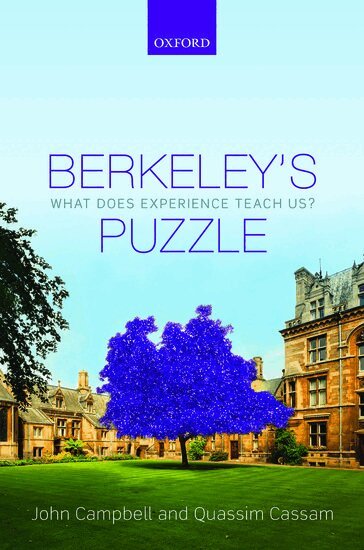
    Berkeley's Puzzle

    What Does Experience Teach Us?

    AvJohn Campbell,Quassim Cassam

    Inbunden, Engelska, 2014

    1 153 kr

    Beställningsvara. Skickas inom 7-10 vardagar. Fri frakt över 249 kr.

    Fler format och utgåvor

    Häftad

    518 kr

    Beskrivning

    Sensory experience seems to be the basis of our knowledge and conception of mind-independent things. The puzzle is to understand how that can be: even if the things we experience (apples, tables, trees etc), are mind-independent how does our sensory experience of them enable us to conceive of them as mind-independent? George Berkeley thought that sensory experience can only provide us with the conception of mind-dependent things, things which cannot exist when they aren't being perceived. It's easy to dismiss Berkeley's conclusion but harder to see how to avoid it. In this book, John Campbell and Quassim Cassam propose very different solutions to Berkeley's Puzzle. For Campbell, sensory experience can be the basis of our knowledge of mind-independent things because it is a relation, more primitive than thought, between the perceiver and high-level objects and properties in the mind-independent world. Cassam opposes this 'relationalist' solution to the Puzzle and defends a 'representationalist' solution: sensory experience can give us the conception of mind-independent things because it represents its objects as mind-independent, but does so without presupposing concepts of mind-independent things.This book is written in the form of a debate between two rival approaches to understanding the relationship between concepts and sensory experience. Although Berkeley's Puzzle frames the debate, the questions addressed by Campbell and Cassam aren't just of historical interest. They are among the most fundamental questions in philosophy.

    Produktinformation

    • Utgivningsdatum:2014-08-21
    • Mått:165 x 236 x 21 mm
    • Vikt:490 g
    • Format:Inbunden
    • Språk:Engelska
    • Antal sidor:224
    • Förlag:OUP OXFORD
    • ISBN:9780198716259

    Utforska kategorier

    • Filosofiska discipliner inom Filosofi och religion

    Mer om författaren

    Quassim Cassam is Professor of Philosophy at the University of Warwick. He was previously Knightbridge Professor of Philosophy at Cambridge, Professor of Philosophy at University College London, and also taught for many years at Oxford University. He is the author of Self and World (1997) and The Possibility of Knowledge (2007), both published by Oxford University Press. John Campbell is Slusser Professor of Philosophy at the University of California, Berkeley. Before that he was Wilde Professor of Philosophy at the University of Oxford. He is the author of Past, Space and Self (MIT, 1994) and Reference and Consciousness (OUP, 2002).

    Recensioner i media

    It is only if we understand experience as representing mind-independent relaisty, Cassam argues, that we can understand how experiecne can ground our thought of the world as mind-independent. Berkeley's Puzzle contains extensive discussion of how these views differ, and substantive arguments on each side. Written in a clear and unfussy style, it is a major contribution to the current debate in the philosophy of perception between relational and representational views of perception

    Innehållsförteckning

    • Preface ; 1. The Historical Background ; 2. A Straightforward Solution to Berkeley's Puzzle ; 3. Experiencing Objects as Mind-Independent ; 4. The Role of Sensory Experience in Propositional Knowledge ; 5. Berkeley's Puzzle ; 6. Experientialism ; 7. The Relational View of Experience ; 8. Representationalism ; Campbell's Epilogue ; Cassam's Epilogue ; References ; Index