Quentin Wheeler – författare
Visar alla böcker från författaren Quentin Wheeler. Handla med fri frakt och snabb leverans.
6 produkter
6 produkter
798 kr
Skickas inom 7-10 vardagar
-- Joel Cracaft, University of Illinois at Chicago
1 272 kr
Skickas inom 7-10 vardagar
No question in theoretical biology has been more perennially controversial or perplexing than "What is a species?" Recent advances in phylogenetic theory have called into question traditional views of species and spawned many concepts that are currently competing for general acceptance. Once the subject of esoteric intellectual exercises, the "species problem" has emerged as a critically important aspect of global environmental concerns. Completion of an inventory of biodiversity, success in conservation, predictive knowledge about life on earth, management of material resources, formulation of scientifically credible public policy and law, and more depend upon our adoption of the "right" species concept. Quentin D. Wheeler and Rudolf Meier present a debate among top systematic biology theorists to consider the strengths and weaknesses of five competing concepts.Debaters include (1) Ernst Mayr (Biological Species Concept), (2) Rudolf Meier and Rainer Willmann (Hennigian species concept), (3) Brent Mishler and Edward Theriot (one version of the Phylogenetic Species Concept), (4) Quentin Wheeler and Norman Platnick (a competing version of the Phylogenetic Species Concept), and (5) E. O. Wiley and Richard Mayden (the Evolutionary Species Concept). Each author or pair of authors contributes three essays to the debate: first, a position paper with an opening argument for their respective concept of species; second, a counterpoint view of the weakness of competing concepts; and, finally, a rebuttal of the attacks made by other authors. This unique and lively debate format makes the comparative advantages and disadvantages of competing species concepts clear and accessible in a single book for the first time, bringing to light numerous controversies in phylogenetic theory, taxonomy, and philosophy of science that are important to a wide audience.Species Concepts and Phylogenetic Theory will meet a need among scientists, conservationists, policy-makers, and students of biology for an explicit, critical evaluation of a large and complex literature on species. An important reference for professionals, the book will prove especially useful in classrooms and discussion groups where students may find a concise, lucid entree to one of the most complex questions facing science and society.
471 kr
Skickas
No question in theoretical biology has been more perennially controversial or perplexing than "What is a species?" Recent advances in phylogenetic theory have called into question traditional views of species and spawned many concepts that are currently competing for general acceptance. Once the subject of esoteric intellectual exercises, the "species problem" has emerged as a critically important aspect of global environmental concerns. Completion of an inventory of biodiversity, success in conservation, predictive knowledge about life on earth, management of material resources, formulation of scientifically credible public policy and law, and more depend upon our adoption of the "right" species concept. Quentin D. Wheeler and Rudolf Meier present a debate among top systematic biology theorists to consider the strengths and weaknesses of five competing concepts.Debaters include (1) Ernst Mayr (Biological Species Concept), (2) Rudolf Meier and Rainer Willmann (Hennigian species concept), (3) Brent Mishler and Edward Theriot (one version of the Phylogenetic Species Concept), (4) Quentin Wheeler and Norman Platnick (a competing version of the Phylogenetic Species Concept), and (5) E. O. Wiley and Richard Mayden (the Evolutionary Species Concept). Each author or pair of authors contributes three essays to the debate: first, a position paper with an opening argument for their respective concept of species; second, a counterpoint view of the weakness of competing concepts; and, finally, a rebuttal of the attacks made by other authors. This unique and lively debate format makes the comparative advantages and disadvantages of competing species concepts clear and accessible in a single book for the first time, bringing to light numerous controversies in phylogenetic theory, taxonomy, and philosophy of science that are important to a wide audience.Species Concepts and Phylogenetic Theory will meet a need among scientists, conservationists, policy-makers, and students of biology for an explicit, critical evaluation of a large and complex literature on species. An important reference for professionals, the book will prove especially useful in classrooms and discussion groups where students may find a concise, lucid entree to one of the most complex questions facing science and society.
482 kr
Skickas inom 10-15 vardagar
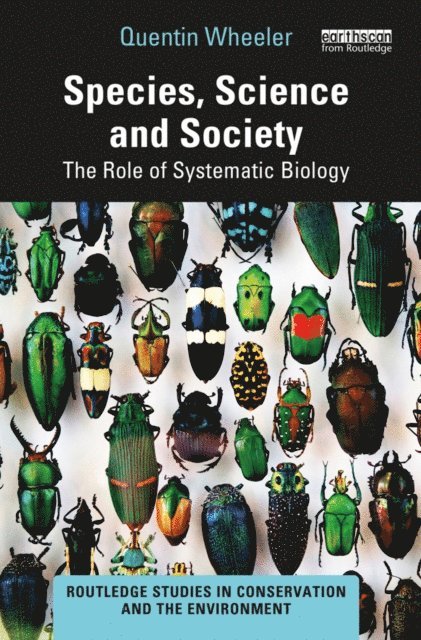
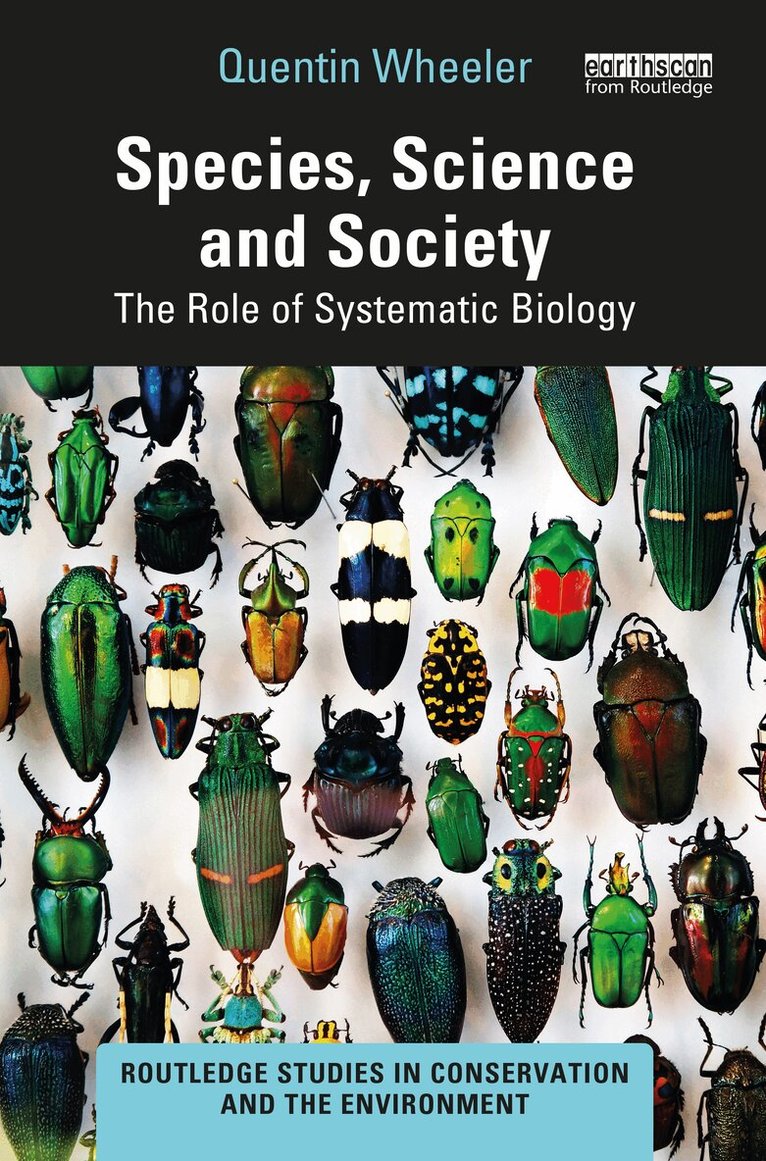
This book presents an engaging and accessible examination of the role of systematic biology in species exploration and biodiversity conservation.Our planet and systematic biology are at a crossroads. Millions of species face an imminent threat of extinction, and, with knowledge of only a fraction of earth’s species we are unprepared to respond. Species, Science and Society explains what is at stake if we continue to ignore the traditional mission of systematics. Rejecting claims that it is too late to document earth’s species, that molecular evidence is sufficient and that comparative morphology and the grand traditions of systematics are outdated, this book makes a compelling argument for a taxonomic renaissance. The book challenges readers to rethink assumptions about systematics. Shattering myths and misconceptions and clarifying the role of systematics in confronting mass extinction, it hopes to inspire a new generation of systematists. Readers are given a deeply personal view of the mission, motivations and rewards of systematic biology. Written in narrative style with passion, wit and optimism, it is the first book to question the growing dominance of molecular data, defend descriptive taxonomy and propose a mission to discover, describe and classify all species. Our evolutionary heritage, the fate of society and the future of the planet depend on what we do next.This book will be of great interest to academics, researchers and professionals working in systematics, taxonomy and biodiversity conservation, as well as students with a basic background in biology.
1 692 kr
Skickas
This book presents an engaging and accessible examination of the role of systematic biology in species exploration and biodiversity conservation.Our planet and systematic biology are at a crossroads. Millions of species face an imminent threat of extinction, and, with knowledge of only a fraction of earth’s species we are unprepared to respond. Species, Science and Society explains what is at stake if we continue to ignore the traditional mission of systematics. Rejecting claims that it is too late to document earth’s species, that molecular evidence is sufficient and that comparative morphology and the grand traditions of systematics are outdated, this book makes a compelling argument for a taxonomic renaissance. The book challenges readers to rethink assumptions about systematics. Shattering myths and misconceptions and clarifying the role of systematics in confronting mass extinction, it hopes to inspire a new generation of systematists. Readers are given a deeply personal view of the mission, motivations and rewards of systematic biology. Written in narrative style with passion, wit and optimism, it is the first book to question the growing dominance of molecular data, defend descriptive taxonomy and propose a mission to discover, describe and classify all species. Our evolutionary heritage, the fate of society and the future of the planet depend on what we do next.This book will be of great interest to academics, researchers and professionals working in systematics, taxonomy and biodiversity conservation, as well as students with a basic background in biology.
Del 86 - Systematics Association Special Volume Series
The Future of Phylogenetic Systematics
The Legacy of Willi Hennig
Inbunden, Engelska, 2016
1 850 kr
Tillfälligt slut
Willi Hennig (1913-76), founder of phylogenetic systematics, revolutionised our understanding of the relationships among species and their natural classification. An expert on Diptera and fossil insects, Hennig's ideas were applicable to all organisms. He wrote about the science of taxonomy or systematics, refining and promoting discussion of the precise meaning of the term 'relationship', the nature of systematic evidence, and how those matters impinge on a precise understanding of monophyly, paraphyly, and polyphyly. Hennig's contributions are relevant today and are a platform for the future. This book focuses on the intellectual aspects of Hennig's work and gives dimension to the future of the subject in relation to Hennig's foundational contributions to the field of phylogenetic systematics. Suitable for graduate students and academic researchers, this book will also appeal to philosophers and historians interested in the legacy of Willi Hennig.