R. Kent Weaver - Böcker
Visar alla böcker från författaren R. Kent Weaver. Handla med fri frakt och snabb leverans.
10 produkter
10 produkter
1 769 kr
Skickas inom 5-8 vardagar
From coping with Covid-19 through to manging climate change, from Brexit through to the barricading of Congress, from democratic disaffection to populist pressures, from historical injustices to contemporary social inequalities, and from scapegoating through to sacrificial lambs... the common thread linking each of these themes and many more is an emphasis on blame. But how do we know who or what is to blame? How do politicians engage in blame-avoidance strategies? How can blaming backfire or boomerang? Are there situations in which politicians might want to be blamed? What is the relationship between avoiding blame and claiming credit? How do developments in relation to machine learning and algorithmic governance affect blame-based assumptions?By focusing on the politics and governance of blame from a range of disciplines, perspectives, and standpoints this volume engages with all these questions and many more. Distinctive contributions include an emphasis on peacekeeping and public diplomacy, on source-credibility and anthropological explanations, on cultural bias and on expert opinions, on polarisation and (de)politicisation, and on trust and post-truth politics. With contributions from the world's leading scholars and emerging research leaders, this volume not only develops the theoretical, disciplinary, empirical, and normative boundaries of blame-based analyses but it also identifies new research agendas and asks distinctive and original questions about the politics and governance of blame.
301 kr
Skickas inom 10-15 vardagar
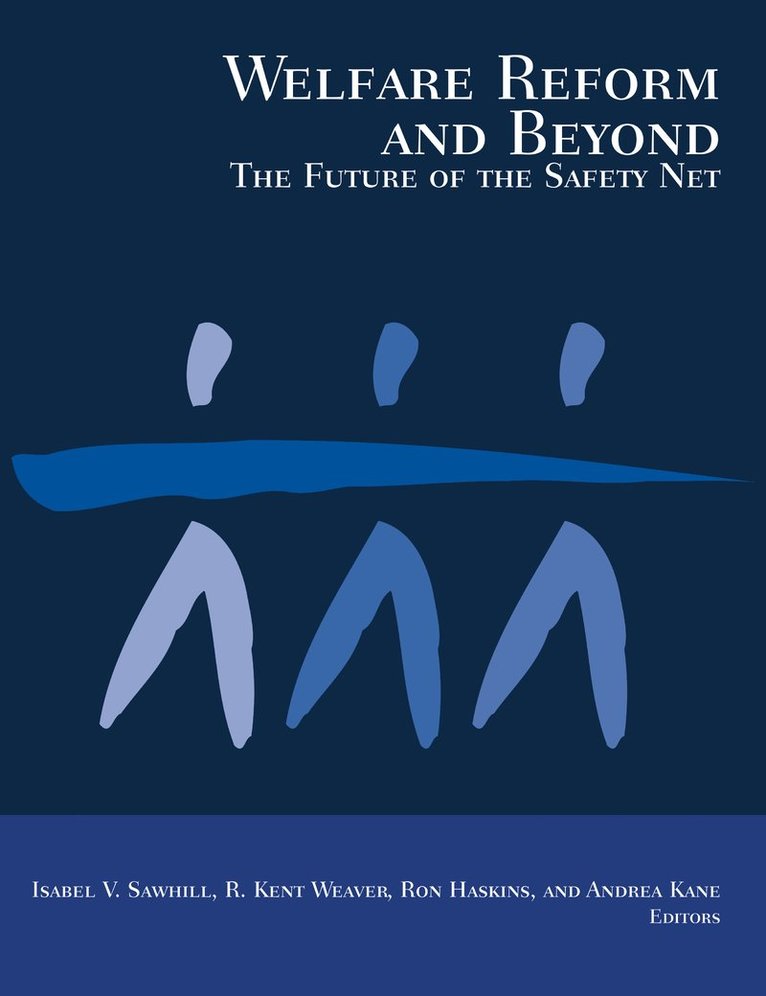
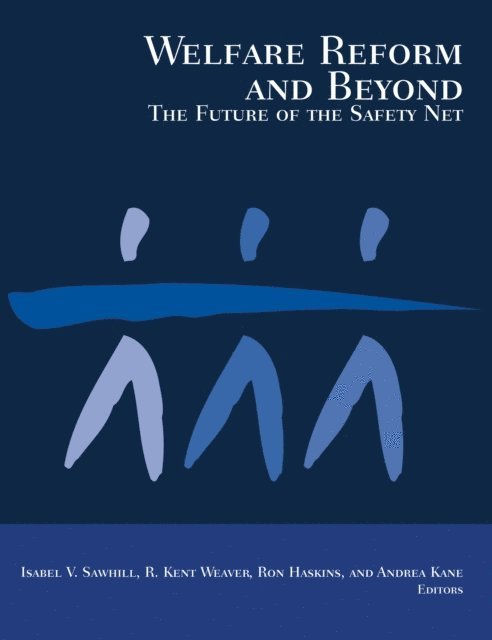
The Brookings Institution's Welfare Reform & Beyond Initiative was created to inform the critical policy debates surrounding the upcoming congressional reauthorization of the Temporary Assistance for Needy Families (TANF) program and a number of related programs that were created or dramatically altered by the 1996 landmark welfare reform legislation. The goal of the project has been to take the large volume of existing and forthcoming research studies and shape them into a more coherent and policy-oriented whole. This capstone collection gathers twenty brief essays (published between January 2001 and February 2002) that focus on assessing the record of welfare reform, specific issues likely to be debated before the TANF reauthorization, and a broader set of policy options for low-income families. It is a reader-friendly volume that will provide policymakers, the press, and the interested public with a comprehensive guide to the numerous issues that must be addressed as Congress considers the future of the nation's antipoverty policies. The collection covers the following topics and features a new introduction from the editors: - An Overview of Effects to Date - Welfare Reform Reauthorization: An Overview of Problems and Issues - A Tax Proposal for Working Families with Children - Welfare Reform and Poverty - Reducing Non-Marital Births - Which Welfare Reforms are Best for Children? - Welfare and the Economy - What Can Be Done to Reduce Teen Pregnancy and Out-of-Wedlock Births? - Changing Welfare Offices - State Programs - Welfare Reform and Employment - Fragile Families, Welfare Reform, and Marriage - Health Insurance, Welfare, and Work - Helping the Hard-to-Employ - Sanctions and Welfare Reform - Child Care and Welfare Reform - Job Retention and Advancement in Welfare Reform - Housing and Welfare Reform - Non-Citizens - Block Grant Structure - Food Stamps - Work Support System - Possible Welfare Reform in the Cities
354 kr
Skickas inom 10-15 vardagar
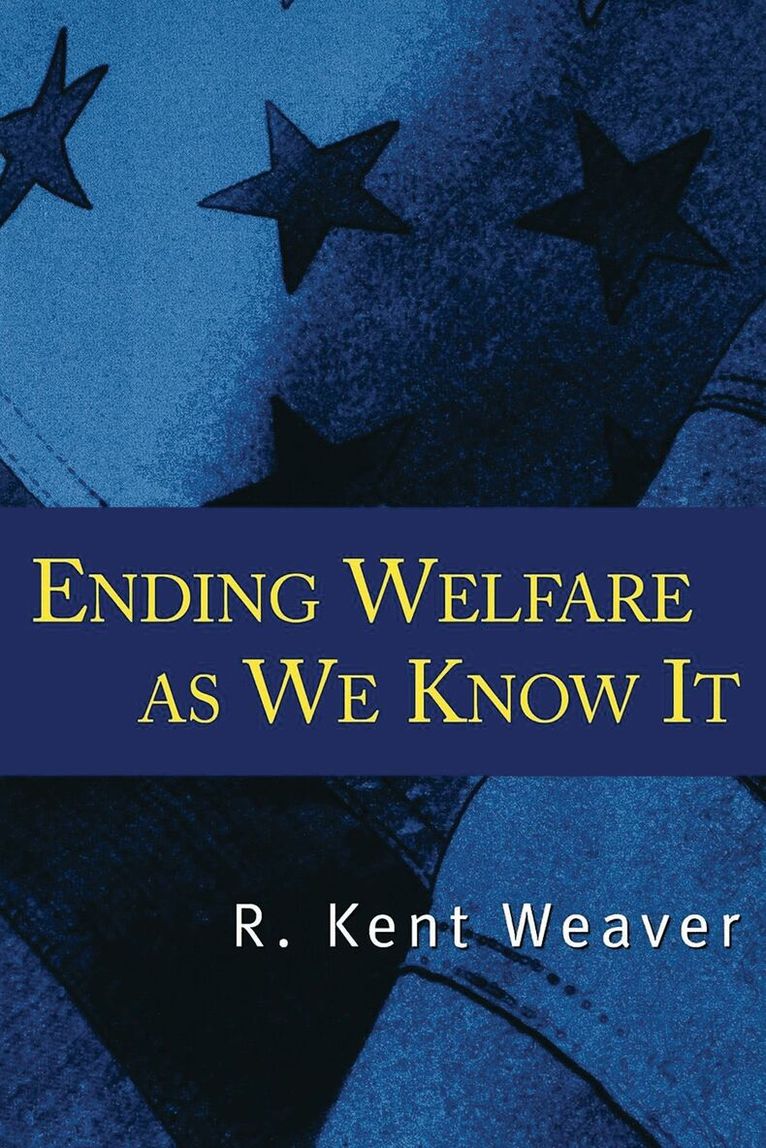
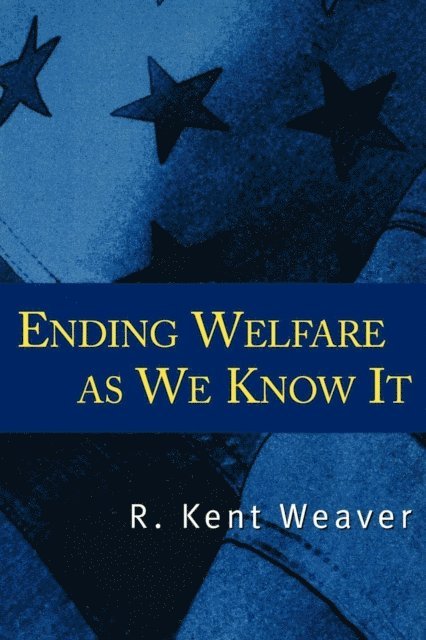
Bill Clinton's first presidential term was a period of extraordinary change in policy toward low-income families. In 1993 Congress enacted a major expansion of the Earned Income Tax Credit for low-income working families. In 1996 Congress passed and the president signed the Personal Responsibility and Work Opportunity Reconciliation Act. This legislation abolished the sixty-year-old Aid to Families with Dependent Children (AFDC) program and replaced it with a block grant program, Temporary Assistance for Needy Families. It contained stiff new work requirements and limits on the length of time people could receive welfare benefits.Dramatic change in AFDC was also occurring piecemeal in the states during these years. States used waivers granted by the federal Department of Health and Human Services to experiment with a variety of welfare strategies, including denial of additional benefits for children born or conceived while a mother received AFDC, work requirements, and time limits on receipt of cash benefits. The pace of change at the state level accelerated after the 1996 federal welfare reform legislation gave states increased leeway to design their programs. Ending Welfare as We Know It analyzes how these changes in the AFDC program came about. In fourteen chapters, R. Kent Weaver addresses three sets of questions about the politics of welfare reform: the dismal history of comprehensive AFDC reform initiatives; the dramatic changes in the welfare reform agenda over the past thirty years; and the reasons why comprehensive welfare reform at the national level succeeded in 1996 after failing in 1995, in 199394, and on many previous occasions. Welfare reform raises issues of race, class, and sex that are as difficult and divisive as any in American politics. While broad social and political trends helped to create a historic opening for welfare reform in the late 1990s, dramatic legislation was not inevitable. The interaction of contextual factors with short-term political and policy calculations by President Clinton and congressional Republicansalong with the cascade of repositioning by other policymakersturned ""ending welfare as we know it"" from political possibility into policy reality.
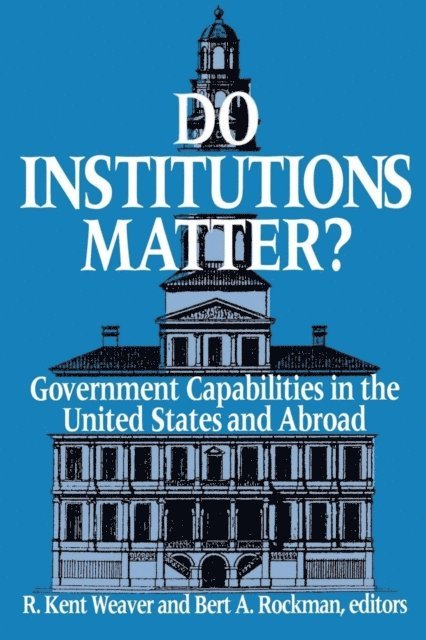
Do Institutions Matter?
Government Capabilities in the United States and Abroad
Häftad, Engelska, 1993
354 kr
Skickas inom 10-15 vardagar
As a stunning tide of democratization sweeps across much of the world, countries must cope with increasing problems of economic development, political and social integration, and greater public demand of scarce resources. That ability to respond effectively to these issues depends largely on the institutional choices of each of these newly democratizing countries. With critics of national political institutions in the United States arguing that the American separation-of-powers system promotes ineffectiveness and policy deadlock, many question whether these countries should emulate American institutions or choose parliamentary institutions instead.The essays in this book fully examine whether parliamentary government is superior to the separation-of-powers system through a direct comparison of the two. In addressing specific policy areassuch as innovation and implementation of energy policies after the oil shocks of 1970, management of societal cleavages, setting of government priorities in budgeting, representation of diffuse interest in environmental policy, and management of defense forcesthe authors define capabilities that allow governments to respond to policy problems.Do Institutions Matter? includes case studies that bear important evidence on when and how institutions influence government effectiveness. The authors discover a widespread variation among parliamentary systems both in institutional arrangements and in governmental capabilities, and find that many of the failings of policy performance commonly attributed to American political institutions are in fact widely shared among western industrial countries. Moreover, they show how American political institutions inhibit some government capabilities while enhancing others. Changing American institutions to improve some aspects of governmental performance could hurt other widely valued capabilities.The authors draw important guidelines for institutional reformers while emphasizing that institutions do have predictable risks and opportunities. They caution that a balance between such risks and opportunities must first be reached before policy reformers try to change political institutions.
274 kr
Skickas inom 10-15 vardagar
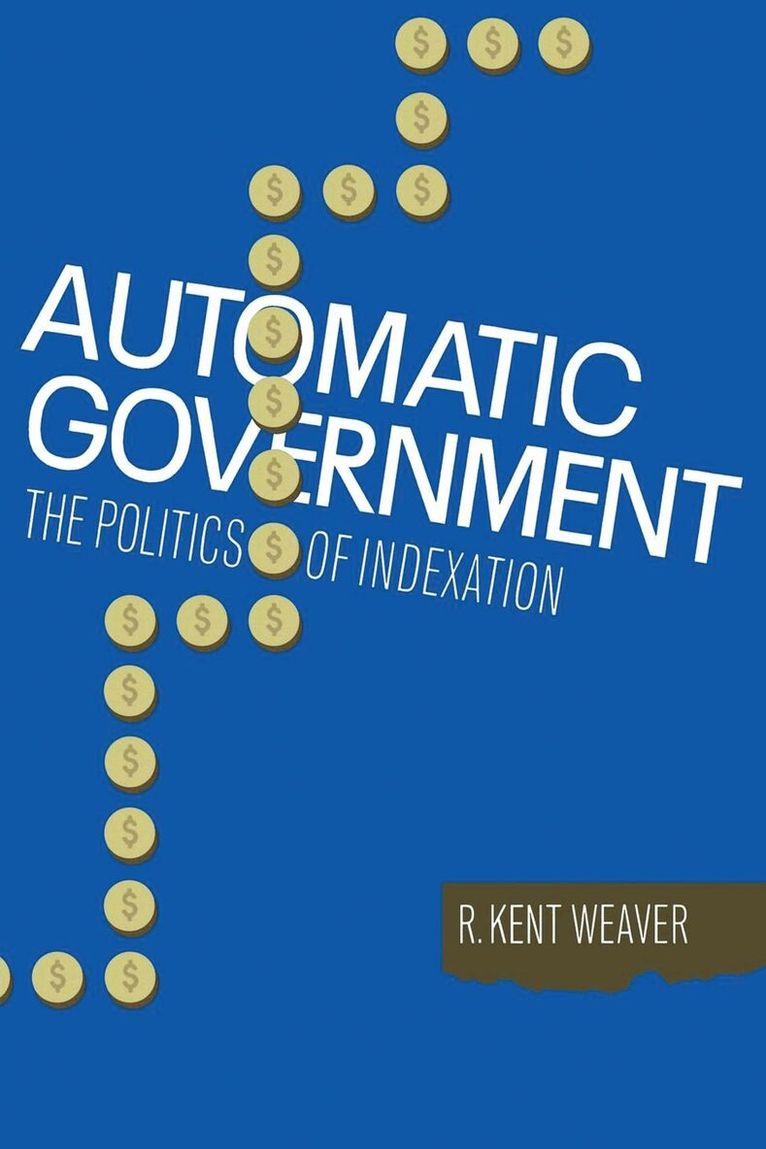
One of the most dramatic and least studied policy changes of the past twenty years is the increased use of indexingautomatic adjustments for inflationin federal programs. Currently, programs comprising more than one-third of the federal budget have indexing provisions. The growth of indexing is all the more remarkable since it appears to conflict with the electoral interests of most politicians. Without indexing, legislators can vote for popular increases in social security benefits, federal pay, and other programs during election years and claim credit with their constituents for doing so. Indexing tends to keep such votes off the agenda. Why would politicians renounce these credit-claiming opportunities instead of embracing them? R. Kent Weaver examines the reasons for the growth of indexing in federal programs and its consequences for current policy. He focuses on indexing debates in six policy areas: social security, food stamps, congressional pay, dairy price supports, the minimum wage, and federal income tax brackets. Weaver argues that to understand indexation policyand policymaking in generalwe must broaden our understanding of policymakers' motivations. They have often given up opportunities to claim credit because they are even more concerned with avoiding blame for unpopular decisions and outcomes. Politicians' efforts to avoid blame for unpopular actions not only have determined whether indexing proposals were adopted, but have also shaped the effects of indexing on programs where it was adopted. Weaver shows that the effects of indexing have varied substantially across programs, and he suggests guidelines for the future use of indexing in federal programs.
1 939 kr
Tillfälligt slut
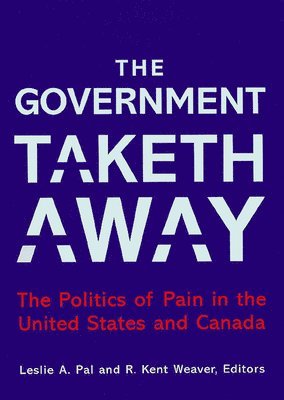
Democratic government is about making choices. Sometimes those choices involve the distribution of benefits. At other times they involve the imposition of some type of loss—a program cut, increased taxes, or new regulatory standards. Citizens will resist such impositions if they can, or will try to punish governments at election time. The dynamics of loss imposition are therefore a universal—if unpleasant—element of democratic governance. The Government Taketh Away examines the repercussions of unpopular government decisions in Canada and the United States, the two great democratic nations of North America.Pal, Weaver, and their contributors compare the capacities of the U.S. presidential system and the Canadian Westminster system to impose different types of losses: symbolic losses (gun control and abortion), geographically concentrated losses (military base closings and nuclear waste disposal), geographically dispersed losses (cuts to pensions and to health care), and losses imposed on business (telecommunications deregulation and tobacco control). Theory holds that Westminster-style systems should, all things being equal, have a comparative advantage in loss imposition because they concentrate power and authority, though this can make it easier to pin blame on politicians too. The empirical findings of the cases in this book paint a more complex picture. Westminster systems do appear to have some robust abilities to impose losses, and US institutions provide more opportunities for loss-avoiders to resist government policy in some sectors. But in most sectors, outcomes in the two countries are strikingly similar.The Government Taketh Away is essential for the scholar and students of public policy or comparative policy. It is also an important book for the average citizen who wants to know more about the complexities of living in a democratic society where the government can give-but how it can also, sometimes painfully, "taketh away."
611 kr
Skickas inom 7-10 vardagar
Democratic government is about making choices. Sometimes those choices involve the distribution of benefits. At other times they involve the imposition of some type of loss-a program cut, increased taxes, or new regulatory standards. Citizens will resist such impositions if they can, or will try to punish governments at election time. The dynamics of loss imposition are therefore a universal-if unpleasant-element of democratic governance. The Government Taketh Away examines the repercussions of unpopular government decisions in Canada and the United States, the two great democratic nations of North America. Pal, Weaver, and their contributors compare the capacities of the U.S. presidential system and the Canadian Westminster system to impose different types of losses: symbolic losses (gun control and abortion), geographically concentrated losses (military base closings and nuclear waste disposal), geographically dispersed losses (cuts to pensions and to health care), and losses imposed on business (telecommunications deregulation and tobacco control).Theory holds that Westminster-style systems should, all things being equal, have a comparative advantage in loss imposition because they concentrate power and authority, though this can make it easier to pin blame on politicians too. The empirical findings of the cases in this book paint a more complex picture. Westminster systems do appear to have some robust abilities to impose losses, and US institutions provide more opportunities for loss-avoiders to resist government policy in some sectors. But in most sectors, outcomes in the two countries are strikingly similar. The Government Taketh Away is essential for the scholar and students of public policy or comparative policy. It is also an important book for the average citizen who wants to know more about the complexities of living in a democratic society where the government can give-but how it can also, sometimes painfully, "taketh away."
234 kr
Kommande
In multilevel governance systems, member states work together to address cross-border problems, yet people still lack a clear understanding of how and why their policies differ or converge. Existing research offers many explanations but often treats them separately or overstates the EU's independent influence. This Element brings these perspectives together in a single framework of policy dynamics. It distinguishes policy areas shaped mainly by EU institutions or member states, or by their interaction. It introduces an actor-centered typology of policy dynamics - stable patterns of actors, incentives, and mechanisms that shape policy over time. The Element shows that these dynamics matter only when governments, interest groups, and NGOs have the incentives, capacity, and leverage to build coalitions and pursue goals. The policy dynamics framework helps learners identify likely causal mechanisms and supports clearer comparison, explanation, and teaching of EU policymaking. This title is also available as Open Access on Cambridge Core.
753 kr
Kommande
In multilevel governance systems, member states work together to address cross-border problems, yet people still lack a clear understanding of how and why their policies differ or converge. Existing research offers many explanations but often treats them separately or overstates the EU's independent influence. This Element brings these perspectives together in a single framework of policy dynamics. It distinguishes policy areas shaped mainly by EU institutions or member states, or by their interaction. It introduces an actor-centered typology of policy dynamics - stable patterns of actors, incentives, and mechanisms that shape policy over time. The Element shows that these dynamics matter only when governments, interest groups, and NGOs have the incentives, capacity, and leverage to build coalitions and pursue goals. The policy dynamics framework helps learners identify likely causal mechanisms and supports clearer comparison, explanation, and teaching of EU policymaking. This title is also available as Open Access on Cambridge Core.
234 kr
Skickas inom 7-10 vardagar
Although the idea that existing policies can have major effects on politics and policy development is hardly new, the last three decades witnessed a major expansion of policy feedback scholarship, which focuses on the mechanisms through which existing policies shape politics and policy development. Starting with a discussion of the origins of the concept of policy feedback, this element explores early and more recent contributions of the policy feedback literature to clarify the meaning of this concept and its contribution to both political science and policy studies. After exploring the rapidly expanding scholarship on policy feedback and mass politics, this element also puts forward new research agendas that stress several ways forward, including the need to explain both institutional and policy continuity and change. Finally, the element discusses the practical implications of policy feedback research through a discussion of its potential impact on policy design. This title is also available as Open Access on Cambridge Core.