Leslie A. Pal – författare
Visar alla böcker från författaren Leslie A. Pal. Handla med fri frakt och snabb leverans.
15 produkter
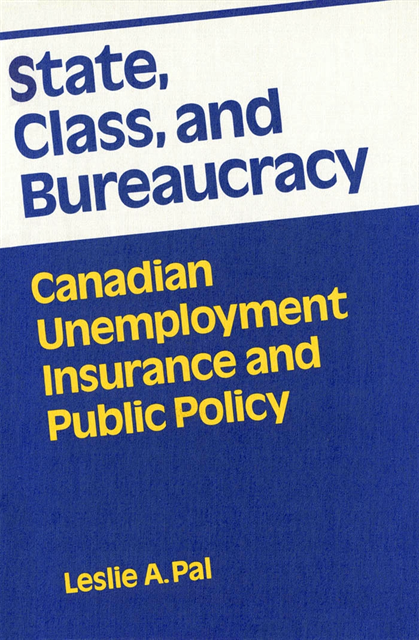
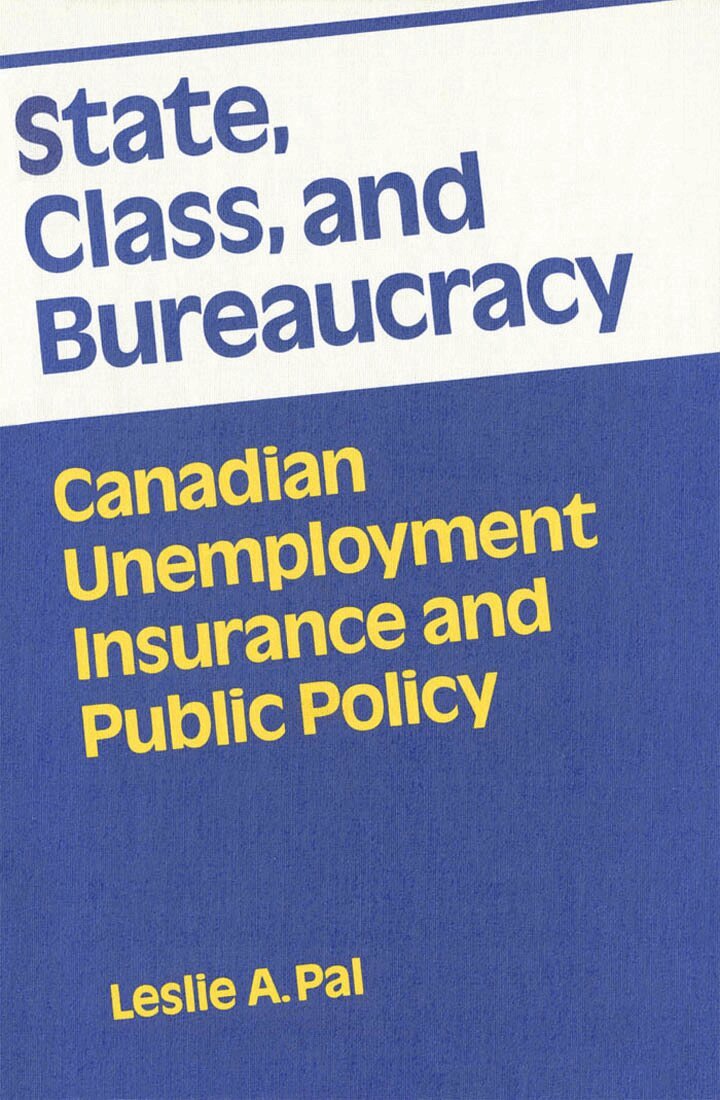
State, Class, and Bureaucracy
Canadian Unemployment Insurance and Public Policy
E-bok, 1988
1008 kr
Lägg i varukorg
In reviewing the history of Canadian UI, Pal shows that while capital and labour had substantial disagreements over policy, their representations to state officials rarely had any decisive impact on policy development. The author suggests that bureaucratic forces, including organizational ideology …
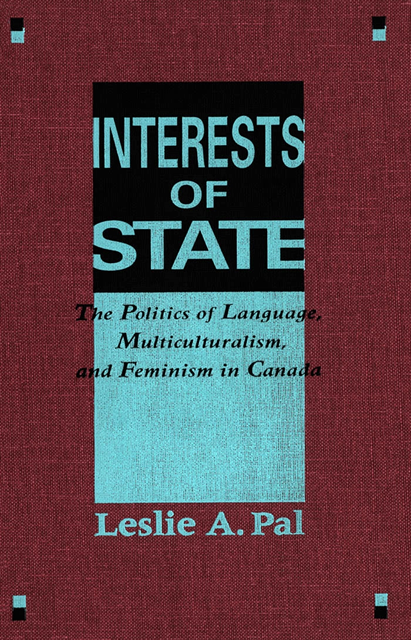
Interests of State
The Politics of Language, Multiculturalism, and Feminism in Canada
E-bok, 1993
1041 kr
Lägg i varukorg
Leslie Pal explores a phenomenon unique to Canadian politics - the direct funding of advocacy groups by the government - and makes a significant contribution to the debate on the role of the state in shaping society. Focusing on groups concerned with the official languages, multiculturalism, and …
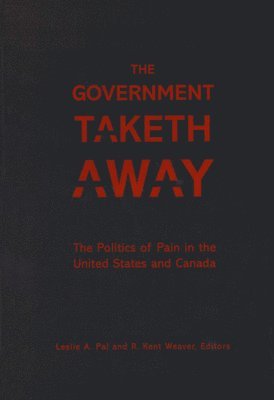
Government Taketh Away
The Politics of Pain in the United States and Canada
Av Leslie A. Pal, R. Kent Weaver
Häftad, 2003
629 kr
Lägg i varukorg
Democratic government is about making choices. Sometimes those choices involve the distribution of benefits. At other times they involve the imposition of some type of loss-a program cut, increased taxes, or new regulatory standards. Citizens will resist such impositions if they can, or will try to …
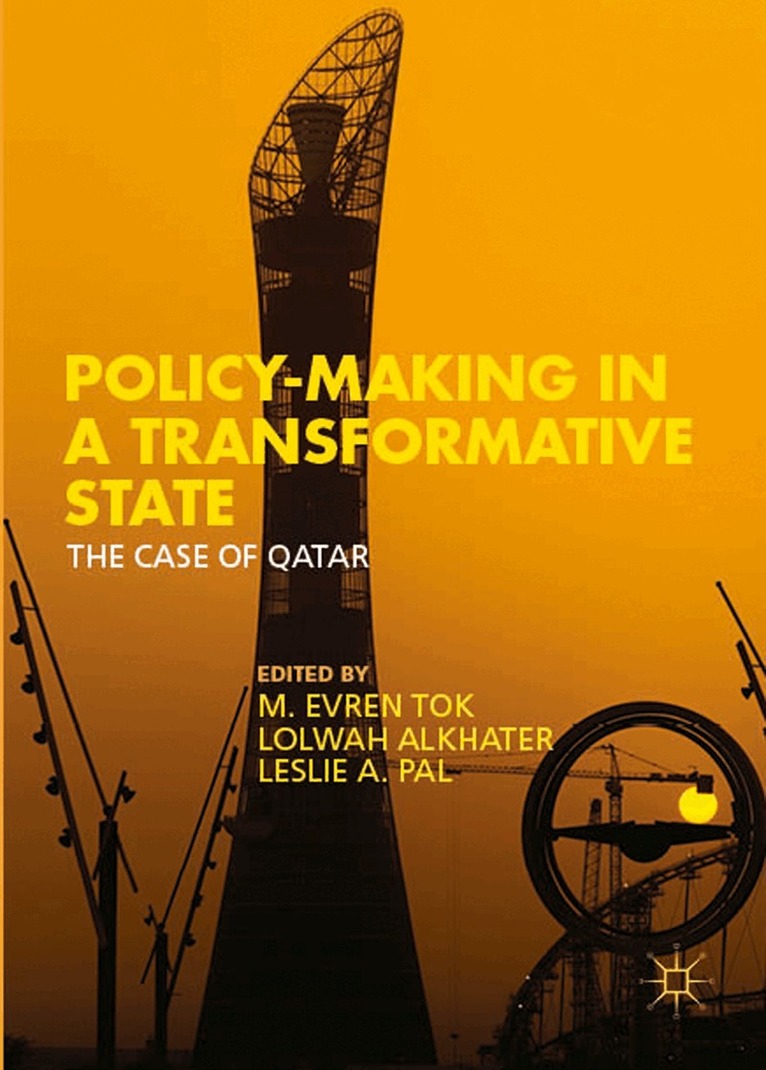
Policy-Making in a Transformative State
The Case of Qatar
Av M. Evren Tok, Lolwah R. M. Alkhater m. fl.
Inbunden, 2016
1857 kr
Lägg i varukorg
This book explores, in a series of detailedcase studies, how public policy is actually made in Qatar. While Qatar is aGulf monarchy, its governance is complex. Other analysts have tried to come togrips with this complexity using qualified descriptions of the system such as 'late rentier,' …
Policy-Making in a Transformative State
The Case of Qatar
Av Leslie A. Pal, Lolwah R. M. Alkhater m. fl.
E-bok, 2016
2533 kr
Lägg i varukorg
This book explores, in a series of detailedcase studies, how public policy is actually made in Qatar. While Qatar is aGulf monarchy, its governance is complex. Other analysts have tried to come togrips with this complexity using qualified descriptions of the system such as ''late rentier,'' …
Public Policy Transfer
Micro-Dynamics and Macro-Effects
Av Magdaléna Hadjiisky, Leslie A. Pal m. fl.
Inbunden, 2017
2325 kr
Lägg i varukorg
Public Policy Transfer highlights how local adaptations and innovations contribute to ongoing policy development, as domestic policy-making activity becomes increasingly engaged with global networks. This work draws together various disciplinary perspectives that dominate the study of policy …
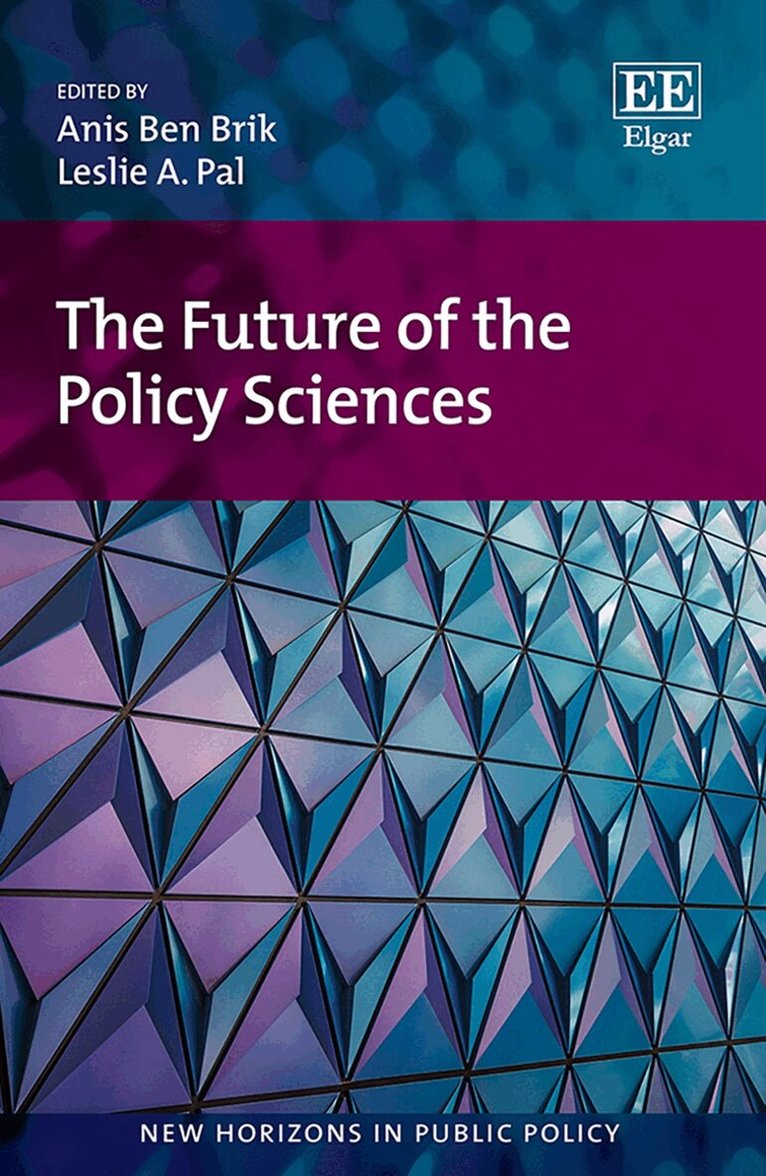
Future of the Policy Sciences
Av Anis B. Brik, Leslie A. Pal
Inbunden, 2021
1859 kr
Lägg i varukorg
This forward-thinking book examines the future of public policy as a discipline, both as it is taught and as it is practiced. Critically assessing the limits of current theories and approaches, leading scholars in the field highlight new models and perspectives.Chapters present data on what is …
Future of the Policy Sciences
Av Leslie A. Pal, Anis B. Brik
E-bok, 2021
446 kr
Lägg i varukorg
This forward-thinking book examines the future of public policy as a discipline, both as it is taught and as it is practiced. Critically assessing the limits of current theories and approaches, leading scholars in the field highlight new models and perspectives. Chapters present data on what is …
Global Governance and Muslim Organizations
Av Leslie A. Pal, M. Evren Tok
Häftad, 2019
1237 kr
Lägg i varukorg
There are 1.6 billion Muslims in the world, represented on the world stage by 57 states, as well as a host of international organizations and associations. This book critically examines the engagement of these states in systems of global governance and with a variety of policy regimes, including …
Global Governance and Muslim Organizations
Av Leslie A. Pal, M. Evren Tok
Inbunden, 2018
1422 kr
Lägg i varukorg
There are 1.6 billion Muslims in the world, represented on the world stage by 57 states, as well as a host of international organizations and associations. This book critically examines the engagement of these states in systems of global governance and with a variety of policy regimes, including …
Global Governance and Muslim Organizations
Av M. Evren Tok, Leslie A. Pal
E-bok, 2018
1746 kr
Lägg i varukorg
There are 1.6 billion Muslims in the world, represented on the world stage by 57 states, as well as a host of international organizations and associations. This book critically examines the engagement of these states in systems of global governance and with a variety of policy regimes, including …
State, Class, and Bureaucracy
Canadian Unemployment Insurance and Public Policy
Inbunden, 1988
1406 kr
Tillfälligt slut
In reviewing the history of Canadian UI, Pal shows that while capital and labour had substantial disagreements over policy, their representations to state officials rarely had any decisive impact on policy development. The author suggests that bureaucratic forces, including organizational ideology …
Interests of State
The Politics of Language, Multiculturalism, and Feminism in Canada
Häftad, 1995
441 kr
Tillfälligt slut
Leslie Pal explores a phenomenon unique to Canadian politics - the direct funding of advocacy groups by the government - and makes a significant contribution to the debate on the role of the state in shaping society. Focusing on groups concerned with the official languages, multiculturalism, and …
Government Taketh Away
The Politics of Pain in the United States and Canada
Av Leslie A. Pal, R. Kent Weaver
Inbunden, 2003
2039 kr
Tillfälligt slut
Democratic government is about making choices. Sometimes those choices involve the distribution of benefits. At other times they involve the imposition of some type of loss—a program cut, increased taxes, or new regulatory standards. Citizens will resist such impositions if they can, or will try to …
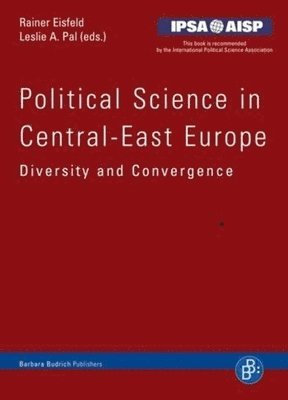
Political Science in Central-East Europe
Diversity and Convergence
Av Rainer Eisfeld, Leslie A. Pal
Inbunden, 2010
844 kr
Tillfälligt slut
The book will survey the recent development and current “state of the art” of political science in post-communist Central and Eastern Europe. It will comprise (a) three comparative overviews: Political Science and Regime Change in East-Central Europe from the 20th to the 21st Century; Analytical …