Isabel V. Sawhill – författare
Visar alla böcker från författaren Isabel V. Sawhill. Handla med fri frakt och snabb leverans.
13 produkter
13 produkter
E-bok
Engelska, 2018205 kr
Läs direkt efter köp
A sobering account of a disenfranchised American working class and important policy solutions to the nation's economic inequalities One of the country's leading scholars on economics and social policy, Isabel Sawhill addresses the enormous divisions in American society-economic, cultural, and political-and what might be done to bridge them. Widening inequality and the loss of jobs to trade and technology has left a significant portion of the American workforce disenfranchised and skeptical of governments and corporations alike. And yet both have a role to play in improving the country for all. Sawhill argues for a policy agenda based on mainstream values, such as family, education, and work. Although many have lost faith in government programs designed to help them, there are still trusted institutions on both the local and the federal level that can deliver better job opportunities and higher wages to those who have been left behind. At the same time, the private sector needs to reexamine how it trains and rewards employees. This book provides a clear headed and middle way path to a better functioning society in which personal responsibility is honored and inclusive capitalism and more broadly shared growth are once more the norm.
Häftad, Engelska, 2009
451 kr
Skickas inom 10-15 vardagar
Americans believe economic opportunity is as fundamental a right as life, liberty, and the pursuit of happiness. More concerned about a level playing field for all, they worry less about the growing income and wealth disparity in our country. Creating an Opportunity Society examines economic opportunity in the United States and explores how to create more of it, particularly for those on the bottom rungs of the economic ladder.Ron Haskins and Isabel Sawhill propose a concrete agenda for increasing opportunity that is cost effective, consistent with American values, and focuses on improving the lives of the young and the disadvantaged. They emphasize individual responsibility as an indispensable basis for successful policies and programs.The authors recommend a three-pronged approach to create more opportunity in America: Increase education for children and youth at the preschool, K12, and postsecondary levels Encourage and support work among adults Reduce the number of out-of-wedlock births while increasing the share of children reared by their married parentsWith concern for the federal deficit in mind, Haskins and Sawhill argue for reallocating existing resources, especially from the affluent elderly to disadvantaged children and their families. The authors are optimistic that a judicious use of the nation's resources can level the playing field and produce more opportunity for all.Creating an Opportunity Society offers the most complete summary available of the facts and the factors that contribute to economic opportunity. It looks at the poor, the middle class, and the rich, providing deep background data on how each group has fared in recent decades. Unfortunately, only the rich have made substantial progress, making this book a timely guide forward for anyone interested in what we can do as a society to improve the prospects for our less-advantaged families and fellow citizens.
E-bok
PDF, Engelska, 2009484 kr
Läs direkt efter köp
Americans believe economic opportunity is as fundamental a right as life, liberty, and the pursuit of happiness. More concerned about a level playing field for all, they worry less about the growing income and wealth disparity in our country. Creating an Opportunity Society examines economic opportunity in the United States and explores how to create more of it, particularly for those on the bottom rungs of the economic ladder.Ron Haskins and Isabel Sawhill propose a concrete agenda for increasing opportunity that is cost effective, consistent with American values, and focuses on improving the lives of the young and the disadvantaged. They emphasize individual responsibility as an indispensable basis for successful policies and programs.The authors recommend a three-pronged approach to create more opportunity in America: Increase education for children and youth at the preschool, K12, and postsecondary levels Encourage and support work among adults Reduce the number of out-of-wedlock births while increasing the share of children reared by their married parentsWith concern for the federal deficit in mind, Haskins and Sawhill argue for reallocating existing resources, especially from the affluent elderly to disadvantaged children and their families. The authors are optimistic that a judicious use of the nation's resources can level the playing field and produce more opportunity for all.Creating an Opportunity Society offers the most complete summary available of the facts and the factors that contribute to economic opportunity. It looks at the poor, the middle class, and the rich, providing deep background data on how each group has fared in recent decades. Unfortunately, only the rich have made substantial progress, making this book a timely guide forward for anyone interested in what we can do as a society to improve the prospects for our less-advantaged families and fellow citizens.
Häftad, Engelska, 2002
311 kr
Skickas inom 10-15 vardagar
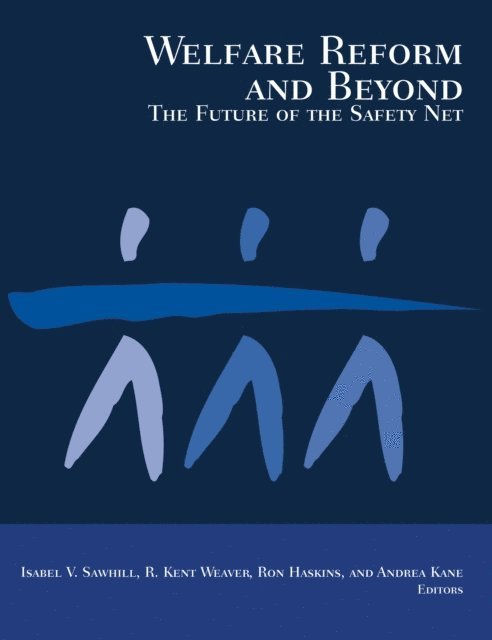
The Brookings Institution's Welfare Reform & Beyond Initiative was created to inform the critical policy debates surrounding the upcoming congressional reauthorization of the Temporary Assistance for Needy Families (TANF) program and a number of related programs that were created or dramatically altered by the 1996 landmark welfare reform legislation. The goal of the project has been to take the large volume of existing and forthcoming research studies and shape them into a more coherent and policy-oriented whole. This capstone collection gathers twenty brief essays (published between January 2001 and February 2002) that focus on assessing the record of welfare reform, specific issues likely to be debated before the TANF reauthorization, and a broader set of policy options for low-income families. It is a reader-friendly volume that will provide policymakers, the press, and the interested public with a comprehensive guide to the numerous issues that must be addressed as Congress considers the future of the nation's antipoverty policies. The collection covers the following topics and features a new introduction from the editors: - An Overview of Effects to Date - Welfare Reform Reauthorization: An Overview of Problems and Issues - A Tax Proposal for Working Families with Children - Welfare Reform and Poverty - Reducing Non-Marital Births - Which Welfare Reforms are Best for Children? - Welfare and the Economy - What Can Be Done to Reduce Teen Pregnancy and Out-of-Wedlock Births? - Changing Welfare Offices - State Programs - Welfare Reform and Employment - Fragile Families, Welfare Reform, and Marriage - Health Insurance, Welfare, and Work - Helping the Hard-to-Employ - Sanctions and Welfare Reform - Child Care and Welfare Reform - Job Retention and Advancement in Welfare Reform - Housing and Welfare Reform - Non-Citizens - Block Grant Structure - Food Stamps - Work Support System - Possible Welfare Reform in the Cities
E-bok
Engelska, 2014383 kr
Läs direkt efter köp
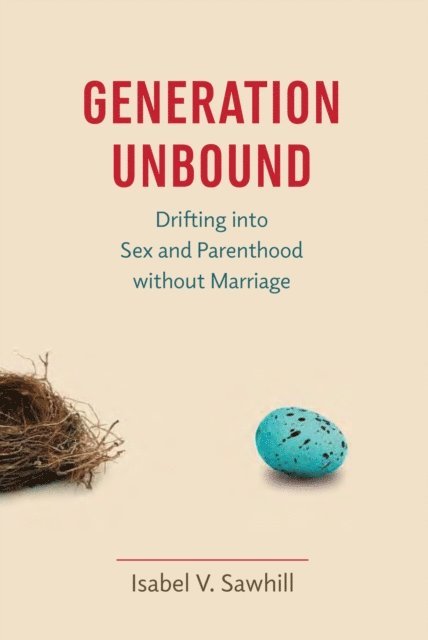
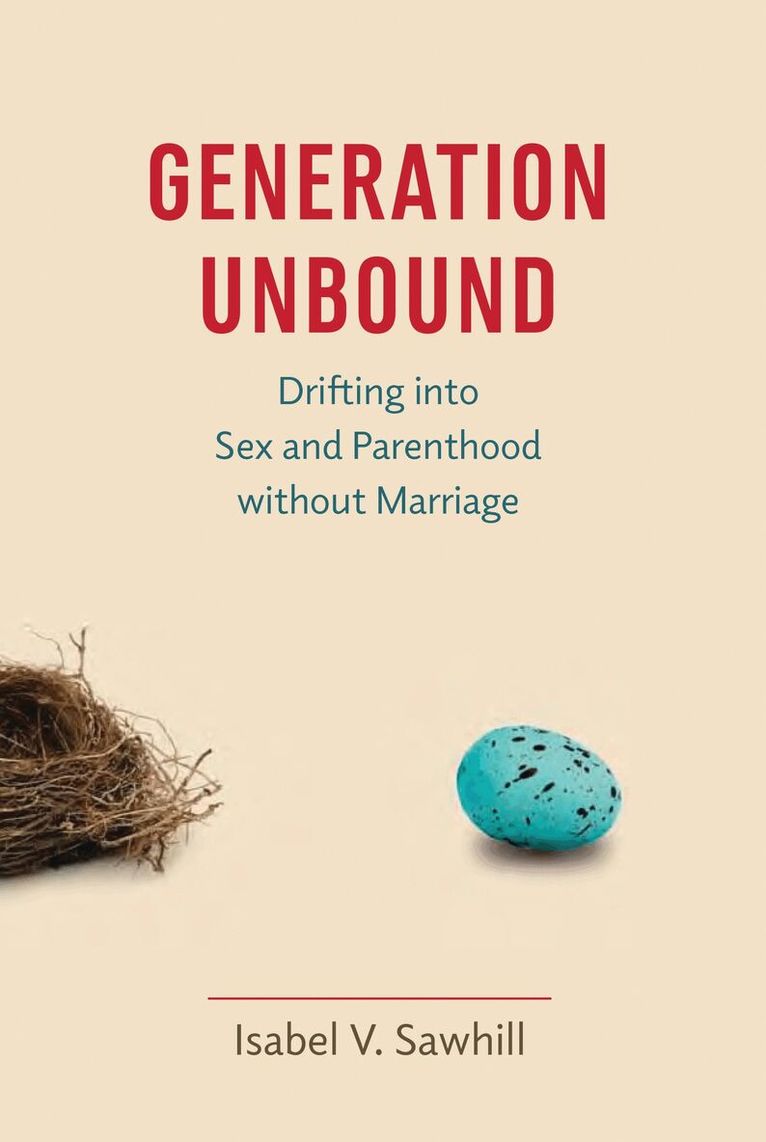
Over half of all births to young adults in the United States now occur outside of marriage, and many are unplanned. The result is increased poverty and inequality for children. The left argues for more social support for unmarried parents; the right argues for a return to traditional marriage.In Generation Unbound, Isabel V. Sawhill offers a third approach: change ""drifters"" into ""planners."" In a well-written and accessible survey of the impact of family structure on child well-being, Sawhill contrasts ""planners,"" who are delaying parenthood until after they marry, with ""drifters,"" who are having unplanned children early and outside of marriage. These two distinct patterns are contributing to an emerging class divide and threatening social mobility in the United States.Sawhill draws on insights from the new field of behavioral economics, showing that it is possible, by changing the default, to move from a culture that accepts a high number of unplanned pregnancies to a culture in which adults only have children when they are ready to be a parent.
Häftad, Engelska, 2014
356 kr
Skickas inom 10-15 vardagar
Over half of all births to young adults in the United States now occur outside of marriage, and many are unplanned. The result is increased poverty and inequality for children. The left argues for more social support for unmarried parents; the right argues for a return to traditional marriage.In Generation Unbound, Isabel V. Sawhill offers a third approach: change ""drifters"" into ""planners."" In a well-written and accessible survey of the impact of family structure on child well-being, Sawhill contrasts ""planners,"" who are delaying parenthood until after they marry, with ""drifters,"" who are having unplanned children early and outside of marriage. These two distinct patterns are contributing to an emerging class divide and threatening social mobility in the United States.Sawhill draws on insights from the new field of behavioral economics, showing that it is possible, by changing the default, to move from a culture that accepts a high number of unplanned pregnancies to a culture in which adults only have children when they are ready to be a parent.
Häftad, Engelska, 2003
277 kr
Skickas inom 10-15 vardagar
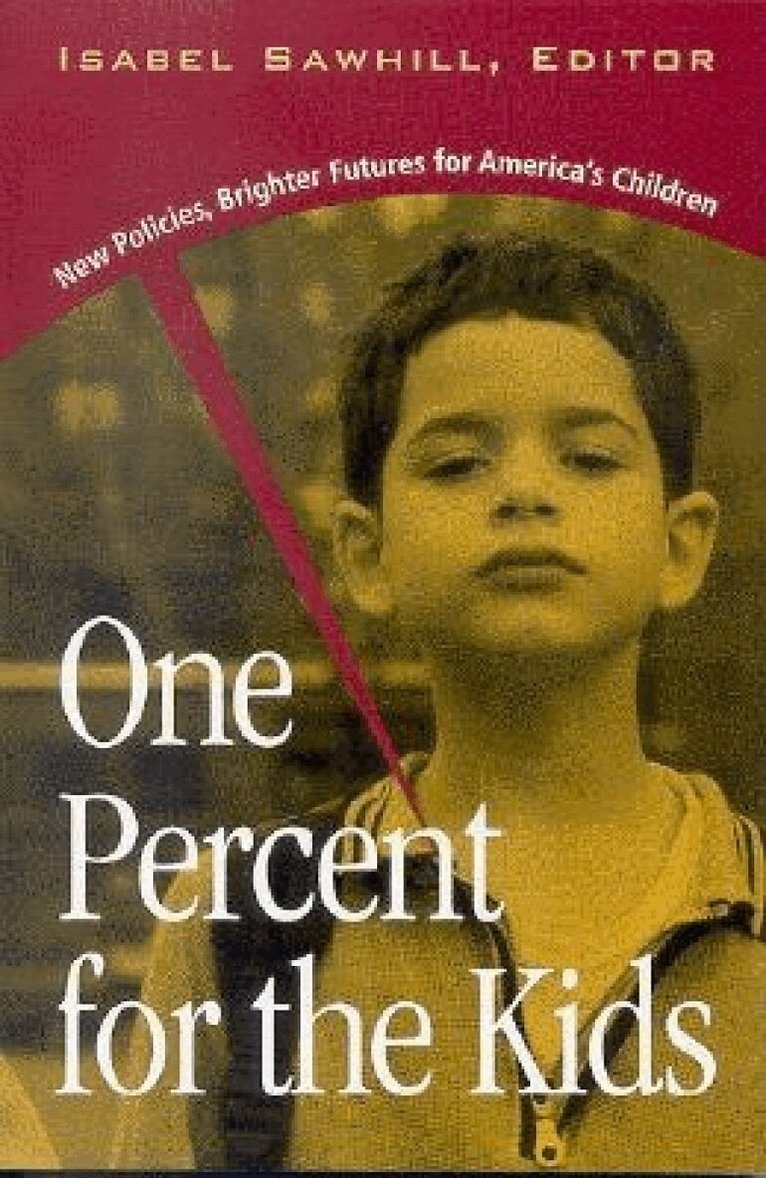
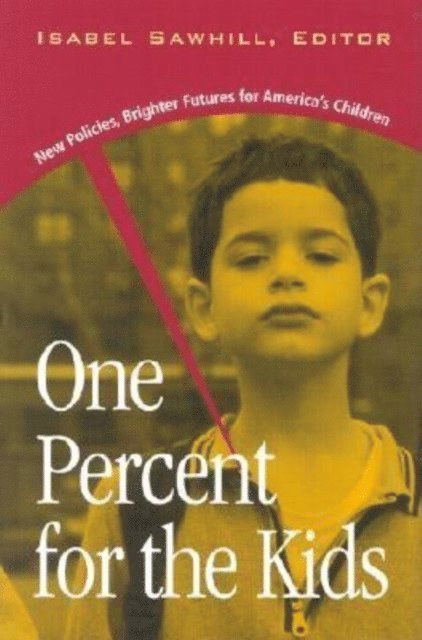
In the United States, long considered the land of opportunity, children born into different types of families begin life with very unequal prospects. A growing group of children is being raised in families in which a poorly educated mother begins childbearing at an early age, often outside marriage, and ends up dependent on public welfare. Another group is raised by parents who delay childbearing until they are well-educated, married, and have stable jobs; these children go on to lead more advantageous lives. While virtually everyone talks about the importance of investing in the next generation, in the late 1990s federal spending on children represented only 2 percent of the nation's gross domestic product. This volume argues forcefully that the life prospects of children at the bottom of the socioeconomic ladder can be improved substantiallyand the growing gap between them and more privileged children reducedby making appropriate investments now. Taking their cue on funding from the Blair government in the United Kingdom, which since 1997 has invested almost an extra 1 percent of GDP to reducing child poverty, the contributors offer specific proposals, along with their rationales and costs, to improve early childhood education and health care, bolster family income and work, reduce teen pregnancy, encourage and strengthen marriage, and allow families to move to better neighborhoods. The final chapter assesses the progress of the Blair government toward reaching its goals. Contributors include Isabel Sawhill (Brookings Institution), Greg Duncan (Northwestern University), Katherine Magnuson (Columbia University), Andrea Kane (Brookings Institution), Sara McLanahan (Princeton University), Irwin Garfinkel (Columbia University), Robert Haveman (University of WisconsinMadison), Jens Ludwig (Georgetown University), David Armor (George Mason University), Barbara Wolfe (University of WisconsinMadison), Scott Scrivner (Public/Private Ventures), and John H
E-bok
PDF, Engelska, 2004292 kr
Läs direkt efter köp
In the United States, long considered the land of opportunity, children born into different types of families begin life with very unequal prospects. A growing group of children is being raised in families in which a poorly educated mother begins childbearing at an early age, often outside marriage, and ends up dependent on public welfare. Another group is raised by parents who delay childbearing until they are well-educated, married, and have stable jobs; these children go on to lead more advantageous lives. While virtually everyone talks about the importance of investing in the next generation, in the late 1990s federal spending on children represented only 2 percent of the nation's gross domestic product. This volume argues forcefully that the life prospects of children at the bottom of the socioeconomic ladder can be improved substantiallyand the growing gap between them and more privileged children reducedby making appropriate investments now. Taking their cue on funding from the Blair government in the United Kingdom, which since 1997 has invested almost an extra 1 percent of GDP to reducing child poverty, the contributors offer specific proposals, along with their rationales and costs, to improve early childhood education and health care, bolster family income and work, reduce teen pregnancy, encourage and strengthen marriage, and allow families to move to better neighborhoods. The final chapter assesses the progress of the Blair government toward reaching its goals. Contributors include Isabel Sawhill (Brookings Institution), Greg Duncan (Northwestern University), Katherine Magnuson (Columbia University), Andrea Kane (Brookings Institution), Sara McLanahan (Princeton University), Irwin Garfinkel (Columbia University), Robert Haveman (University of WisconsinMadison), Jens Ludwig (Georgetown University), David Armor (George Mason University), Barbara Wolfe (University of WisconsinMadison), Scott Scrivner (Public/Private Ventures), and John H
Häftad, Engelska, 2004
271 kr
Skickas inom 10-15 vardagar
The United States is standing at a critical juncture in its fiscal outlook. After experiencing a brief period of budget surpluses at the turn of the century, the federal government will run deficits that add about $4 trillion to the national debt over the next decade. Substantial deficits will likely continue long into the future because the looming retirement of the baby boom generation will raise spending in Social Security, Medicare, and Medicaid. At the same time, the federal government appears to be neglecting spending in key areas of social and economic policy. The nation thus faces a vital choice: continue down a path toward future fiscal crisis while under investing in critical areas, or increase resources in high-priority areas while also reducing the overall budget deficit. This choice will materially affect Americans' economic status and security in the immediate future as well as over long horizons. In R estoring Fiscal Sanity, a group of Brookings scholars with high-level government experience provide an overview of the country's likely medium- and long-term spending needs and the resources available to pay for them. They propose three alternative fiscal paths that are more responsible than the current path. One plan emphasizes spending cuts, the second emphasizes revenue increases, and a third is a balanced mix between the two.The contributors address the policy choices in such areas as defense, homeland security, international assistance, and programs targeted to the less advantaged, the elderly, and other domestic priorities. In the process, they provide an understanding of the short- and long-run trade offs and illustrate how the budget can be reshaped to achieve high priority objectives in a fiscally responsible way.
E-bok
PDF, Engelska, 2004288 kr
Läs direkt efter köp
The United States is standing at a critical juncture in its fiscal outlook. After experiencing a brief period of budget surpluses at the turn of the century, the federal government will run deficits that add about $4 trillion to the national debt over the next decade. Substantial deficits will likely continue long into the future because the looming retirement of the baby boom generation will raise spending in Social Security, Medicare, and Medicaid. At the same time, the federal government appears to be neglecting spending in key areas of social and economic policy. The nation thus faces a vital choice: continue down a path toward future fiscal crisis while under investing in critical areas, or increase resources in high-priority areas while also reducing the overall budget deficit. This choice will materially affect Americans' economic status and security in the immediate future as well as over long horizons. In R estoring Fiscal Sanity, a group of Brookings scholars with high-level government experience provide an overview of the country's likely medium- and long-term spending needs and the resources available to pay for them. They propose three alternative fiscal paths that are more responsible than the current path. One plan emphasizes spending cuts, the second emphasizes revenue increases, and a third is a balanced mix between the two.The contributors address the policy choices in such areas as defense, homeland security, international assistance, and programs targeted to the less advantaged, the elderly, and other domestic priorities. In the process, they provide an understanding of the short- and long-run trade offs and illustrate how the budget can be reshaped to achieve high priority objectives in a fiscally responsible way.
E-bok
PDF, Engelska, 2005222 kr
Läs direkt efter köp
The retirement of the baby boom generation will create spiraling costs for health care and pension programs. Combined with lower revenues, these developments will lead to a decline in economic growth if nothing is done. In this second volume of Restoring Fiscal Sanity, a group of policy experts focus on how to bring spending and revenues in line over the next decade, and even more important, how to balance them over the longer term. They suggest reforms in the tax system, Social Security, and Medicare that might close this looming gap and put the nation on a sounder fiscal footing.Contributors include Henry J. Aaron, William G. Gale, Ron Haskins, Jack Meyer, and Peter R. Orszag (Brookings Institution), Rudolph G. Penner and C. Eugene Steuerle (Urban Institute), and John B. Shoven (Stanford University).
E-bok
PDF, Engelska, 2004333 kr
Läs direkt efter köp
The Brookings Institution's Welfare Reform & Beyond Initiative was created to inform the critical policy debates surrounding the upcoming congressional reauthorization of the Temporary Assistance for Needy Families (TANF) program and a number of related programs that were created or dramatically altered by the 1996 landmark welfare reform legislation. The goal of the project has been to take the large volume of existing and forthcoming research studies and shape them into a more coherent and policy-oriented whole. This capstone collection gathers twenty brief essays (published between January 2001 and February 2002) that focus on assessing the record of welfare reform, specific issues likely to be debated before the TANF reauthorization, and a broader set of policy options for low-income families. It is a reader-friendly volume that will provide policymakers, the press, and the interested public with a comprehensive guide to the numerous issues that must be addressed as Congress considers the future of the nation's antipoverty policies. The collection covers the following topics and features a new introduction from the editors: - An Overview of Effects to Date - Welfare Reform Reauthorization: An Overview of Problems and Issues - A Tax Proposal for Working Families with Children - Welfare Reform and Poverty - Reducing Non-Marital Births - Which Welfare Reforms are Best for Children? - Welfare and the Economy - What Can Be Done to Reduce Teen Pregnancy and Out-of-Wedlock Births? - Changing Welfare Offices - State Programs - Welfare Reform and Employment - Fragile Families, Welfare Reform, and Marriage - Health Insurance, Welfare, and Work - Helping the Hard-to-Employ - Sanctions and Welfare Reform - Child Care and Welfare Reform - Job Retention and Advancement in Welfare Reform - Housing and Welfare Reform - Non-Citizens - Block Grant Structure - Food Stamps - Work Support System - Possible Welfare Reform in the Cities
Häftad, Engelska
189 kr
Tillfälligt slut