R. Torenvlied – Författare
Visar alla böcker från författaren R. Torenvlied. Handla med fri frakt och snabb leverans.
2 produkter
2 produkter
Del 2 - Library of Public Policy and Public Administration
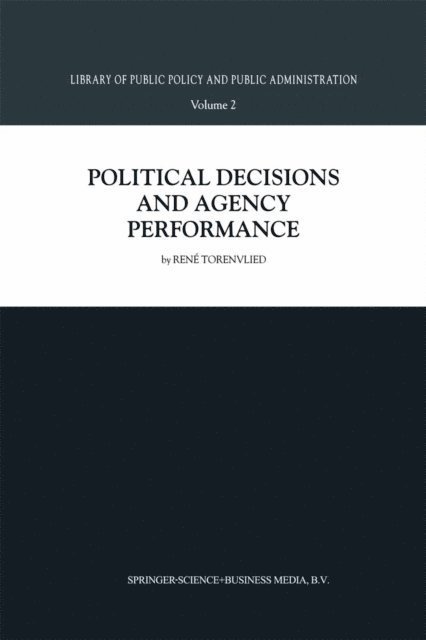
Political Decisions and Agency Performance
Inbunden, Engelska, 1999
1 589 kr
Skickas inom 10-15 vardagar
This work analyzes the implementation of controversial public policy. A single, overarching model provides the framework for testing competing theories, ranging from Max Weber's bureaucracy theory and Woodrow Wilson's theory of administration to more recent ideas on how the legislature controls the bureaucracy. The model combines ideas about policy implementation drawn from different disciplines: political science, public administration, sociology and economics. The author uses an empirical test design to measure agency performance and deviations from political decisions taken in three Dutch local authorities. In contrast to more conventional implementation studies, this work adopts a "few variables, many cases" approach. The model and empirical tests, which are fully clarified in the book, together offer a novel framework for the analysis of complex implementation processes. A previous version of the book (written in Dutch) was awarded the Van Poelje prize of the Dutch Association for Public Administration and the 1996 annual award of the Dutch Political Science Association.
Del 2 - Library of Public Policy and Public Administration
Political Decisions and Agency Performance
Häftad, Engelska, 2012
1 589 kr
Skickas inom 10-15 vardagar
All over the world, many people who live in urban areas find themselves in an arduous social situation. In the third world, people in overcrowded metropolitan areas have a problem in maintaining even the slightest standards of living. But also richer parts of the world, the United States, Europe and the far-East, show growing social inequalities in their cities. And social problems are not confined to the large metropolitan areas: impoverishment, long-term unemployment, social isolation, and the dependency on welfare programs pops up in medium-sized cities and even in smaller communities. At the same time, these cities are confronted with a growing bureaucratic conglomerate which is increasingly inapt to fight social degeneration. The catastrophe seems to be total: how to deal at once with declining social conditions and bureaucratic inadequacy? Two American authors, Osborne and Plastrik (1997), claim to have found the answer: just banish bureaucracy. The liberating accomplishments of the free market will elevate ordinary citizens and force lazy, incompetent bureaucrats to do their work properly. If they succeed, they survive. Otherwise, these agencies will vanish. They illustrate their arguments with the American city of 'Uphill Battle' which stopped its decline by reinventing government. Strict performance measures, allotting financial controls and incentives to the citizens, and improving accountability have saved the city. We should, however, be very careful in taking such measures so far that they banish bureaucracy. It is far from obvious that simply banishing bureaucracy indeed will help people in poor social situations.