Ragnhild Johnsrud Zorgati – författare
Visar alla böcker från författaren Ragnhild Johnsrud Zorgati. Handla med fri frakt och snabb leverans.
5 produkter
Pluralism in the Middle Ages
Hybrid Identities, Conversion, and Mixed Marriages in Medieval Iberia
Inbunden, 2011
2826 kr
Lägg i varukorg
The challenges of cultural and religious diversity that face European and American societies today are not a new phenomenon. People in the Middle Ages lived in pluralistic societies, and they found highly interesting ways of dealing with religious and cultural diversity. While religious and …
Pluralism in the Middle Ages
Hybrid Identities, Conversion, and Mixed Marriages in Medieval Iberia
Häftad, 2024
652 kr
Lägg i varukorg
The challenges of cultural and religious diversity that face European and American societies today are not a new phenomenon. People in the Middle Ages lived in pluralistic societies, and they found highly interesting ways of dealing with religious and cultural diversity. While religious and …
Pluralism in the Middle Ages
Hybrid Identities, Conversion, and Mixed Marriages in Medieval Iberia
E-bok, 2012
723 kr
Lägg i varukorg
The challenges of cultural and religious diversity that face European and American societies today are not a new phenomenon. People in the Middle Ages lived in pluralistic societies, and they found highly interesting ways of dealing with religious and cultural diversity. While religious and …
Pluralism in the Middle Ages
Hybrid Identities, Conversion, and Mixed Marriages in Medieval Iberia
E-bok, 2012
745 kr
Lägg i varukorg
The challenges of cultural and religious diversity that face European and American societies today are not a new phenomenon. People in the Middle Ages lived in pluralistic societies, and they found highly interesting ways of dealing with religious and cultural diversity. While religious and …
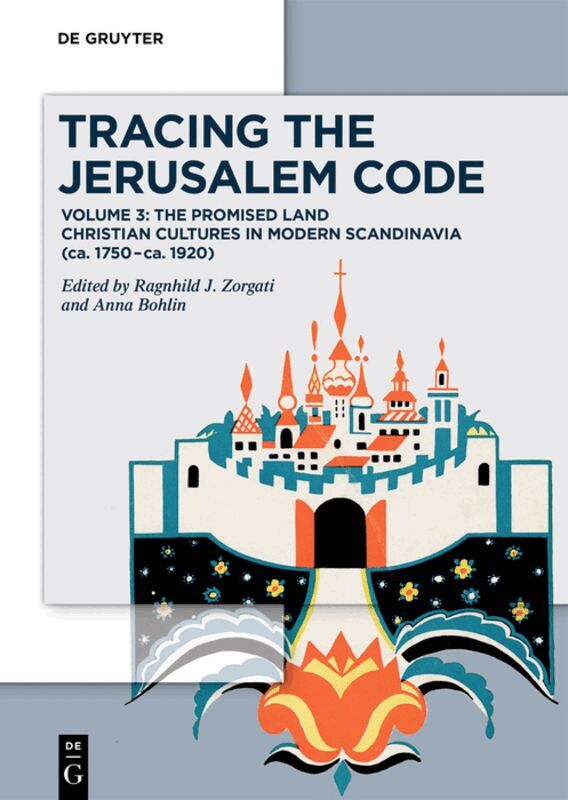
Tracing the Jerusalem Code
Volume 3: The Promised Land Christian Cultures in Modern Scandinavia (ca. 1750–ca. 1920)
Av Ragnhild Johnsrud Zorgati, Anna Bohlin
Inbunden, 2021
1481 kr
Lägg i varukorg
With the aim to write the history of Christianity in Scandinavia with Jerusalem as a lens, this book investigates the image – or rather the imagination – of Jerusalem in the religious, political, and artistic cultures of Scandinavia through most of the second millennium. Volume 3 analyses the …