Raja Parasuraman - Böcker
Visar alla böcker från författaren Raja Parasuraman. Handla med fri frakt och snabb leverans.
8 produkter
8 produkter
1 961 kr
Skickas inom 7-10 vardagar
Event-related brain potentials (ERPs) are used as measures of covert brain function. Their usefulness as such has led to an enormous increase of interest in their basic character and their application in clinical and research settings. Written by internationally recognized investigators, Event-Related Brain Potentials aims to meet this growing interest. It provides an up-to-date and comprehensive review of current knowledge as well as discussions of factors that will shape future developments. The book is divided into four sections, each addressing a key area in ERP research. Much of the material covered is new and has not received such in-depth and systematic discussion before. In keeping with the interdisciplinary nature of research in this area, it includes views from experts in the fields of neurology, psychiatry, cognitive psychology, biophysics, engineering, and genetics. It also contains extensive bibliographies and is fully indexed.
847 kr
Skickas inom 7-10 vardagar
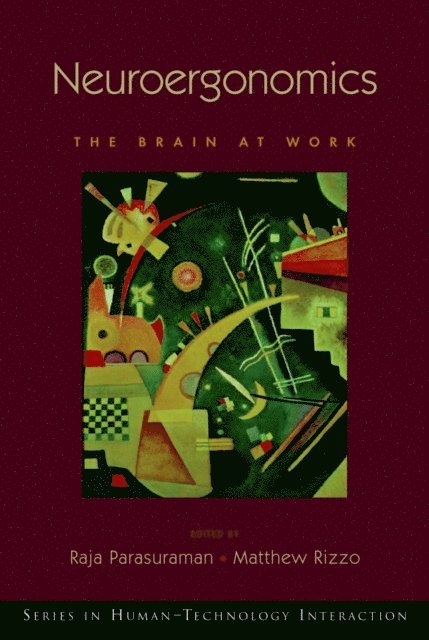
Neuroergonomics can be defined as the study of brain and behavior at work. It combines two disciplines - neuroscience, the study of brain function, and human factors, the study of how to match technology with the capabilities and limitations of people so they can work effectively and safely. The goal of merging these two fields is to use the startling discoveries of human brain and physiological functioning both to inform the design of technologies in the workplace and home, and to provide new training methods that enhance performance, expand capabilites, and optimize the fit between people and technology.Research in the area of neuroergonomics has blossomed in recent years with the emergence of noninvasive techniques for monitoring human brain function that can be used to study various aspects of human behavior in relation to technology and work, including mental workload, visual attention, working memory, motor control, human-automation interaction, and adaptive automation.This volume provides the first systematic overview of this emerging area, describing the theoretical background, basic research, major methods, as well as the new and future areas of application. This collection will benefit a number of readers: the experienced researcher investigating related questions in human facotrs and cognitive neuroscience, the student wishing to get a rapid but systematic overview of the field, and the designer interested in novel approaches and new ideas for application.
182 kr
Tillfälligt slut
108 kr
Tillfälligt slut
1 018 kr
Tillfälligt slut
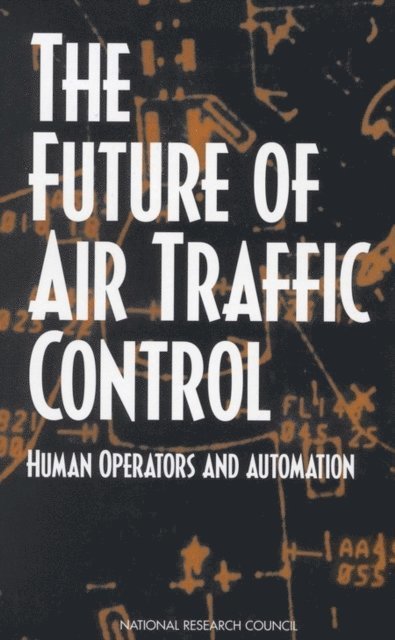
Automation in air traffic control may increase efficiency, but it also raises questions about adequate human control over automated systems. Following on the panel's first volume on air traffic control automation, Flight to the Future (NRC, 1997), this book focuses on the interaction of pilots and air traffic controllers, with a growing network of automated functions in the airspace system. The panel offers recommendations for development of human-centered automation, addressing key areas such as providing levels of automation that are appropriate to levels of risk, examining procedures for recovery from emergencies, free flight versus ground-based authority, and more. The book explores ways in which technology can build on human strengths and compensate for human vulnerabilities, minimizing both mistrust of automation and complacency about its abilities.The panel presents an overview of emerging technologies and trends toward automation within the national airspace system--in areas such as global positioning and other aspects of surveillance, flight information provided to pilots an controllers, collision avoidance, strategic long-term planning, and systems for training and maintenance. The book examines how to achieve better integration of research and development, including the importance of user involvement in air traffic control. It also discusses how to harmonize the wide range of functions in the national airspace system, with a detailed review of the free flight initiative.
915 kr
Skickas inom 10-15 vardagar
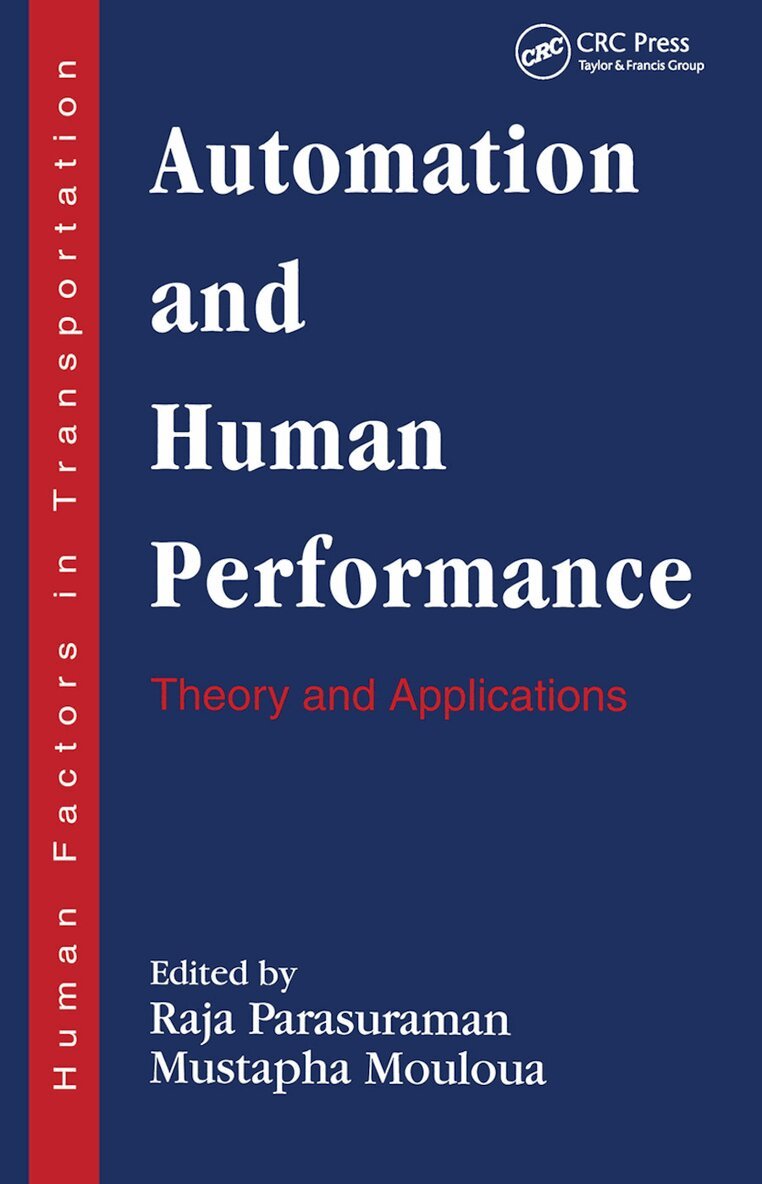
There is perhaps no facet of modern society where the influence of computer automation has not been felt. Flight management systems for pilots, diagnostic and surgical aids for physicians, navigational displays for drivers, and decision-aiding systems for air-traffic controllers, represent only a few of the numerous domains in which powerful new automation technologies have been introduced. The benefits that have been reaped from this technological revolution have been many. At the same time, automation has not always worked as planned by designers, and many problems have arisen--from minor inefficiencies of operation to large-scale, catastrophic accidents. Understanding how humans interact with automation is vital for the successful design of new automated systems that are both safe and efficient.The influence of automation technology on human performance has often been investigated in a fragmentary, isolated manner, with investigators conducting disconnected studies in different domains. There has been little contact between these endeavors, although principles gleaned from one domain may have implications for another. Also, with a few exceptions, the research has tended to be empirical and only theory-driven. In recent years, however, various groups of investigators have begun to examine human performance in automated systems in general and to develop theories of human interaction with automation technology.This book presents the current theories and assesses the impact of automation on different aspects of human performance. Both basic and applied research is presented to highlight the general principles of human-computer interaction in several domains where automation technologies are widely implemented. The major premise is that a broad-based, theory-driven approach will have significant implications for the effective design of both current and future automation technologies. This volume will be of considerable value to researchers in human
2 358 kr
Skickas inom 10-15 vardagar
There is perhaps no facet of modern society where the influence of computer automation has not been felt. Flight management systems for pilots, diagnostic and surgical aids for physicians, navigational displays for drivers, and decision-aiding systems for air-traffic controllers, represent only a few of the numerous domains in which powerful new automation technologies have been introduced. The benefits that have been reaped from this technological revolution have been many. At the same time, automation has not always worked as planned by designers, and many problems have arisen--from minor inefficiencies of operation to large-scale, catastrophic accidents. Understanding how humans interact with automation is vital for the successful design of new automated systems that are both safe and efficient.The influence of automation technology on human performance has often been investigated in a fragmentary, isolated manner, with investigators conducting disconnected studies in different domains. There has been little contact between these endeavors, although principles gleaned from one domain may have implications for another. Also, with a few exceptions, the research has tended to be empirical and only theory-driven. In recent years, however, various groups of investigators have begun to examine human performance in automated systems in general and to develop theories of human interaction with automation technology.This book presents the current theories and assesses the impact of automation on different aspects of human performance. Both basic and applied research is presented to highlight the general principles of human-computer interaction in several domains where automation technologies are widely implemented. The major premise is that a broad-based, theory-driven approach will have significant implications for the effective design of both current and future automation technologies. This volume will be of considerable value to researchers in human factors, human-computer interaction, aviation and cognitive psychology, industrial engineering--and related disciplines as well as computer scientists, aeronautical, biomedical, and mechanical engineers. In addition, it should interest others involved in the design and manufacture of automation technologies. Part I covers broad theoretical perspectives and concepts in automation research. Part II assesses the impact of automation on different aspects of human performance, including monitoring, mental workload, situational awareness, vigilance, decision making, and supervisory control. Aspects of team performance in automated systems are also discussed. Part III examines issues related to human performance in different domains where automation technologies have been introduced including: aviation, different modes of transportation, motor vehicles on the road, maritime operations, medical systems, quality control and maintenance, and oil and gas pipeline operations. Part IV speculates on the future relationship between humans and automation and explores this relationship in the context of understanding the "teleology," or grand purpose in design, of automation technology.
6 114 kr
Skickas inom 11-20 vardagar
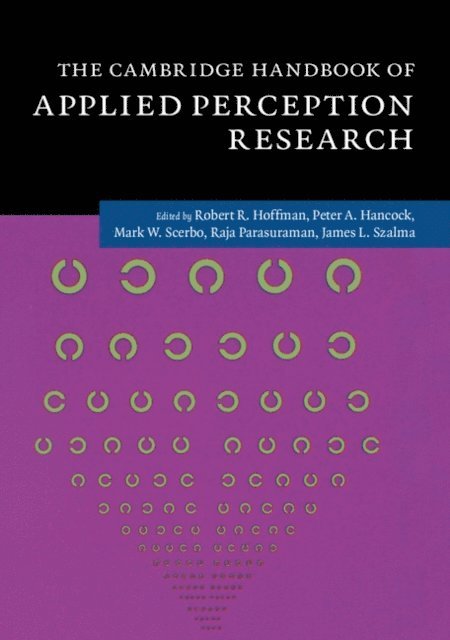
The Cambridge Handbook of Applied Perception Research covers core areas of research in perception with an emphasis on its application to real-world environments. Topics include multisensory processing of information, time perception, sustained attention, and signal detection, as well as pedagogical issues surrounding the training of applied perception researchers. In addition to familiar topics, such as perceptual learning, the Handbook focuses on emerging areas of importance, such as human-robot coordination, haptic interfaces, and issues facing societies in the twenty-first century (such as terrorism and threat detection, medical errors, and the broader implications of automation). Organized into sections representing major areas of theoretical and practical importance for the application of perception psychology to human performance and the design and operation of human-technology interdependence, it also addresses the challenges to basic research, including the problem of quantifying information, defining cognitive resources, and theoretical advances in the nature of attention and perceptual processes.