Rajeshwari V. Pandharipande – författare
Visar alla böcker från författaren Rajeshwari V. Pandharipande. Handla med fri frakt och snabb leverans.
5 produkter
Marathi
Av Rajeshwari V. Pandharipande
Häftad, 2010
1350 kr
Lägg i varukorg
This is a complete grammatical description of Marathi, which belongs to the Indo-European family and is spoken in Maharashtra State in India. It has around 45 million speakers, who comprise about eight per cent of the total population of India. Marathi is particularly interesting from the point of …
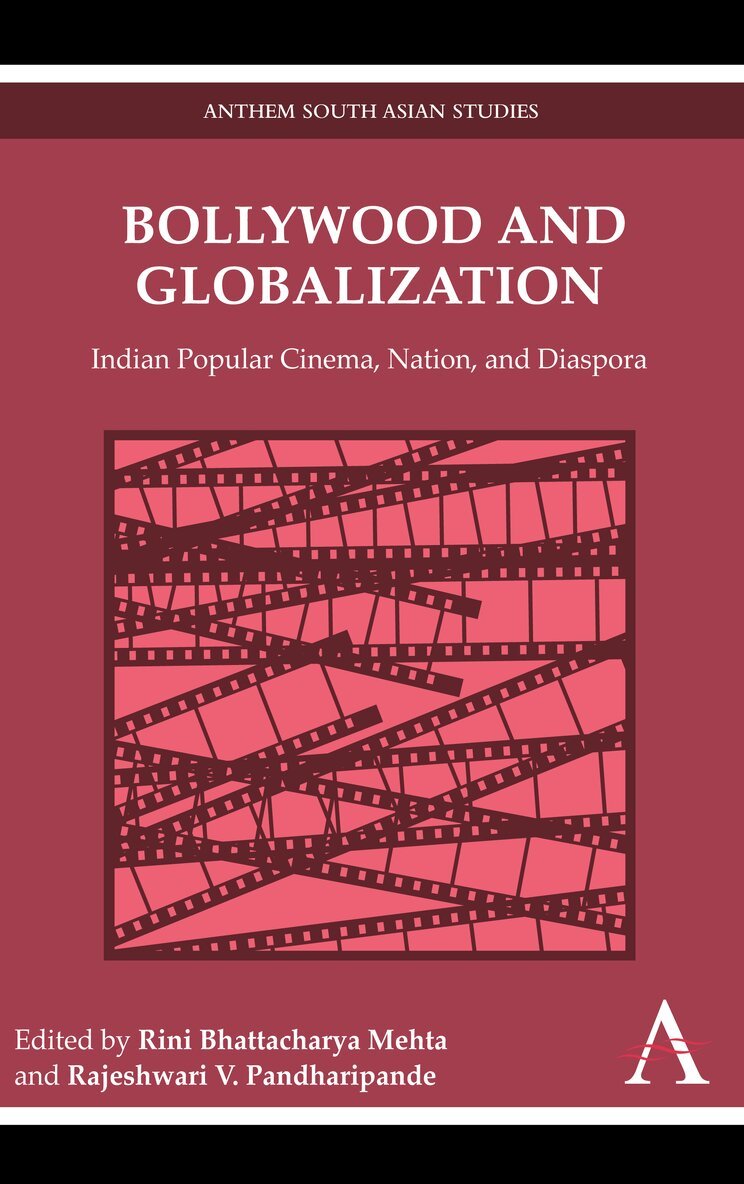
Bollywood and Globalization
Indian Popular Cinema, Nation, and Diaspora
Av Rini Bhattacharya Mehta, Rajeshwari V. Pandharipande
Häftad, 2011
422 kr
Lägg i varukorg
Commercial cinema has always been one of the biggest indigenous industries in India, and remains so in the post-globalization era, when Indian economy has entered a new phase of global participation, liberalization and expansion. Issues of community, gender, society, social and economic justice, …
Marathi
Av Rajeshwari V. Pandharipande
E-bok, 2021
1427 kr
Lägg i varukorg
This is a complete grammatical description of Marathi, which belongs to the Indo-European family and is spoken in Maharashtra State in India. It has around 45 million speakers, who comprise about eight per cent of the total population of India. Marathi is particularly interesting from the point of …
Marathi
Av Rajeshwari V. Pandharipande
E-bok, 2021
1427 kr
Lägg i varukorg
This is a complete grammatical description of Marathi, which belongs to the Indo-European family and is spoken in Maharashtra State in India. It has around 45 million speakers, who comprise about eight per cent of the total population of India. Marathi is particularly interesting from the point of …
Bollywood and Globalization
Indian Popular Cinema, Nation, and Diaspora
Av Rini Bhattacharya Mehta, Rajeshwari V. Pandharipande
Inbunden, 2010
1156 kr
Lägg i varukorg
Commercial cinema has always been one of the biggest indigenous industries in India, and remains so in the post-globalization era, when Indian economy has entered a new phase of global participation, liberalization and expansion. Issues of community, gender, society, social and economic justice, …