Rakesh Ankit – Författare
Visar alla böcker från författaren Rakesh Ankit. Handla med fri frakt och snabb leverans.
4 produkter
4 produkter
621 kr
Skickas inom 5-8 vardagar
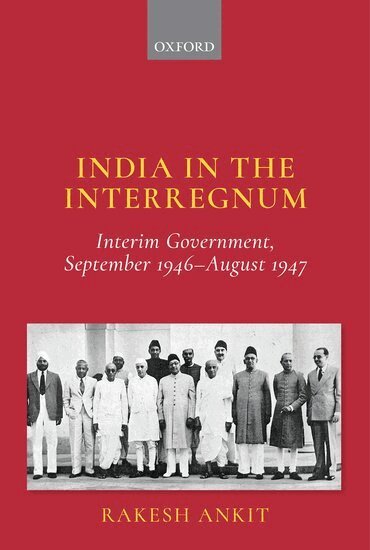
This book is about India's Interim Government, in office from 2 September 1946 till August 1947, and some of its provincial counterparts. The Interim Government was a unique coalition of the Indian National Congress, All-India Muslim League, and non-Congress, non-League political figures. Further, it presided over a British/British-trained state apparatus in a time of transition. Overlooked by the historiography of the period, given its sole identification with freedom/Partition/end of empire, it was important in its own right. The eleven months from September 1946 to August 1947 were packed as much with the formal exit of the empire as its informal continuance; as much with the anticipation of Partition as its alternatives. Alongside, this last government of British India attempted to govern too, with legacies for its independent successor(s). Rather than looking at its existence as just another event on the road to Partition, this book seeks to restore identity to the Interim Government, its personalities and their body of work, which illustrate the 'continuity and change' paradigm of post-1945 India.
665 kr
Skickas inom 10-15 vardagar
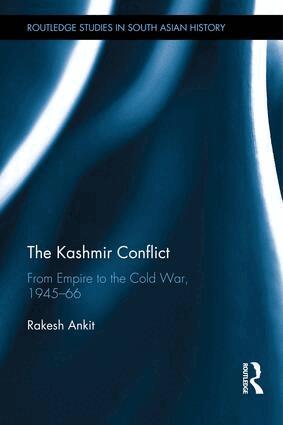
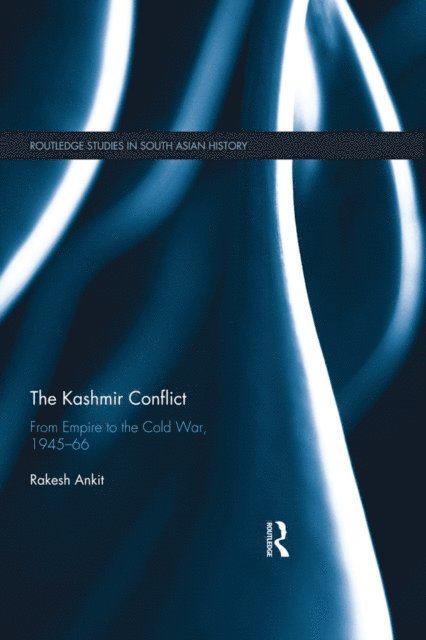
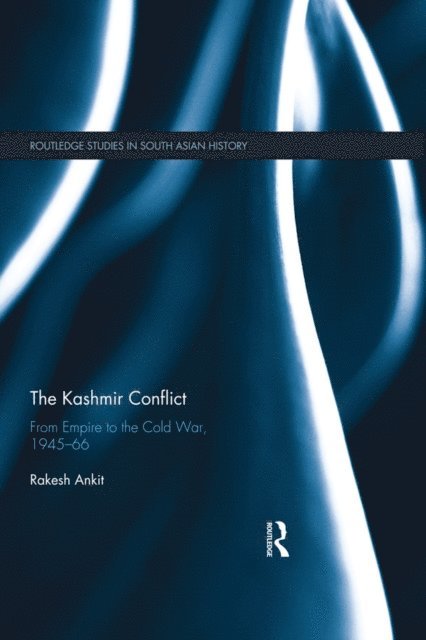
This book presents a study of the international dimensions of the Kashmir dispute between India and Pakistan from before its outbreak in October 1947 until the Tashkent Summit in January 1966. By focusing on Kashmir’s under-researched transnational dimensions, it represents a different approach to this intractable territorial conflict. Concentrating on the global context(s) in which the dispute unfolded, it argues that the dispute’s evolution was determined by international concerns that existed from before and went beyond the Indian subcontinent.Based on new and diverse official and personal papers across four countries, the book foregrounds the Kashmir dispute in a twin setting of Decolonisation and the Cold War, and investigates the international understanding around it within the imperatives of these two processes. In doing so, it traces Kashmir’s journey from being a residual irritant of the British Indian Empire, to becoming a Commonwealth embarrassment and its eventual metamorphosis into a security concern in the Cold War climate(s). A princely state of exceptional geo-strategic location, complex religious composition and unique significance in the context of Indian and Pakistani notions of nation and statehood, Kashmir also complicated their relations with Britain, the United States, Soviet Union, China, the Commonwealth countries and the Afro-Arab-Asian world.This book is of interest to scholars in the field of Asian History, Cold War History, Decolonisation and South Asian Studies.
1 192 kr
Skickas inom 7-10 vardagar
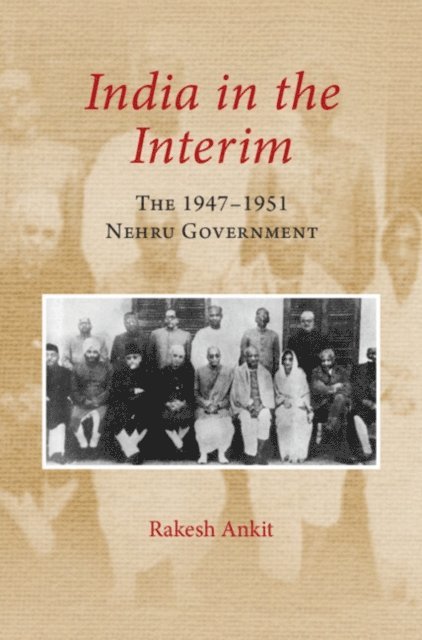
This book looks at the governmental interregnum from August 1947 to the start of the first general election in October 1951, and is a narrative of some of its intermediate moments in light of contemporary politics. It is a multi-track chronicle, which draws attention to its discrete, if not determining, impact on the following decade of consolidation. While it is also a map of the prime minister's words and actions, drawn as it is mainly from his papers, it is embedded in the government. It describes a time of transitional governance in independent India's early political history and gives a glimpse of its multiple individual traits, identity tensions, and institutional trends. The Nehruvian gaze traced here shows what a constant flux governing in those unsettled post-partition years was.
2 246 kr
Skickas inom 10-15 vardagar
This book presents a study of the international dimensions of the Kashmir dispute between India and Pakistan from before its outbreak in October 1947 until the Tashkent Summit in January 1966. By focusing on Kashmir’s under-researched transnational dimensions, it represents a different approach to this intractable territorial conflict. Concentrating on the global context(s) in which the dispute unfolded, it argues that the dispute’s evolution was determined by international concerns that existed from before and went beyond the Indian subcontinent.Based on new and diverse official and personal papers across four countries, the book foregrounds the Kashmir dispute in a twin setting of Decolonisation and the Cold War, and investigates the international understanding around it within the imperatives of these two processes. In doing so, it traces Kashmir’s journey from being a residual irritant of the British Indian Empire, to becoming a Commonwealth embarrassment and its eventual metamorphosis into a security concern in the Cold War climate(s). A princely state of exceptional geo-strategic location, complex religious composition and unique significance in the context of Indian and Pakistani notions of nation and statehood, Kashmir also complicated their relations with Britain, the United States, Soviet Union, China, the Commonwealth countries and the Afro-Arab-Asian world.This book is of interest to scholars in the field of Asian History, Cold War History, Decolonisation and South Asian Studies.