Ralph Bauer - Böcker
Visar alla böcker från författaren Ralph Bauer. Handla med fri frakt och snabb leverans.
9 produkter
9 produkter
Del 136 - Cambridge Studies in American Literature and Culture
The Cultural Geography of Colonial American Literatures
Empire, Travel, Modernity
Häftad, Engelska, 2009
614 kr
Skickas inom 7-10 vardagar
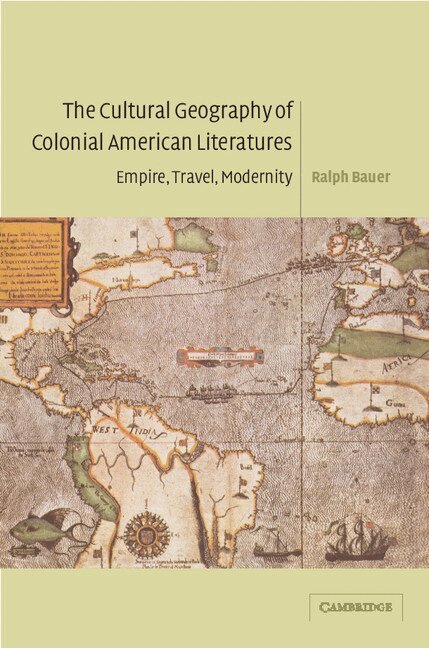
In this 2003 book, Ralph Bauer presents a comparative investigation of colonial prose narratives in Spanish and British America from 1542 to 1800. He discusses narratives of shipwreck, captivity and travel, as well as imperial and natural histories of the New World in the context of transformative early modern scientific ideologies and investigates the inter-connectedness of literary evolutions in various places of the early modern Atlantic world. Bauer positions the narrative models promoted by the 'New Sciences' during the sixteenth and seventeenth centuries within the context of the geopolitical question of how knowledge can be centrally controlled in outwardly expanding empires. This important and highly original study of Early American literature brings into conversation with one another writers from various parts of the early modern Atlantic world including Álvar Núñez Cabeza de Vaca, Gonzalo Fernández de Oviedo y Valdes, Samuel Purchas, William Strachey, Mary Rowlandson, Carlos de Sigüenza y Góngora, William Byrd and Hector St John de Crèvecoeur.
Del 136 - Cambridge Studies in American Literature and Culture
The Cultural Geography of Colonial American Literatures
Empire, Travel, Modernity
Inbunden, Engelska, 2003
1 461 kr
Skickas inom 7-10 vardagar
In this 2003 book, Ralph Bauer presents a comparative investigation of colonial prose narratives in Spanish and British America from 1542 to 1800. He discusses narratives of shipwreck, captivity and travel, as well as imperial and natural histories of the New World in the context of transformative early modern scientific ideologies and investigates the inter-connectedness of literary evolutions in various places of the early modern Atlantic world. Bauer positions the narrative models promoted by the 'New Sciences' during the sixteenth and seventeenth centuries within the context of the geopolitical question of how knowledge can be centrally controlled in outwardly expanding empires. This important and highly original study of Early American literature brings into conversation with one another writers from various parts of the early modern Atlantic world including Álvar Núñez Cabeza de Vaca, Gonzalo Fernández de Oviedo y Valdes, Samuel Purchas, William Strachey, Mary Rowlandson, Carlos de Sigüenza y Góngora, William Byrd and Hector St John de Crèvecoeur.
701 kr
Skickas inom 10-15 vardagar
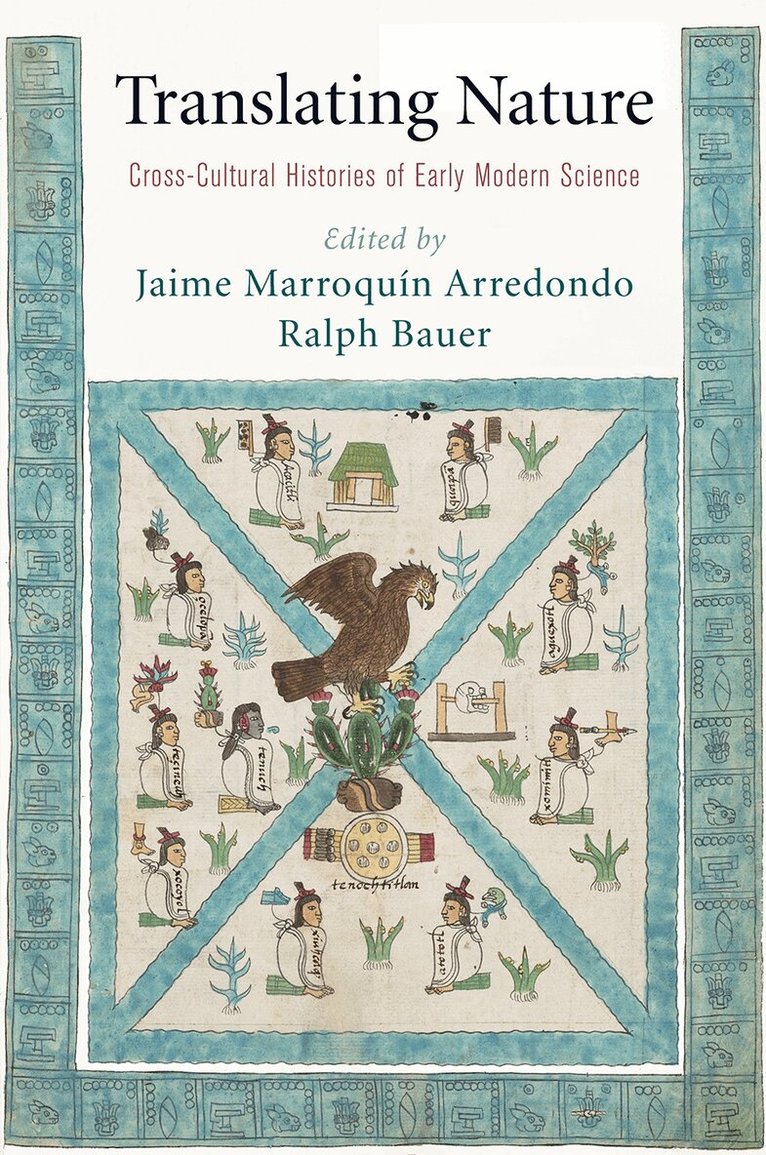
Translating Nature recasts the era of early modern science as an age not of discovery but of translation. As Iberian and Protestant empires expanded across the Americas, colonial travelers encountered, translated, and reinterpreted Amerindian traditions of knowledge-knowledge that was later translated by the British, reading from Spanish and Portuguese texts. Translations of natural and ethnographic knowledge therefore took place across multiple boundaries-linguistic, cultural, and geographical-and produced, through their transmissions, the discoveries that characterize the early modern era. In the process, however, the identities of many of the original bearers of knowledge were lost or hidden in translation.The essays in Translating Nature explore the crucial role that the translation of philosophical and epistemological ideas played in European scientific exchanges with American Indians; the ethnographic practices and methods that facilitated appropriation of Amerindian knowledge; the ideas and practices used to record, organize, translate, and conceptualize Amerindian naturalist knowledge; and the persistent presence and influence of Amerindian and Iberian naturalist and medical knowledge in the development of early modern natural history. Contributors highlight the global nature of the history of science, the mobility of knowledge in the early modern era, and the foundational roles that Native Americans, Africans, and European Catholics played in this age of translation.Contributors: Ralph Bauer, Daniela Bleichmar, William Eamon, Ruth Hill, Jaime MarroquÍn Arredondo, Sara Miglietti, Luis Millones Figueroa, Marcy Norton, Christopher Parsons, Juan Pimentel, Sarah Rivett, John Slater.
1 128 kr
Skickas inom 10-15 vardagar
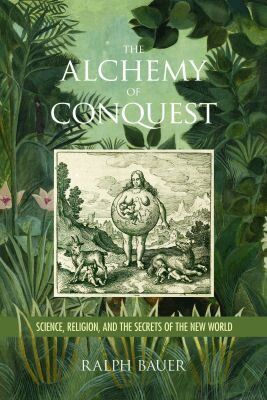
The Age of the Discovery of the Americas was concurrent with the Age of Discovery in science. In The Alchemy of Conquest, Ralph Bauer explores the historical relationship between the two, focusing on the connections between religion and science in the Spanish, English, and French literatures about the Americas during the early modern period.As sailors, conquerors, travelers, and missionaries were exploring "new worlds," and claiming ownership of them, early modern men of science redefined what it means to "discover" something. Bauer explores the role that the verbal, conceptual, and visual language of alchemy played in the literature of the discovery of the Americas and in the rise of an early modern paradigm of discovery in both science and international law. The book traces the intellectual and spiritual legacies of late medieval alchemists such as Roger Bacon, Arnald of Villanova, and Ramon Llull in the early modern literature of the conquest of America in texts written by authors such as Christopher Columbus, Amerigo Vespucci, José de Acosta, Nicolás Monardes, Walter Raleigh, Thomas Harriot, Francis Bacon, and Alexander von Humboldt.
545 kr
Skickas inom 10-15 vardagar
The Age of the Discovery of the Americas was concurrent with the Age of Discovery in science. In The Alchemy of Conquest, Ralph Bauer explores the historical relationship between the two, focusing on the connections between religion and science in the Spanish, English, and French literatures about the Americas during the early modern period.As sailors, conquerors, travelers, and missionaries were exploring "new worlds," and claiming ownership of them, early modern men of science redefined what it means to "discover" something. Bauer explores the role that the verbal, conceptual, and visual language of alchemy played in the literature of the discovery of the Americas and in the rise of an early modern paradigm of discovery in both science and international law. The book traces the intellectual and spiritual legacies of late medieval alchemists such as Roger Bacon, Arnald of Villanova, and Ramon Llull in the early modern literature of the conquest of America in texts written by authors such as Christopher Columbus, Amerigo Vespucci, José de Acosta, Nicolás Monardes, Walter Raleigh, Thomas Harriot, Francis Bacon, and Alexander von Humboldt.
616 kr
Skickas inom 10-15 vardagar
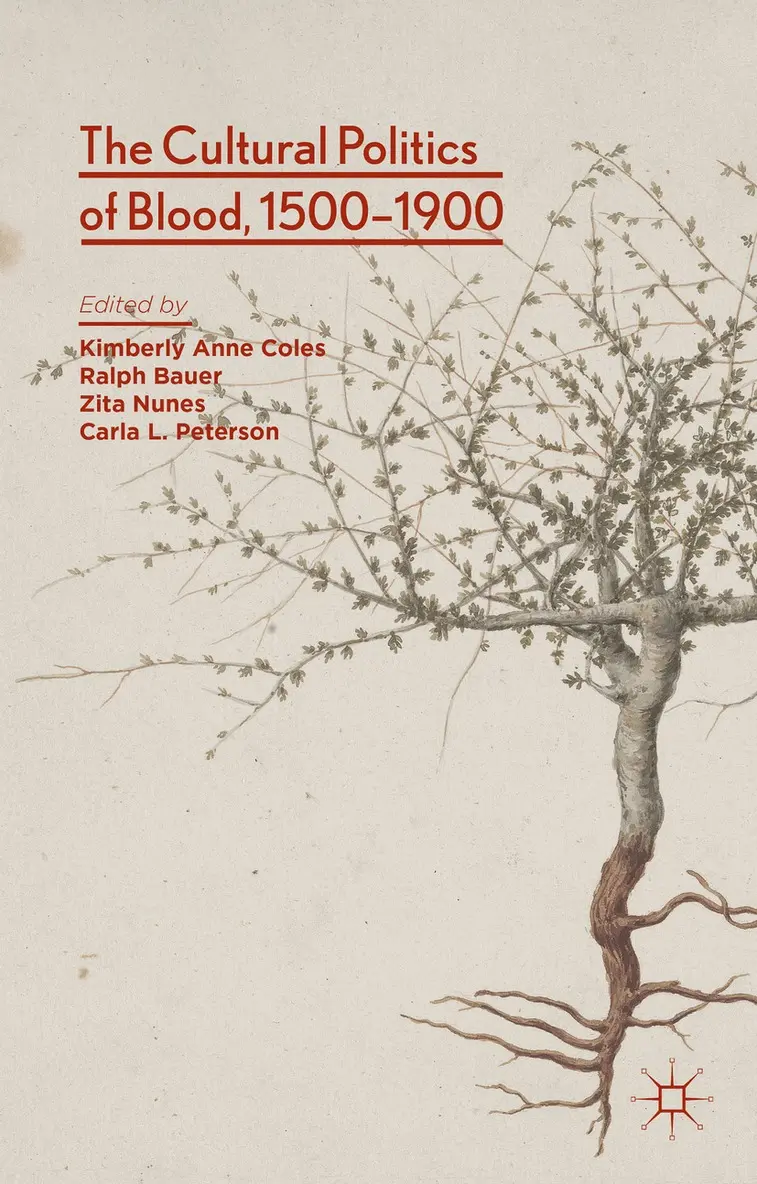
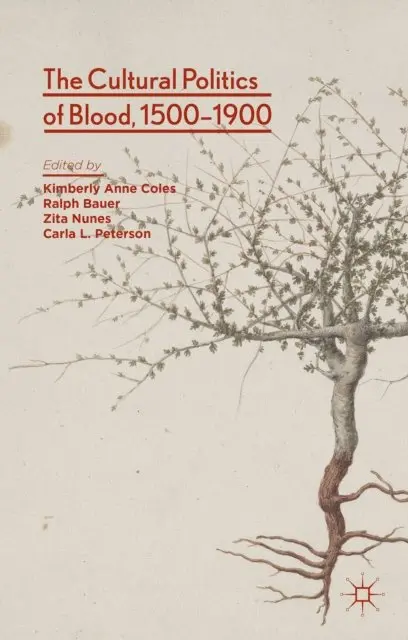
The essays of this collection explore how ideas about 'blood' in science and literature have supported, at various points in history and in various places in the circum-Atlantic world, fantasies of human embodiment and human difference that serve to naturalize existing hierarchies.
552 kr
Skickas inom 10-15 vardagar
The essays of this collection explore how ideas about 'blood' in science and literature have supported, at various points in history and in various places in the circum-Atlantic world, fantasies of human embodiment and human difference that serve to naturalize existing hierarchies.
200 kr
Skickas inom 5-8 vardagar
308 kr
Skickas inom 5-8 vardagar