Raman Uppal – författare
Visar alla böcker från författaren Raman Uppal. Handla med fri frakt och snabb leverans.
2 produkter
2 produkter
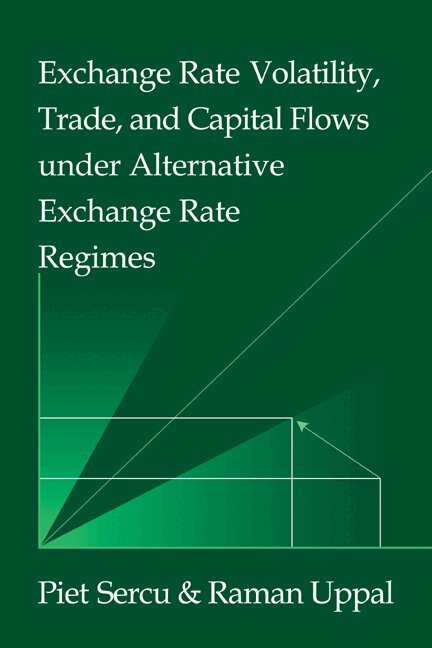
Exchange Rate Volatility, Trade, and Capital Flows under Alternative Exchange Rate Regimes
Häftad, Engelska, 2006
428 kr
Skickas inom 7-10 vardagar
Recent years have seen a substantial increase in the volatility of exchange rates. This trend has prompted economists and finance analysts to question if the observed behaviour of exchange rates is consistent with a rational model. Does that volatility hinder trade? What are financial markets' effects on countries' investment decisions, and how would changes in fixed exchange rates affect growth and welfare? What are the requirements to make such changes feasible? Professors Sercu and Uppal examine these issues in the context of dynamic general equilibrium models, explicitly considering the role of financial markets while allowing for commodity markets to be segmented across countries. They show that the theoretical models for exchange rates in this context are quite different from those put forth by monetary theorists and proponents of purchasing power parity arguments.
Exchange Rate Volatility, Trade, and Capital Flows under Alternative Exchange Rate Regimes
Inbunden, Engelska, 2000
875 kr
Skickas inom 7-10 vardagar
Recent years have seen a substantial increase in the volatility of exchange rates. This trend has prompted economists and finance analysts to question if the observed behaviour of exchange rates is consistent with a rational model. Does that volatility hinder trade? What are financial markets' effects on countries' investment decisions, and how would changes in fixed exchange rates affect growth and welfare? What are the requirements to make such changes feasible? Professors Sercu and Uppal examine these issues in the context of dynamic general equilibrium models, explicitly considering the role of financial markets while allowing for commodity markets to be segmented across countries. They show that the theoretical models for exchange rates in this context are quite different from those put forth by monetary theorists and proponents of purchasing power parity arguments.