Raoul Motika - Böcker
Visar alla böcker från författaren Raoul Motika. Handla med fri frakt och snabb leverans.
5 produkter
5 produkter
2 159 kr
Skickas inom 10-15 vardagar
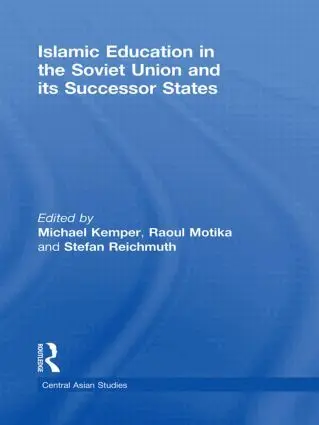
This book provides a comparative history of Islamic education in the Soviet Union and the post-Soviet countries. Case studies on Ukraine, Azerbaijan, Kazakhstan, Uzbekistan, and Tajikistan and on two regions of the Russian Federation, Tatarstan and Daghestan, highlight the importance which Muslim communities in all parts of the Soviet Union attached to their formal and informal institutions of Islamic instruction. New light is shed on the continuity of pre-revolutionary educational traditions – including Jadidist ethics and teaching methods – throughout the New Economic Policy period (1921-1928), on Muslim efforts to maintain their religious schools under Stalinist repression, and on the complete institutional breakdown of the Islamic educational sector by the late 1930s. A second focus of the book is on the remarkable boom of Islamic education in the post-Soviet republics after 1991. Contrary to general assumptions on the overwhelming influence of foreign missionary activities on this revival, this study stresses the primary role of the Soviet Islamic institutions which were developed during and after the Second World War, and of the persisting regional and even international networks of Islamic teachers and muftis. Throughout the book, special attention is paid to the specific regional traditions of Islamic learning and to the teachers’ affiliations with Islamic legal schools and Sufi brotherhoods. The book thus testifies to the astounding dynamics of Islamic education under rapidly changing and oftentimes extremely harsh political conditions.
671 kr
Skickas inom 10-15 vardagar
This book provides a comparative history of Islamic education in the Soviet Union and the post-Soviet countries. Case studies on Ukraine, Azerbaijan, Kazakhstan, Uzbekistan, and Tajikistan and on two regions of the Russian Federation, Tatarstan and Daghestan, highlight the importance which Muslim communities in all parts of the Soviet Union attached to their formal and informal institutions of Islamic instruction. New light is shed on the continuity of pre-revolutionary educational traditions – including Jadidist ethics and teaching methods – throughout the New Economic Policy period (1921-1928), on Muslim efforts to maintain their religious schools under Stalinist repression, and on the complete institutional breakdown of the Islamic educational sector by the late 1930s. A second focus of the book is on the remarkable boom of Islamic education in the post-Soviet republics after 1991. Contrary to general assumptions on the overwhelming influence of foreign missionary activities on this revival, this study stresses the primary role of the Soviet Islamic institutions which were developed during and after the Second World War, and of the persisting regional and even international networks of Islamic teachers and muftis. Throughout the book, special attention is paid to the specific regional traditions of Islamic learning and to the teachers’ affiliations with Islamic legal schools and Sufi brotherhoods. The book thus testifies to the astounding dynamics of Islamic education under rapidly changing and oftentimes extremely harsh political conditions.
Del 33 - Heidelberger Studien Zur Geschichte Und Kultur Des Modernen
Migration Und Ritualtransfer
Religioese Praxis Der Aleviten, Jesiden Und Nusairier Zwischen Vorderem Orient Und Westeuropa
Häftad, Engelska, 2005
626 kr
Tillfälligt slut
536 kr
Skickas inom 10-15 vardagar
?Der vorliegende Band schafft ein interdisziplinäres Forum für die gegenwartsbezogene Türkeiforschung in Deutschland. Er präsentiert Forschungsergebnisse von NachwuchswissenschaftlerInnen, die sich durch einen frischen Blick auf die Türkei, methodische Vielfalt sowie interdisziplinäre Ansätze auszeichnen.
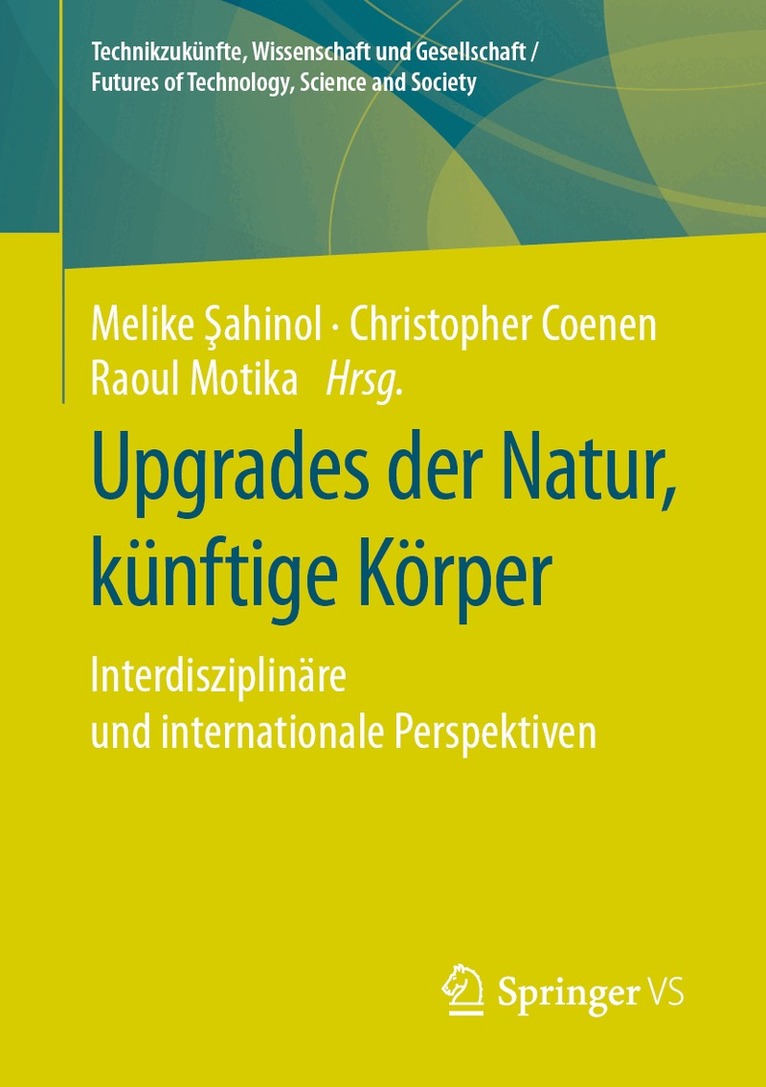
Upgrades der Natur, künftige Körper
Interdisziplinäre und internationale Perspektiven
Häftad, Tyska, 2020
600 kr
Skickas inom 10-15 vardagar
Jahrhunderts verändert sich durch Entdeckungen und Entwicklungen in Feldern wie den Neurotechnologien und der Hirnforschung, der Gentechnik und synthetischen Biologie, der Prothetik und den Nanotechnologien auch unser Verständnis der Natur und des Menschseins.