Raymond McCall - Böcker
Visar alla böcker från författaren Raymond McCall. Handla med fri frakt och snabb leverans.
4 produkter
4 produkter
1 105 kr
Skickas inom 10-15 vardagar
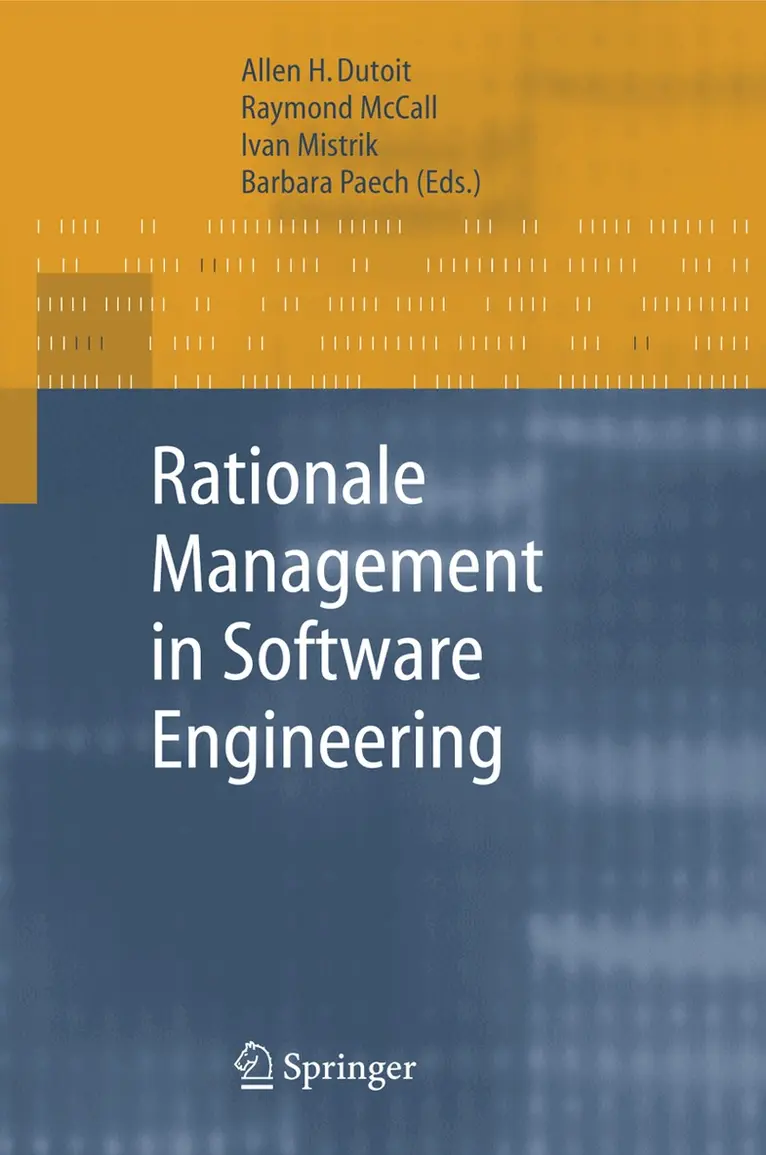
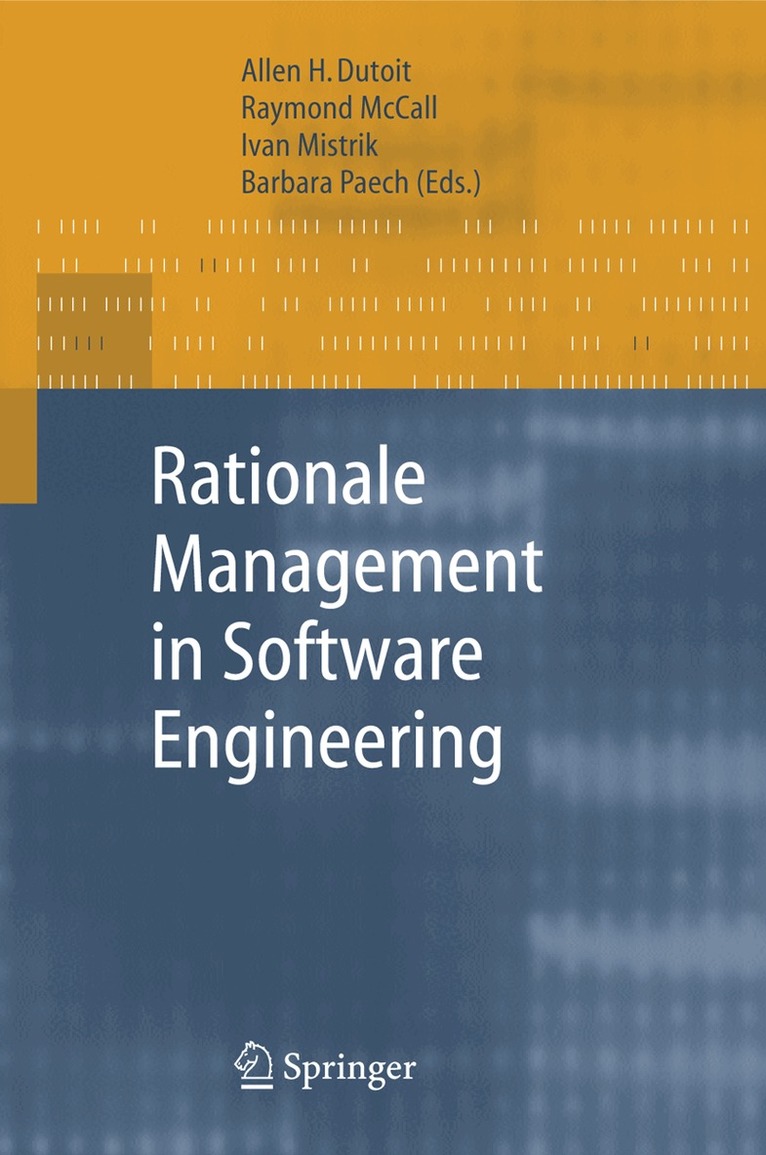
Thirty years ago, I first entered the dark realm of software engineering, through a prior interest in documentation. In those days, documentation pretty much meant functional specifications. The idea that stakeholders in a system (its implementers, its end-users, its maintainers, and so forth) might want something other than an alphabetic list of function definitions was just taking hold. There was an exciting (to me) vision of stakeholders accessing and contributing to explanations of how and why aspects of a system work as they do, tradeoff analysis of concomitant downsides, and perhaps even accounts of why other possible approaches were not followed. There were many challenges to overcome in achieving this vision. The most formidable is the belief that people do not like to create or use do- mentation. This negative image of documentation is (unfortunately) more than just the bias of a few incorrigible system developers. It is more like a deep truth about human information behavior, about how human beings construe and act towards information. Humans are, by default, active users of information; they want to try things out, and get things done. When documentation is interposed as a prerequisite between people and a desired activity, they try to skip through it, circumvent it, or undermine it. Desi- ing information to suit the needs and interests of its users is an abiding challenge, but we have come a long way from functional specifications as the only answer.
1 105 kr
Skickas inom 10-15 vardagar
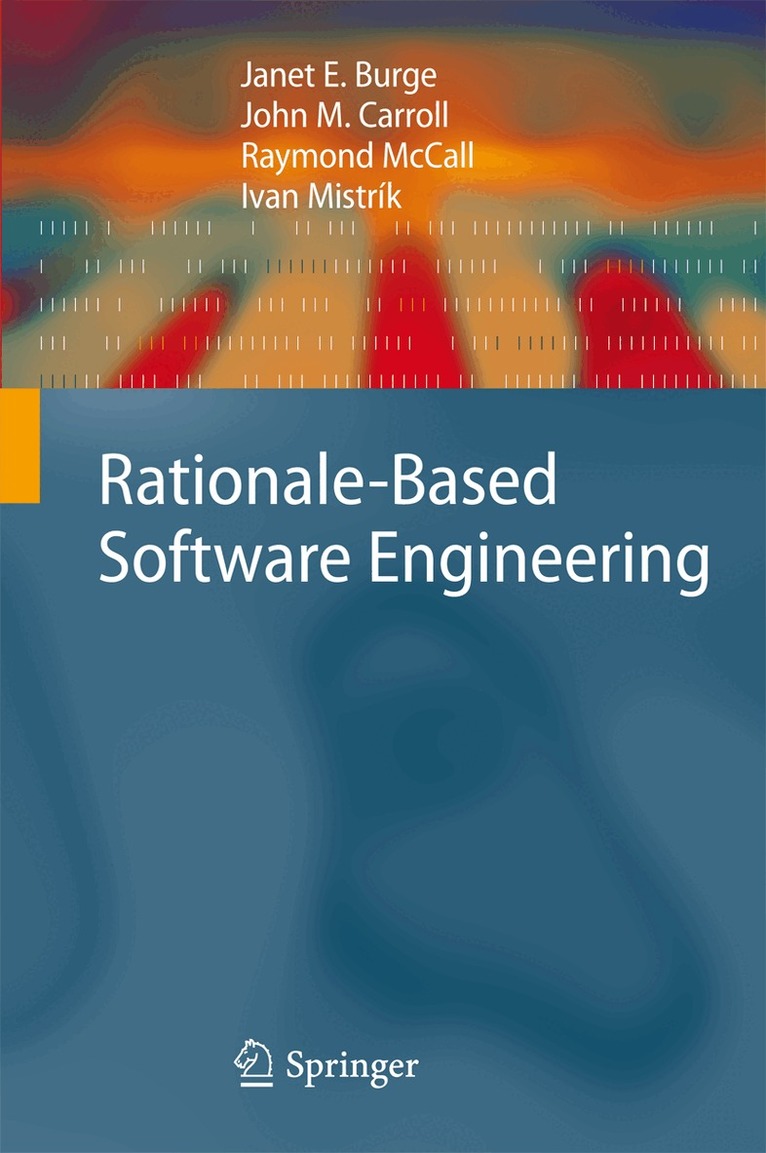
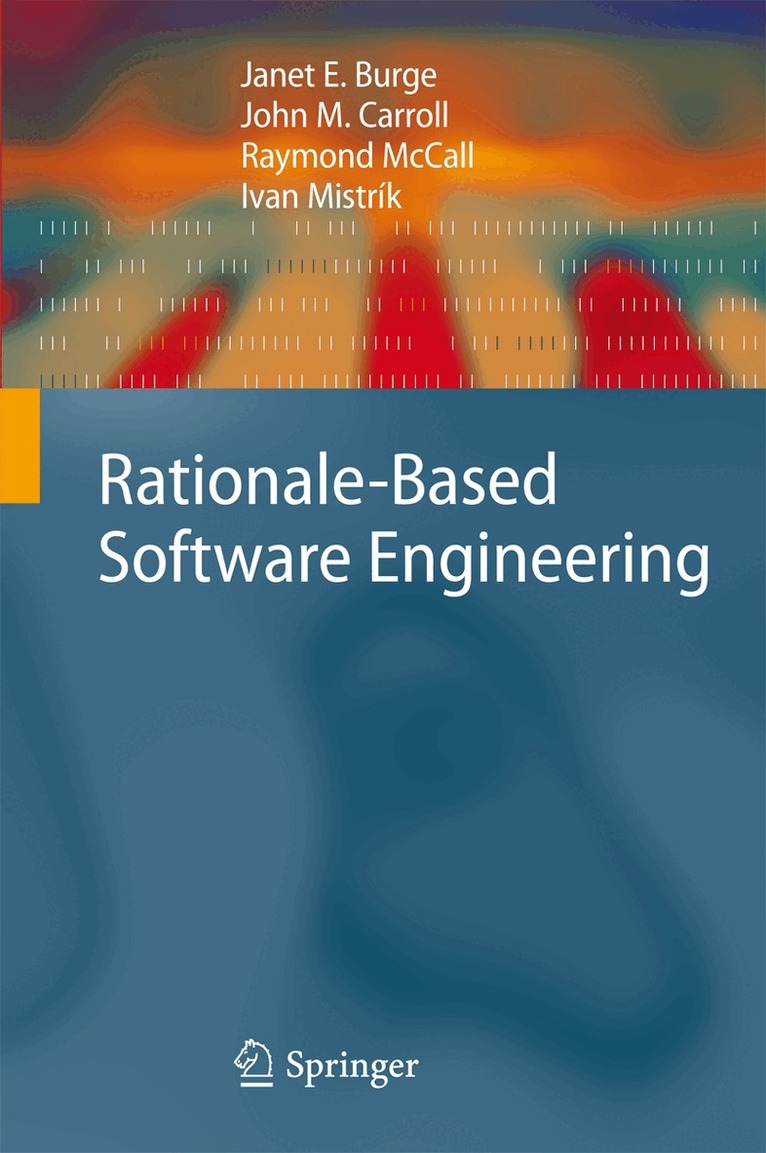
Many decisions are required throughout the software development process. These decisions, and to some extent the decision-making process itself, can best be documented as the rationale for the system, which will reveal not only what was done during development but the reasons behind the choices made and alternatives considered and rejected. This information becomes increasingly critical as software development becomes more distributed and encompasses the corporate knowledge both used and refined during the development process. The capture of rationale helps to ensure that decisions are well thought out and justified and the use of rationale can help avoid the mistakes of the past during both the development of the current system and when software products (architecture and design, as well as code) are reused in future systems. Burge, Carroll, McCall, and Mistrík describe in detail the capture and use of design rationale in software engineering to improve the quality of software. Their book is the first comprehensive and unified treatment of rationale usage in software engineering. It provides a consistent conceptual framework and a unified terminology for comparing, contrasting and combining the myriad approaches to rationale in software engineering. It is both an excellent introductory text for those new to the field and a uniquely valuable reference for experienced rationale researchers. The book covers the use of rationale for decision making throughout the software lifecycle, starting from the first decisions in a project and continuing through requirements definition, design, implementation, testing, maintenance, redesign and reuse.
1 105 kr
Skickas inom 10-15 vardagar
Thirty years ago, I first entered the dark realm of software engineering, through a prior interest in documentation. In those days, documentation pretty much meant functional specifications. The idea that stakeholders in a system (its implementers, its end-users, its maintainers, and so forth) might want something other than an alphabetic list of function definitions was just taking hold. There was an exciting (to me) vision of stakeholders accessing and contributing to explanations of how and why aspects of a system work as they do, tradeoff analysis of concomitant downsides, and perhaps even accounts of why other possible approaches were not followed. There were many challenges to overcome in achieving this vision. The most formidable is the belief that people do not like to create or use do- mentation. This negative image of documentation is (unfortunately) more than just the bias of a few incorrigible system developers. It is more like a deep truth about human information behavior, about how human beings construe and act towards information. Humans are, by default, active users of information; they want to try things out, and get things done. When documentation is interposed as a prerequisite between people and a desired activity, they try to skip through it, circumvent it, or undermine it. Desi- ing information to suit the needs and interests of its users is an abiding challenge, but we have come a long way from functional specifications as the only answer.
1 073 kr
Skickas inom 10-15 vardagar
Many decisions are required throughout the software development process. These decisions, and to some extent the decision-making process itself, can best be documented as the rationale for the system, which will reveal not only what was done during development but the reasons behind the choices made and alternatives considered and rejected. This information becomes increasingly critical as software development becomes more distributed and encompasses the corporate knowledge both used and refined during the development process. The capture of rationale helps to ensure that decisions are well thought out and justified and the use of rationale can help avoid the mistakes of the past during both the development of the current system and when software products (architecture and design, as well as code) are reused in future systems. Burge, Carroll, McCall, and Mistrík describe in detail the capture and use of design rationale in software engineering to improve the quality of software. Their book is the first comprehensive and unified treatment of rationale usage in software engineering. It provides a consistent conceptual framework and a unified terminology for comparing, contrasting and combining the myriad approaches to rationale in software engineering. It is both an excellent introductory text for those new to the field and a uniquely valuable reference for experienced rationale researchers. The book covers the use of rationale for decision making throughout the software lifecycle, starting from the first decisions in a project and continuing through requirements definition, design, implementation, testing, maintenance, redesign and reuse.