Raymond Robertson - Böcker
Visar alla böcker från författaren Raymond Robertson. Handla med fri frakt och snabb leverans.
8 produkter
8 produkter
327 kr
Skickas inom 10-15 vardagar
Trade liberalization holds both promises and perils for workers around the world. This book uses a fresh analytical framework to show that while globalization has been associated with improvements in working conditions in the exposed sectors (apparel and textile), questions remain about the durability and generalization of such improvements.
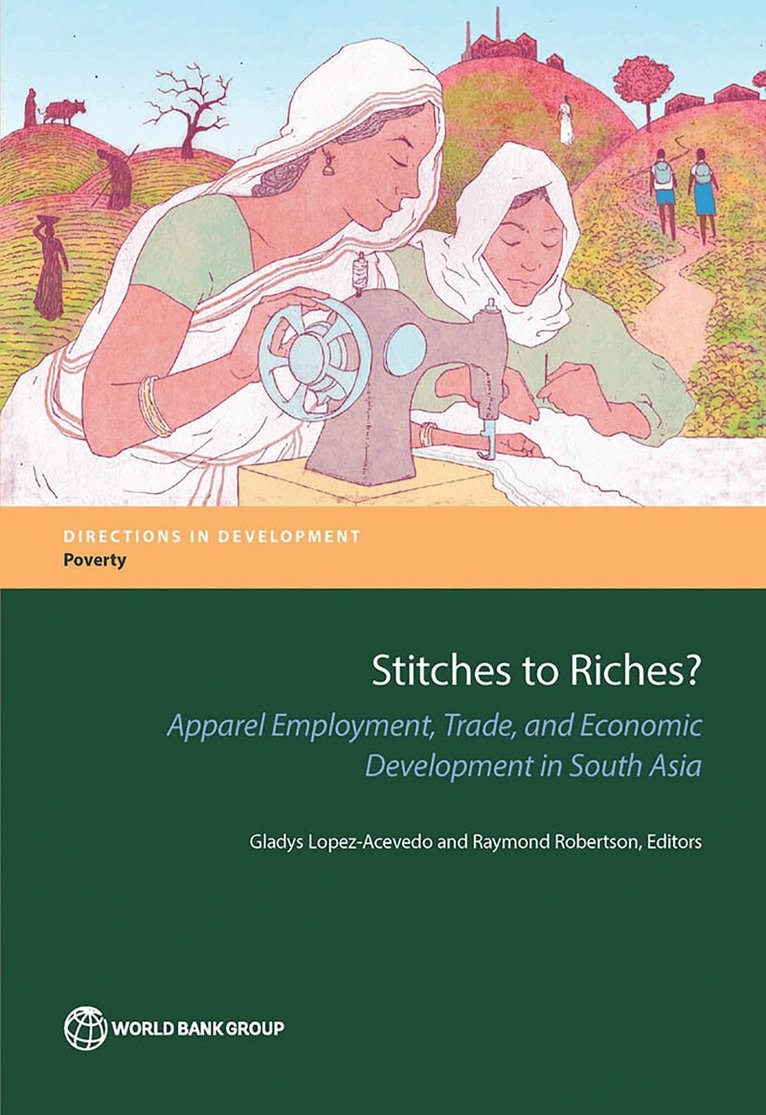
Stitches to Riches?
Apparel Employment, Trade, and Economic Development in South Asia
Häftad, Engelska, 2016
454 kr
Skickas inom 3-6 vardagar
The apparel sector in South Asia is labor-intensive, employs more women on average than other manufacturing sectors, and provides jobs that allow for the acquisition of skills. Despite these development benefits, this book finds that the sector has not reached its full potential due to inefficiencies that affect its competitiveness.
447 kr
Skickas inom 10-15 vardagar
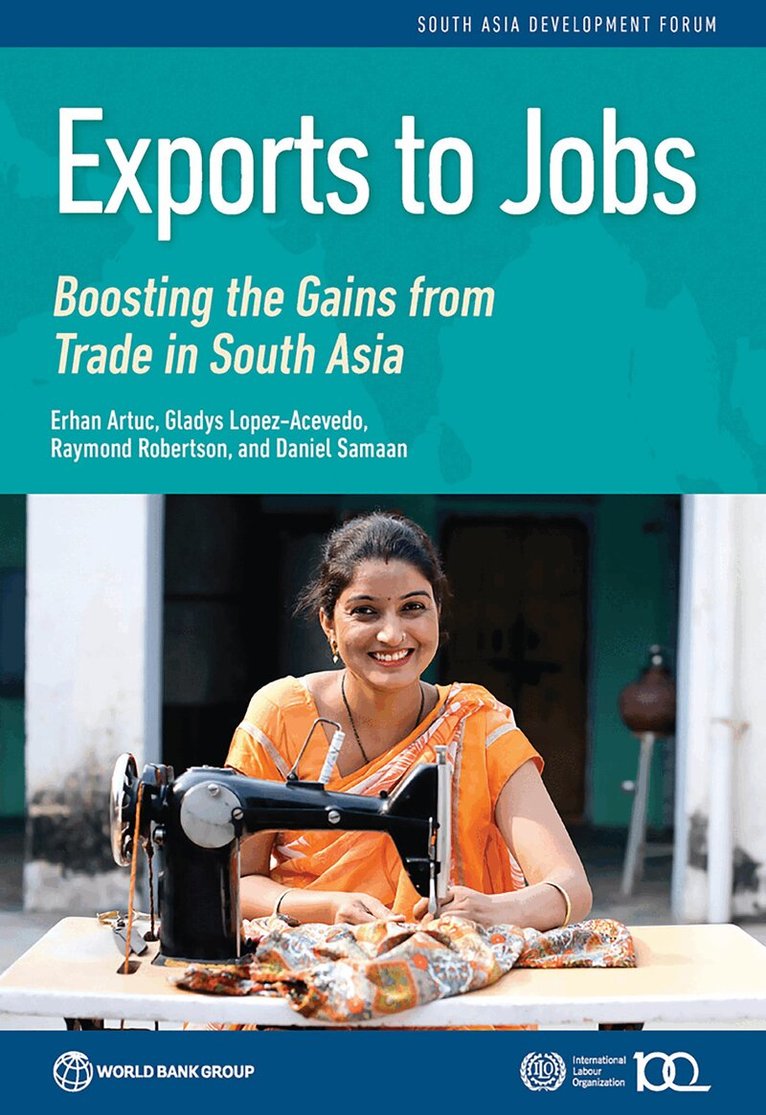
Very few studies focus on the growth of labor market opportunities that follow from exports. Entangled is one of the first to systematically examine the localized effects of long-run export growth in South Asia. The basic premise is that adjustment costs matter. If adjustment costs matter, then we would expect to see significant and persistent differences in wages across industries and regions. We would expect tosee that exporting industries and regions tend to pay higher wages and that these differences would only slowly dissipate over time (if at all). We would expect to see that increases in exports would increase the demand for workers. An increase in demand for workers could increase either wages, employment, or both, depending on the ability and willingness of workers to switch industries and regions. If workers face high adjustment costs, the increase in labor demand from exports would be associated with higher wage growth, but not necessarily higher employment growth, because workers would not move into expanding industries. As a result, firms would have to raise wages to attract the workers they need. Since expanding takes more time than contracting, we would expect to see the strongest positive wage effects over the longest time horizon, because exports take longer to affect labour markets than import competition. The report evaluates these predictions using data from Bangladesh, India, and Sri Lanka. The results are consistent with the presence of very significant worker-level adjustment costs in South Asia and suggest that the gains from exports to date have still been modest.
447 kr
Skickas inom 10-15 vardagar
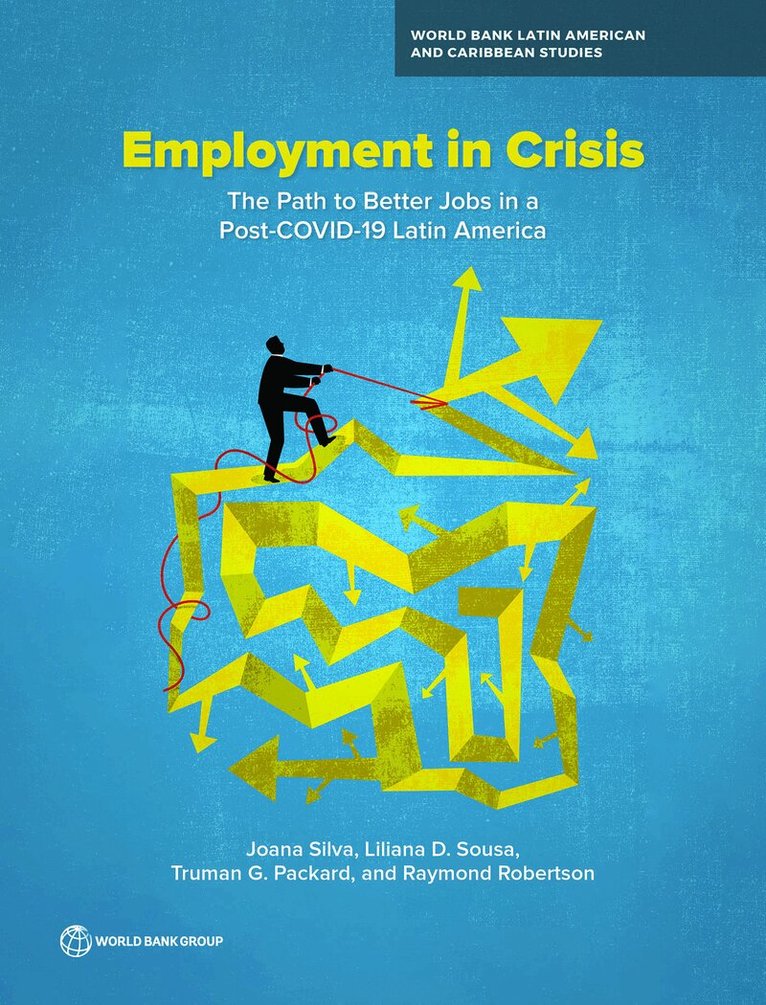
A better policy framework for preventing, managing, and helping people recover from crises is crucial to lifting long-term growth and livelihoods in Latin America and the Caribbean (LAC). The need for this policy framework has never been more urgent as the region faces the monumental task of recovery from the worldwide COVID-19 pandemic. Whether specific policy responses will deliver the expected growth dividends will depend on the underlying vision of how labor markets adjust to crises and the quality of the policies enacted. This report estimates how crises change labor market flows, assesses how these changes affect people, and discusses the key policy responses.The key findings are threefold. First, crises have significant impacts on employment dynamics and structure in Latin America. Different labor market dynamics hide behind similar reductions in labor demand. Crises increase unemployment. This is the principal margin of adjustment despite highly informal labor markets. Across the region, the biggest employment losses are in the formal sector, driven by a reduction in job-finding rates rather than higher job-loss rates. Adjustment through reduction in hours worked does not seem to be an important factor in most countries' formal or informal sectors. Crises do not just shape worker flows temporarily—they have significant after-crisis effects on the structure of employment that last for several years. These effects are such that good job opportunities are gradually shrinking. Whereas in some countries the whole economy shrinks, in others informality serves as a partial buffer. Second, crises leave scars. Some workers recover from displacement and other livelihood shocks, while others are permanently scarred. For lower-skilled workers, earnings losses are persistent. Workers with higher education suffer no impacts of the crisis on their wages and very short-lived impacts on their employment. The responses are similar across male and female workers and workers with high and low previous participation in the formal labor market. New entrants to the labor market during a crisis face a worse career start – one from which it is difficult to recover. Yet, crises also bring efficiency gains, as detailed in this report.This study finds that both the structure of product markets and the conditions in local labor markets matter for the severity of crisis-induced employment and earnings losses across localities and sectors. Workers in more protected sectors that enjoy rents are sheltered from adjustment, while workers in localities with more informality cope better. This suggests the need for integrated responses at the worker, sector, and locality levels.Third, this study considers how the region’s policy frameworks can more effectively respond to crises—mitigating scarring, speeding adjustment, and promoting long-term growth. It proposes a three-pronged strategy, including (i) creating a more stable macroeconomic environment at the aggregate level to smooth the impacts of crises, including "automatic stabilizers" such as countercyclical, publicly-financed income support that is lacking in LAC; (ii) increasing the capacity of social protection and labor policies to provide income support as well prepare workers for change through reemployment assistance; and (iii) tackling structural issues, including addressing product market competition, contestability issues, and the spatial dimension behind poor labor market adjustment.
Employment in Crisis (Spanish Edition)
The Path to Better Jobs in a Post-COVID-19 Latin America
Häftad, Spanska, 2021
447 kr
Skickas inom 10-15 vardagar
A better policy framework for preventing, managing, and helping people recover from crises is crucial to lifting long-term growth and livelihoods in Latin America and the Caribbean (LAC). The need for this policy framework has never been more urgent as the region faces the monumental task of recovery from the worldwide COVID-19 pandemic. Whether specific policy responses will deliver the expected growth dividends will depend on the underlying vision of how labor markets adjust to crises and the quality of the policies enacted. This report estimates how crises change labor market flows, assesses how these changes affect people, and discusses the key policy responses.The key findings are threefold. First, crises have significant impacts on employment dynamics and structure in Latin America. Different labor market dynamics hide behind similar reductions in labor demand. Crises increase unemployment. This is the principal margin of adjustment despite highly informal labor markets. Across the region, the biggest employment losses are in the formal sector, driven by a reduction in job-finding rates rather than higher job-loss rates. Adjustment through reduction in hours worked does not seem to be an important factor in most countries' formal or informal sectors. Crises do not just shape worker flows temporarily—they have significant after-crisis effects on the structure of employment that last for several years. These effects are such that good job opportunities are gradually shrinking. Whereas in some countries the whole economy shrinks, in others informality serves as a partial buffer.Second, crises leave scars. Some workers recover from displacement and other livelihood shocks, while others are permanently scarred. For lower-skilled workers, earnings losses are persistent. Workers with higher education suffer no impacts of the crisis on their wages and very short-lived impacts on their employment. The responses are similar across male and female workers and workers with high and low previous participation in the formal labor market. New entrants to the labor market during a crisis face a worse career start – one from which it is difficult to recover. Yet, crises also bring efficiency gains, as detailed in this report.This study finds that both the structure of product markets and the conditions in local labor markets matter for the severity of crisis-induced employment and earnings losses across localities and sectors. Workers in more protected sectors that enjoy rents are sheltered from adjustment, while workers in localities with more informality cope better. This suggests the need for integrated responses at the worker, sector, and locality levels.Third, this study considers how the region’s policy frameworks can more effectively respond to crises—mitigating scarring, speeding adjustment, and promoting long-term growth. It proposes a three-pronged strategy, including (i) creating a more stable macroeconomic environment at the aggregate level to smooth the impacts of crises, including "automatic stabilizers" such as countercyclical, publicly-financed income support that is lacking in LAC; (ii) increasing the capacity of social protection and labor policies to provide income support as well prepare workers for change through reemployment assistance; and (iii) tackling structural issues, including addressing product market competition, contestability issues, and the spatial dimension behind poor labor market adjustment.
Employment in Crisis (Portuguese Edition)
The Path to Better Jobs in a Post-COVID-19 Latin America
Häftad, Portugisiska, 2021
447 kr
Skickas inom 10-15 vardagar
A better policy framework for preventing, managing, and helping people recover from crises is crucial to lifting long-term growth and livelihoods in Latin America and the Caribbean (LAC). The need for this policy framework has never been more urgent as the region faces the monumental task of recovery from the worldwide COVID-19 pandemic. Whether specific policy responses will deliver the expected growth dividends will depend on the underlying vision of how labor markets adjust to crises and the quality of the policies enacted. This report estimates how crises change labor market flows, assesses how these changes affect people, and discusses the key policy responses.The key findings are threefold. First, crises have significant impacts on employment dynamics and structure in Latin America. Different labor market dynamics hide behind similar reductions in labor demand. Crises increase unemployment. This is the principal margin of adjustment despite highly informal labor markets. Across the region, the biggest employment losses are in the formal sector, driven by a reduction in job-finding rates rather than higher job-loss rates. Adjustment through reduction in hours worked does not seem to be an important factor in most countries' formal or informal sectors. Crises do not just shape worker flows temporarily—they have significant after-crisis effects on the structure of employment that last for several years. These effects are such that good job opportunities are gradually shrinking. Whereas in some countries the whole economy shrinks, in others informality serves as a partial buffer.Second, crises leave scars. Some workers recover from displacement and other livelihood shocks, while others are permanently scarred. For lower-skilled workers, earnings losses are persistent. Workers with higher education suffer no impacts of the crisis on their wages and very short-lived impacts on their employment. The responses are similar across male and female workers and workers with high and low previous participation in the formal labor market. New entrants to the labor market during a crisis face a worse career start – one from which it is difficult to recover. Yet, crises also bring efficiency gains, as detailed in this report.This study finds that both the structure of product markets and the conditions in local labor markets matter for the severity of crisis-induced employment and earnings losses across localities and sectors. Workers in more protected sectors that enjoy rents are sheltered from adjustment, while workers in localities with more informality cope better. This suggests the need for integrated responses at the worker, sector, and locality levels.Third, this study considers how the region’s policy frameworks can more effectively respond to crises—mitigating scarring, speeding adjustment, and promoting long-term growth. It proposes a three-pronged strategy, including (i) creating a more stable macroeconomic environment at the aggregate level to smooth the impacts of crises, including "automatic stabilizers" such as countercyclical, publicly-financed income support that is lacking in LAC; (ii) increasing the capacity of social protection and labor policies to provide income support as well prepare workers for change through reemployment assistance; and (iii) tackling structural issues, including addressing product market competition, contestability issues, and the spatial dimension behind poor labor market adjustment.
474 kr
Skickas inom 10-15 vardagar
This book focuses on studying Egypt, Morocco, and Tunisia, estimating the impact of trade policy on exports and their relationship with local labor market outcomes. The book suggests that trade has successfully boosted trade flows, but the benefits from this have not necessarily yielded better labor market outcomes and have not been equally shared.
Del 84 - World Scientific Studies in International Economics
Not Just Neighbors: The Remarkable Economic Relationships In North America
Inbunden, Engelska, 2026
2 554 kr
Skickas inom 3-6 vardagar
This book offers the most comprehensive account to date of how trade, migration, and labor markets have bound the United States and Mexico into one of the world's most deeply integrated economies. It highlights the supply chains that connect factories across borders, the workers whose livelihoods span two nations, and the shared opportunities and vulnerabilities that emerge from this unprecedented level of interdependence.At the heart of Not Just Neighbors is a clear argument: the US-Mexico relationship is not merely about proximity, but about the making of a single North American economy. Trade flows surpassing those with China, the planet's largest migration corridor, and cross-border industries from autos to agriculture all demonstrate how the fate of the two countries are linked.Drawing on decades of research, the book explains both the gains of integration — competitiveness, efficiency, shared prosperity — and the challenges it produces, such as inequality, dislocation, and political tensions.Written in a simple and an accessible manner, Not Just Neighbors is a timely and an essential reading for academics and policymakers, business leaders, and engaged citizens alike. It provides a roadmap for cooperative policies that can turn interdependence into a powerful engine of prosperity and security, while warning of the risks if this partnership is neglected.