Raymond Van Dam - Böcker
Visar alla böcker från författaren Raymond Van Dam. Handla med fri frakt och snabb leverans.
10 produkter
10 produkter
Del 8 - Transformation of the Classical Heritage
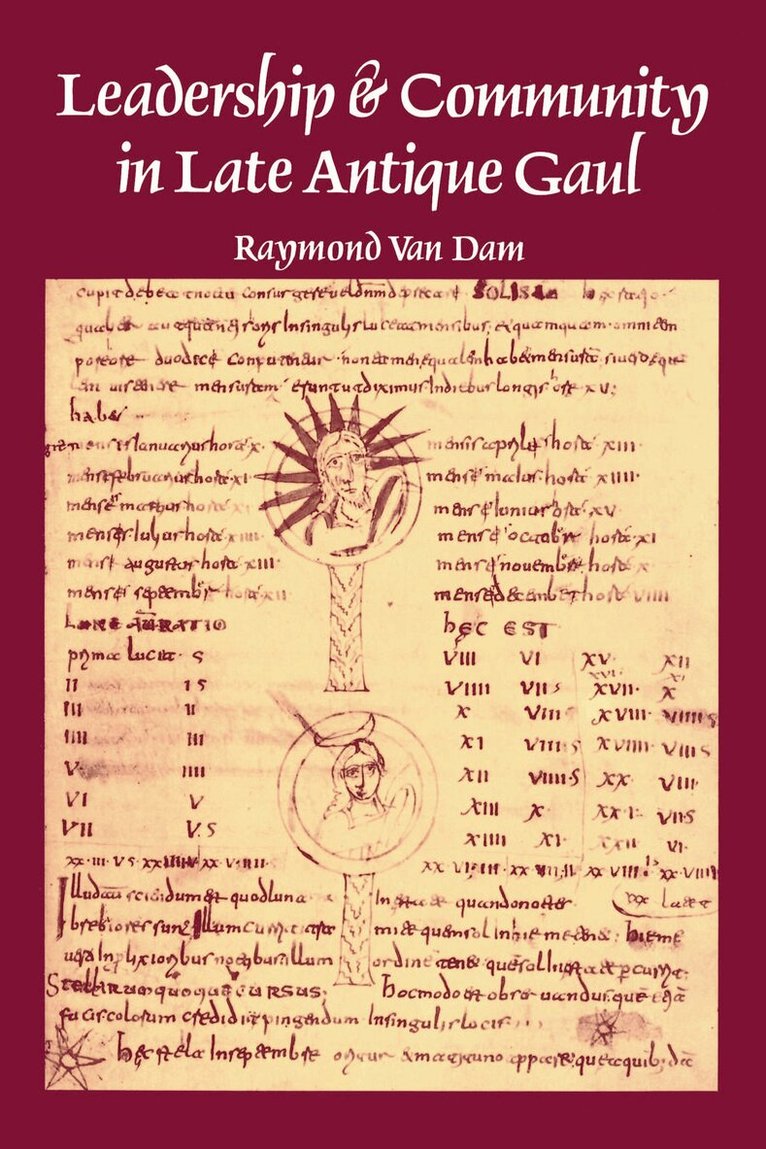
Leadership and Community in Late Antique Gaul
Häftad, Engelska, 1992
577 kr
Skickas inom 3-6 vardagar
The rise of Christianity to the dominant position it held in the Middle Ages remains a paradoxical achievement. Early Christian communities in Gaul had been so restrictive that they sometimes persecuted misfits with accusations of heresy. Yet by the fifth century Gallic aristocrats were becoming bishops to enhance their prestige; and, by the sixth century Christian relic cults provided the most comprehensive idiom for articulating values and conventions. To strengthen its appeal, Christianity had absorbed the ideologies of secular authority already familiar in Gallic society.
422 kr
Skickas inom 7-10 vardagar
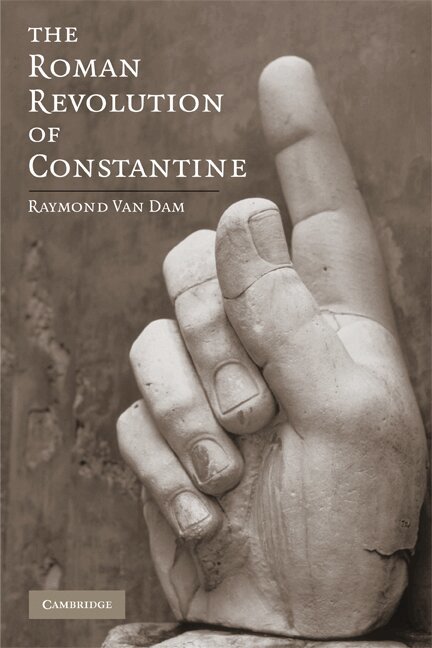
The reign of the emperor Constantine (306-337) was as revolutionary for the transformation of Rome's Mediterranean empire as that of Augustus, the first emperor three centuries earlier. The abandonment of Rome signaled the increasing importance of frontier zones in northern and central Europe and the Middle East. The foundation of Constantinople as a new imperial residence and the rise of Greek as the language of administration previewed the establishment of a separate eastern Roman empire. Constantine's patronage of Christianity required both a new theology of the Christian Trinity and a new political image of a Christian emperor. Raymond Van Dam explores and interprets each of these events. His book complements accounts of the role of Christianity by highlighting ideological and cultural aspects of the transition to a post-Roman world.
1 350 kr
Skickas inom 7-10 vardagar
The reign of the emperor Constantine (306-337) was as revolutionary for the transformation of Rome's Mediterranean empire as that of Augustus, the first emperor three centuries earlier. The abandonment of Rome signaled the increasing importance of frontier zones in northern and central Europe and the Middle East. The foundation of Constantinople as a new imperial residence and the rise of Greek as the language of administration previewed the establishment of a separate eastern Roman empire. Constantine's patronage of Christianity required both a new theology of the Christian Trinity and a new political image of a Christian emperor. Raymond Van Dam explores and interprets each of these events. His book complements accounts of the role of Christianity by highlighting ideological and cultural aspects of the transition to a post-Roman world.
778 kr
Skickas inom 10-15 vardagar
Cappadocia had long been a marginal province in the eastern Roman empire, high on a rugged plateau in central Asia Minor and hardly influenced by classical Greek culture. But during the fourth century emperors visited repeatedly as they traveled between Constantinople and Antioch. In Cappadocia they met provincial notables and prominent churchmen, including Basil of Caesarea, his brother Gregory of Nyssa, and their friend Gregory of Nazianzus. These three Cappadocian Fathers were already competing with local landowners over the distribution of resources. As patrons representing their communities, they negotiated with provincial administrators and presented petitions to the imperial court. They also confronted emperors over Christian orthodoxy and Greek culture.Kingdom of Snow investigates the impact of Roman rule in a remote province and the fate of Greek culture in an increasingly Christian society. The extensive writings of the Cappadocian Fathers combine to make Cappadocia one of the best-documented regions in the later Roman empire. Raymond Van Dam highlights the sometimes passionate relationships among bishops, local notables, imperial magistrates, and emperors as they struggled to gain prestige and power. In the drama of their personal confrontations they measured themselves and found their identities.
809 kr
Skickas inom 10-15 vardagar
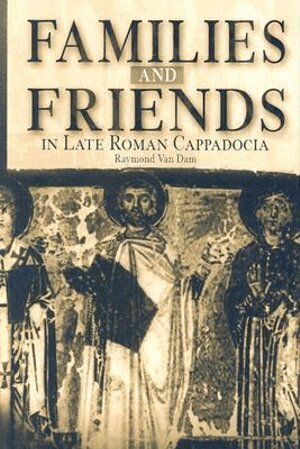
Basil of Caesarea, his brother Gregory of Nyssa, and their friend Gregory of Nazianzus were prominent churchmen in Roman Cappadocia during the later fourth century. Because of their reputations as distinguished theologians, they are now known as the Cappadocian Fathers. Recent research on Roman families and friendships has been revitalized through the use of comparative demography, Roman law, and gender studies, and the extensive writings of the Cappadocian Fathers offer a rare opportunity for a close investigation of two provincial families side by side. By examining their relationships as sons, brothers, uncles, and mutual friends, Families and Friends in Late Roman Cappadocia combines patristic studies and ecclesiastical history with cultural studies and the history of the family.None of the Cappadocian Fathers became a parent. But as sons they had to cope with their different feelings about their fathers, one who died comparatively young, the other who lived much longer than expected. Since at the same time they were formulating their doctrines about God the Father and Jesus Christ the Son, Raymond Van Dam considers whether their personal experiences might have influenced their theology.The mothers in both families were influential figures, one because of her close emotional bond with her children, the other because she controlled the family's patrimony. Macrina, the famous sister of Basil and Gregory of Nyssa, was noted for her ascetic piety. Yet these women are known almost exclusively through texts composed by their sons or brothers. Narrating the lives of women was a rhetorical strategy for men to reflect on themselves and their own concerns.Friendships were a form of self-representation, too, and in choosing their friends Basil and Gregory of Nazianzus were at the same time fashioning personal identities. At one time, their own friendship had reflected their mutual delight in classical culture. After they became churchmen, however, their friendship collapsed. At the end of his life, Gregory still cried when he thought about Basil. Their friendship had been one of the great love stories of the fourth century.
756 kr
Skickas inom 10-15 vardagar
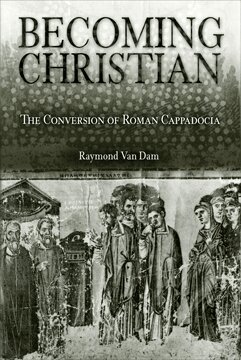
In a richly textured investigation of the transformation of Cappadocia during the fourth century, Becoming Christian: The Conversion of Roman Cappadocia examines the local impact of Christianity on traditional Greek and Roman society. The Cappadocians Basil of Caesarea, Gregory of Nyssa, Gregory of Nazianzus, and Eunomius of Cyzicus were influential participants in intense arguments over doctrinal orthodoxy and heresy. In his discussion of these prominent churchmen Raymond Van Dam explores the new options that theological controversies now made available for enhancing personal prestige and acquiring wider reputations throughout the Greek East.Ancient Christianity was more than theology, liturgical practices, moral strictures, or ascetic lifestyles. The coming of Christianity offered families and communities in Cappadocia and Pontus a history built on biblical and ecclesiastical traditions, a history that justified distinctive lifestyles, legitimated the prominence of bishops and clerics, and replaced older myths. Christianity presented a common language of biblical stories and legends about martyrs that allowed educated bishops to communicate with ordinary believers. It provided convincing autobiographies through which people could make sense of the vicissitudes of their lives.The transformation of Roman Cappadocia was a paradigm of the disruptive consequences that accompanied conversion to Christianity in the ancient world. Through vivid accounts of Cappadocians as preachers, theologians, and historians, Becoming Christian highlights the social and cultural repercussions of the formation of new orthodoxies in theology, history, language, and personal identity.
2 379 kr
Skickas inom 7-10 vardagar
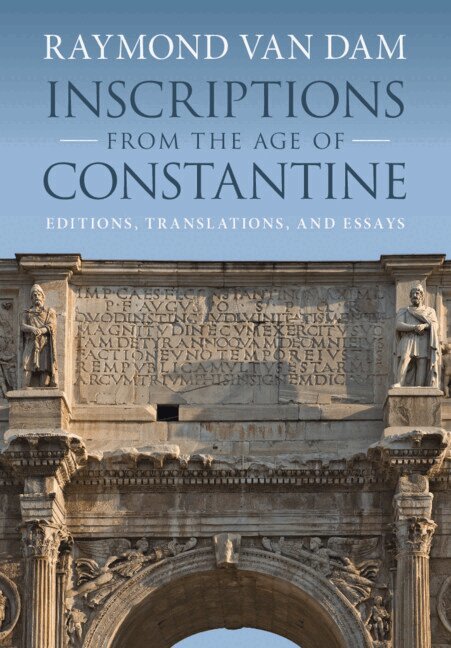
The reign of Constantine, Roman emperor from 306 to 337, was one of the most important periods in world history. Although literary texts often represented him as the first Christian emperor, the inscriptions engraved on monuments, statue bases, and milestones offer alternative perspectives. Inscriptions highlight the influence of the other emperors, the prominence of senators at Rome, the civic traditions for praising benefactors in provincial cities, the logistics of the economy, and the abiding importance of traditional cults. This book includes the Greek and Latin texts of over 800 inscriptions from the early fourth century, with translations and critical annotations. An extended Introduction and almost 200 short essays provide context by explaining the issues and problems, correlating the literary texts, and comparing the legends and images of coins. Without the emperor as the constant focus, the Age of Constantine becomes all the more fascinating.
1 282 kr
Skickas inom 7-10 vardagar
Constantine's victory in 312 at the battle of the Milvian Bridge established his rule as the first Christian emperor. This book examines the creation and dissemination of the legends about that battle and its significance. Christian histories, panegyrics and an honorific arch at Rome soon commemorated his victory, and the emperor himself contributed to the myth by describing his vision of a cross in the sky before the battle. Through meticulous research into the late Roman narratives and the medieval and Byzantine legends, this book moves beyond a strictly religious perspective by emphasizing the conflicts about the periphery of the Roman empire, the nature of emperorship and the role of Rome as a capital city. Throughout late antiquity and the medieval period, memories of Constantine's victory served as a powerful paradigm for understanding rulership in a Christian society.
577 kr
Skickas inom 7-10 vardagar
Constantine's victory in 312 at the battle of the Milvian Bridge established his rule as the first Christian emperor. This book examines the creation and dissemination of the legends about that battle and its significance. Christian histories, panegyrics and an honorific arch at Rome soon commemorated his victory, and the emperor himself contributed to the myth by describing his vision of a cross in the sky before the battle. Through meticulous research into the late Roman narratives and the medieval and Byzantine legends, this book moves beyond a strictly religious perspective by emphasizing the conflicts about the periphery of the Roman empire, the nature of emperorship and the role of Rome as a capital city. Throughout late antiquity and the medieval period, memories of Constantine's victory served as a powerful paradigm for understanding rulership in a Christian society.
271 kr
Skickas inom 7-10 vardagar
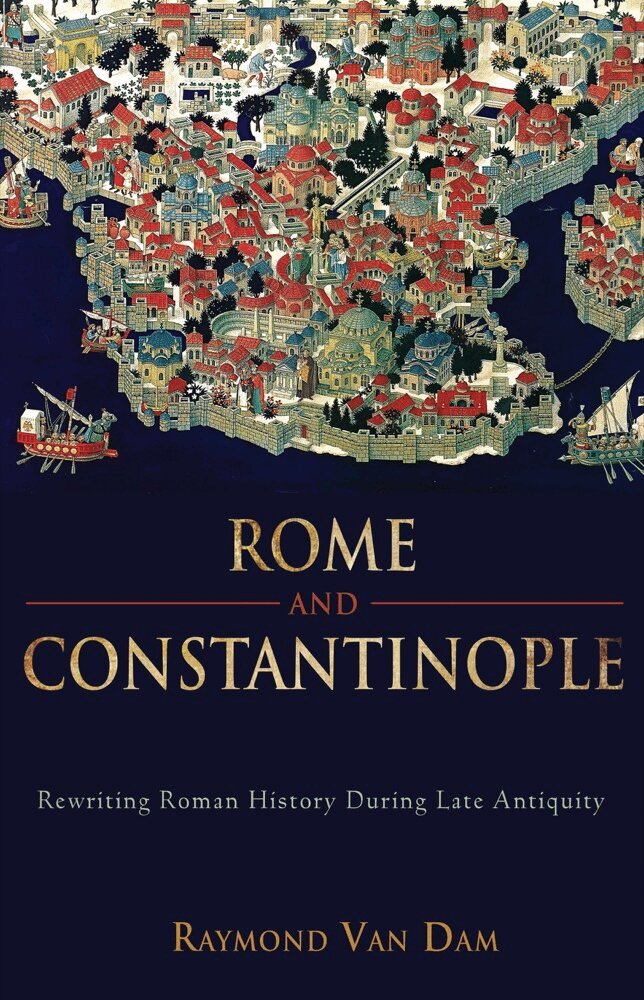
Imperial Rome and Christian Constantinople were both astonishingly large cities with over-sized appetites that served as potent symbols of the Roman Empire and its rulers. Esteemed historian Raymond Van Dam draws upon a wide array of evidence to reveal a deep interdependence on imperial ideology and economy as he elucidates the parallel workaday realities and lofty images in their stories. Tracing the arc of empire from the Rome of Augustus to Justinian's Constantinople, he masterfully shows how the changing political structures, ideologies, and historical narratives of Old and New Rome always remained rooted in the bedrock of the ancient Mediterranean's economic and demographic realities. The transformations in the Late Roman Empire, brought about by the rise of the military and the church, required a rewriting of the master narrative of history and signaled changes in economic systems. Just as Old Rome had provided a stage set for the performance of Republican emperorship, New Rome was configured for the celebration of Christian rule. As it came to pass, a city with too much history was outshone by a city with no history. Provided with the urban amenities and an imagined history appropriate to its elevated status, Constantinople could thus resonate as the new imperial capital, while Rome, on the other hand, was reinvented as the papal city.