Raz Chen-Morris - Böcker
Visar alla böcker från författaren Raz Chen-Morris. Handla med fri frakt och snabb leverans.
5 produkter
5 produkter
267 kr
Skickas inom 7-10 vardagar
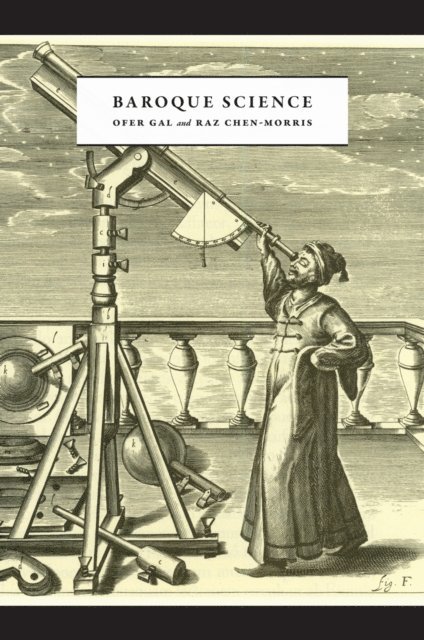
In Baroque Science Ofer Gal and Raz Chen-Morris present a radically new perspective on the scientific revolution of the seventeenth century. Instead of celebrating the triumph of reason and rationality, they study the paradoxes and anxieties that stemmed from the New Science and the intellectual compromises that shaped it and enabled its spectacular success. Gal and Chen-Morris show how the protagonists of the new mathematical natural philosophy grasped at the very far and very small by entrusting observation to the mediation of artificial instruments, and how they justified this mediation by naturalizing and denigrating the human senses. They show how the physical-mathematical ordering of heavens and earth demanded obscure and spurious mathematical procedures, replacing the divine harmonies of the late Renaissance with an assemblage of isolated, contingent laws and approximated constants. Finally, they show how the new savants, forced to contend that reason is hopelessly estranged from its surrounding world and that nature is irreducibly complex, turned to the passions to provide an alternative, naturalized foundation for their epistemology and ethics.The New Science, Gal and Chen-Morris reveal, is a Baroque phenomenon: deeply entrenched in and crucially formative of the culture of its time.
531 kr
Tillfälligt slut
In "Baroque Science", Ofer Gal and Raz D. Chen-Morris present a radically new perspective on the study of early modern science. Instead of the triumph of reason and rationality and the celebration of the discoveries and breakthroughs of the period, they examine science in the context of the baroque, analyzing the tensions, paradoxes, and compromises that shaped the New Science of the seventeenth century and enabled its spectacular success. Gal and Chen-Morris show how scientists during the seventeenth century turned away from the trust in the acquisition of knowledge through the senses toward a growing reliance on the mediation of artificial instruments, such as lenses and mirrors for observation and mechanical and pneumatic devices for experimentation. Likewise, the mathematical techniques and procedures that allowed the success of mathematical natural philosophy turned increasingly obscure and artificial, and in place of divine harmonies they revealed an assemblage of isolated, contingent laws and constants.In its attempts to enforce order in the face of threatening chaos, blur the boundaries of the natural and the artificial, and mobilize passions in the service of objective knowledge, Gal and Chen-Morris reveal, the New Science is a baroque phenomenon.
936 kr
Skickas inom 7-10 vardagar
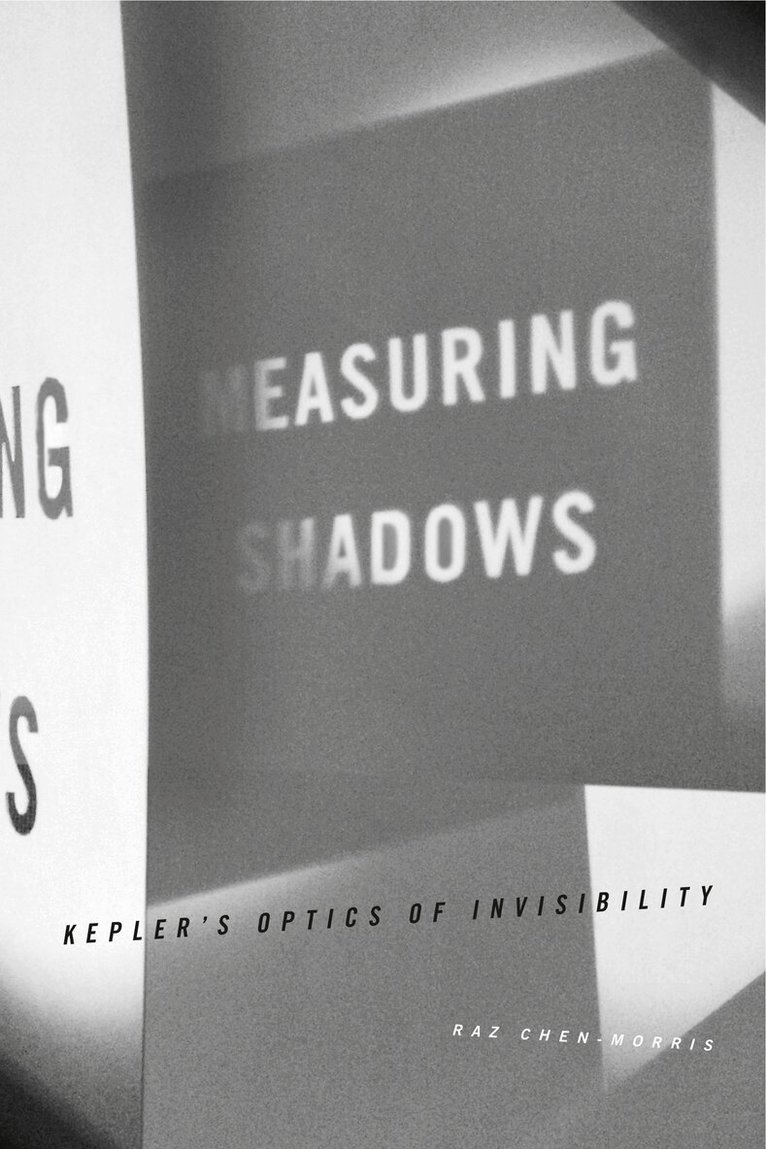
In Measuring Shadows, Raz Chen-Morris demonstrates that a close study of Kepler’s Optics is essential to understanding his astronomical work and his scientific epistemology. He explores Kepler’s radical break from scientific and epistemological traditions and shows how the seventeenth-century astronomer posited new ways to view scientific truth and knowledge. Chen-Morris reveals how Kepler’s ideas about the formation of images on the retina and the geometrics of the camera obscura, as well as his astronomical observations, advanced the argument that physical reality could only be described through artificially produced shadows, reflections, and refractions.Breaking from medieval and Renaissance traditions that insisted upon direct sensory perception, Kepler advocated for instruments as mediators between the eye and physical reality, and for mathematical language to describe motion. It was only through this kind of knowledge, he argued, that observation could produce certainty about the heavens. Not only was this conception of visibility crucial to advancing the early modern understanding of vision and the retina, but it affected how people during that period approached and understood the world around them.
1 473 kr
Skickas inom 10-15 vardagar
This volume examines the New Science of the 17th century in the context of Baroque culture, analysing its emergence as an integral part of the high culture of the period.
1 473 kr
Skickas inom 10-15 vardagar
This volume examines the New Science of the 17th century in the context of Baroque culture, analysing its emergence as an integral part of the high culture of the period. The collected essays explore themes common to the new practices of knowledge production and the rapidly changing culture surrounding them, as well as the obsessions, anxieties and aspirations they share, such as the foundations of order, the power and peril of mediation and the conflation of the natural and the artificial. The essays also take on the historiographical issues involved: the characterization of culture in general and culture of knowledge in particular; the use of generalizations like ‘Baroque’ and the status of such categories; and the role of these in untangling the historical complexities of the tumultuous 17th century. The canonical protagonists of the ‘Scientific Revolution’ are considered, and so are some obscure and suppressed figures: Galileo side by side with Scheiner;Torricelli together with Kircher; Newton as well as Scilla. The coupling of Baroque and Science defies both the still-triumphalist historiographies of the Scientific Revolution and the slight embarrassment that the Baroque represents for most cultural-national histories of Western Europe. It signals a methodological interest in tensions and dilemmas rather than self-affirming narratives of success and failure, and provides an opportunity for reflective critique of our historical categories which is valuable in its own right.