• Fri frakt över 249 kr
  • •
  • Snabba leveranser
  • •
  • Billiga böcker
Kundservice

Du är på sajten för privatpersoner.

Företag, bibliotek eller offentlig verksamhet?

Du handlar på classic.bokus.com, där alla dina funktioner finns intakta.
Till classic.bokus.com
Bokus logotyp. Gå till startsidan.
  • Erbjudanden
  • Student
  • Topplistor
  • Barn & ungdom
  • Bokus Play
  • E-böcker
  • Ljudböcker
  • Pocketböcker
  • Spel & pussel

10% rabatt på allt med kod NYSTART10 →

Sidfot

Mina sidor

    Hjälp

    • Kundservice
    • Vanliga frågor och svar
    • Frakt och leverans
    • Retur vid ångerrätt
    • Reklamera vara
    • Betalning
    • Köpvillkor
    • Allmänna villkor
    • Information om webbplatsens tillgänglighet

    Om Bokus

    • Om oss
    • Pressrum
    • För studenter
    • För företag
    • För bibliotek och offentlig verksamhet
    • För leverantörer
    • Hållbarhet

    Populärt

    • Aktuella erbjudanden
    • Presentkort
    • Studentlitteratur
    • Nya böcker
    • Topplistor
    • Signerade böcker
    • Engelska böcker

    Inspiration

    • Boktips
    • BookTok
    • Populära bokserier
    • Barnbokskaraktärer
    • Populära författare
    Logotyp för Bokus
    Följ oss på Facebook (extern länk)Följ oss på Instagram (extern länk)Följ oss på YouTube (extern länk)Följ oss på TikTok (extern länk)
    bokus @ CookiesAnpassa cookiesIntegritetspolicyKöpvillkor
    Till Citymail hemsida (extern länk)Till Budbee hemsida (extern länk)Till Postnord hemsida (extern länk)Till Schenker hemsida (extern länk)Till Early Bird hemsida (extern länk)Till Walleys hemsida (extern länk)
    1. Historia och arkeologi
    2. Historia
    3. Europas historia

    Measuring Shadows

    Kepler’s Optics of Invisibility

    AvRaz Chen-Morris

    Inbunden, Engelska, 2016

    964 kr

    Beställningsvara. Skickas inom 5-8 vardagar. Fri frakt över 249 kr.

    Beskrivning

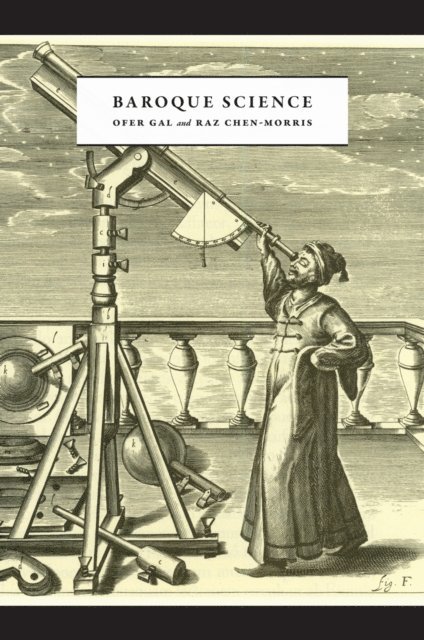
    In Measuring Shadows, Raz Chen-Morris demonstrates that a close study of Kepler’s Optics is essential to understanding his astronomical work and his scientific epistemology. He explores Kepler’s radical break from scientific and epistemological traditions and shows how the seventeenth-century astronomer posited new ways to view scientific truth and knowledge. Chen-Morris reveals how Kepler’s ideas about the formation of images on the retina and the geometrics of the camera obscura, as well as his astronomical observations, advanced the argument that physical reality could only be described through artificially produced shadows, reflections, and refractions.Breaking from medieval and Renaissance traditions that insisted upon direct sensory perception, Kepler advocated for instruments as mediators between the eye and physical reality, and for mathematical language to describe motion. It was only through this kind of knowledge, he argued, that observation could produce certainty about the heavens. Not only was this conception of visibility crucial to advancing the early modern understanding of vision and the retina, but it affected how people during that period approached and understood the world around them.

    Produktinformation

    • Utgivningsdatum:2016-01-28
    • Mått:152 x 229 x 38 mm
    • Vikt:544 g
    • Format:Inbunden
    • Språk:Engelska
    • Antal sidor:264
    • Förlag:Pennsylvania State University Press
    • ISBN:9780271070988

    Utforska kategorier

    • Europas historia inom Historia och arkeologi

    Mer om författaren

    Raz Chen-Morris is Senior Lecturer in History at the Hebrew University of Jerusalem.

    Recensioner i media

    “Raz Chen-Morris masterfully argues that Kepler’s optics is a response to widely shared anxieties about vision in Renaissance culture. This book is the first to show why the Paralipomena was important for Kepler, and how it was a book of cultural significance instead of a response to a narrowly defined technical issue.”—Sven Dupré, Institute for Art History, Freie Universität Berlin

    Innehållsförteckning

    • Contents List of IllustrationsAcknowledgmentsIntroduction1The New Optical Narrative: Light, Camera Obscura, and the Astronomer’s Wings2“Seeing with My Own Eyes”: Introducing the New Foundations of Scientific Knowledge3The Content of Kepler’s Visual Language: Abstraction, Representation, and Recognition4“Non tanquam Pictor, sed tanquam Mathematicus”: Kepler’s Pictures and the Art of Painting5Reading the Book of Nature: Allegories, Emblems, and Geometrical Diagrams6Nothing and the Ends of Renaissance SciencePostscriptNotesBibliographyIndex