• Fri frakt över 249 kr
  • •
  • Snabba leveranser
  • •
  • Billiga böcker
Kundservice

Du är på sajten för privatpersoner.

Företag, bibliotek eller offentlig verksamhet?

Du handlar på classic.bokus.com, där alla dina funktioner finns intakta.
Till classic.bokus.com
Bokus logotyp. Gå till startsidan.
  • Erbjudanden
  • Nyheter
  • Student
  • Topplistor
  • Barn & ungdom
  • Bokus Play
  • E-böcker
  • Pocketböcker
  • Spel & pussel

10% rabatt på allt med kod: NYSTART10 →

Sidfot

Mina sidor

    Hjälp

    • Kundservice
    • Vanliga frågor och svar
    • Frakt och leverans
    • Retur vid ångerrätt
    • Reklamera vara
    • Betalning
    • Köpvillkor
    • Allmänna villkor
    • Information om webbplatsens tillgänglighet

    Om Bokus

    • Om oss
    • Pressrum
    • För studenter
    • För företag
    • För bibliotek och offentlig verksamhet
    • För leverantörer
    • Hållbarhet

    Populärt

    • Aktuella erbjudanden
    • Presentkort
    • Studentlitteratur
    • Nya böcker
    • Topplistor
    • Signerade böcker
    • Engelska böcker

    Inspiration

    • Boktips
    • BookTok
    • Populära bokserier
    • Barnbokskaraktärer
    • Populära författare
    Logotyp för Bokus
    Följ oss på Facebook (extern länk)Följ oss på Instagram (extern länk)Följ oss på YouTube (extern länk)Följ oss på TikTok (extern länk)
    bokus @ CookiesAnpassa cookiesIntegritetspolicyKöpvillkor
    Till Citymail hemsida (extern länk)Till Budbee hemsida (extern länk)Till Postnord hemsida (extern länk)Till Schenker hemsida (extern länk)Till Early Bird hemsida (extern länk)Till Walleys hemsida (extern länk)
    1. Naturvetenskap och teknik
    2. Matematik och naturvetenskap
    3. Naturvetenskap:allmänt
    4. Naturvetenskapens historia

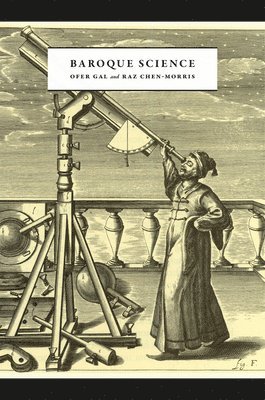
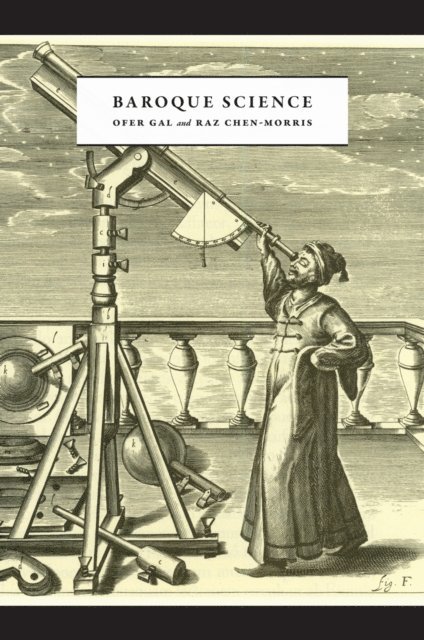
    Science in the Age of Baroque

    AvOfer Gal,Raz Chen-Morris

    Inbunden, Engelska, 2012

    Del i serien International Archives of the History of Ideas Archives internationales d'histoire des idées

    1 518 kr

    Beställningsvara. Skickas inom 10-15 vardagar. Fri frakt över 249 kr.

    Beskrivning

    This volume examines the New Science of the 17th century in the context of Baroque culture, analysing its emergence as an integral part of the high culture of the period. The collected essays explore themes common to the new practices of knowledge production and the rapidly changing culture surrounding them, as well as the obsessions, anxieties and aspirations they share, such as the foundations of order, the power and peril of mediation and the conflation of the natural and the artificial. The essays also take on the historiographical issues involved: the characterization of culture in general and culture of knowledge in particular; the use of generalizations like ‘Baroque’ and the status of such categories; and the role of these in untangling the historical complexities of the tumultuous 17th century. The canonical protagonists of the ‘Scientific Revolution’ are considered, and so are some obscure and suppressed figures: Galileo side by side with Scheiner;Torricelli together with Kircher; Newton as well as Scilla.   The coupling of Baroque and Science defies both the still-triumphalist historiographies of the Scientific Revolution and the slight embarrassment that the Baroque represents for most cultural-national histories of Western Europe. It signals a methodological interest in tensions and dilemmas rather than self-affirming narratives of success and failure, and provides an opportunity for reflective critique of our historical categories which is valuable in its own right.  ​
    Produktinformation

    • Utgivningsdatum:2012-11-21
    • Mått:155 x 235 x 22 mm
    • Vikt:647 g
    • Format:Inbunden
    • Språk:Engelska
    • Serie:International Archives of the History of Ideas Archives internationales d'histoire des idées
    • Antal sidor:314
    • Upplaga:2013
    • Förlag:Springer
    • ISBN:9789400748064

    Utforska kategorier

    • Naturvetenskapens historia inom Naturvetenskap och teknik

    Innehållsförteckning

    • 1. Ofer Gal and Raz Chen Morris: Baroque Modes and the Production of Knowledge.- A. Order.- 2. John Schuster: What Was the Relation of Baroque Culture to the Trajectory of Early Modern Natural Philosophy?.- 3. Koen Vermeir: “Bent And Directed Towards Him:” A Baroque Perspective on Kircher’s Sunflower Clock.- 4. Ofer Gal: From Divine Order to Human Approximation: Mathematics in Baroque Science.- B. Vision.- 5. Raz Chen-Morris: “The Quality of Nothing,” Or Kepler's Visual Economy of Science.- 6. Paula Findlen: Agostino Scilla:  A Baroque Painter in Pursuit of Science.- 7. J.B. Shank: What Exactly Was “Torricelli’s Barometer?”.- 8. Alan Salter: William Harvey and the Way of the Artisan.- C. Excess.- 9. John Gascoigne: Crossing the Pillars of Hercules: Francis Bacon, the Scientific Revolution and the New World.- 10. Nicholas Dew: The Hive and the Pendulum: Universal Metrology and Baroque Science.-11. Victor Boantza: Chymical Philosophy and Boyle’s Incongruous Philosophical Chymistry.-12 Rivka Feldhay: The Simulation of Nature and the Dissimulation of the Law on a Baroque Stage: Galileo and the Church Revisited​.