Rebecca Herzig - Böcker
Visar alla böcker från författaren Rebecca Herzig. Handla med fri frakt och snabb leverans.
9 produkter
9 produkter
444 kr
Skickas inom 7-10 vardagar
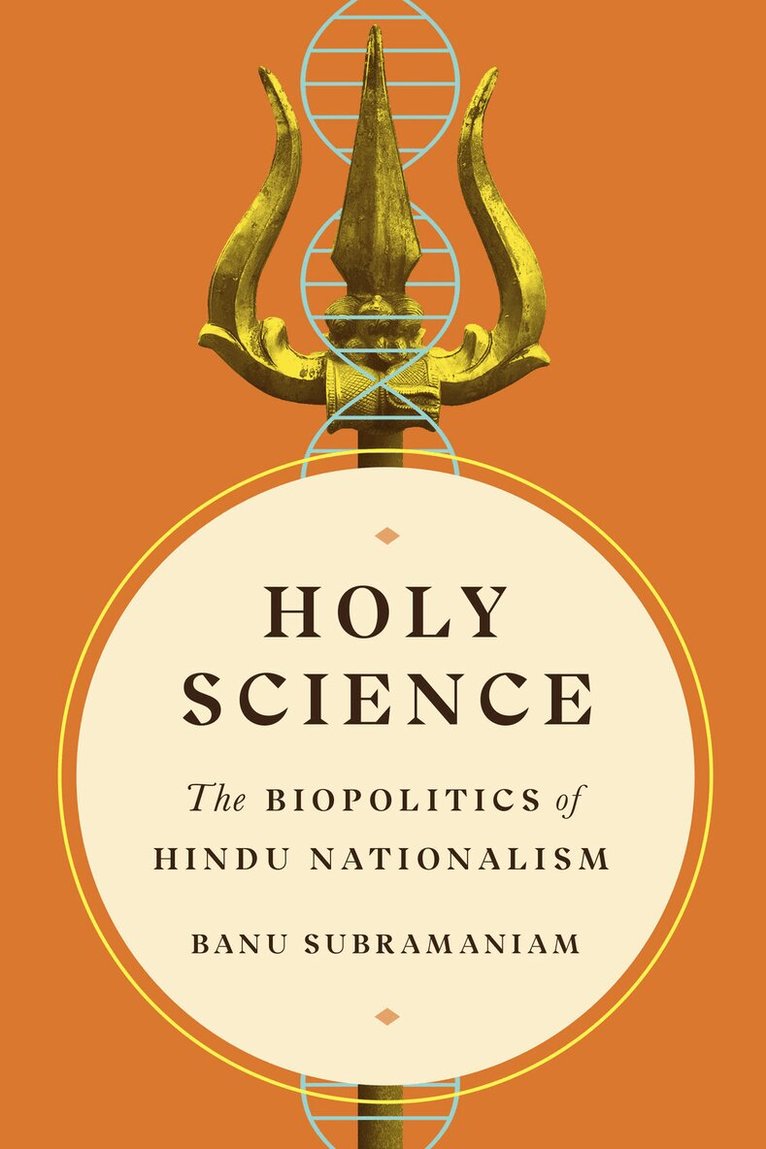
Behind the euphoric narrative of India as an emerging world power lies a complex and evolving relationship between science and religion. Evoking the rich mythology of comingled worlds where humans, animals, and gods transform each other and ancient history, Banu Subramaniam demonstrates how Hindu nationalism sutures an ideal past to technologies of the present to make bold claims about the Vedic Sciences and the scientific Vedas. Moving beyond a critique of India’s emerging bionationalism, this book explores the generative possibility of myth and story, interweaving compelling new stories into a rich analysis that animates alternative imaginaries and “other” worlds of possibilities.
431 kr
Skickas inom 7-10 vardagar
Challenges the way we think about pit bulls and their human companionsFifty-plus years of media fearmongering coupled with targeted breed bans have produced what could be called “America’s Most Wanted” dog: the pit bull. However, at the turn of the twenty-first century, competing narratives began to change the meaning of “pit bull.” Increasingly represented as loving members of mostly white, middle-class, heteronormative families, pit bulls and pit bull–type dogs are now frequently seen as victims rather than perpetrators, beings deserving not fear or scorn but rather care and compassion.Drawing from the increasingly contentious world of human/dog politics and featuring rich ethnographic research among dogs and their advocates, Bad Dog explores how relationships between humans and animals not only reflect but actively shape experiences of race, gender, ethnicity, sexuality, nation, breed, and species. Harlan Weaver proposes a critical and queer reading of pit bull politics and animal advocacy, challenging the zero-sum logic through which care for animals is seen as detracting from care for humans. Introducing understandings rooted in examinations of what it means for humans to touch, feel, sense, and think with and through relationships with nonhuman animals, Weaver suggests powerful ways to seek justice for marginalized humans and animals together.
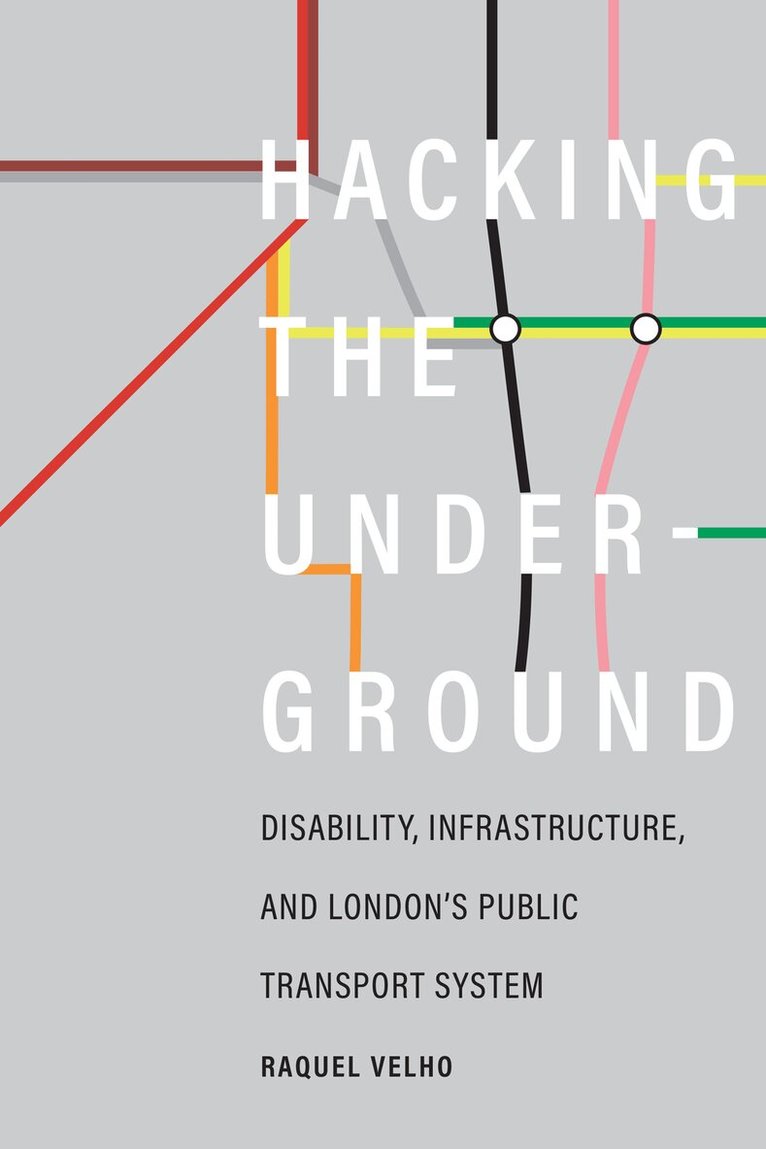
Hacking the Underground
Disability, Infrastructure, and London's Public Transport System
Inbunden, Engelska, 2023
1 689 kr
Skickas inom 3-6 vardagar
Reveals how knowledge from the margins shapes infrastructures"Minding the gap" while using a wheelchair on the London Underground goes beyond a sharp eye and careful foot placement to avoid a fall: it can entail carrying and deploying a portable ramp to embark and disembark or carefully mapping out a custom route ahead of time. The extensive infrastructure of London's public transportation system requires constant improvisation from users who move through the system differently than nondisabled people do. Centering the voices of disabled passengers, Hacking the Underground highlights how marginalized groups subvert and ultimately transform infrastructures, actively shaping them. Raquel Velho draws on emancipatory action research in London, capturing the hegemonic character of infrastructures without losing the experiences and actions of marginalized users. Proposing a crip feminist and profoundly relational approach to infrastructure, Velho illustrates how the built environment holds the potential for both inclusionary and exclusionary world-building.
Hacking the Underground
Disability, Infrastructure, and London's Public Transport System
Häftad, Engelska, 2023
438 kr
Skickas inom 7-10 vardagar
Reveals how knowledge from the margins shapes infrastructures"Minding the gap" while using a wheelchair on the London Underground goes beyond a sharp eye and careful foot placement to avoid a fall: it can entail carrying and deploying a portable ramp to embark and disembark or carefully mapping out a custom route ahead of time. The extensive infrastructure of London's public transportation system requires constant improvisation from users who move through the system differently than nondisabled people do. Centering the voices of disabled passengers, Hacking the Underground highlights how marginalized groups subvert and ultimately transform infrastructures, actively shaping them. Raquel Velho draws on emancipatory action research in London, capturing the hegemonic character of infrastructures without losing the experiences and actions of marginalized users. Proposing a crip feminist and profoundly relational approach to infrastructure, Velho illustrates how the built environment holds the potential for both inclusionary and exclusionary world-building.
1 739 kr
Skickas inom 3-6 vardagar
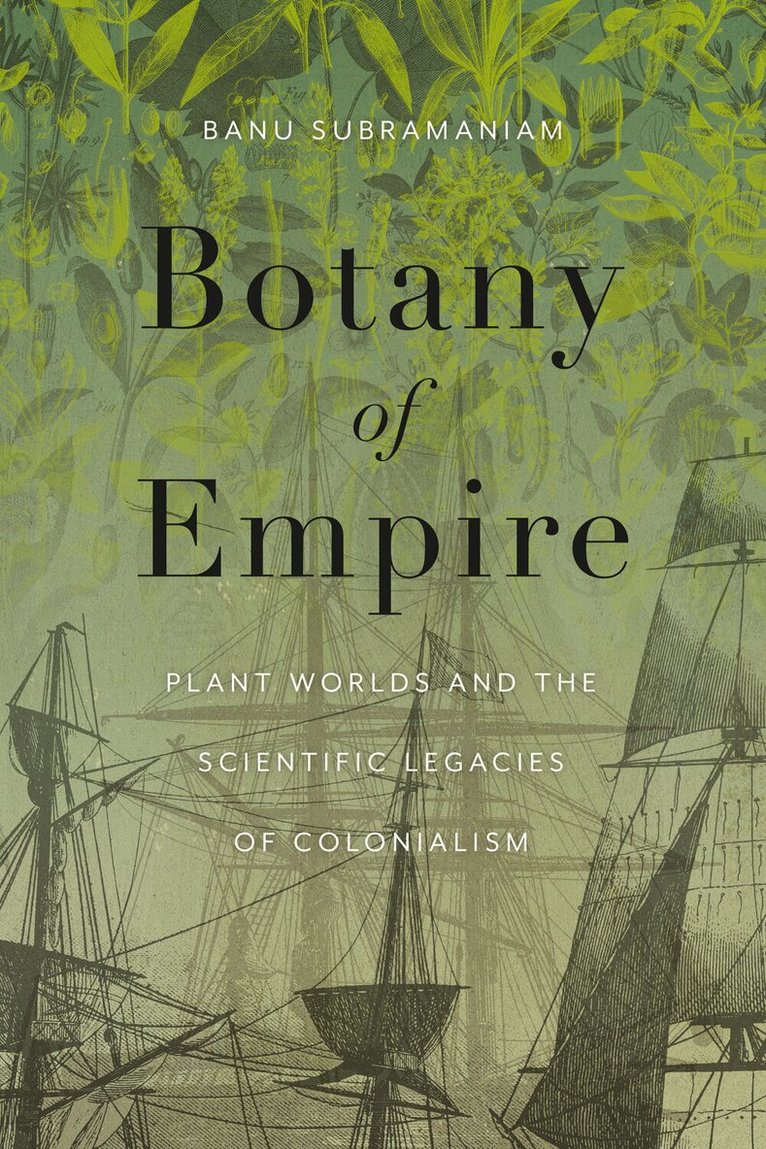
An accessible foray into botany’s origins and how we can transform its futureColonial ambitions spawned imperial attitudes, theories, and practices that remain entrenched within botany and across the life sciences. Banu Subramaniam draws on fields as disparate as queer studies, Indigenous studies, and the biological sciences to explore the labyrinthine history of how colonialism transformed rich and complex plant worlds into biological knowledge. Botany of Empire demonstrates how botany’s foundational theories and practices were shaped and fortified in the aid of colonial rule and its extractive ambitions. We see how colonizers obliterated plant time’s deep history to create a reductionist system that imposed a Latin-based naming system, drew on the imagined sex lives of European elites to explain plant sexuality, and discussed foreign plants like foreign humans. Subramanian then pivots to imagining a more inclusive and capacious field of botany untethered and decentered from its origins in histories of racism, slavery, and colonialism. This vision harnesses the power of feminist and scientific thought to chart a course for more socially just practices of experimental biology.A reckoning and a manifesto, Botany of Empire provides experts and general readers alike with a roadmap for transforming the colonial foundations of plant science.
444 kr
Skickas inom 7-10 vardagar
An accessible foray into botany’s origins and how we can transform its futureColonial ambitions spawned imperial attitudes, theories, and practices that remain entrenched within botany and across the life sciences. Banu Subramaniam draws on fields as disparate as queer studies, Indigenous studies, and the biological sciences to explore the labyrinthine history of how colonialism transformed rich and complex plant worlds into biological knowledge. Botany of Empire demonstrates how botany’s foundational theories and practices were shaped and fortified in the aid of colonial rule and its extractive ambitions. We see how colonizers obliterated plant time’s deep history to create a reductionist system that imposed a Latin-based naming system, drew on the imagined sex lives of European elites to explain plant sexuality, and discussed foreign plants like foreign humans. Subramanian then pivots to imagining a more inclusive and capacious field of botany untethered and decentered from its origins in histories of racism, slavery, and colonialism. This vision harnesses the power of feminist and scientific thought to chart a course for more socially just practices of experimental biology.A reckoning and a manifesto, Botany of Empire provides experts and general readers alike with a roadmap for transforming the colonial foundations of plant science.
1 738 kr
Skickas inom 7-10 vardagar
Reveals the limits and exclusions of defining desire as universalCompulsory sexuality—where sexual desire is seen as fundamental to human experience—not only pervades popular culture but is foundational to scientific research. Through a sharp intersectional lens, Kristina Gupta’s Acing Science interrogates a wide range of scientific studies, from clinical diagnoses of “sexual disinterest” and neuroimaging of desire to models of asexual reproduction, revealing how dominant science has pathologized the absence of sexual desire while tying sexual activity to health, social relationships, and citizenship. By exposing the assumptions undergirding these studies, Gupta shows how sexual desire has been framed as universal and socially necessary, while asexuality is often rendered invisible or suspect.At the core of the book is a compelling critique: that scientific discourses of sexuality are not based on objective biological facts but are sustained by broader systems of power—sexism, racism, ableism, and settler colonialism. Yet Acing Science is not merely a critique but a radical invitation. By rereading hegemonic science, Gupta opens space for reimagining how desires, pleasures, and relationships might be understood beyond narrow sexual frames. The result is a powerful intervention, essential reading for scholars in feminist science studies, sexuality studies, and anyone interested in how knowledge systems shape the intimate contours of everyday life.
431 kr
Skickas inom 7-10 vardagar
Reveals the limits and exclusions of defining desire as universalCompulsory sexuality—where sexual desire is seen as fundamental to human experience—not only pervades popular culture but is foundational to scientific research. Through a sharp intersectional lens, Kristina Gupta’s Acing Science interrogates a wide range of scientific studies, from clinical diagnoses of “sexual disinterest” and neuroimaging of desire to models of asexual reproduction, revealing how dominant science has pathologized the absence of sexual desire while tying sexual activity to health, social relationships, and citizenship. By exposing the assumptions undergirding these studies, Gupta shows how sexual desire has been framed as universal and socially necessary, while asexuality is often rendered invisible or suspect.At the core of the book is a compelling critique: that scientific discourses of sexuality are not based on objective biological facts but are sustained by broader systems of power—sexism, racism, ableism, and settler colonialism. Yet Acing Science is not merely a critique but a radical invitation. By rereading hegemonic science, Gupta opens space for reimagining how desires, pleasures, and relationships might be understood beyond narrow sexual frames. The result is a powerful intervention, essential reading for scholars in feminist science studies, sexuality studies, and anyone interested in how knowledge systems shape the intimate contours of everyday life.
414 kr
Skickas inom 11-20 vardagar
From gruesome self-experimentation to exhausting theoretical calculations, stories abound of scientists willfully surrendering health, well-being, and personal interests for the sake of their work. What accounts for the prevalence of this coupling of knowledge and pain-and for the peculiar assumption that science requires such suffering? In this lucid and absorbing history, Rebecca M. Herzig explores the rise of an ethic of "self-sacrifice" in American science. Delving into some of the more bewildering practices of the Gilded Age and the Progressive Era, she describes when and how science-the supposed standard of all things judicious and disinterested-came to rely on an enthralled investigator willing to embrace toil, danger, and even lethal dismemberment. With attention to shifting racial, sexual, and transnational politics, Herzig examines the suffering scientist as a way to understand the rapid transformation of American life between the Civil War and World War I. Suffering for Science reveals more than the passion evident in many scientific vocations; it also illuminates a nation's changing understandings of the purposes of suffering, the limits of reason, and the nature of freedom in the aftermath of slavery.