Rebecca Lemov – författare
Visar alla böcker från författaren Rebecca Lemov. Handla med fri frakt och snabb leverans.
5 produkter
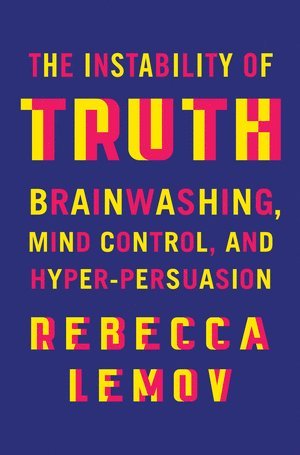
Instability of Truth
Brainwashing, Mind Control, and Hyper-Persuasion
Inbunden, 2025
311 kr
Lägg i varukorg
Because brainwashing affects both the world and our observation of the world, we often cannot recognise it while it’s happening—unless we know where to look. In The Instability of Truth, Rebecca Lemov exposes the myriad ways our minds can be controlled against our will, exploring the history of …
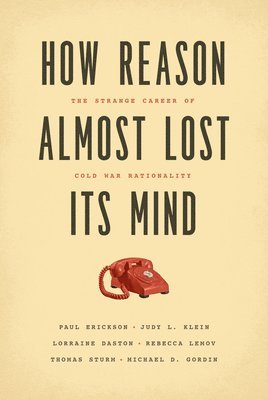
How Reason Almost Lost Its Mind – The Strange Career of Cold War Rationality
Av Paul Erickson, Judy L. Klein m. fl.
Häftad, 2015
239 kr
Lägg i varukorg
In the United States at the height of the Cold War, roughly between the end of World War II and the early 1980s, a new project of redefining rationality commanded the attention of sharp minds, powerful politicians, wealthy foundations, and top military brass. Its home was the human …
How Reason Almost Lost Its Mind
The Strange Career of Cold War Rationality
Av Paul Erickson, Judy L. Klein m. fl.
Inbunden, 2013
858 kr
Lägg i varukorg
In the United States at the height of the Cold War, roughly between the end of World War II and the early 1980s, a new project of redefining rationality commanded the attention of sharp minds, powerful politicians, wealthy foundations, and top military brass. Its home was the human sciences - …
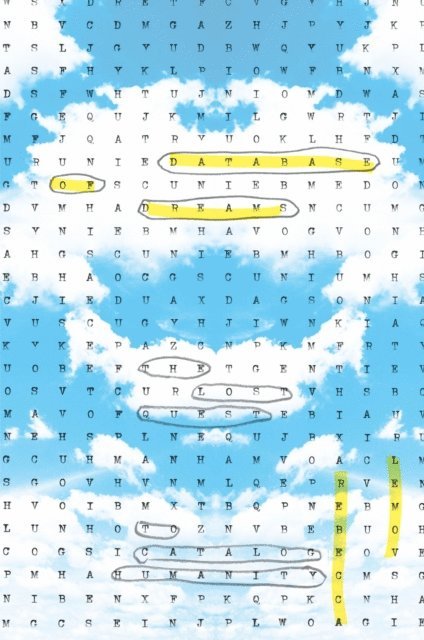
Database of Dreams
The Lost Quest to Catalog Humanity
E-bok, 2015
265 kr
Lägg i varukorg
Just a few years before the dawn of the digital age, Harvard psychologist Bert Kaplan set out to build the largest database of sociological information ever assembled. It was the mid-1950s, and social scientists were entranced by the human insights promised by Rorschach tests and other innovative …
Database of Dreams
The Lost Quest to Catalog Humanity
Inbunden, 2015
333 kr
Tillfälligt slut
An acclaimed science historian uncovers the fascinating story of a “lost” project to unlock humanity’s common denominator that prefigured the emergence of Big DataJust a few years before the dawn of the digital age, Harvard psychologist Bert Kaplan set out to build the largest database of …