Rebecca Sanchez - Böcker
Visar alla böcker från författaren Rebecca Sanchez. Handla med fri frakt och snabb leverans.
7 produkter
7 produkter
211 kr
Skickas inom 3-6 vardagar
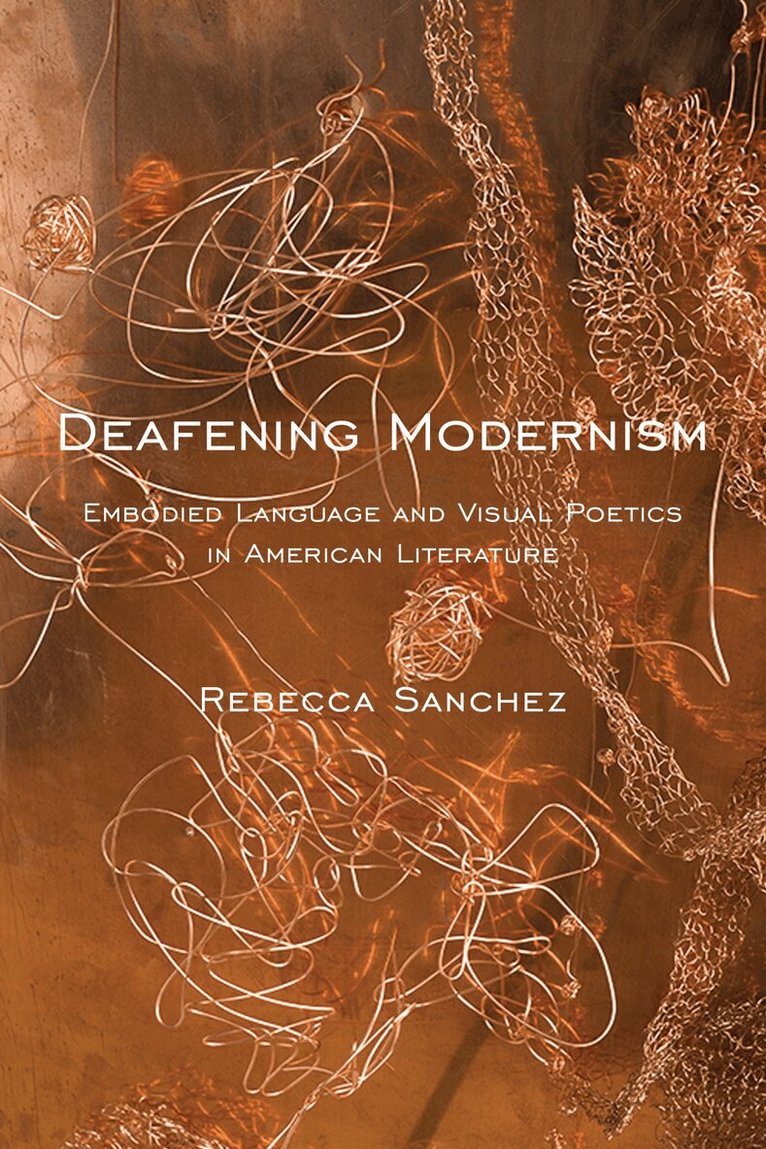
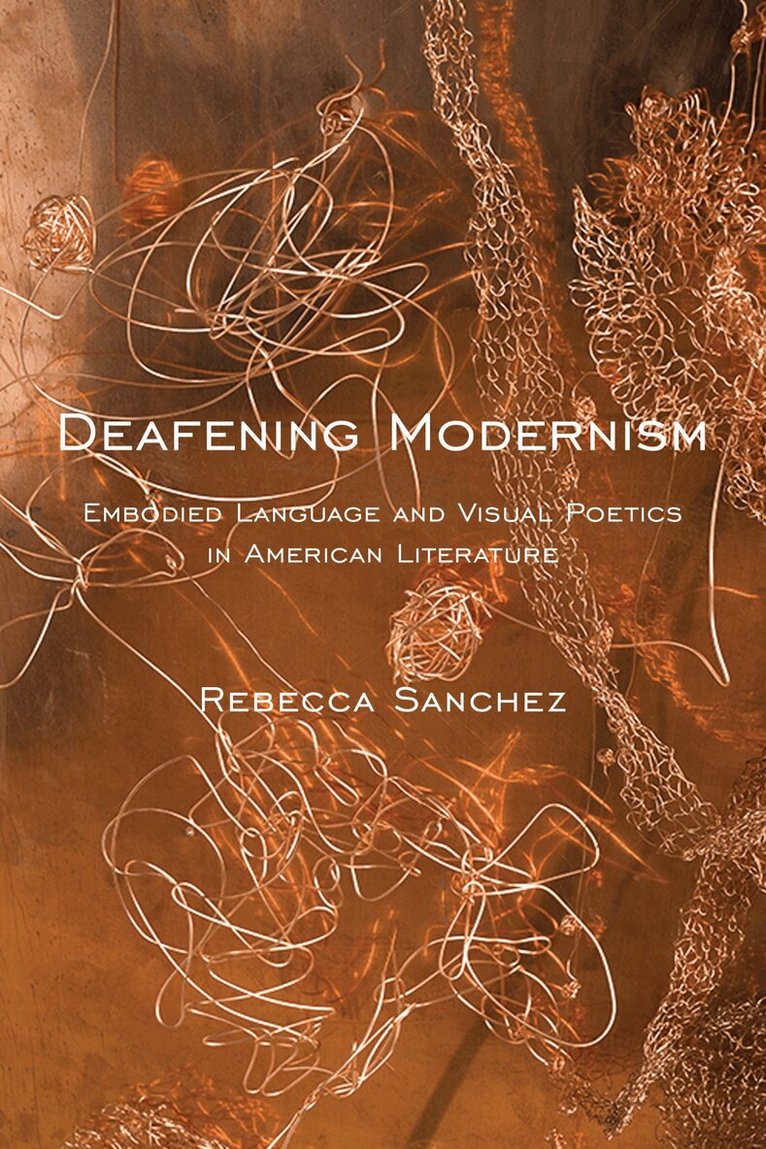
Deafening Modernism
Embodied Language and Visual Poetics in American Literature
Häftad, Engelska, 2015
362 kr
Skickas inom 7-10 vardagar
Deafening Modernism tells the story of modernism from the perspective of Deaf critical insight. Working to develop a critical Deaf theory independent of identity-based discourse, Rebecca Sanchez excavates the intersections between Deaf and modernist studies. She traces the ways that Deaf culture, history, linguistics, and literature provide a vital and largely untapped resource for understanding the history of American language politics and the impact that history has had on modernist aesthetic production.Discussing Deaf and disability studies in these unexpected contexts highlights the contributions the field can make to broader discussions of the intersections between images, bodies, and text. Drawing on a range of methodological approaches, including literary analysis and history, linguistics, ethics, and queer, cultural, and film studies, Sanchez sheds new light on texts by T.S. Eliot, Ezra Pound, Gertrude Stein, William Carlos Williams, Charlie Chaplin, and many others. By approaching modernism through the perspective of Deaf and disability studies, Deafening Modernism reconceptualizes deafness as a critical modality enabling us to freshly engage topics we thought we knew.
976 kr
Skickas inom 10-15 vardagar
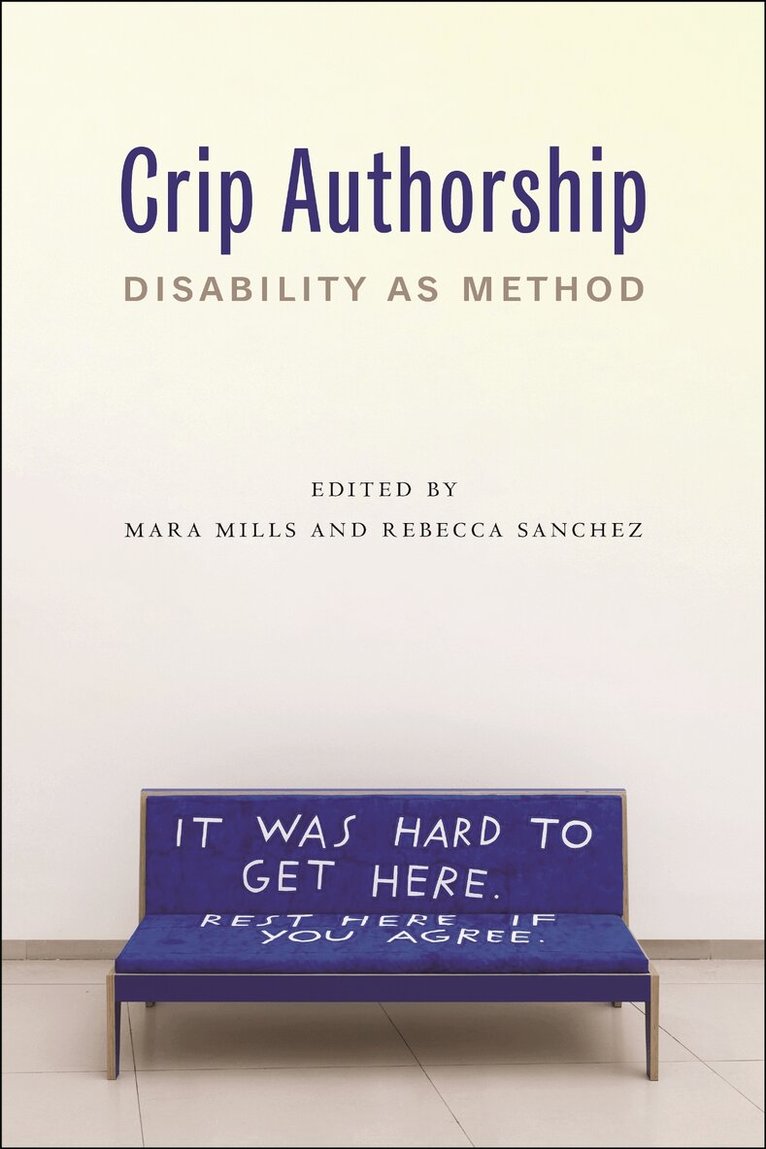
2024 Daniel E. Griffiths Research Award Winner2024 Outstanding Academic Title, given by Choice Reviews An expansive volume presenting crip approaches to writing, research, and publishing. Crip Authorship: Disability as Method is an expansive volume presenting the multidisciplinary methods brought into being by disability studies and activism. Mara Mills and Rebecca Sanchez have convened leading scholars, artists, and activists to explore the ways disability shapes authorship, transforming cultural production, aesthetics, and media.Starting from the premise that disability is plural and authorship spans composition, affect, and publishing, this collection of thirty-five compact essays asks how knowledge about disability is produced and shared in disability studies. Disability alters, generates, and dismantles method. Crip authorship takes place within and beyond the commodity version of authorship, in books, on social media, and in creative works that will never be published. The chapters draw on the expertise of international researchers and activists in the humanities, social sciences, education, arts, and design. Across five sections—Writing, Research, Genre/Form, Publishing, Media—contributors consider disability as method for creative work: practices of writing and other forms of composition; research methods and collaboration; crip aesthetics; media formats and hacks; and the capital, access, legal standing, and care networks required to publish. Designed to be accessible and engaging for students, Crip Authorship also provides theoretically sophisticated arguments in a condensed form that will make the text a key resource for disability studies scholars.Essays include Mel Y Chen on the temporality of writing with chronic illness; Remi Yergeau on perseveration; La Marr Jurelle Bruce on mad Black writing; Alison Kafer on the reliance of the manifesto genre on disability; Jaipreet Virdi on public scholarship for disability justice; Ellen Samuels on the importance of disability and illness to autotheory; Xuan Thuy Nguyen on decolonial research methods for disability studies; Emily Lim Rogers on virtual ethnography; Cameron Awkward-Rich on depression and trans reading methods; Robert McRuer on crip theory in translation; Kelsie Acton on plain language writing; and Georgina Kleege on description as an access and aesthetic technique.
331 kr
Skickas
2024 Daniel E. Griffiths Research Award Winner2024 Outstanding Academic Title, given by Choice Reviews An expansive volume presenting crip approaches to writing, research, and publishing. Crip Authorship: Disability as Method is an expansive volume presenting the multidisciplinary methods brought into being by disability studies and activism. Mara Mills and Rebecca Sanchez have convened leading scholars, artists, and activists to explore the ways disability shapes authorship, transforming cultural production, aesthetics, and media.Starting from the premise that disability is plural and authorship spans composition, affect, and publishing, this collection of thirty-five compact essays asks how knowledge about disability is produced and shared in disability studies. Disability alters, generates, and dismantles method. Crip authorship takes place within and beyond the commodity version of authorship, in books, on social media, and in creative works that will never be published. The chapters draw on the expertise of international researchers and activists in the humanities, social sciences, education, arts, and design. Across five sections—Writing, Research, Genre/Form, Publishing, Media—contributors consider disability as method for creative work: practices of writing and other forms of composition; research methods and collaboration; crip aesthetics; media formats and hacks; and the capital, access, legal standing, and care networks required to publish. Designed to be accessible and engaging for students, Crip Authorship also provides theoretically sophisticated arguments in a condensed form that will make the text a key resource for disability studies scholars.Essays include Mel Y Chen on the temporality of writing with chronic illness; Remi Yergeau on perseveration; La Marr Jurelle Bruce on mad Black writing; Alison Kafer on the reliance of the manifesto genre on disability; Jaipreet Virdi on public scholarship for disability justice; Ellen Samuels on the importance of disability and illness to autotheory; Xuan Thuy Nguyen on decolonial research methods for disability studies; Emily Lim Rogers on virtual ethnography; Cameron Awkward-Rich on depression and trans reading methods; Robert McRuer on crip theory in translation; Kelsie Acton on plain language writing; and Georgina Kleege on description as an access and aesthetic technique.
Deafening Modernism
Embodied Language and Visual Poetics in American Literature
Inbunden, Engelska, 2015
1 154 kr
Skickas inom 10-15 vardagar
Deafening Modernism tells the story of modernism from the perspective of Deaf critical insight. Working to develop a critical Deaf theory independent of identity-based discourse, Rebecca Sanchez excavates the intersections between Deaf and modernist studies. She traces the ways that Deaf culture, history, linguistics, and literature provide a vital and largely untapped resource for understanding the history of American language politics and the impact that history has had on modernist aesthetic production.Discussing Deaf and disability studies in these unexpected contexts highlights the contributions the field can make to broader discussions of the intersections between images, bodies, and text. Drawing on a range of methodological approaches, including literary analysis and history, linguistics, ethics, and queer, cultural, and film studies, Sanchez sheds new light on texts by T.S. Eliot, Ezra Pound, Gertrude Stein, William Carlos Williams, Charlie Chaplin, and many others. By approaching modernism through the perspective of Deaf and disability studies, Deafening Modernism reconceptualizes deafness as a critical modality enabling us to freshly engage topics we thought we knew.
301 kr
Skickas inom 7-10 vardagar
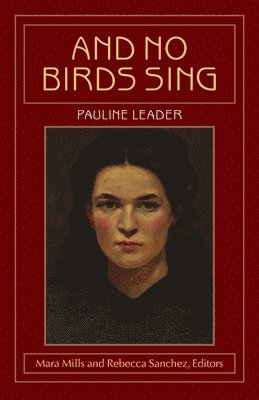
Originally published in 1931, this memoir is an unflinching look at the life experience of a woman struggling with identity and isolation. In harrowing yet lyrical prose, Pauline Leader assails her poverty and Jewish heritage and longs to fit in with her "American" peers. Born in 1908, she describes her home life as the daughter of Polish immigrants who run a butcher's market and boarding houses in a small New England town. Frequent beatings and sinister remarks issued by her parents puncture her childhood. At the age of 12, following a long illness, Leader becomes deaf yet another stigma to bear. As a young adult she journeys to New York City where she struggles to find work in factories and sweatshops and seeks social acceptance among the artists and prostitutes of Greenwich Village. For a time she is held in a reformatory for "wayward" girls. Her strong will and fierce independence are often thwarted by severe self-doubt, but through it all, she finds solace through her writing. A new scholarly introduction provides a modern framework for understanding Leader and her times. She persevered and became a published poet and novelist, often drawing on the experiences offered up here.Compelling and evocative, And No Birds Sing deftly reveals a complex, intelligent spirit toiling in a brutal world. From the book: I insisted to myself that I could still hear. I heard in my mind the sounds of streams as I passed them. I knew the sound the river made, that river that I had known always, the river by the marble house. In my mind the river washed with a low intimate sound. I had no need to hear as the people heard. True intimacy needs no ears. I knew the sound of birds; I heard them as they hopped about. I knew the sound of words also. It was words that I most intensely heard. I had not always the river and the birds they appeared far away at times. I did not always want river and birds, but I always wanted words, and I always had them. I would have been terribly lonely without them. With them always in my mind, I could not be truly lonely. I played with them; I set them to music; I achieved endless variations with them. They were never weary, as other things could sometimes be weary.
1 657 kr
Skickas inom 3-6 vardagar