Mara Mills - Böcker
Visar alla böcker från författaren Mara Mills. Handla med fri frakt och snabb leverans.
7 produkter
7 produkter
1 469 kr
Skickas inom 5-8 vardagar
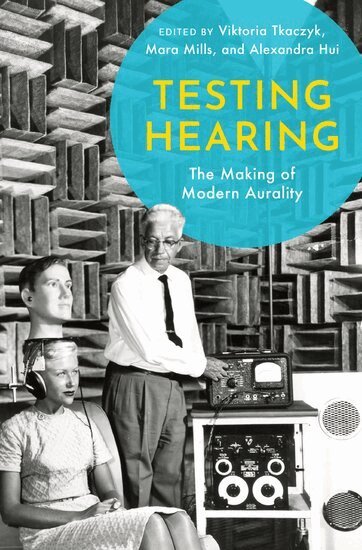
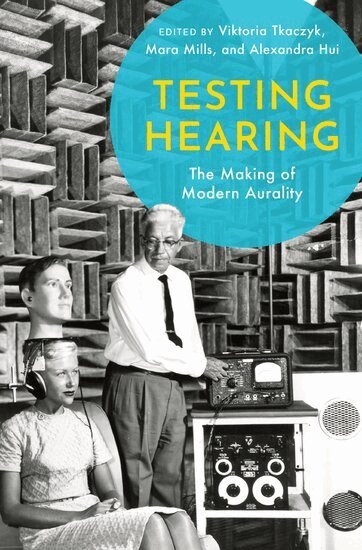
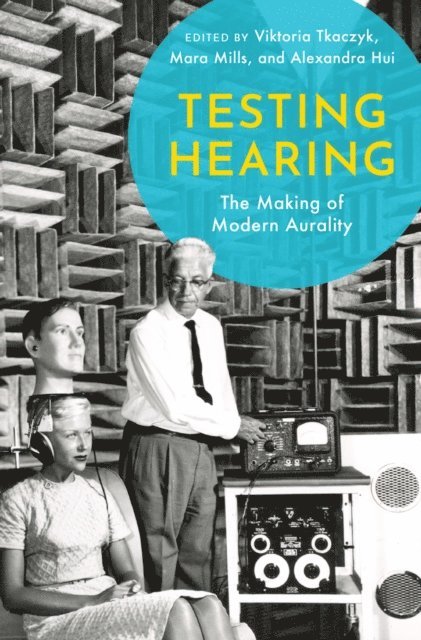
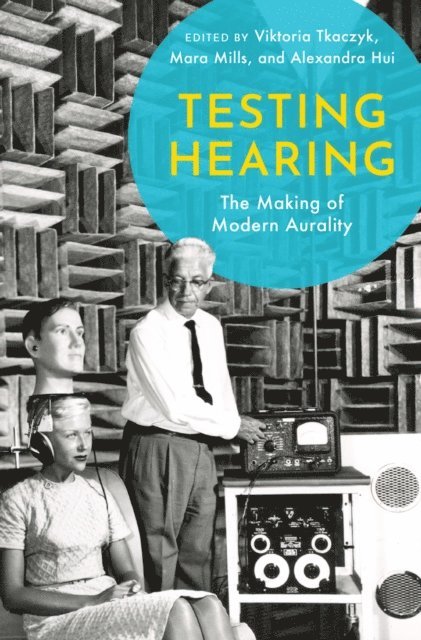
Testing Hearing: The Making of Modern Aurality argues that the modern cultural practices of hearing and testing have emerged from a long interrelationship. Since the early nineteenth century, auditory test tools (whether organ pipes or electronic tone generators) and the results of hearing tests have fed back into instrument calibration, human training, architecture, and the creation of new musical sounds. Hearing tests received a further boost around 1900 as a result of injury compensation laws and state and professional demands for aptitude testing in schools, conservatories, the military, and other fields. Applied at large scale, tests of seemingly small measure-of auditory acuity, of hearing range-helped redefine the modern concept of hearing as such. During the twentieth and twenty-first centuries, the epistemic function of hearing expanded. Hearing took on the dual role of test object and test instrument; in the latter case, human hearing became a gauge by which to evaluate or regulate materials, nonhuman organisms, equipment, and technological systems. This book considers both the testing of hearing and testing with hearing to explore the co-creation of modern epistemic and auditory cultures. The book's twelve contributors trace the design of ever more specific tests for the arts, education and communication, colonial and military applications, sociopolitical and industrial endeavors. Together, they demonstrate that testing as such became an enduring and wide-ranging cultural technique in the modern period, one that is situated between histories of scientific experimentation and many fields of application.
553 kr
Skickas inom 5-8 vardagar
Testing Hearing: The Making of Modern Aurality argues that the modern cultural practices of hearing and testing have emerged from a long interrelationship. Since the early nineteenth century, auditory test tools (whether organ pipes or electronic tone generators) and the results of hearing tests have fed back into instrument calibration, human training, architecture, and the creation of new musical sounds. Hearing tests received a further boost around 1900 as a result of injury compensation laws and state and professional demands for aptitude testing in schools, conservatories, the military, and other fields. Applied at large scale, tests of seemingly small measure-of auditory acuity, of hearing range-helped redefine the modern concept of hearing as such. During the twentieth and twenty-first centuries, the epistemic function of hearing expanded. Hearing took on the dual role of test object and test instrument; in the latter case, human hearing became a gauge by which to evaluate or regulate materials, nonhuman organisms, equipment, and technological systems. This book considers both the testing of hearing and testing with hearing to explore the co-creation of modern epistemic and auditory cultures. The book's twelve contributors trace the design of ever more specific tests for the arts, education and communication, colonial and military applications, sociopolitical and industrial endeavors. Together, they demonstrate that testing as such became an enduring and wide-ranging cultural technique in the modern period, one that is situated between histories of scientific experimentation and many fields of application.
980 kr
Skickas inom 10-15 vardagar
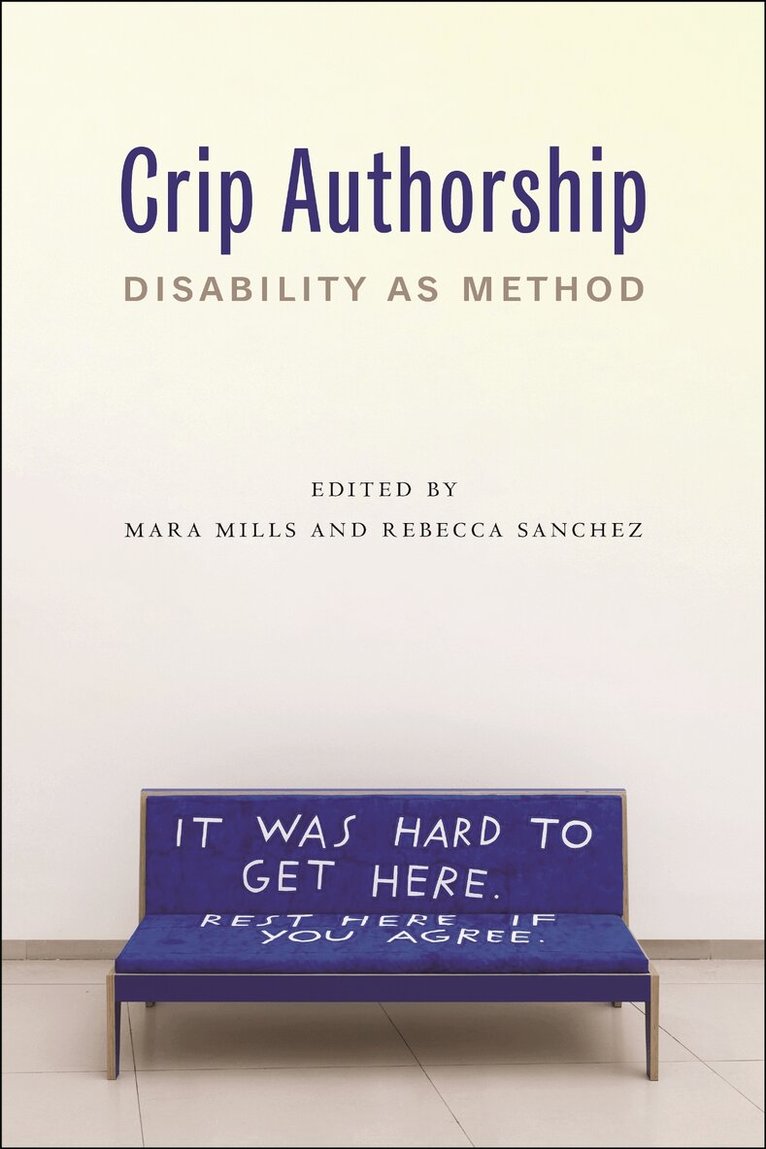
2024 Daniel E. Griffiths Research Award Winner2024 Outstanding Academic Title, given by Choice Reviews An expansive volume presenting crip approaches to writing, research, and publishing. Crip Authorship: Disability as Method is an expansive volume presenting the multidisciplinary methods brought into being by disability studies and activism. Mara Mills and Rebecca Sanchez have convened leading scholars, artists, and activists to explore the ways disability shapes authorship, transforming cultural production, aesthetics, and media.Starting from the premise that disability is plural and authorship spans composition, affect, and publishing, this collection of thirty-five compact essays asks how knowledge about disability is produced and shared in disability studies. Disability alters, generates, and dismantles method. Crip authorship takes place within and beyond the commodity version of authorship, in books, on social media, and in creative works that will never be published. The chapters draw on the expertise of international researchers and activists in the humanities, social sciences, education, arts, and design. Across five sections—Writing, Research, Genre/Form, Publishing, Media—contributors consider disability as method for creative work: practices of writing and other forms of composition; research methods and collaboration; crip aesthetics; media formats and hacks; and the capital, access, legal standing, and care networks required to publish. Designed to be accessible and engaging for students, Crip Authorship also provides theoretically sophisticated arguments in a condensed form that will make the text a key resource for disability studies scholars.Essays include Mel Y Chen on the temporality of writing with chronic illness; Remi Yergeau on perseveration; La Marr Jurelle Bruce on mad Black writing; Alison Kafer on the reliance of the manifesto genre on disability; Jaipreet Virdi on public scholarship for disability justice; Ellen Samuels on the importance of disability and illness to autotheory; Xuan Thuy Nguyen on decolonial research methods for disability studies; Emily Lim Rogers on virtual ethnography; Cameron Awkward-Rich on depression and trans reading methods; Robert McRuer on crip theory in translation; Kelsie Acton on plain language writing; and Georgina Kleege on description as an access and aesthetic technique.
331 kr
Skickas
2024 Daniel E. Griffiths Research Award Winner2024 Outstanding Academic Title, given by Choice Reviews An expansive volume presenting crip approaches to writing, research, and publishing. Crip Authorship: Disability as Method is an expansive volume presenting the multidisciplinary methods brought into being by disability studies and activism. Mara Mills and Rebecca Sanchez have convened leading scholars, artists, and activists to explore the ways disability shapes authorship, transforming cultural production, aesthetics, and media.Starting from the premise that disability is plural and authorship spans composition, affect, and publishing, this collection of thirty-five compact essays asks how knowledge about disability is produced and shared in disability studies. Disability alters, generates, and dismantles method. Crip authorship takes place within and beyond the commodity version of authorship, in books, on social media, and in creative works that will never be published. The chapters draw on the expertise of international researchers and activists in the humanities, social sciences, education, arts, and design. Across five sections—Writing, Research, Genre/Form, Publishing, Media—contributors consider disability as method for creative work: practices of writing and other forms of composition; research methods and collaboration; crip aesthetics; media formats and hacks; and the capital, access, legal standing, and care networks required to publish. Designed to be accessible and engaging for students, Crip Authorship also provides theoretically sophisticated arguments in a condensed form that will make the text a key resource for disability studies scholars.Essays include Mel Y Chen on the temporality of writing with chronic illness; Remi Yergeau on perseveration; La Marr Jurelle Bruce on mad Black writing; Alison Kafer on the reliance of the manifesto genre on disability; Jaipreet Virdi on public scholarship for disability justice; Ellen Samuels on the importance of disability and illness to autotheory; Xuan Thuy Nguyen on decolonial research methods for disability studies; Emily Lim Rogers on virtual ethnography; Cameron Awkward-Rich on depression and trans reading methods; Robert McRuer on crip theory in translation; Kelsie Acton on plain language writing; and Georgina Kleege on description as an access and aesthetic technique.
1 102 kr
Skickas inom 10-15 vardagar
A chronicle of ableism and disability activism in New York City during the COVID-19 pandemicHow to Be Disabled in a Pandemic documents the pivotal experiences of disabled people living in an early epicenter of COVID-19: New York City. Among those hardest hit by the pandemic, disability communities across the five boroughs have been disproportionately impacted by city and national policies, work and housing conditions, stigma, racism, and violence—as much as by the virus itself. Disabled and chronically-ill activists have protested plans for medical rationing and refuted the eugenic logic of mainstream politicians and journalists who "reassure" audiences that only older people and those with disabilities continue to die from COVID-19. At the same time, as exemplified by the viral hashtag #DisabledPeopleToldYou, disability expertise has become widely recognized in practices such as accessible remote work and education, quarantine, and distributed networks of support and mutual aid. This edited volume charts the legacies of this "mass disabling event" for uncertain viral futures, exploring the dialectic between disproportionate risk and the creativity of a disability justice response.How to Be Disabled in a Pandemic includes contributions by wide-ranging disability scholars, writers, and activists whose research and lived experiences chronicle the pandemic's impacts in prisons, migrant detention centers, Chinatown senior centers, hospitals in Queens and the Bronx, subways, schools, housing shelters, social media, and other locations of public and private life. By focusing on New York City over the course of three years, the book reveals key themes of the pandemic, including hierarchies of disability "vulnerability," the deployment of disability as a tool of population management, and innovative crip pandemic cultural production. How to Be Disabled in a Pandemic honors those lost, as well as those who survived, by calling for just policies and caring infrastructures, not only in times of crisis but for the long haul.
355 kr
Skickas
A chronicle of ableism and disability activism in New York City during the COVID-19 pandemicHow to Be Disabled in a Pandemic documents the pivotal experiences of disabled people living in an early epicenter of COVID-19: New York City. Among those hardest hit by the pandemic, disability communities across the five boroughs have been disproportionately impacted by city and national policies, work and housing conditions, stigma, racism, and violence—as much as by the virus itself. Disabled and chronically-ill activists have protested plans for medical rationing and refuted the eugenic logic of mainstream politicians and journalists who "reassure" audiences that only older people and those with disabilities continue to die from COVID-19. At the same time, as exemplified by the viral hashtag #DisabledPeopleToldYou, disability expertise has become widely recognized in practices such as accessible remote work and education, quarantine, and distributed networks of support and mutual aid. This edited volume charts the legacies of this "mass disabling event" for uncertain viral futures, exploring the dialectic between disproportionate risk and the creativity of a disability justice response.How to Be Disabled in a Pandemic includes contributions by wide-ranging disability scholars, writers, and activists whose research and lived experiences chronicle the pandemic's impacts in prisons, migrant detention centers, Chinatown senior centers, hospitals in Queens and the Bronx, subways, schools, housing shelters, social media, and other locations of public and private life. By focusing on New York City over the course of three years, the book reveals key themes of the pandemic, including hierarchies of disability "vulnerability," the deployment of disability as a tool of population management, and innovative crip pandemic cultural production. How to Be Disabled in a Pandemic honors those lost, as well as those who survived, by calling for just policies and caring infrastructures, not only in times of crisis but for the long haul.
302 kr
Skickas inom 7-10 vardagar
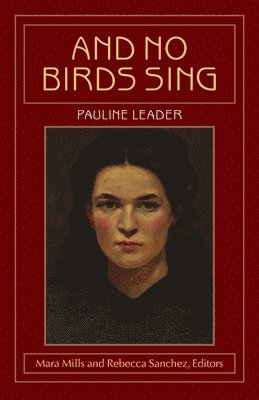
Originally published in 1931, this memoir is an unflinching look at the life experience of a woman struggling with identity and isolation. In harrowing yet lyrical prose, Pauline Leader assails her poverty and Jewish heritage and longs to fit in with her "American" peers. Born in 1908, she describes her home life as the daughter of Polish immigrants who run a butcher's market and boarding houses in a small New England town. Frequent beatings and sinister remarks issued by her parents puncture her childhood. At the age of 12, following a long illness, Leader becomes deaf yet another stigma to bear. As a young adult she journeys to New York City where she struggles to find work in factories and sweatshops and seeks social acceptance among the artists and prostitutes of Greenwich Village. For a time she is held in a reformatory for "wayward" girls. Her strong will and fierce independence are often thwarted by severe self-doubt, but through it all, she finds solace through her writing. A new scholarly introduction provides a modern framework for understanding Leader and her times. She persevered and became a published poet and novelist, often drawing on the experiences offered up here.Compelling and evocative, And No Birds Sing deftly reveals a complex, intelligent spirit toiling in a brutal world. From the book: I insisted to myself that I could still hear. I heard in my mind the sounds of streams as I passed them. I knew the sound the river made, that river that I had known always, the river by the marble house. In my mind the river washed with a low intimate sound. I had no need to hear as the people heard. True intimacy needs no ears. I knew the sound of birds; I heard them as they hopped about. I knew the sound of words also. It was words that I most intensely heard. I had not always the river and the birds they appeared far away at times. I did not always want river and birds, but I always wanted words, and I always had them. I would have been terribly lonely without them. With them always in my mind, I could not be truly lonely. I played with them; I set them to music; I achieved endless variations with them. They were never weary, as other things could sometimes be weary.