Regev Nathansohn - Böcker
Visar alla böcker från författaren Regev Nathansohn. Handla med fri frakt och snabb leverans.
3 produkter
3 produkter
2 289 kr
Skickas inom 10-15 vardagar
This collection of original articles deals with two intertwined general questions: what is the visual sphere, and what are the means by which we can study it sociologically? These questions serve as the logic for dividing the book into two sections, the first ("Visualizing the Social, Sociologizing the Visual") focuses on the meanings of the visual sphere, and the second ("New Methodologies for Sociological Investigations of the Visual") explores various sociological research methods to getting a better understanding of the visual sphere. We approach the visual sphere sociologically because we regard it as one of the layers of the social world. It is where humans produce, use, and engage with the visual in their creation and interpretation of meanings. Under the two large inquiries into the "what" and the "how" of the sociology of the visual sphere, a subset of more focused questions is being posed: what social processes and hierarchies make up the visual sphere? How various domains of visual politics and visuality are being related (or being presented as such)? What are the relations between sites and sights in the visual research? What techniques help visual researcher to increase sensorial awareness of the research site? How do imaginaries of competing political agents interact in different global contexts and create unique, locally-specific visual spheres? What constitutes competing interpretations of visual signs? The dwelling on these questions brings here eleven scholars from eight countries to share their research experience from variety of contexts and sites, utilizing a range of sociological theories, from semiotics to post-structuralism.
576 kr
Skickas inom 10-15 vardagar
This collection of original articles deals with two intertwined general questions: what is the visual sphere, and what are the means by which we can study it sociologically? These questions serve as the logic for dividing the book into two sections, the first ("Visualizing the Social, Sociologizing the Visual") focuses on the meanings of the visual sphere, and the second ("New Methodologies for Sociological Investigations of the Visual") explores various sociological research methods to getting a better understanding of the visual sphere. We approach the visual sphere sociologically because we regard it as one of the layers of the social world. It is where humans produce, use, and engage with the visual in their creation and interpretation of meanings. Under the two large inquiries into the "what" and the "how" of the sociology of the visual sphere, a subset of more focused questions is being posed: what social processes and hierarchies make up the visual sphere? How various domains of visual politics and visuality are being related (or being presented as such)? What are the relations between sites and sights in the visual research? What techniques help visual researcher to increase sensorial awareness of the research site? How do imaginaries of competing political agents interact in different global contexts and create unique, locally-specific visual spheres? What constitutes competing interpretations of visual signs? The dwelling on these questions brings here eleven scholars from eight countries to share their research experience from variety of contexts and sites, utilizing a range of sociological theories, from semiotics to post-structuralism.
673 kr
Kommande
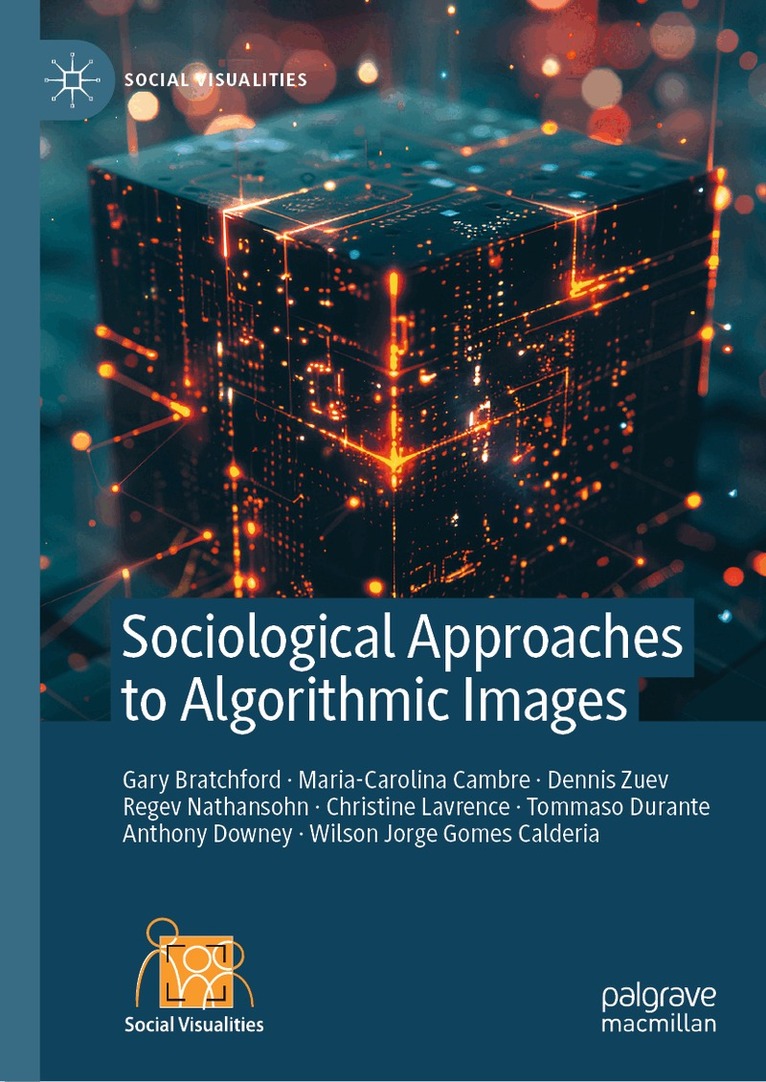
This book explores the impact of digital algorithms on visual culture, examining how these technologies influence the creation, circulation, interpretation, and archiving of images. It presents a focused analysis of how algorithms reshape key sociological themes such as power, social relations, labour, racialisation, gender, and representation. Through a combination of case studies and theoretical essays, the book highlights the algorithmic shift within visual sociology, addressing crucial questions: Can algorithms interpret images like humans? How do they affect our understanding of subjectivity, agency, truth, and creativity? With perspectives from multiple geographies and cultural contexts and the analysis of visual phenomena across various digital platforms, this volume is essential for students and scholars in visual sociology, digital sociology, and visual studies. It serves as an accessible, thought-provoking resource for understanding the rapidly evolving relationship between visual culture and technological intervention.