Reiko Ohnuma - Böcker
Visar alla böcker från författaren Reiko Ohnuma. Handla med fri frakt och snabb leverans.
5 produkter
5 produkter
485 kr
Skickas inom 5-8 vardagar
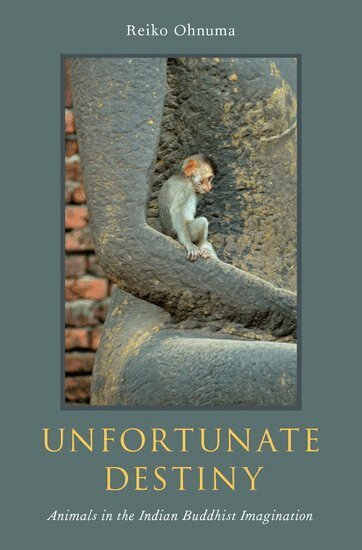
Unfortunate Destiny focuses on the roles played by nonhuman animals within the imaginative thought-world of Indian Buddhism, as reflected in pre-modern South Asian Buddhist literature. These roles are multifaceted, diverse, and often contradictory: In Buddhist doctrine and cosmology, the animal rebirth is a most "unfortunate destiny" (durgati), won through negative karma and characterized by a lack of intelligence, moral agency, and spiritual potential. In stories about the Buddha's previous lives, on the other hand, we find highly anthropomorphized animals who are wise, virtuous, endowed with human speech, and often critical of the moral shortcomings of humankind. In the life-story of the Buddha, certain animal characters serve as "doubles" of the Buddha, illuminating his nature through identification, contrast or parallelism with an animal "other." Relations between human beings and animals likewise range all the way from support, friendship, and near-equality to rampant exploitation, cruelty, and abuse. Perhaps the only commonality among these various strands of thought is a persistent impulse to use animals to clarify the nature of humanity itself--whether through similarity, contrast, or counterpoint. Buddhism is a profoundly human-centered religious tradition, yet it relies upon a dexterous use of the animal other to help clarify the human self. This book seeks to make sense of this process through a wide-ranging-exploration of animal imagery, animal discourse, and specific animal characters in South Asian Buddhist texts.
877 kr
Skickas inom 5-8 vardagar
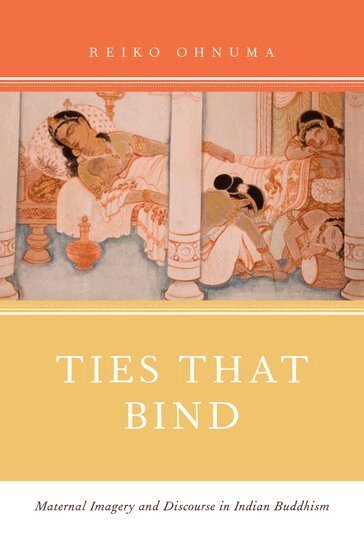
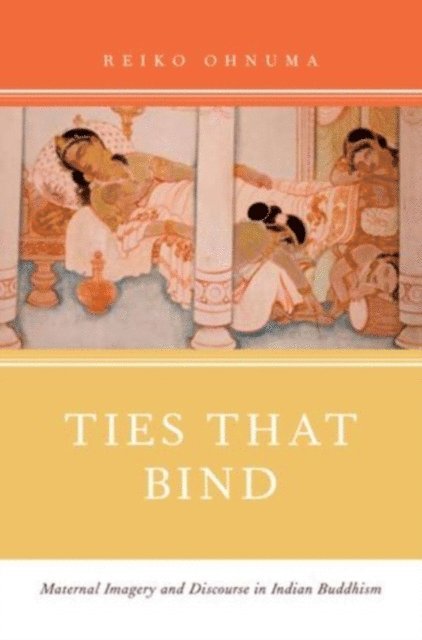
Reiko Ohnuma offers a wide-ranging exploration of maternal imagery and discourse in pre-modern South Asian Buddhism, drawing on textual sources preserved in Pali and Sanskrit. She demonstrates that Buddhism in India had a complex and ambivalent relationship with mothers and motherhood-symbolically, affectively, and institutionally. Symbolically, motherhood was a double-edged sword, sometimes extolled as the most appropriate symbol for buddhahood itself, and sometimes denigrated as the most paradigmatic manifestation possible of attachment and suffering. On an affective level, too, motherhood was viewed with the same ambivalence: in Buddhist literature, warm feelings of love and gratitude for the mother's nurturance and care frequently mingle with submerged feelings of hostility and resentment for the unbreakable obligations thus created, and positive images of self-sacrificing mothers are counterbalanced by horrific depictions of mothers who kill and devour. Institutionally, the formal definition of the Buddhist renunciant as one who has severed all familial ties seems to co-exist uneasily with an abundance of historical evidence demonstrating monks' and nuns' continuing concern for their mothers, as well as other familial entanglements. Ohnuma's study provides critical insight into Buddhist depictions of maternal love and maternal grief, the role played by the Buddha's own mothers, Maya and Mahaprajapati, the use of pregnancy and gestation as metaphors for the attainment of enlightenment, the use of breastfeeding as a metaphor for the compassionate deeds of buddhas and bodhisattvas, and the relationship between Buddhism and motherhood as it actually existed in day-to-day life.
495 kr
Skickas inom 5-8 vardagar
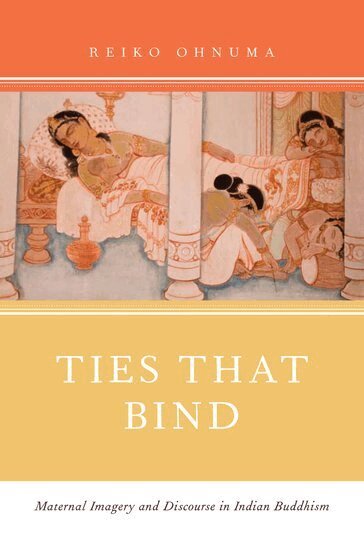
Reiko Ohnuma offers a wide-ranging exploration of maternal imagery and discourse in pre-modern South Asian Buddhism, drawing on textual sources preserved in Pali and Sanskrit. She demonstrates that Buddhism in India had a complex and ambivalent relationship with mothers and motherhood-symbolically, affectively, and institutionally. Symbolically, motherhood was a double-edged sword, sometimes extolled as the most appropriate symbol for buddhahood itself, and sometimes denigrated as the most paradigmatic manifestation possible of attachment and suffering. On an affective level, too, motherhood was viewed with the same ambivalence: in Buddhist literature, warm feelings of love and gratitude for the mother's nurturance and care frequently mingle with submerged feelings of hostility and resentment for the unbreakable obligations thus created, and positive images of self-sacrificing mothers are counterbalanced by horrific depictions of mothers who kill and devour. Institutionally, the formal definition of the Buddhist renunciant as one who has severed all familial ties seems to co-exist uneasily with an abundance of historical evidence demonstrating monks' and nuns' continuing concern for their mothers, as well as other familial entanglements. Ohnuma's study provides critical insight into Buddhist depictions of maternal love and maternal grief, the role played by the Buddha's own mothers, Maya and Mahaprajapati, the use of pregnancy and gestation as metaphors for the attainment of enlightenment, the use of breastfeeding as a metaphor for the compassionate deeds of buddhas and bodhisattvas, and the relationship between Buddhism and motherhood as it actually existed in day-to-day life.
1 354 kr
Skickas inom 3-6 vardagar
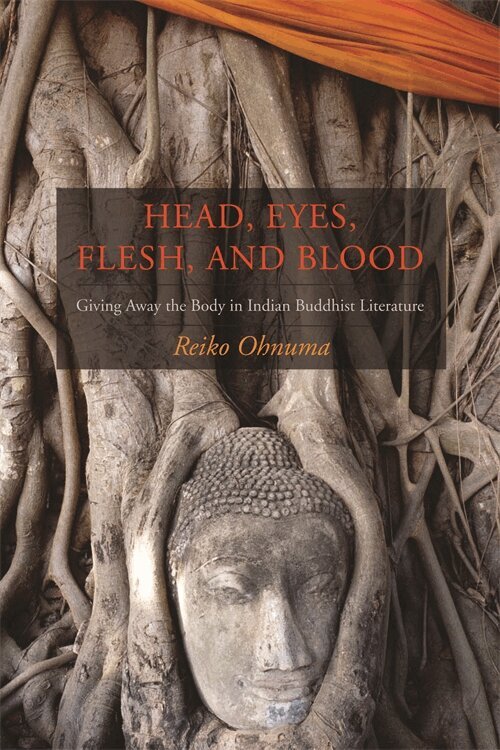
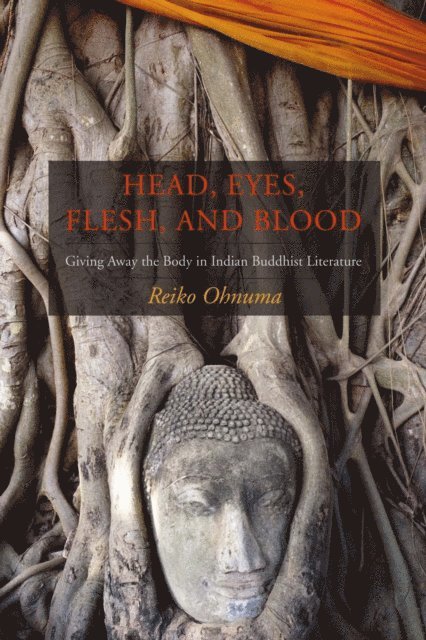
Head, Eyes, Flesh, and Blood is the first comprehensive study of a central narrative theme in premodern South Asian Buddhist literature: the Buddha's bodily self-sacrifice during his previous lives as a bodhisattva. Conducting close readings of stories from Sanskrit, Pali, Chinese, and Tibetan literature written between the third century BCE and the late medieval period, Reiko Ohnuma argues that this theme has had a major impact on the development of Buddhist philosophy and culture. Whether he takes the form of king, prince, ascetic, elephant, hare, serpent, or god, the bodhisattva repeatedly gives his body or parts of his flesh to others. He leaps into fires, drowns himself in the ocean, rips out his tusks, gouges out his eyes, and lets mosquitoes drink from his blood, always out of selflessness and compassion and to achieve the highest state of Buddhahood. Ohnuma places these stories into a discrete subgenre of South Asian Buddhist literature and approaches them like case studies, analyzing their plots, characterizations, and rhetoric.She then relates the theme of the Buddha's bodily self-sacrifice to major conceptual discourses in the history of Buddhism and South Asian religions, such as the categories of the gift, the body (both ordinary and extraordinary), kingship, sacrifice, ritual offering, and death. Head, Eyes, Flesh, and Blood reveals a very sophisticated and influential perception of the body in South Asian Buddhist literature and highlights the way in which these stories have provided an important cultural resource for Buddhists. Combined with her rich and careful translations of classic texts, Ohnuma introduces a whole new understanding of a vital concept in Buddhists studies.
770 kr
Skickas inom 7-10 vardagar
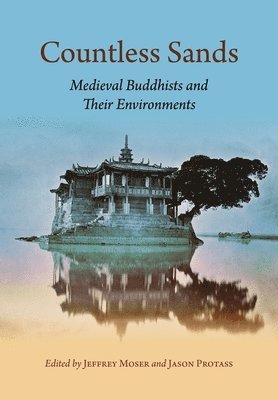
Countless Sands presents engaging analyses of the diverse relationships between Buddhism and the environment that existed in medieval Asia. Recent years have witnessed a surge in publications across the humanities that advance powerful ethical and political arguments to account for the human failure to respond effectively to global climate change. While the contributors to this volume are attuned to this challenge, rather than present explicit political arguments, they pursue a subtler effort to historicize the environment as a site and subject of Buddhist practice while providing research grounded in rigorous analysis of complex and fragmentary sources. The volume thereby mitigates against the Orientalist, East-West binaries that have long informed the invocation of Buddhism in Euro-American environmental discourses. As the chapters collectively demonstrate, there was no singular, consistently "Buddhist" understanding of the natural world, but innumerable, varied engagements preserved in discrete texts, images, and artifacts. We title the volume Countless Sands to echo the Buddhist metaphor of "sands of the Ganges" that implies an uncountable number. Through specific case studies, the authors consider such questions as: How did premodern Buddhists understand what we today call "the environment"? How did they think about their earth? How, when, and where did the various processes of the earth actually impinge on the practices of historical Buddhists? What kinds of "environmental imaginations" informed specific Buddhist practices? In so doing, the authors explore the connections between the ways in which historical Buddhist communities interacted with their environments and how they understood those environments. In the broader field of Buddhist studies, Countless Sands contributes to ongoing efforts to expand the locus of inquiry from textually based investigations of Buddhist doctrine to a broader examination of the complex and varied place of Buddhism in the lives of historical communities. The book furthers this broader process by casting it in environmental terms and will engage readers looking for models of thought-provoking historical analysis on environmental themes.