Rein Taagepera – författare
Visar alla böcker från författaren Rein Taagepera. Handla med fri frakt och snabb leverans.
19 produkter
Predicting Party Sizes
The Logic of Simple Electoral Systems
E-bok, 2007
1668 kr
Lägg i varukorg
For a given electoral system, what average number and sizes of parties and government duration can we expect? Predicting Party Sizes is the first book to make specific predictions that agree with world averages. The basic factors are the numbers of seats in the assembly and in the average electoral …
Making Social Sciences More Scientific
The Need for Predictive Models
E-bok, 2008
1283 kr
Lägg i varukorg
In his challenging new book Rein Taagepera argues that society needs more from social sciences than they have delivered. One reason for falling short is that social sciences have depended excessively on regression and other statistical approaches, neglecting logical model building. Science is not …
Predicting Party Sizes
The Logic of Simple Electoral Systems
Inbunden, 2007
2948 kr
Lägg i varukorg
For a given electoral system, what average number and sizes of parties and government duration can we expect? Predicting Party Sizes is the first book to make specific predictions that agree with world averages. The basic factors are the numbers of seats in the assembly and in the average electoral …
Making Social Sciences More Scientific
The Need for Predictive Models
Inbunden, 2008
2260 kr
Lägg i varukorg
In his challenging new book Rein Taagepera argues that society needs more from social sciences than they have delivered. One reason for falling short is that social sciences have depended excessively on regression and other statistical approaches, neglecting logical model building. Science is not …
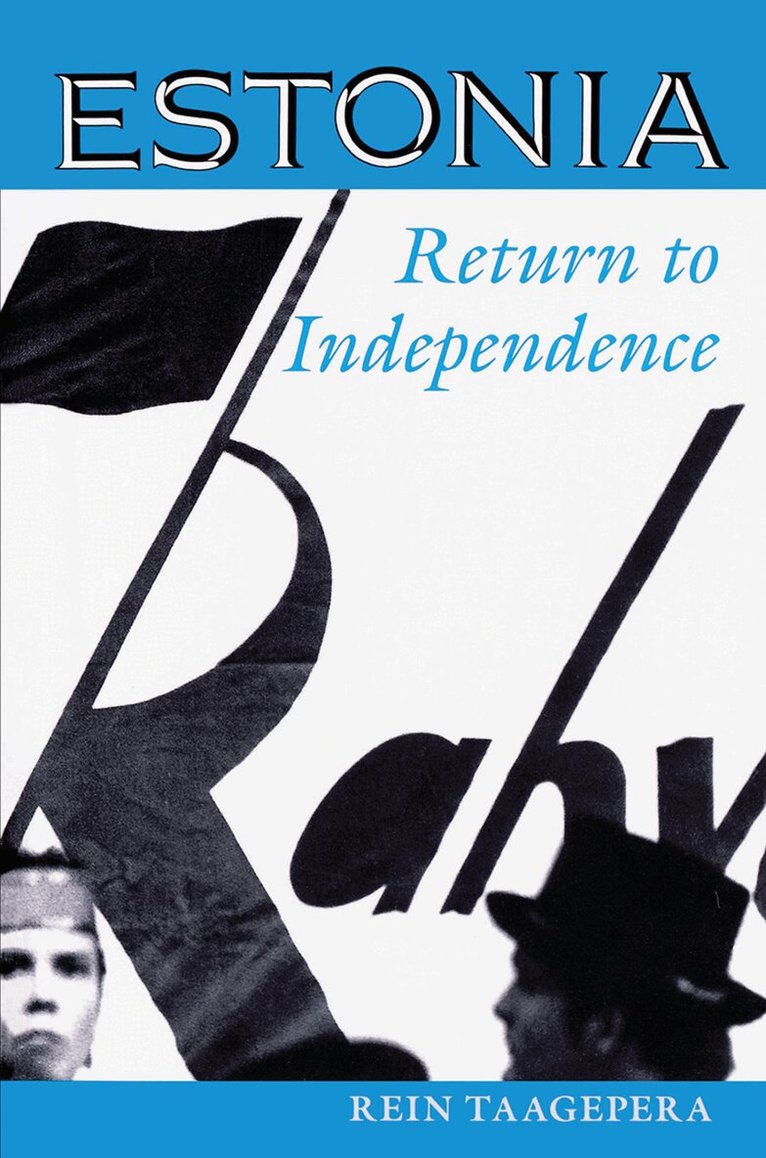
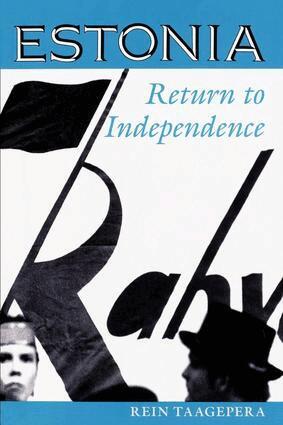
Estonia
Return To Independence
Inbunden, 2019
2513 kr
Lägg i varukorg
After breaking free from the Bolsheviks in 1918, Estonia enjoyed independence until 1940, when the country was subsumed by the Soviet Union. Not until 1991 was Estonia able to make its next successful bid for sovereignty. In this book, Rein Taagepera traces the evolution of Estonia from prehistory …
Estonia
Return To Independence
E-bok, 2018
910 kr
Lägg i varukorg
After breaking free from the Bolsheviks in 1918, Estonia enjoyed independence until 1940 when the country was subsumed by the Soviet Union. Not until 1991 was Estonia able to make its next successful bid for sovereignty. In this book, Rein Taagepera traces the evolution of Estonia from prehistory …
Estonia
Return To Independence
E-bok, 2018
910 kr
Lägg i varukorg
After breaking free from the Bolsheviks in 1918, Estonia enjoyed independence until 1940 when the country was subsumed by the Soviet Union. Not until 1991 was Estonia able to make its next successful bid for sovereignty. In this book, Rein Taagepera traces the evolution of Estonia from prehistory …
The Baltic States: Years of Dependence, 1940-1990
Av Romuald Misiunas, Rein Taagepera
Häftad
714 kr
Lägg i varukorg
Estonia
Return To Independence
Häftad, 1993
774 kr
Lägg i varukorg
After breaking free from the Bolsheviks in 1918, Estonia enjoyed independence until 1940 when the country was subsumed by the Soviet Union. Not until 1991 was Estonia able to make its next successful bid for sovereignty. In this book, Rein Taagepera traces the evolution of Estonia from prehistory …
More People, Fewer States
The Past and Future of World Population and Empire Sizes
Av Miroslav Nemcok, Rein Taagepera
E-bok, 2024
479 kr
Lägg i varukorg
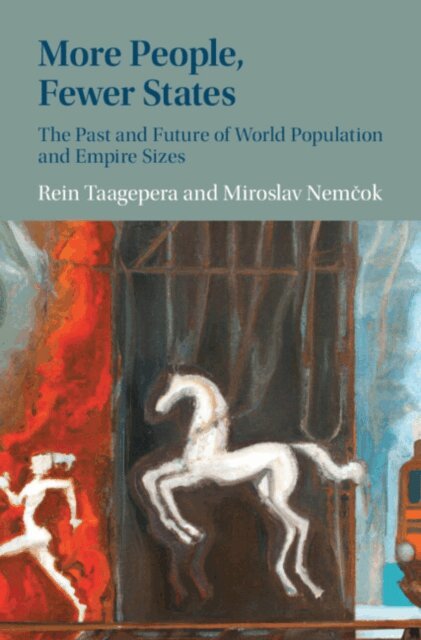
More People, Fewer States
The Past and Future of World Population and Empire Sizes
Av Rein Taagepera, Miroslav Nemčok
Inbunden, 2024
1526 kr
Lägg i varukorg
The long-term development of political systems over extended time periods has been somewhat neglected. More People, Fewer States examines world history through population explosion and empire size changes across 5000 years of socio-technological development, revealing three distinct phases: Runner, …
More People, Fewer States
The Past and Future of World Population and Empire Sizes
Av Rein Taagepera, Miroslav Nemčok
Häftad, 2024
519 kr
Lägg i varukorg
The long-term development of political systems over extended time periods has been somewhat neglected. More People, Fewer States examines world history through population explosion and empire size changes across 5000 years of socio-technological development, revealing three distinct phases: Runner, …
Votes from Seats
Logical Models of Electoral Systems
Av Rein Taagepera, Matthew S. Shugart
E-bok, 2017
543 kr
Lägg i varukorg
Take the number of seats in a representative assembly and the number of seats in districts through which this assembly is elected. From just these two numbers, the authors of Votes from Seats show that it is possible to deduce the number of parties in the assembly and in the electorate, as well as …
Votes from Seats
Logical Models of Electoral Systems
Av Rein Taagepera, Matthew S. Shugart
E-bok, 2017
555 kr
Lägg i varukorg
Take the number of seats in a representative assembly and the number of seats in districts through which this assembly is elected. From just these two numbers, the authors of Votes from Seats show that it is possible to deduce the number of parties in the assembly and in the electorate, as well as …
Votes from Seats
Logical Models of Electoral Systems
Av Matthew S. Shugart, Rein Taagepera
Häftad, 2017
569 kr
Lägg i varukorg
Take the number of seats in a representative assembly and the number of seats in districts through which this assembly is elected. From just these two numbers, the authors of Votes from Seats show that it is possible to deduce the number of parties in the assembly and in the electorate, as well as …
Votes from Seats
Logical Models of Electoral Systems
Av Matthew S. Shugart, Rein Taagepera
Inbunden, 2017
1661 kr
Lägg i varukorg
Take the number of seats in a representative assembly and the number of seats in districts through which this assembly is elected. From just these two numbers, the authors of Votes from Seats show that it is possible to deduce the number of parties in the assembly and in the electorate, as well as …
Finno-Ugric Republics and the Russian State
E-bok, 2013
2473 kr
Lägg i varukorg
First Published in 2000. This text provides a survey of the peoples who speak Finno-Ugric languages and have titular republics or autonomous regions within the post-Soviet Russian federation. Their languages have set them apart from their Turkic and Russian neighbours and helped to preserve their …
Finno-Ugric Republics and the Russian State
E-bok, 2013
2528 kr
Lägg i varukorg
First Published in 2000. This text provides a survey of the peoples who speak Finno-Ugric languages and have titular republics or autonomous regions within the post-Soviet Russian federation. Their languages have set them apart from their Turkic and Russian neighbours and helped to preserve their …
Softening without Liberalization in the Soviet Union
The Case of Juri Kukk
Inbunden, 1984
857 kr
Tillfälligt slut
Examines the case of Soviet Estonian chemistry professor Juri Kukk, who died in prison three years after resigning from the Communist party. The author hypothesizes that Kukk's story illustrates how the Soviet regime has lately become dangerously erratic by becoming more hesitant in its acts …