Renato Cristi - Böcker
Visar alla böcker från författaren Renato Cristi. Handla med fri frakt och snabb leverans.
4 produkter
4 produkter
273 kr
Skickas inom 7-10 vardagar
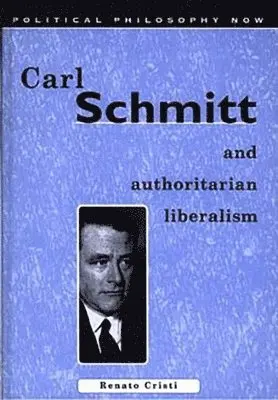
Within Germany, Carl Schmitt's status as a political thinker is on a par with Machiavelli and Hobbes. With the rise in neo-conservatism and authoritarian liberalism in less developed countries such as Chile and Singapore, Schmitt's theories will become of incredible importance. Carl Schmitt had close links with the Weimar Republic and its successor the Nazi Third Reich. His political theories give a valuable insight into the nature of Conservatism. As with all the titles in the Political Philosophy Now Series, the author takes previous political thought and applies to the modern day and extrapolates possibilities for the future. Renato Christi, in his final chapter, also compares Schmitt's theories with those of Hobbes, Hegel and Hayek.
131 kr
Tillfälligt slut
Hegel's concept of civil society endorses a market economy and a liberal outlook. But his concept of state culminates in an authoritarian prince who is protector of the constitution. The tensions and contradictions that plague Hegel's liberal society that cannot be resolved by its own civil institutions, motivate his conservative authoritarianism.
259 kr
Skickas inom 7-10 vardagar
Hegel's concept of civil society endorses a market economy and a liberal outlook. But his concept of state culminates in an authoritarian prince who is protector of the constitution. The tensions and contradictions that plague Hegel's liberal society that cannot be resolved by its own civil institutions, motivate his conservative authoritarianism.
416 kr
Tillfälligt slut
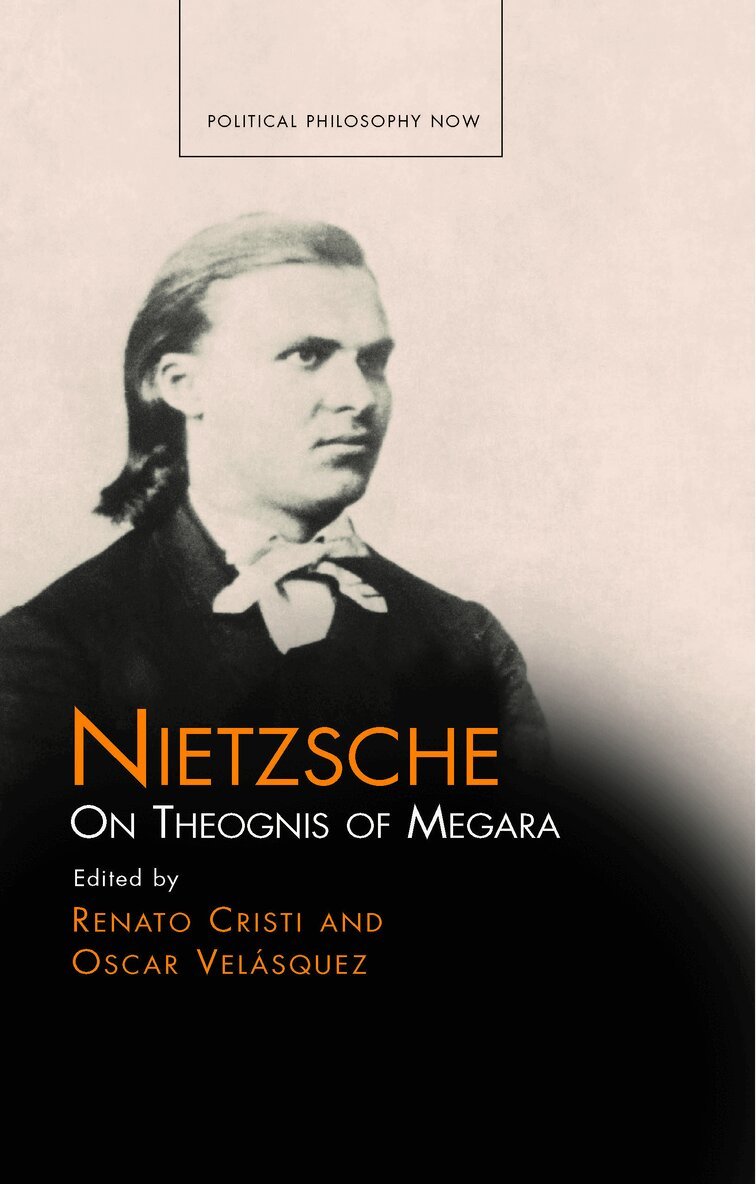
The topic chosen by Nietzsche for his Pforta dissertation was Theognis, his life in Megara, his lyrical production, and his views on the gods, morality and politics. Nietzsche saw Theognis as the intellectual champion of the defeated Megarian aristocracy, who sought to preserve the Dorian spirit and its noble virtues. The interests that guided Nietzsche transcended scientific philology and embraced a concern for the social and political context he adumbrated in the Theognidea. The editors of this volume refer to this novel standpoint as constituting a rudimentary political philology, showing that Theognis’ aristocratism determined and guided Nietzsche’s critique of the moral point of view and his conception of an aristocratic state.ContentsIntroduction: Nietzsche’s Aristocratism by Renato CristiPart I: Theognis and Nietzsche’s AristocratismPart II. Nietzsche’s Aristocratic Ethics: Command and ObediencePart III. Nietzsche’s Aristocratic Radicalism: Charismatic AuthorityNietzsche, On Theognis of Megara (De Theognide Megarensi), translated by Oscar VelásquezNietzsche, Studies on Theognis (Studien zu Theognis), translated by Manuel Knoll & Renato Cristi