Resat Kasaba - Böcker
Visar alla böcker från författaren Resat Kasaba. Handla med fri frakt och snabb leverans.
5 produkter
5 produkter
443 kr
Skickas inom 7-10 vardagar
In a series of essays by an international group of scholars and policy makers, this book provides the first sustained look at democracy and democratic movements in the Middle East. Moving beyond a concern with the growth of Islamicist movements and nationalist states, the authors probe the historical experiences of the last hundred years and the social conflict over the past decade centering on democratic structures and processes from North Africa to Turkey, Iraq, and Iran. The essays explore from theoretical, descriptive, and political perspectives questions of democracy, freedom, and rule of law in a region that is usually thought of as lacking in all these respects.In recent years there has been a marked growth in the number and influences of social movements and organizations working to expand social, political, and civil rights, and to constrain the power of the states in many countries in the Middle East. At the same time many of the regimes in the area have introduced practices and institutions designed to make their rule more democratic in order to enhance their domestic and international standing and legitimacy, as well as to spur economic growth.
443 kr
Skickas inom 7-10 vardagar
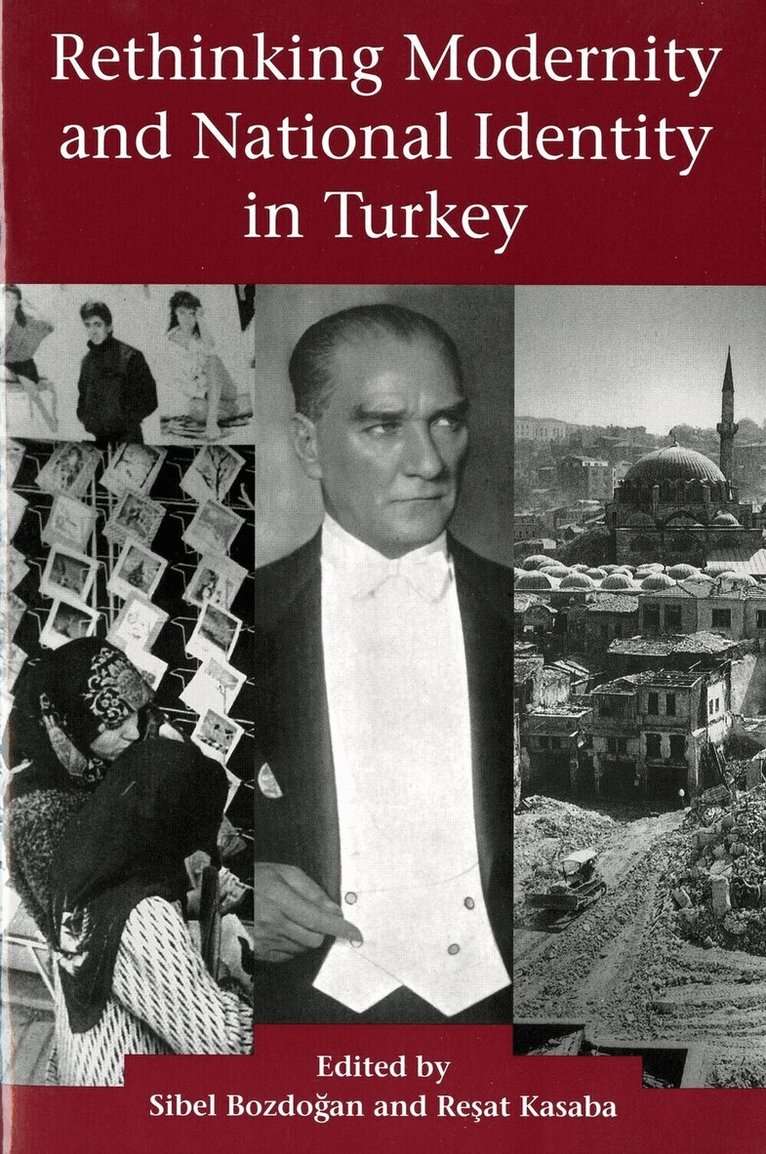
In the first two decades after W.W.II, social scientist heralded Turkey as an exemplar of a 'modernizing' nation in the Western mold. Images of unveiled women working next to clean-shaven men, healthy children in school uniforms, and downtown Ankara's modern architecture all proclaimed the country's success. Although Turkey's modernization began in the late Ottoman era, the establishment of the secular nation-state by Kemal Ataturk in 1923 marked the crystallization of an explicit, elite-driven 'project of modernity' that took its inspiration exclusively from the West. The essays in this book are the first attempt to examine the Turkish experiment with modernity from a broad, interdisciplinary perspective, encompassing the fields of history, the social sciences, the humanities, architecture, and urban planning. As they examine both the Turkish project of modernity and its critics, the contributors offer a fresh, balanced understanding of dilemmas now facing not only Turkey but also many other parts of the Middle East and the world at large.
516 kr
Skickas inom 7-10 vardagar
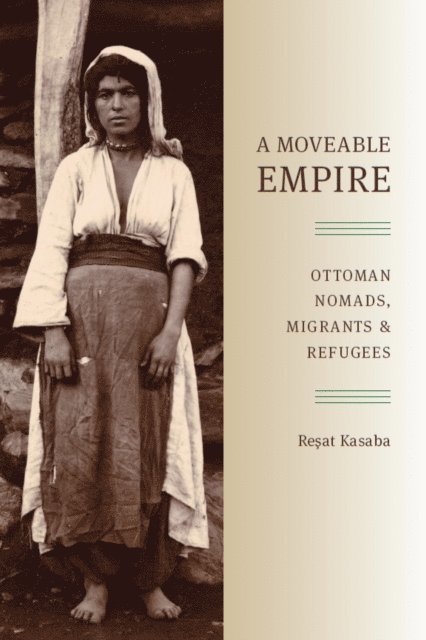
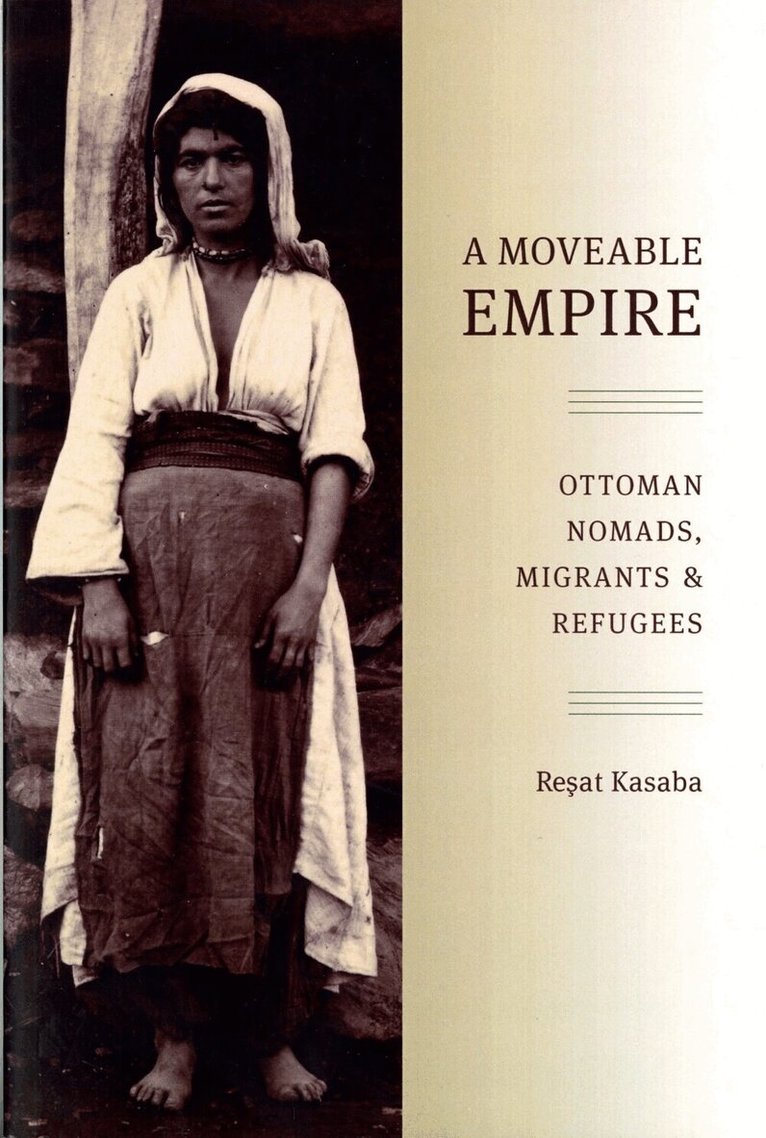
A Moveable Empire examines the history of the Ottoman Empire through a new lens, focusing on the migrant groups that lived within its bounds and their changing relationship to the state's central authorities. Unlike earlier studies that take an evolutionary view of tribe-state relations -- casting the development of a state as a story in which nomadic tribes give way to settled populations -- this book argues that mobile groups played an important role in shaping Ottoman institutions and, ultimately, the early republican structures of modern Turkey.Over much of the empire's long history, local interests influenced the development of the Ottoman state as authorities sought to enlist and accommodate the various nomadic groups in the region. In the early years of the empire, maintaining a nomadic presence, especially in frontier regions, was an important source of strength. Cooperation between the imperial center and tribal leaders provided the center with an effective way of reaching distant parts of the empire, while allowing tribal leaders to perpetuate their own authority and guarantee the tribes' survival as bearers of distinct cultures and identities. This relationship changed in the eighteenth and nineteenth centuries, as indigenous communities discovered new possibilities for expanding their own economic and political power by pursuing local, regional, and even global opportunities, independent of the Ottoman center.The loose, flexible relationship between the Ottoman center and migrant communities became a liability under these changing conditions, and the Ottoman state took its first steps toward settling tribes and controlling migrations. Finally, in the early twentieth century, mobility took another form entirely as ethnicity-based notions of nationality led to forced migrations.
1 009 kr
Skickas inom 10-15 vardagar
The contributors to this collection question the boundaries and limitations that are imposed on the study of cities by urban sociology. They do not disagree that during most of their history, the regions and peoples of the world have been organized hierarchically and that there are differences that need to be explained. But they see the processes and relations that link regions and people together as the main factor that explains these differences. It is the differentiation and not the differences per se that constitute this volume's focus and, in its respective accounts, taking care not to privilege any one region or time period on the basis of its presumed special characteristics. Against this background the book is divided into three parts. Part one deals with places outside of western Europe and with times that preceded the establishment of the European-based capitalist world-economy. The articles in part two discuss the different aspects of the concept of hegemony and the establishment of domination as these apply to cities in the world-system. In part three the focus shifts back to extra-European zones where the patterns of transformation around cities under the aegis of capitalist world-economy are examined.This book constitutes an important addition to the literature on cities. By approaching cities from a large-scale and a long-term perspective, the contributors develop a historical explanation of some of the different patterns of development that affected particular cities in their interaction with the world-economy. This historical and holistic perspective represents an improvement over most of urban sociology, where cities or aspects of cities are studied in isolation from all contingent and contextual factors. This book can be used by scholars, graduate, and upper-division undergraduate students of urban history and sociology.
569 kr
Skickas inom 3-6 vardagar
The Ottoman Empire is approahced through analysis of its political economy based on world systems theory. Relations with Europe constituted one of the key factors that shaped the dissolution of the Ottoman Empire. Yet a comprehensive account of the nature, development, and consequences of these realtions has, until now, never been developed. This book moves beyond the narrow framework of Euro-Ottoman relations, and places Europe at the center of the expanding world economy as it examines the impact of this global system on the Ottoman Empire. Its main contention is that the dissolution of the Ottoman Empire was the culmination of a long term process whereby the Ottoman territories became integral parts of the European-centered world economy, and Ottoman state a subordinate member of the interstate system. In addition to the broad processes eminating from outside, the author focuses on the transformation of the political, economic, and social structures in the Ottoman Empire. The changes in processes of production, networks of trade, and relations among various social groups are described on the basis of archival material on western Anatolia.Considering world affairs and Ottoman developments simultaneously makes this work unique in its field. This approach captures the transformation of the Ottoman Empire during the nineteenth century in all its complexity. In addition to providing original information about western Anatolia, the books also offers a general model for combining the macro concerns of historical sociology with detailed research in social history.