Richard A. Brody - Böcker
Visar alla böcker från författaren Richard A. Brody. Handla med fri frakt och snabb leverans.
5 produkter
5 produkter
417 kr
Skickas inom 7-10 vardagar
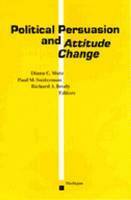
Political Persuasion and Attitude Change defines and introduces a new field of research, one that investigates the alteration of people's attitudes: when people can be moved, and when they cannot. Each chapter synopsizes a major area of political persuasion and provides an update on the latest findings as well as overviews of past research in each area. Whole sections of the book center on the three major agents involved in the political persuasion process: the mass media, political elites, and individual citizens themselves.Political Persuasion and Attitude Change boldly contradicts the received wisdom on the extent of mass media's influence on political attitudes and argues that the media's effects are indeed massive, rather than limited. It explores the impact of political elites on the persuasion process, and focuses on individual control over the persuasion process.This volume is unique in that chapters address theoretical as well as methodological issues, simultaneously combining reviews of literature with the latest research findings. It will appeal to scholars and students interested in the study of political persuasion in contemporary politics across the disciplines of political science, psychology, sociology, and communications. Part I. Mass Media and Political Persuasion. Contributors are Steven Ansolabehere and Shanto Iyengar; Joanne M. Miller and Jon A. Krosnick; and John Zaller.Part II. Persuasion by Political Elites. Contributors are James H. Kuklinski and Norman L. Hurley; Kathleen M. McGraw and Clark Hubbard; Lee Sigelman and Alan Rosenblatt.Part III. Individual Control of the Political Persuasion Process. Contributors are Steven H. Chaffee and Rajiv Rimal; Dennis Chong; Gregory Andrade Diamond and Michael D. Cobb; Jeffrey Mondak, Diana C. Mutz, and Robert Huckfeldt.Diana C. Mutz is Associate Professor of Political Science and Mass Communications, University of Wisconsin, Madison. Paul M. Sniderman is Professor of Political Science, Stanford University. Richard A. Brody is Professor Emeritus of Political Science and Communications, Stanford University.
1 192 kr
Skickas inom 7-10 vardagar
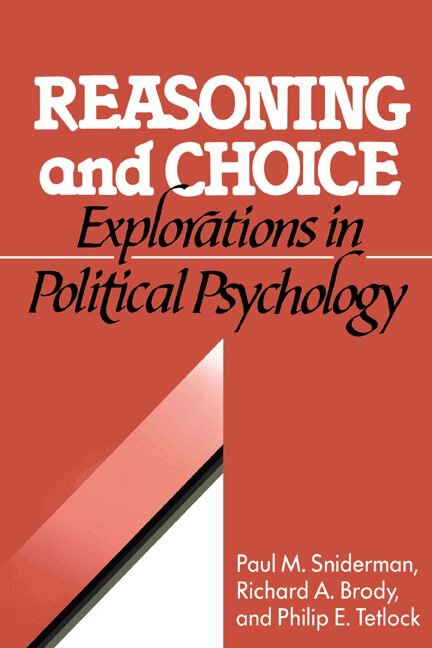
Drawing on a multitude of data sets and building on analyses carried out over more than a decade, this book offers a major new theoretical explanation of how ordinary citizens figure out what they favour and oppose politically. Reacting against the conventional wisdom, which stresses how little attention the general public pays to political issues and the lack of consistency in their opinions, the studies presented in this book redirect attention to the processes of reasoning that can be discerned when people are confronted with choices about political issues. These studies demonstrate that ordinary people are in fact capable of reasoning dependably about political issues by the use of judgmental heuristics, even if they have only a limited knowledge of politics and of specific issues.
428 kr
Skickas inom 7-10 vardagar
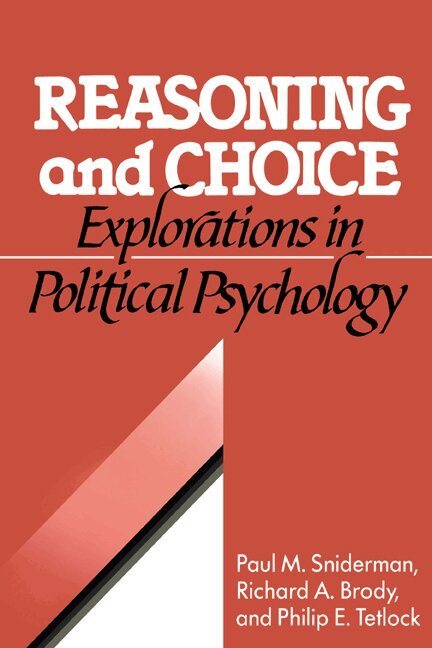
Drawing on a multitude of data sets and building on analyses carried out over more than a decade, this book offers a major new theoretical explanation of how ordinary citizens figure out what they favour and oppose politically. Reacting against the conventional wisdom, which stresses how little attention the general public pays to political issues and the lack of consistency in their opinions, the studies presented in this book redirect attention to the processes of reasoning that can be discerned when people are confronted with choices about political issues. These studies demonstrate that ordinary people are in fact capable of reasoning dependably about political issues by the use of judgmental heuristics, even if they have only a limited knowledge of politics and of specific issues.
1 127 kr
Skickas inom 10-15 vardagar
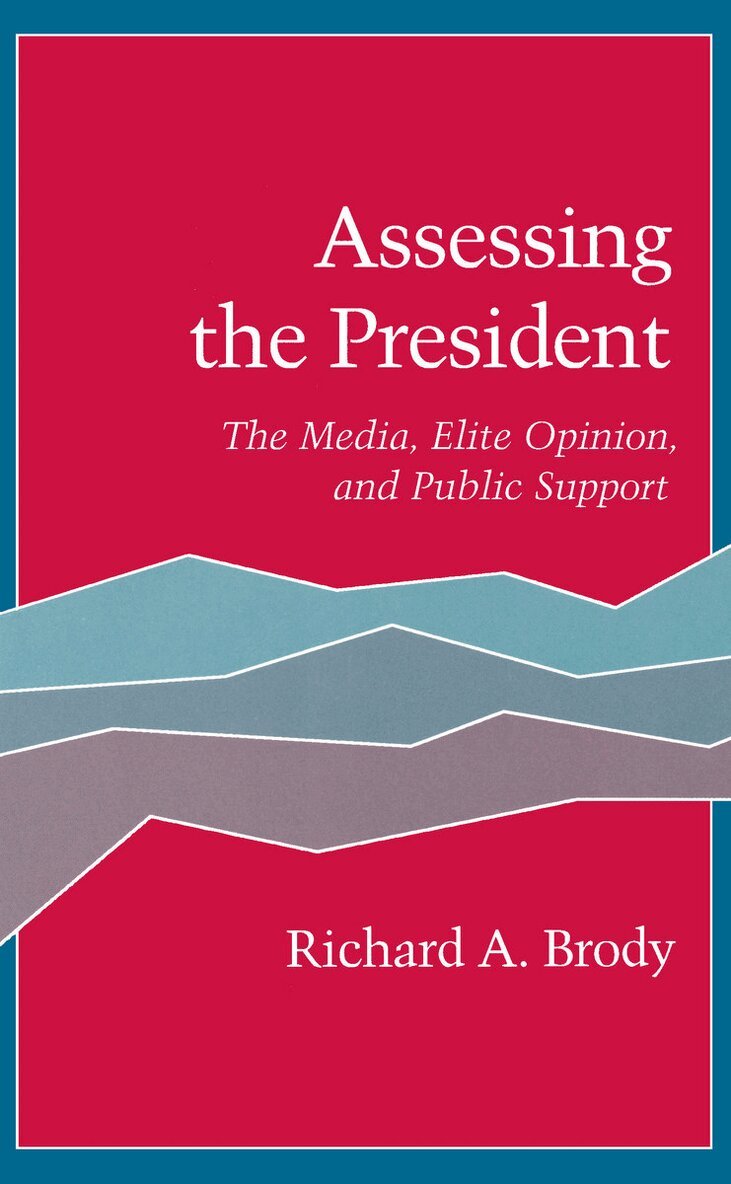
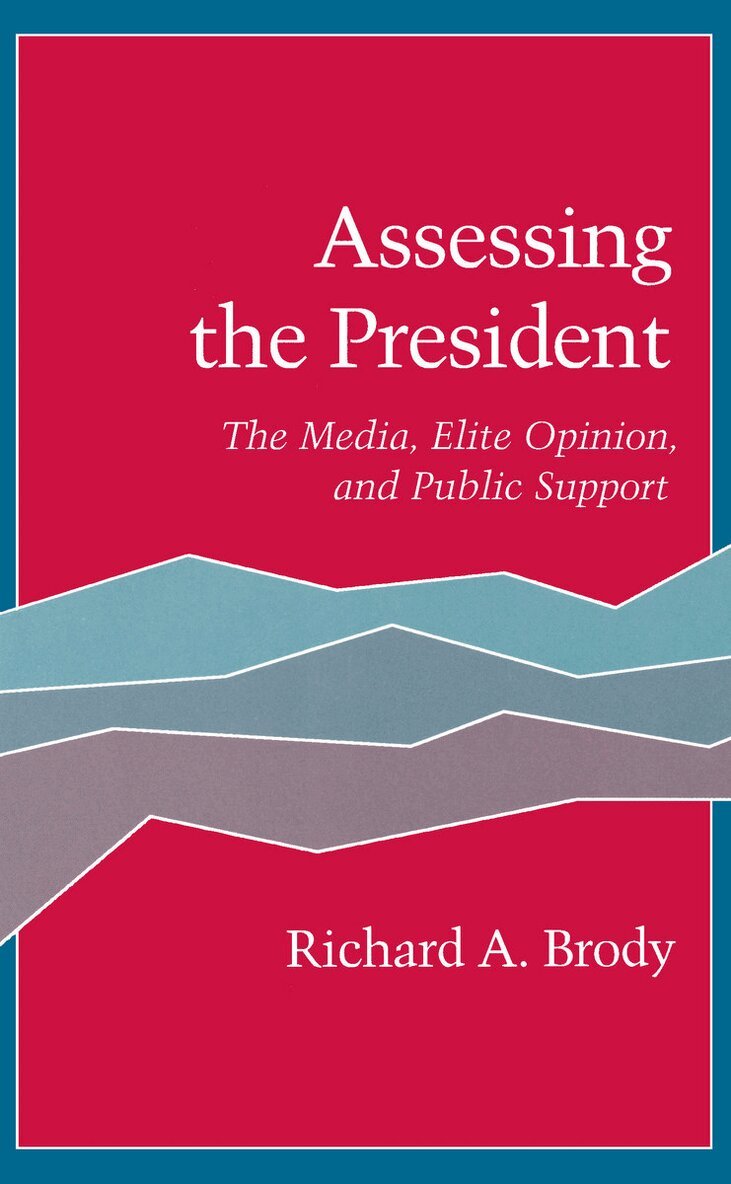
Do presidents inevitably lose support the longer they are in office? Does the public invariably rally behind presidents during international crises? What are the criteria by which the public forms its judgment about whether or not the president is doing a good job? And what is the role of daily news reporting and elite opinion in shaping the public's perception of the president's performance? This book addresses these questions and many others surrounding the dynamics of fluctuating public support for the president of the United States. Drawing its case material from the modern presidency from Kennedy through Reagan, with looks backward as far as Truman, this innovative work shows how the standing of the president with the American people has come to have a political life of its own. The author first examines two seemingly distinctive periods of opinion formation: the 'honeymoon' at the beginning of a presidential term and the 'rally' of presidential support that accompanies international crises. He then analyzes two previous explanations of public support - length of term in office and the state of the economy - and concludes that these explanations are, respectively, incorrect and incomplete. The author presents a model of information processing that ties public support to indications of policy success or failure brought to the attention of the public through daily news reporting by the media. The model is tested initially for the presidencies of Kennedy, Johnson, Nixon, and Ford; it is then refined and tested further for the Carter and Reagan presidencies.
270 kr
Skickas inom 7-10 vardagar
Do presidents inevitably lose support the longer they are in office? Does the public invariably rally behind presidents during international crises? What are the criteria by which the public forms its judgment about whether or not the president is doing a good job? And what is the role of daily news reporting and elite opinion in shaping the public's perception of the president's performance? This book addresses these questions and many others surrounding the dynamics of fluctuating public support for the president of the United States. Drawing its case material from the modern presidency from Kennedy through Reagan, with looks backward as far as Truman, this innovative work shows how the standing of the president with the American people has come to have a political life of its own. The author first examines two seemingly distinctive periods of opinion formation: the 'honeymoon' at the beginning of a presidential term and the 'rally' of presidential support that accompanies international crises. He then analyzes two previous explanations of public support - length of term in office and the state of the economy - and concludes that these explanations are, respectively, incorrect and incomplete. The author presents a model of information processing that ties public support to indications of policy success or failure brought to the attention of the public through daily news reporting by the media. The model is tested initially for the presidencies of Kennedy, Johnson, Nixon, and Ford; it is then refined and tested further for the Carter and Reagan presidencies.