Richard A. McCray – författare
Visar alla böcker från författaren Richard A. McCray. Handla med fri frakt och snabb leverans.
3 produkter
Improving Undergraduate Instruction in Science, Technology, Engineering, and Mathematics
Report of a Workshop
Av Steering Committee on Criteria and Benchmarks for Increased Learning from Undergraduate STEM Instruction, Committee on Undergraduate Science Education m. fl.
E-bok, 2003
741 kr
Lägg i varukorg
Participants in this workshop were asked to explore three related questions: (1) how to create measures of undergraduate learning in STEM courses; (2) how such measures might be organized into a framework of criteria and benchmarks to assess instruction; and (3) how such a framework might be used …
Improving Undergraduate Instruction in Science, Technology, Engineering, and Mathematics
Report of a Workshop
Av Steering Committee on Criteria and Benchmarks for Increased Learning from Undergraduate STEM Instruction, Committee on Undergraduate Science Education m. fl.
E-bok, 2003
522 kr
Lägg i varukorg
Participants in this workshop were asked to explore three related questions: (1) how to create measures of undergraduate learning in STEM courses; (2) how such measures might be organized into a framework of criteria and benchmarks to assess instruction; and (3) how such a framework might be used …
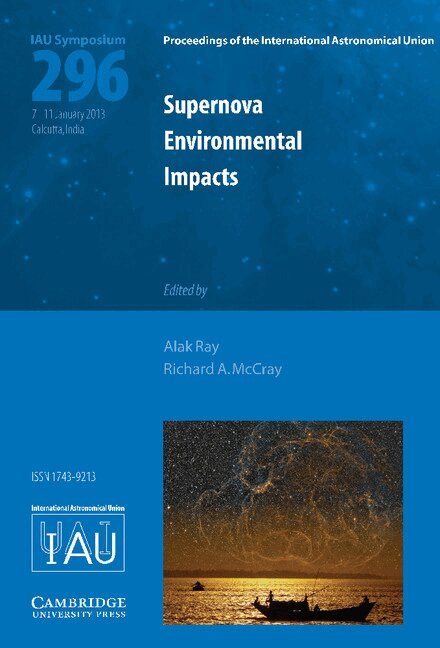
Supernova Environmental Impacts (IAU S296)
Av Alak Ray, Richard A. McCray
Inbunden, 2014
1282 kr
Lägg i varukorg
New telescopes spanning the full electromagnetic spectrum have enabled the study of supernovae (SNe) and supernova remnants (SNRs) to advance at a breathtaking pace. Automated synoptic surveys have increased the detection rate of supernovae by more than an order of magnitude and have led to the …