Richard D E Burton - Böcker
Visar alla böcker från författaren Richard D E Burton. Handla med fri frakt och snabb leverans.
9 produkter
9 produkter
1 320 kr
Skickas inom 5-8 vardagar
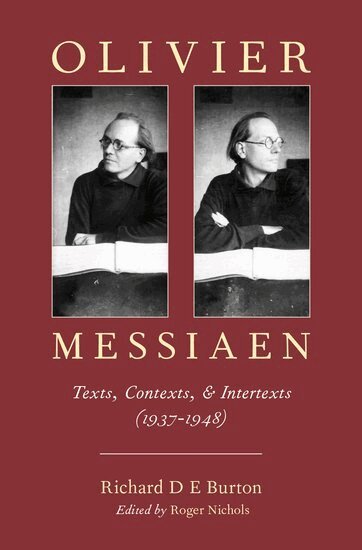
The 20th century French composer Olivier Messiaen was a devout Roman Catholic and notably claimed that his music was an expression of his faith. Unsurprisingly, many performers and listeners consider Messiaen's strong religiosity central to their appreciation of the composer's music. Music scholars have devoted much energy to exploring how Messiaen's music was an extension of his religious beliefs. Yet, these works tend to discuss Messiaen's Catholicism solely in terms of personal religious identity and ignore the composer's broader connections to the cultural landscape of Roman Catholicism in France.In Olivier Messiaen: Texts, Contexts, and Intertexts (1937-1948) the late French literature scholar Richard Burton examines nine of Messiaen's works in the context of the broader French Catholic intellectual tradition. Drawing on an expansive knowledge of the Catholic literature and the surrealist tradition, Burton reveals that Messiaen's middle-period compositions are filled with intertextual references to the Bible and other theological writings, which Messiaen, given his reputation for falsifying facts, may have gone to great lengths to obscure. As a Catholic, Messiaen is presented as somewhat removed from the ethos of his time and place, taking no part in the social side of Catholicism that found expression in the Pétainist litany of 'Patrie, Famille, Travail'. Rather, Messiaen regarded himself as having a 'vertical' relationship with God, which could make him seem unworldly and even uncaring. With insights into the artistic careers of Messiaen's notable contemporaries and historical perspectives on the breakdown of French politics during World War II, Burton creates a vivid picture of the previously unexamined spiritual and philosophical inspirations behind Messiaen's pivotal mid-century compositions.
1 275 kr
Skickas inom 3-6 vardagar
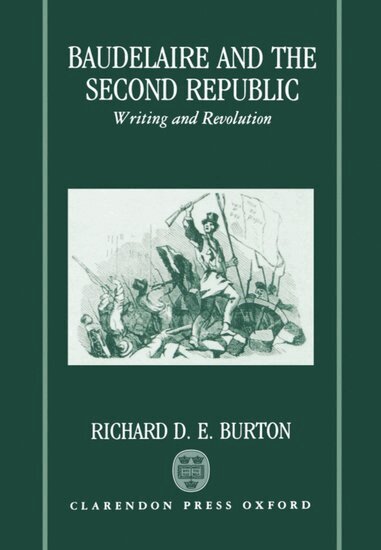
Baudelaire and the Second Republic is the first fully comprehensive study of Baudelaire's actions, reactions, and writings from the Revolution of February 1848 to the Bonapartist coup d'état of December 1851. The picture of Baudelaire that emerges from the biographical, textual and contextual materials discussed, is of a consistent radical republican. He is shown to have been close in his views first to Blanqui and then, after the failure of the insurrection of June 1848, to Proudhon and to the démoc-soc party that constituted the main resistance to Bonapartism during what remained of the Second Republic. Baudelaire was close to the popular political culture of mid-nineteenth-century France and drew upon a reservoir of popular themes and images - notably the image of wine - in expressing his commitment to the cause of radical republicanism. A book which traces in detail the links between literary texts and socio-political contexts, this will appeal both to students of Baudelaire and of mid-1800s French politics and society.
Del 24 - Cambridge Studies in French
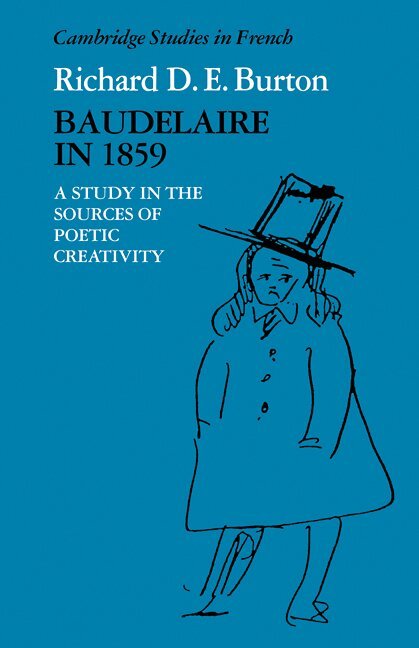
Baudelaire in 1859
A Study in the Sources of Poetic Creativity
Häftad, Engelska, 2009
493 kr
Skickas inom 7-10 vardagar
This book is an intensive study of what was by far the most productive year in Baudelaire's literary career. It combines biographical investigation with detailed textual analysis in order to locate the sources of the extraordinary 'explosion' (Baudelaires' own word) of poetic creativity that he experienced during that year, and which resulted, amongst other things, in the writing of his greatest 'Paris poems'. Baudelaire in 1859 differs from 'synchronic' approaches in stressing the need for a reappraisal of his development as man and poet. To this end, Dr Burton devotes a large part of the book and thorough investigation of the fundamental difference between the first (1857) edition of Les Fleurs du mal and its successor of 1861. A picture of Baudelaire emerges, which calls into question the received view of him as a poet committed - in Sartre's words - to a life-long quest for sterility.
364 kr
Skickas inom 5-8 vardagar
The book provides a ‘flâneur’s eye view’ of Parisian life in the first half of the nineteenth century: dress, cafés and restaurants, but also shops and passages, the omnibus, bals publics and carnival. The author provides general conclusions about the private and public spheres in ‘le vieux Paris’. Like the flâneur, the author concentrates less on factual information for its own sake – which may be found in the secondary works cited in the text and footnotes – than on the ‘semiological’ or anthropological significance of the cultural forms in question. Links are drawn between cultural institutions and class relations in pre-1850 Paris, with particular emphasis on cultural inequality, on the persistence of cross-class contacts, and the growing differences between classes as reflected in behaviour and attitudes.
1 518 kr
Skickas inom 10-15 vardagar
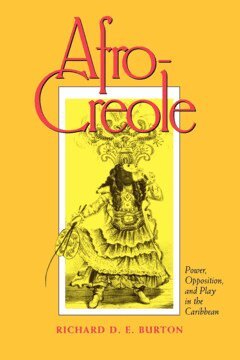
This wide-ranging book explores the origins, development, and character of Afro-Caribbean cultures from the slave period to the present day. Richard D. E. Burton focuses on ways in which African traditions—including those in religion, music, food, dress, and family structure—were transformed by interaction with European and indigenous forces to create the particular cultures of Jamaica, Trinidad, and Haiti. He demonstrates how the resulting Afro-Creole cultures have both challenged and reinforced the social, political, and economic status quo in these countries.Jamaican slaves opposed slavery in many ways and one of the most important, Burton suggests, was the development of Afro-Christianity. He pays particular attention to the African-derived Christmas celebration of Jonkonnu as an expression of opposition and then documents religion in the post-slavery period, with an emphasis on Rastafarianism in Jamaica and Vodou in Haiti. The element of play has always figured importantly in Afro-Caribbean life. Burton examines the evolution of carnival and calypso in Trinidad and describes the significance of cricket in defining Caribbean national identity. Based on ten years of research, Afro-Creole draws on historical, anthropological, sociological, and literary sources. Burton characterizes the emergence of Caribbean identity with three different national flavors and demonstrates how culture both reflects and impacts people's changing sense of their own political power.
955 kr
Skickas inom 10-15 vardagar
The Terror of 1793-94, the Paris Commune of 1871, the Dreyfus Affair—explosions of violence punctuated French history from the start of the Revolution until the Liberation at the close of World War II. The distinguished scholar Richard D. E. Burton here offers a stunningly original account of these outbursts, concluding that recourse to political violence was not occasional and abnormal, but rather the usual pattern, in French history. Instead of adhering to conventional chronological lines, Blood in the City is structured topologically around a number of major Parisian "sites of memory," including Place de la Concorde, Sacré Coeur, and the Eiffel Tower. For thirty years Burton has visited and revisited Paris, criss-crossing the streets on foot, and lived with great nineteenth- and twentieth-century literary depictions of the city. Drawing on historical, literary, visual, anthropological, and psychological sources, he develops a wide-ranging account of violence in modern French politics. In so doing, he provides powerful insights into political violence, scapegoating, the idea of sacrifice, and the widespread French obsession with conspiracy. Burton demonstrates that time and again the same basic scenario has been acted out on the streets of Paris: one or more people would be singled out from the community and imprisoned, exiled, or, more often, subjected to violence by the crowd or the state. In particular, he explores how Catholicism—in its extreme, ultrareactionary form—shaped the worldviews of Parisians and how the killing of a sacrificial victim came to be seen as a reenactment of the crucifixion of Christ.
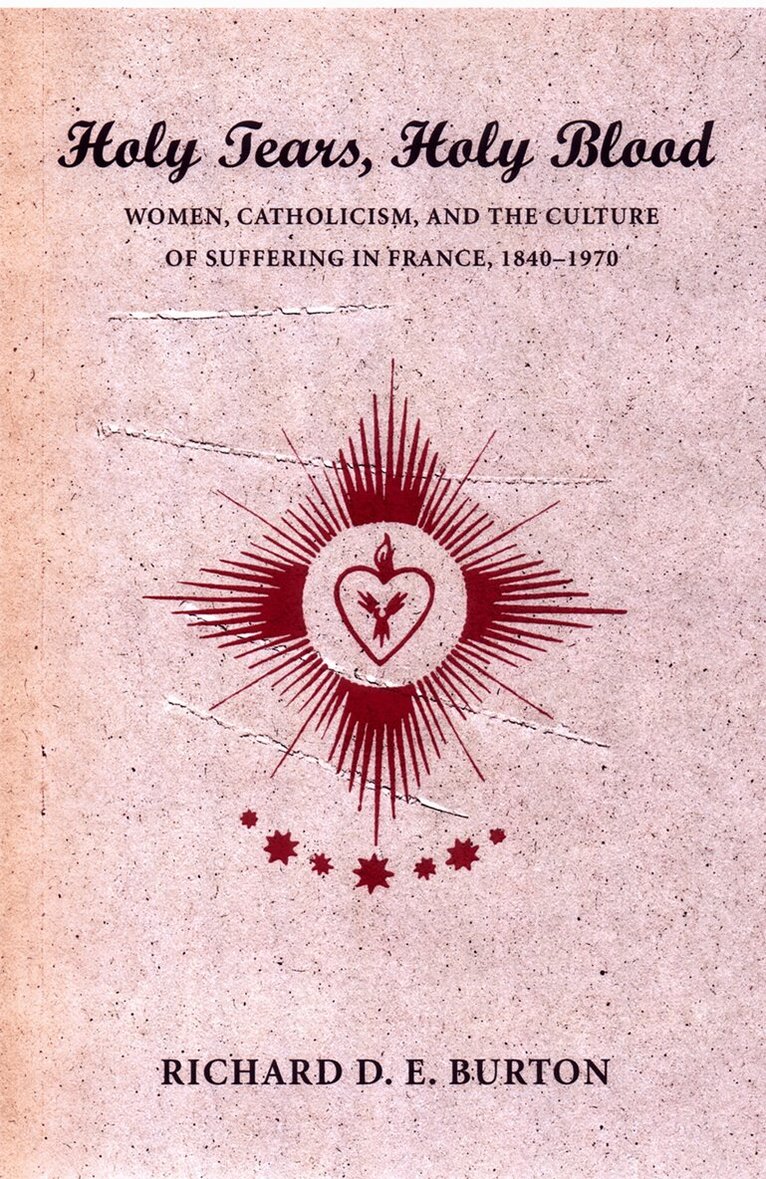
Holy Tears, Holy Blood
Women, Catholicism, and the Culture of Suffering in France, 1840–1970
Inbunden, Engelska, 2004
941 kr
Skickas inom 10-15 vardagar
In Holy Tears, Holy Blood, Richard D. E. Burton continues his investigation of Catholic France from Revolution to Liberation. From his focus in Blood in the City on public demonstrations of the cultural power of Catholicism, he now turns to more private rituals, those codes of conduct that shaped the interior lives of French Catholic women and determined their artistic and social presentation. "Here there is rather less blood, and considerably more weeping," Burton says. In portraits of eleven women, including Simone Weil and Sainte Thèrése, he traces the lasting power of particular expressions of suffering and sacrifice. How, Burton asks, does a rapidly modernizing society accommodate the cultural-historical legacy of religious belief, in particular the extreme conservative beliefs of ultramontane Catholicism? Burton pays particular attention to the doctrine of "vicarious suffering," whereby an individual suffers for the redemption of others, and to certain extreme forms of religious experience including stigmatization, self-starvation, visions, and apparitions.
461 kr
Skickas inom 10-15 vardagar
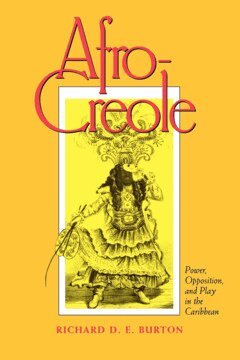
This wide-ranging book explores the origins, development, and character of Afro-Caribbean cultures from the slave period to the present day. Richard D. E. Burton focuses on ways in which African traditions—including those in religion, music, food, dress, and family structure—were transformed by interaction with European and indigenous forces to create the particular cultures of Jamaica, Trinidad, and Haiti. He demonstrates how the resulting Afro-Creole cultures have both challenged and reinforced the social, political, and economic status quo in these countries.Jamaican slaves opposed slavery in many ways and one of the most important, Burton suggests, was the development of Afro-Christianity. He pays particular attention to the African-derived Christmas celebration of Jonkonnu as an expression of opposition and then documents religion in the post-slavery period, with an emphasis on Rastafarianism in Jamaica and Vodou in Haiti. The element of play has always figured importantly in Afro-Caribbean life. Burton examines the evolution of carnival and calypso in Trinidad and describes the significance of cricket in defining Caribbean national identity. Based on ten years of research, Afro-Creole draws on historical, anthropological, sociological, and literary sources. Burton characterizes the emergence of Caribbean identity with three different national flavors and demonstrates how culture both reflects and impacts people's changing sense of their own political power.
407 kr
Skickas inom 5-8 vardagar