Richard Graham - Böcker
Visar alla böcker från författaren Richard Graham. Handla med fri frakt och snabb leverans.
18 produkter
18 produkter
302 kr
Skickas inom 5-8 vardagar
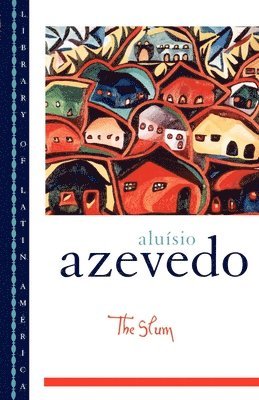
First published in 1890, and undoubtedly Azevedo's masterpiece, The Slum is one of the most widely read and critically acclaimed novels ever written about Brazil. Indeed, its great popularity, realistic descriptions, archetypal situations, detailed local coloring, and overall race-consciousness may well evoke Huckleberry Finn as the novel's North American equivalent. Yet Azevedo also exhibits the naturalism of Zola and the ironic distance ofBalzac; while tragic, beautiful, and imaginative as a work of fiction, The Slum is universally regarded as one of the best, or truest, portraits of Brazilian society ever rendered.This is a vivid andcomplex tale of passion and greed, a story with many different strands touching on the different economic tiers of society. Mainly, however, The Slum thrives on two intersecting story lines. In one narrative, a penny-pinching immigrant landlord strives to become a rich investor and then discards his black lover for a wealthy white woman. In the other, we witness the innocent yet dangerous love affair between a strong, pragmatic, "gentle giant" sort of immigrant and a vivacious mulattowoman who both live in a tenement owned by said landlord. The two immigrant heroes are originally Portuguese, and thus personify two alternate outsider responses to Brazil. As translator David H. Rosenthalpoints out in his useful Introduction: one is the capitalist drawn to new markets, quick prestige, and untapped resources; the other, the prudent European drawn moth-like to "the light and sexual heat of the tropics."A deftly told, deeply moving, and hardscrabble novel that features several stirring passages about life in the streets, the melting-pot realities of the modern city, and the oft-unstable mind of the crowd, The Slum will captivate anyone who mightappreciate a more poetic, less political take on the nineteenth-century naturalism of Crane or Dreiser.
Feeding the City
From Street Market to Liberal Reform in Salvador, Brazil, 1780–1860
Häftad, Engelska, 2010
380 kr
Skickas inom 10-15 vardagar
Winner, Bolton-Johnson Prize, Conference on Latin American History, 2011Murdo J. McLeod Book Prize, 2011On the eastern coast of Brazil, facing westward across a wide magnificent bay, lies Salvador, a major city in the Americas at the end of the eighteenth century. Those who distributed and sold food, from the poorest street vendors to the most prosperous traders-black and white, male and female, slave and free, Brazilian, Portuguese, and African-were connected in tangled ways to each other and to practically everyone else in the city, and are the subjects of this book. Food traders formed the city's most dynamic social component during the late eighteenth and early nineteenth centuries, constantly negotiating their social place. The boatmen who brought food to the city from across the bay decisively influenced the outcome of the war for Brazilian independence from Portugal by supplying the insurgents and not the colonial army. Richard Graham here shows for the first time that, far from being a city sharply and principally divided into two groups-the rich and powerful or the hapless poor or enslaved-Salvador had a population that included a great many who lived in between and moved up and down.The day-to-day behavior of those engaged in food marketing leads to questions about the government's role in regulating the economy and thus to notions of justice and equity, questions that directly affected both food traders and the wider consuming public. Their voices significantly shaped the debate still going on between those who support economic liberalization and those who resist it.
239 kr
Skickas inom 10-15 vardagar
Joaquim Maria Machado de Assis (1839-1908) never left Brazil and rarely traveled outside his native city of Rio de Janeiro, yet he is widely acknowledged by those who have read him as one of the major authors of the nineteenth century. His works are full of subtle irony, relentless psychological insights, and brilliant literary innovations. Yet, because he wrote in Portuguese, a language outside the mainstream of Western culture, those with access to his writings are relatively few. This book is designed not only to call new attention to this master but also to raise questions about the nature of literature itself and current alternative views on how it can be approached. Four essays address the question of Machado's "realism" in the five masterpiece novels of his maturity, especially Dom Casmurro. The noted contributors include John Gledson (University of Liverpool), JoÃo Adolfo Hansen (Universidade de SÃo Paulo), Sidney Chalhoub (Universidade de Campinas), and Daphne Patai (University of Massachusetts at Amherst). Dain Borges of the University of California at San Diego says, "[This is the] only collection explicitly debating the question that polarizes contemporary Brazilian criticism of Machado de Assis: was he a sophisticated late realist, or was he a pioneering anti-realist, even a postmodernist? The [essayists] marshal their evidence and argument with virtuosity and arrive at sharply opposing conclusions."
208 kr
Skickas inom 10-15 vardagar
From the mid-nineteenth century until the 1930s, many Latin American leaders faced a difficult dilemma regarding the idea of race. On the one hand, they aspired to an ever-closer connection to Europe and North America, where, during much of this period, "scientific" thought condemned nonwhite races to an inferior category. Yet, with the heterogeneous racial makeup of their societies clearly before them and a growing sense of national identity impelling consideration of national futures, Latin American leaders hesitated. What to do? Whom to believe?Latin American political and intellectual leaders' sometimes anguished responses to these dilemmas form the subject of The Idea of Race in Latin America. Thomas Skidmore, Aline Helg, and Alan Knight have each contributed chapters that succinctly explore various aspects of the story in Brazil, Argentina, Cuba, and Mexico. While keenly alert to the social and economic differences that distinguish one Latin American society from another, each author has also addressed common issues that Richard Graham ably draws together in a brief introduction. Written in a style that will make it accessible to the undergraduate, this book will appeal as well to the sophisticated scholar.
311 kr
Skickas inom 10-15 vardagar
New Approaches to Latin American History incorporates methods and concepts from the social sciences without abandoning a distinctively historical approach. A collection of original essays by distinguished younger scholars, it proposes original concepts and methods for analyzing crucial problems in Latin American history. Using as examples such subjects as salvery, dictatorship, immigration, and the relationship between land ownership and political power, the contributors show how approaches and techniques from psychology, political science, economics. and sociology can be applied to historical studies. The papers attempt to explain the thematic and substantive importance of the particular problems at hand; describe and evaluate standard approaches to them; propose original hypotheses; suggest methods for testing the hypotheses; or indicate major methodological or conceptual difficulties that have so far hampered such work. Despite their diversity of content, the papers show strong underlying unities. First, they all point to the need for placing institutions and actions in a broad societal context. The authurs present an implicit, cumulative argument against the excessive isolation of historical phenomena. Second, they demonstrate the utility of interdisciplinary research. Third, they issue an implicit call for rigorous comparative analysis. The propositions formulated in these essays can best tested and modified in comparative fashion. Ultimately this book deals with the exposition of a research style: a style based on systematic doubt, an awareness of the need for conceptual rigor, and a willingness to try new methodologies. For this reason it is of interest to historians in every field as well as to students of Latin America.
269 kr
Skickas inom 10-15 vardagar
In the course of fifteen momentous years, the Spanish- and the Portuguese-American empires that had endured for three centuries came to an end in the mid-1820s. How did this come about? Not all Latin Americans desired such a change, and the independence wars were civil wars, often cruel and always violent. What social and economic groups lined up on one side or the other? Were there variations from place to place, region to region? Did men and women differ in their experience of war? How did Indians and blacks participate and how did they fare as a result? In the end, who won and who lost?Independence in Latin America is about the reciprocal effect of war and social dislocation. It also demonstrates that the war itself led to national identity and so to the creation of new states. These governments generally acknowledged the novel principle of constitutionalism and popular sovereignty, even when sometimes carving out exceptions to such rules. The notion that society consisted of individuals and was not a body made up of castes, guilds, and other corporate orders had become commonplace by the end of these wars. So international politics and military confrontations are only part of the intriguing story recounted here.For this third edition, Richard Graham has written a new introduction and extensively revised and updated the text. He has also added new illustrations and maps.
Del 4 - Cambridge Latin American Studies
Britain and the Onset of Modernization in Brazil 1850-1914
Häftad, Engelska, 1972
523 kr
Skickas inom 7-10 vardagar
This is a detailed study of British influence in Brazil as a theme within the larger story of modernization. The British were involved at key points in the initial stages of modernization. Their hold upon the import-export economy tended to slow down industrialization, and there were other areas in which their presence acted as a brake upon Brazilian modernization. But the British also fostered change. British railways provided primary stimulus to the growth of coffee exports, and since the British did not monopolize coffee production, a large proportion of the profits remained in Brazilian hands for other uses. Furthermore, the burgeoning coffee economy shattered traditional economic, social and political relationships, opening up the way for other areas of growth. The British role was not confined to economic development. They also contributed to the growth of 'a modern world-view'. Spencerianism and the idea of progress, for instance, were not exotic and meaningless imports, but an integral part of the transformation Brazil was experiencing.
402 kr
Skickas inom 7-10 vardagar
Focusing on the period from 1840 to 1889, the author explores the specific ways in which granting protection, official positions, and other favors in exchange for political and personal loyalty worked to benefit the interests of wealthy Brazilians. The book is based principally on both the official and private correspondence of politicians, judges and bureaucrats, using these materials to look in depth at political practice. "Whatever the outcome of the current crisis of Latin American scholarship, here is one book that will not be swept into the dustbin of historiography ... This is a masterful study: imaginatively conceived, solidly researched, tightly reasoned, clearly and forcefully written. Graham's conclusions will be challenged, but his work will endure."—The American Historical Review.
259 kr
Skickas inom 3-6 vardagar
433 kr
Skickas inom 5-8 vardagar
308 kr
Skickas inom 5-8 vardagar
318 kr
Skickas
At the Emperors Pleasure follows the young couple Christopher and Topsy Man through the savage battle for Hong Kong and the years of enforced separation, she interned in Stanley Camp, Hong Kong, he as a prisoner of war and forced labourer in Kobe, Japan.The book is not about Christopher and Topsy Man alone but also of friends and colleagues close to them forced to endure the cruel torture and execution by the Kempeitai.Amongst those close to them some of Topsy’s friends and colleagues were raped and murdered, one was imprisoned within shouting distance of her husband being tortured then executed by the Kempeitai, while another died when their camp was mistakenly bombed by the Allies. Topsy was herself the reluctant witness to ritual executions.Christopher lost brother officers and many of the Cockney soldiers under his command in the battle for Hong Kong. Others drowned in the East China Sea, victims of a barbaric but little-known mass war crime, the sinking of the Lisbon Maru. Still others survived the sinking only to succumb to the harsh regime of the POW camp in Japan. Perhaps most tragic of all, four of Christopher’s men came through the battle, the Lisbon Maru sinking and cruel imprisonment only to die when the aircraft carrying them to freedom crashed into the sea during a typhoon.Like many of their generation who suffered at the hands of the Japanese during the second world war, Christopher and Topsy Man rarely spoke of their experience, and when they did, they were guarded in what they chose to share of it, even with those closest to them in their post-war lives.With privileged access to personal letters, diaries and records from the wartime years, from memories exchanged with Christopher’s and Topsy’s contemporaries and from knowledge shared by other historians, the author has written a compelling and moving account of the young couple’s lives being torn apart by world events in late 1941.
206 kr
Tillfälligt slut
Since the 1940s, federal and state government agencies have published comics to disseminate public information. Comics legends Will Eisner and Milton Caniff produced comics for the army. Li’l Abner joined the navy. Walt Kelly’s Pogo told parents how much TV their kids should watch, Bert the Turtle showed them how to survive a nuclear attack, and Dennis the Menace took “A Poke at Poison.” Smokey Bear had his own comic, and so did Zippy, the USPS mascot. Dozens of artists and writers, known and unknown, were recruited to create comics about every aspect of American life, from jobs and money to health and safety to sex and drugs. Whether you want the lowdown on psychological warfare or the highlights of working in the sardine industry, the government has a comic for you! Government Issue reproduces an important selection of these official comics in full-reading format, plus a broad range of excerpts and covers, all organized chronologically in thematic chapters. Earnest, informational, and kitschy, this outstanding collection is the ultimate comics vox populi.Praise for Government Issue:“Public-service comics never looked so good.” —Cleveland Plain Dealer “The book includes work by Neal Adams, Denis Kitchen, Milton Caniff, Walt Kelly, and other big names, all producing pages paid for by American taxpayers, many of whom never even got to see [them]. Now, at last, we have that chance.” —A.V. Club“A gold mine of the serious, the silly, and the truly strange stuff the government thinks we ought to know.” —Scripps Howard News Service
213 kr
Skickas inom 10-15 vardagar
Has the world economy shaped and defined Brazil’s economic and political history and, if so, to what extent? Is Brazil’s past to be explained principally by its insertion in a single world capitalist system? The authors of the three essays in this volume reflect critically on these questions along with the following: Should the determining factors be understood as sociological-cultural (as in a heritage of patrimonial rule) or were they based on material reality? What was the connection between the presence of slavery in the Americas and the emergence of capitalism in Europe? What accounts for Brazil’s centuries-long reliance on exports and the slow development of its industry?The chapters in this book draw contrasting judgments on virtually every major issue in Brazilian history because they begin from divergent premises. In arguing their cause, noted scholars John R. Hall, Fernando A. Novais, and LuÍs Carlos Soares provide a formidable intellectual point and counterpoint whose theoretical assumptions bear heavily on all social scientists engaged in exploring colonialism, imperialism, capitalism, dependency, and relative international poverty.Brazil and the World System provides provocative insights not only about Brazil but also about the nature of colonialism in general and its relationship to the rise of capitalism in Europe. It should appeal to Latin Americanists of all disciplinary persuasions as well as to general readers curious about great patterns of change in history. Stuart Schwartz, director of the Center for Early Modern History at the University of Minnesota, says, “ . . . an excellent collection . . . North American scholarship will find these essays an eye-opener.
313 kr
Skickas inom 5-8 vardagar
168 kr
Skickas inom 5-8 vardagar
591 kr
Skickas inom 10-15 vardagar
A Brief History of Comic Book Movies traces the meteoric rise of the hybrid art form of the comic book film.
591 kr
Skickas inom 10-15 vardagar
A Brief History of Comic Book Movies traces the meteoric rise of the hybrid art form of the comic book film.