Richard H. King - Böcker
Visar alla böcker från författaren Richard H. King. Handla med fri frakt och snabb leverans.
11 produkter
11 produkter
243 kr
Skickas inom 5-8 vardagar
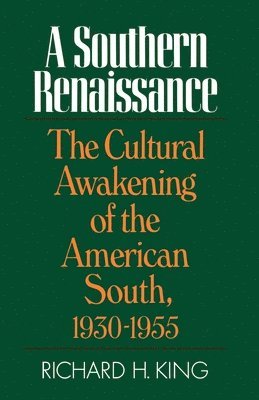
This perceptive study of a major cultural movement shows how Southern writers of 1930 t0 1955 tried to come to terms with Southern tradition, and discusses the resulting body of significant literature - fiction, poetry, memoirs, and historical writing.
1 235 kr
Skickas inom 5-8 vardagar
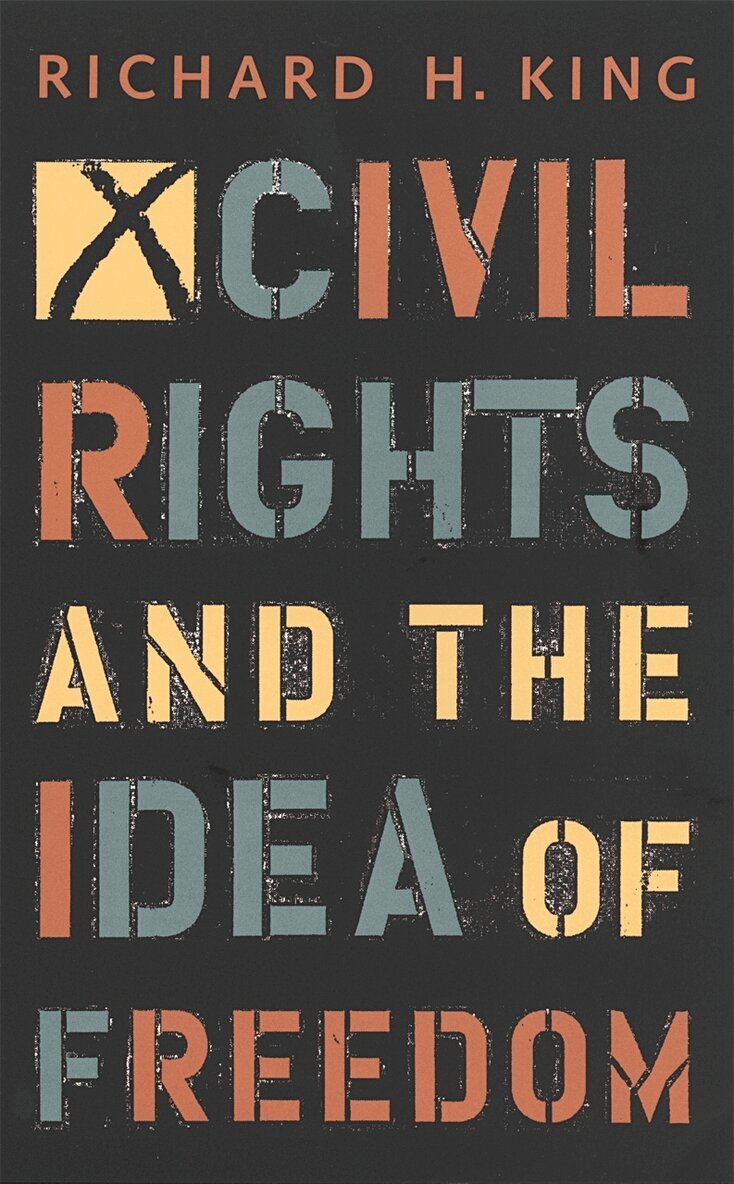
This book delineates the important issues and ideas that developed out of the political experience of the Civil Rights Movement, and argues that the Movement was not as much about ending segregation and political disenfranchisement as about having blacks recognized as individuals and enhancing their sense of self-worth and freedom.
786 kr
Skickas inom 7-10 vardagar
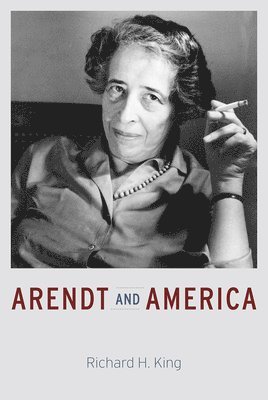
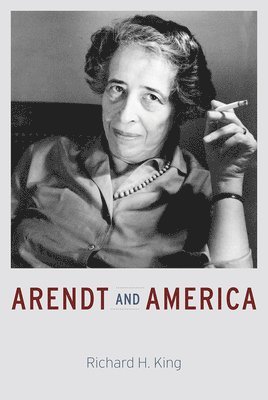
German political philosopher Hannah Arendt (1906-75) fled from the Nazis to New York in 1941, and during the next thirty years in America she penned her best-known and most influential works, such as The Human Condition, The Origins of Totalitarianism, and On Revolution. Yet, despite the fact that a substantial portion of her oeuvre was written in America-not Europe-no one has directly considered the influence of America on her thought-until now. In Arendt and America, historian Richard H. King argues that while all of Arendt's work was haunted by her experience of totalitarianism, it was only in her adopted homeland that she was able to formulate the idea of the modern republic as an alternative to totalitarian rule. Situating Arendt within the context of US intellectual, political, and social history, King reveals how Arendt developed an extensive grasp of American constitutional history and how her idea of the American republic grew through her dialogue with the work of Alexis de Tocqueville.King also re-creates her intellectual exchanges with American friends and colleagues, such as Dwight Macdonald and Mary McCarthy, and shows how her lively correspondence with sociologist David Riesman helped her understand modern American culture and society. In the last section of Arendt and America, King sets out the context in which the Eichmann controversy took place and follows the debate about "the banality of evil" that has continued ever since. As King shows, Arendt's work, regardless of focus, was shaped by postwar American thought, culture, and politics, including the Civil Rights Movement and the Cold War. For Arendt, the United States was much more than a refuge from Nazi Germany; it was a stimulus to rethink the political, ethical, and historical traditions of human culture. This authoritative combination of intellectual history and biography offers a unique approach for thinking about the influence of America on Arendt's ideas and also the effect of her ideas on American thought.
250 kr
Skickas inom 7-10 vardagar
German-Jewish political philosopher Hannah Arendt (1906–75) fled from the Nazis to New York in 1941, and during the next thirty years in America she wrote her best-known and most influential works, such as The Human Condition, The Origins of Totalitarianism, and On Revolution. Yet, despite the fact that a substantial portion of her oeuvre was written in America, not Europe, no one has directly considered the influence of America on her thought—until now. In Arendt and America, historian Richard H. King argues that while all of Arendt’s work was haunted by her experience of totalitarianism, it was only in her adopted homeland that she was able to formulate the idea of the modern republic as an alternative to totalitarian rule. Situating Arendt within the context of U.S. intellectual, political, and social history, King reveals how Arendt developed a fascination with the political thought of the Founding Fathers. King also re-creates her intellectual exchanges with American friends and colleagues, such as Dwight Macdonald and Mary McCarthy, and shows how her lively correspondence with sociologist David Riesman helped her understand modern American culture and society. In the last section of Arendt and America, King sets out the context in which the Eichmann controversy took place and follows the debate about “the banality of evil” that has continued ever since. As King shows, Arendt’s work, regardless of focus, was shaped by postwar American thought, culture, and politics, including the Civil Rights Movement and the Cold War.For Arendt, the United States was much more than a refuge from Nazi Germany; it was a stimulus to rethink the political, ethical, and historical traditions of human culture. This authoritative combination of intellectual history and biography offers a unique approach for thinking about the influence of America on Arendt’s ideas and also the effect of her ideas on American thought.
1 294 kr
Skickas inom 10-15 vardagar
In this collection, academics from both sides of the Atlantic analyze the confluence of a politician, a process, and a problem - Barack Obama, the 2008 US presidential election, and the 'problem' of race in contemporary America. The special focus falls upon Barack Obama himself, who appears in many guises: as an individual from biracial and transnational backgrounds; a skilled, urban African-American organizer and then politician; and as intellectual and author of a bestselling autobiographical exploration. There is a certain representative quality about Obama that makes him a convenient way into the labyrinth of American race relations, national and regional politics (including the South and Hawaii), and past history (particularly from the 1960s to the present). Contributors also explore the role Michelle Obama has played in this process, both separately from and together with her husband, while one theme running through many chapters concerns the myriad ways that the American left, right and centre differ on the nature and future of race in a country that daily becomes more mixed in ethnic and racial terms. Race is everywhere; race is nowhere. The essays are grouped by their approach to the topic of Obama and race: via historical analysis, cultural studies, political science and sociology, as well as pedagogy. The result is an exciting mix of perspectives on one of the most fascinating phenomena of our time.This book was originally published as a special issue of the journal Patterns of Prejudice.
1 409 kr
Skickas inom 5-8 vardagar
The contemporary American South is a region of economic expansion, political sophistication, and, particularly, cultural ferment. Its literature is well-known and celebrated. But what of the popular cultural forms of expression that have done so much to reflect the curious tensions between the traditional South--white-dominated, rural, religous--and contemporary multicultural forms and discourses? This collection offers a wealth of exciting new perspectives on cultural studies in general and of the particular forms of popular Southern culture--from rock and roll to Cajun music to the impact on the South of tourism and the questions of genre and race in contemporary film-making.
468 kr
Skickas inom 5-8 vardagar
The contemporary American South is a region of economic expansion, political sophistication, and, particularly, cultural ferment. Its literature is well-known and celebrated. But what of the popular cultural forms of expression that have done so much to reflect the curious tensions between the traditional South--white-dominated, rural, religous--and contemporary multicultural forms and discourses? This collection offers a wealth of exciting new perspectives on cultural studies in general and of the particular forms of popular Southern culture--from rock and roll to Cajun music to the impact on the South of tourism and the questions of genre and race in contemporary film-making.
486 kr
Skickas inom 5-8 vardagar
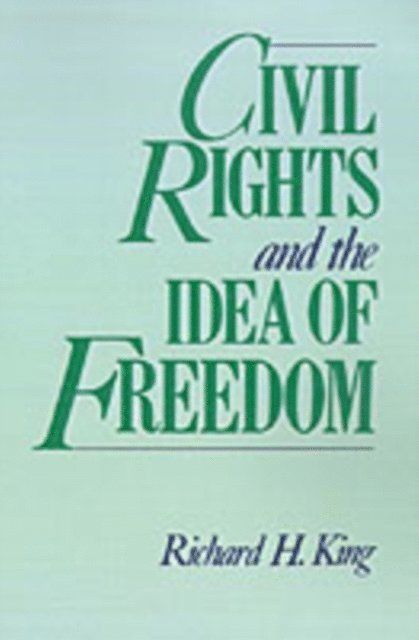
Civil Rights and the Idea of Freedom is a groundbreaking work, one of the first to show in detail how the civil rights movement crystallized our views of citizenship as a grassroots-level, collective endeavor and of self-respect as a formidable political tool. Drawing on both oral and written sources, Richard H. King shows how rank-and-file movement participants defined and discussed such concepts as rights, equality, justice, and, in particular, freedom, and how such key movement leaders as Martin Luther King Jr., Ella Baker, Stokely Carmichael, and James Forman were attuned to this "freedom talk."The book includes chapters on the concept of freedom in its many varieties, both individual and collective; on self-interest and self-respect; on Martin Luther King's use of the idea of freedom; and on the intellectual evolution of the Student Non-violent Coordinating Committee, especially in light of Frantz Fanon's thought among movement radicals.In demonstrating that self-respect, self-determination, and solidarity were as central to the goals of the movement as the dismantling of the Jim Crow system, King argues that the movement's success should not be measured in terms of tangible, quantifiable advances alone, such as voter registration increases or improved standards of living. Not only has the civil rights movement helped strengthen the meaning and political importance of active citizenship in the contemporary world, says King, but
576 kr
Skickas inom 10-15 vardagar
In this collection, academics from both sides of the Atlantic analyze the confluence of a politician, a process, and a problem - Barack Obama, the 2008 US presidential election, and the 'problem' of race in contemporary America. The special focus falls upon Barack Obama himself, who appears in many guises: as an individual from biracial and transnational backgrounds; a skilled, urban African-American organizer and then politician; and as intellectual and author of a bestselling autobiographical exploration. There is a certain representative quality about Obama that makes him a convenient way into the labyrinth of American race relations, national and regional politics (including the South and Hawaii), and past history (particularly from the 1960s to the present). Contributors also explore the role Michelle Obama has played in this process, both separately from and together with her husband, while one theme running through many chapters concerns the myriad ways that the American left, right and centre differ on the nature and future of race in a country that daily becomes more mixed in ethnic and racial terms. Race is everywhere; race is nowhere. The essays are grouped by their approach to the topic of Obama and race: via historical analysis, cultural studies, political science and sociology, as well as pedagogy. The result is an exciting mix of perspectives on one of the most fascinating phenomena of our time.This book was originally published as a special issue of the journal Patterns of Prejudice.
Hannah Arendt and the Uses of History
Imperialism, Nation, Race, and Genocide
Inbunden, Engelska, 2007
1 956 kr
Skickas inom 3-6 vardagar
Hannah Arendt (1906-1975) first argued that there were continuities between the age of European imperialism and the age of fascism in Europe in The Origins of Totalitarianism (1951). She claimed that theories of race, notions of racial and cultural superiority, and the right of ‘superior races’ to expand territorially were themes that connected the white settler colonies, the other imperial possessions, and the fascist ideologies of post-Great War Europe. These claims have rarely been taken up by historians. Only in recent years has the work of scholars such as Jürgen Zimmerer and A. Dirk Moses begun to show in some detail that Arendt was correct.This collection does not seek merely to expound Arendt’s opinions on these subjects; rather, it seeks to use her insights as the jumping-off point for further investigations – including ones critical of Arendt – into the ways in which race, imperialism, slavery and genocide are linked, and the ways in which these terms have affected the United States, Europe, and the colonised world.
346 kr
Skickas inom 3-6 vardagar
Hannah Arendt (1906-1975) first argued that there were continuities between the age of European imperialism and the age of fascism in Europe in The Origins of Totalitarianism (1951). She claimed that theories of race, notions of racial and cultural superiority, and the right of ‘superior races’ to expand territorially were themes that connected the white settler colonies, the other imperial possessions, and the fascist ideologies of post-Great War Europe. These claims have rarely been taken up by historians. Only in recent years has the work of scholars such as Jürgen Zimmerer and A. Dirk Moses begun to show in some detail that Arendt was correct.This collection does not seek merely to expound Arendt’s opinions on these subjects; rather, it seeks to use her insights as the jumping-off point for further investigations – including ones critical of Arendt – into the ways in which race, imperialism, slavery and genocide are linked, and the ways in which these terms have affected the United States, Europe, and the colonised world.