Richard J. Walter – författare
Visar alla böcker från författaren Richard J. Walter. Handla med fri frakt och snabb leverans.
11 produkter
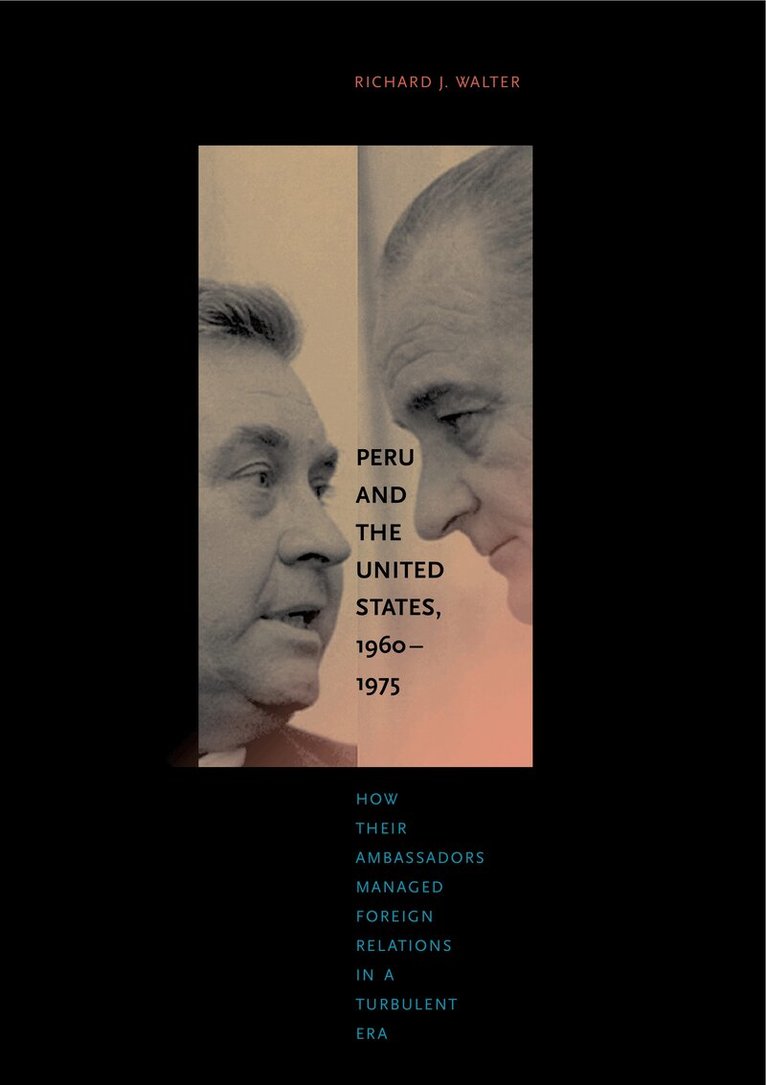
Peru and the United States, 1960–1975
How Their Ambassadors Managed Foreign Relations in a Turbulent Era
Häftad, 2014
600 kr
Lägg i varukorg
The period of 1960 to 1975 was a time when the United States paid more than the usual amount of attention to relations with Latin America, contending with Fidel Castro’s efforts to export the revolution and with Salvador Allende’s efforts to establish a socialist government in Chile, for example. …
Socialist Party of Argentina, 1890–1930
Häftad, 1977
343 kr
Lägg i varukorg
In the early part of the twentieth century, Argentina's Socialist Party became the largest and most effective socialist organization in Latin America. Richard J. Walter's interpretive study begins with the party's origins in the 1890s, traces its development through 1912, and then offers a …
Politics and Urban Growth in Buenos Aires, 1910-1942
Av Richard J. Walter, Alan Knight
Inbunden, 1993
1389 kr
Lägg i varukorg
Buenos Aires is Argentina's national capital and largest city. This book, first published in 1994, describes the development of the city during the period from 1910 to the early 1940s. It focuses on the role of politics and local government in the evolution of the city, detailing elections, party …
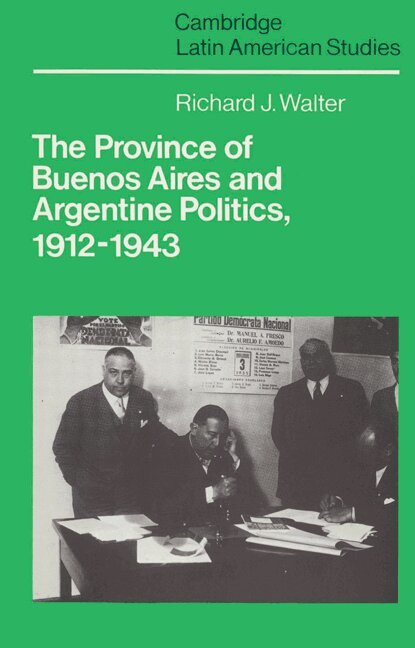
The Province of Buenos Aires and Argentine Politics, 1912-1943
Av Richard J. Walter, Alan Knight
Häftad, 2002
569 kr
Lägg i varukorg
Buenos Aires is Argentina's wealthiest, largest, and most populous province, and has long been the key prize in all major electoral struggles, has received little scholarly attention. This first account of its political history between 1912 and 1943 underscores its role as a vital factor in …
Politics and Urban Growth in Buenos Aires, 1910-1942
Av Richard J. Walter, Alan Knight
Häftad, 2003
586 kr
Lägg i varukorg
Buenos Aires is Argentina's national capital and largest city. This book, first published in 1994, describes the development of the city during the period from 1910 to the early 1940s. It focuses on the role of politics and local government in the evolution of the city, detailing elections, party …
Politics and Urban Growth in Santiago, Chile, 1891-1941
Inbunden, 2005
970 kr
Lägg i varukorg
From 1891 to 1941, Santiago—Chile's capital and its largest and most important city—experienced rapid urbanization, industrialization, and administrative expansion along with a massive internal migration that had significant social and economic consequences for the city. This book is the first …
Twisted Tango
E-bok, 2012
59 kr
Lägg i varukorg
Peter Benton arrives in Buenos Aires, Argentina in June 1945 to investigate possible fraud in the local office of a foreign film distributor. In Buenos Aires, he reunites with his partner from his days in the OSS, who has been posted to the U.S. embassy. His friend recruits him to spy on the most …
Evita's Revenge
E-bok, 2016
61 kr
Lägg i varukorg
In this thrilling sequel to the author''s Twisted Tango, former OSS officer Pete Benton finds himself in Washington, D.C. in the summer of 1951, working for a Department of Justice task force investigating organized crime. When a member of the task force is found near dead from a brutal beating, …
Peru and the United States, 1960–1975
How Their Ambassadors Managed Foreign Relations in a Turbulent Era
Inbunden, 2010
1057 kr
Tillfälligt slut
The period 1960-1975 was a time when the United States paid more than the usual amount of attention to relations with Latin America, contending with Castro's efforts to export the Revolution and with Allende's efforts to establish a socialist government in Chile, for example. During this turbulent …