Richard K. Olson - Böcker
Visar alla böcker från författaren Richard K. Olson. Handla med fri frakt och snabb leverans.
3 produkter
3 produkter
2 088 kr
Skickas inom 10-15 vardagar
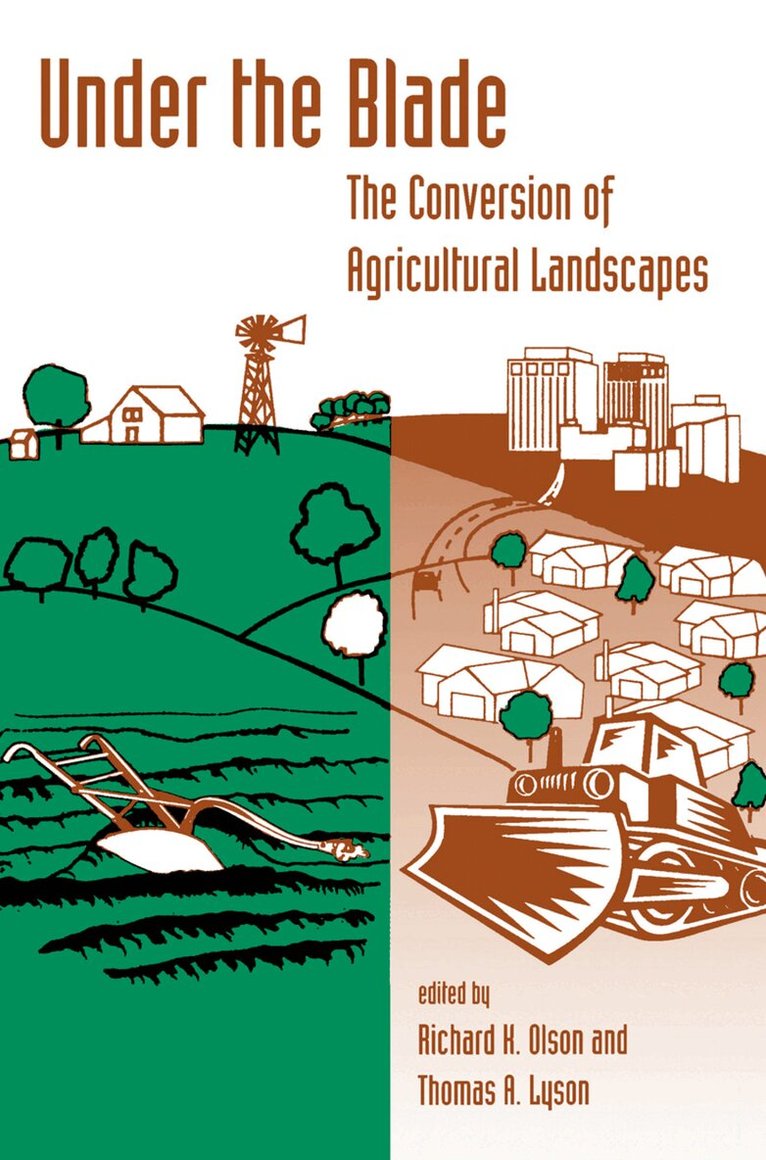
In 1998, the last farm in Des Plaines, Illinois was subdivided. Seven acres along the Niobrara River in north-central Nebraska sold for 5700 per acre, twenty times the price for agricultural use. Waukesha County, Wisconsin, although still largely in agriculture, has been almost entirely zoned for small lot subdivisions. Nationwide, the cumulative effect of thousands of individual land use decisions is an orgiastic devouring of the countryside that consumes at least 1.4 million acres of rural land each year, and fragments a much larger area. The effects on landscape functions include loss of agricultural production, water pollution, increases in local runoff and flooding, loss of habitat and biodiversity, and the loss of natural beauty. In exchange we get malls, retail strips, and an ugly sprawl that degrades people and community. How have we come to this, and more importantly, how might we find a better, sustainable approach to the use of land? Land use decisions are the result of complex interactions among law, economics, landscape characteristics, population growth, social and political forces, ethics, and aesthetics. Under the Blade: The Conversion of Agricultural Landscapes examines the loss of farmland and other rural lands from each of these perspectives, and shows how interactions among different factors greatly complicate sustainable land management. Included throughout the seven main chapters of the book are descriptions of some of the tools and strategies that can be used to preserve farmland and guide development. The application of these tools is illustrated by 22 case studies of towns and regions throughout the United States, each with a somewhat different challenge, response, and degree of success (or failure).Dietrich Bonhoeffer, a Protestant theologian hanged by the Nazis in 1945, stated that ?the ultimate test of a moral society is the kind of world that it leaves to its children.? Our current choices in the use of the land are among the most important factors shaping that future world, and Under the Blade demonstrates that the quality of that future is far from certain.
807 kr
Skickas inom 10-15 vardagar
In 1998, the last farm in Des Plaines, Illinois was subdivided. Seven acres along the Niobrara River in north-central Nebraska sold for 5700 per acre, twenty times the price for agricultural use. Waukesha County, Wisconsin, although still largely in agriculture, has been almost entirely zoned for small lot subdivisions. Nationwide, the cumulative effect of thousands of individual land use decisions is an orgiastic devouring of the countryside that consumes at least 1.4 million acres of rural land each year, and fragments a much larger area. The effects on landscape functions include loss of agricultural production, water pollution, increases in local runoff and flooding, loss of habitat and biodiversity, and the loss of natural beauty. In exchange we get malls, retail strips, and an ugly sprawl that degrades people and community. How have we come to this, and more importantly, how might we find a better, sustainable approach to the use of land? Land use decisions are the result of complex interactions among law, economics, landscape characteristics, population growth, social and political forces, ethics, and aesthetics. Under the Blade: The Conversion of Agricultural Landscapes examines the loss of farmland and other rural lands from each of these perspectives, and shows how interactions among different factors greatly complicate sustainable land management. Included throughout the seven main chapters of the book are descriptions of some of the tools and strategies that can be used to preserve farmland and guide development. The application of these tools is illustrated by 22 case studies of towns and regions throughout the United States, each with a somewhat different challenge, response, and degree of success (or failure).Dietrich Bonhoeffer, a Protestant theologian hanged by the Nazis in 1945, stated that ?the ultimate test of a moral society is the kind of world that it leaves to its children.? Our current choices in the use of the land are among the most important factors shaping that future world, and Under the Blade demonstrates that the quality of that future is far from certain.
536 kr
Skickas inom 10-15 vardagar
John Sculley In the short history of personal computing, the task of the software programmer has been one of the least recognized-but one of the most significant-in the industry. In addition to defining the prob lems, and presenting the solutions, the software programmer is con fronted with the challenge of having to predict what combination of ideas and technologies will move the industry forward in the most compelling way. Even though we've seen the development of tremendous applications in a surprisingly short period of time, the most difficult problems often surface when we try to elevate a suc cessful local idea to the international arena. In the case of Apple Computer, these challenges become especially profound when you consider that Apple sells Macintosh not just in the United States, but in Japan, China, the Middle East, Africa, East ern Europe, and even to the United Nations itself. Of course, this means that the personal computer must work everywhere around the world. But more significantly, it also means that the software must reflect the uniqueness of a given culture, its language, morals, and even its sense of humor. To step away from a narrowly-defined, nationally-based paradigm for software development, programmers, management, and entire corporations must learn to recognize what elements of an interface, problem solving technique, documentation illustration, package de sign, and advertisement are local, and which elements are appro priate for global markets.