Richard K. Scotch - Böcker
Visar alla böcker från författaren Richard K. Scotch. Handla med fri frakt och snabb leverans.
3 produkter
3 produkter
1 452 kr
Skickas inom 7-10 vardagar
This volume of "Research in Social Science and Disability" brings together interdisciplinary scholarship to examine a wide array of issues related to disability and community, a topic of critical importance academically and politically. The evolving and politically contested notions of community sit at the centre of much of the recent research on disability and, as researchers both create and reflect various ideas of membership when defining "disability" and aggregating individuals, their methodological decisions have significant implications for how we come to understand disability and community. This volume also examines a wide range of social institutions and practices such as education, employment, and cultural venues and the extent to which and how they include people with disabilities in the workings of these institutions. It includes research framed by a variety of theoretical perspectives and research methodologies and offers innovative ways to envision inclusive communities and, therefore, enables us to consider how to move forward to create them.
188 kr
Skickas inom 7-10 vardagar
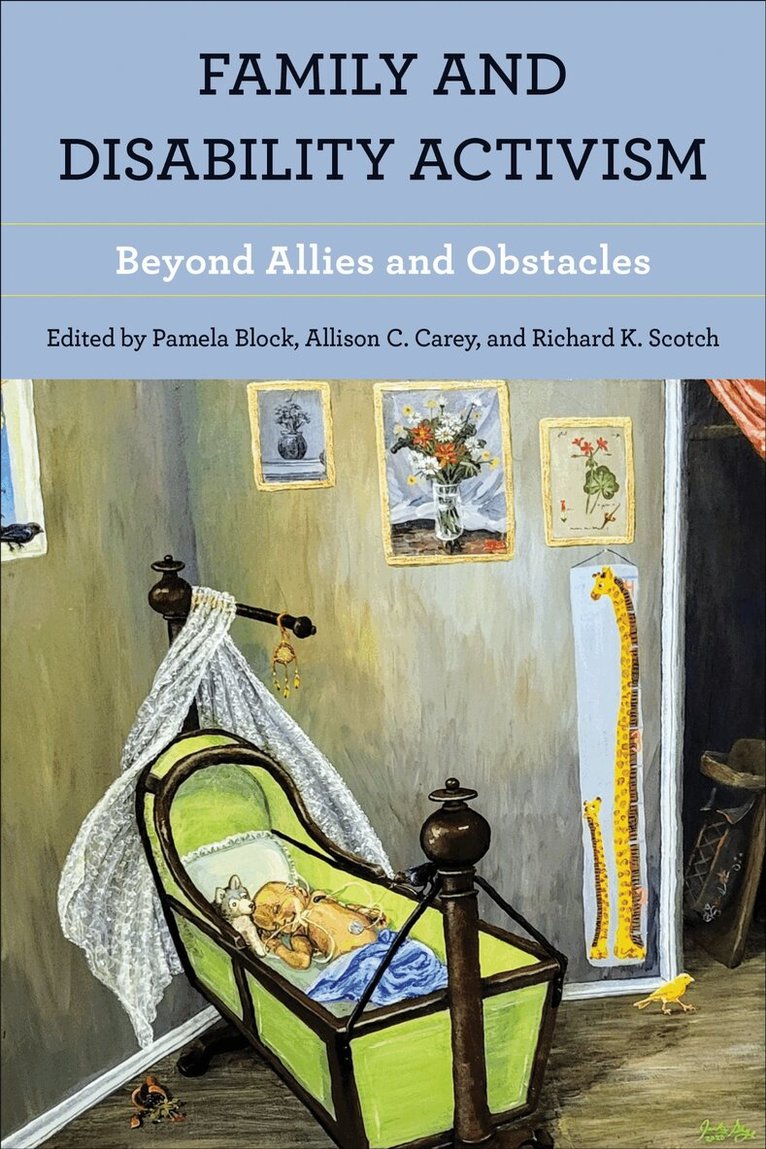
In 2020, Pamela Block, Allison C. Carey, and Richard K. Scotch published Allies and Obstacles, which examined the tensions and connections between disability activism and parents of children with disabilities. In Family and Disability Activism, they continue to examine these issues with a focus on the path-breaking advocacy by marginalized activists with intersectional lived experiences.Family and Disability Activism reveals how families and disabled people who identify as BIPOC and/or LGBTQIA2S understand issues of rights versus justice. Contributions by Deaf and disabled activists emphasize the frequent need for either care or independence. Other chapters show how members of the disabled community and their families must navigate systemic issues of segregation, institutionalization, and access to special education services differently depending on their ethnic and racial identities.Expanding the conversation about disability, kinship, biological and chosen families, and activism, this volume amplifies important voices in the fight for disability rights.Contributors: Erin Compton, Diane Compton, Jaclyn Ellis, Laura LeBrun Hatcher, Elena Hung, Bridget Liang, Jenelle Rouse, Cheryl Najarian Souza, Jeneva Stone, Roger A. Stone, Lisette E. Torres, Grace Tsao, and the editors
699 kr
Skickas inom 7-10 vardagar
Part and parcel to the civil rights movements of the past thirty years has been a sustained, coordinated effort among disabled Americans to secure equal rights and equal access to that of non-disabled people. Beyond merely providing a history of this movement, Sharon Barnartt and Richard Scotch's Disability Protests: Contentious Politics, 1970-1999 offers an incisive, sociological analysis of thirty years of protests, organization, and legislative victories within the deaf and disabled populations. The authors begin with a thoughtful consideration of what constitutes "contentious" politics and what distinguishes a sustained social movement from isolated acts of protest. The numbers of disability rights protests are meticulously catalogued over the course of thirty years, revealing significant increases in both cross-disability actions as well as disability-specific actions. Political rancor within disability communities is addressed as well. Chapter four, "A Profile of Contentious Actions" confronts the thorny question of who is "deaf enough" or "disabled enough" to adequately represent their constituencies.Barnartt and Scotch conclude by giving special attention to the Rehabilitation Act of 1973, the Americans with Disabilities Act of 1990, and the 1988 Deaf President Now protest, focusing on how these landmark events affected their proponents. Disability Protests offers an entirely original sociological perspective on the emerging movement for deaf and disability rights.